Alastair Davidson - Böcker
Visar alla böcker från författaren Alastair Davidson. Handla med fri frakt och snabb leverans.
12 produkter
12 produkter
1 964 kr
Skickas inom 10-15 vardagar
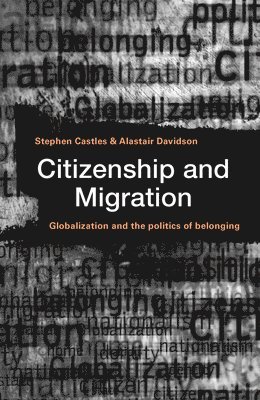
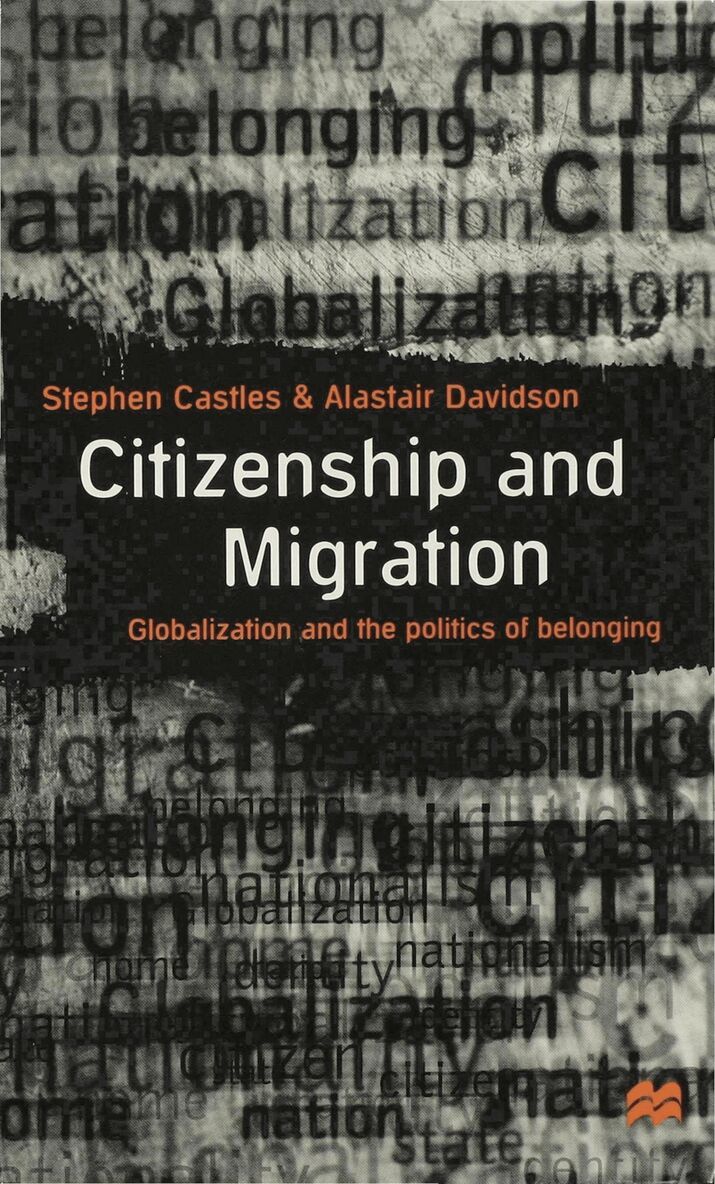
Globalization creates new challenges for citizenship: boundaries are being blurred and nation-state powers eroded. Millions of people have multiple citizenship, millions more lack citizenship of their country of residence. Cultural heterogeneity is escalating. There are increasing numbers of citizens who do not belong. This undermines the nation-state as the central site of democracy. New approaches are needed, which take account of complex identities and transnational belonging, and which allow for democratic control of power at all its proliferating levels.
595 kr
Skickas inom 10-15 vardagar
Globalization creates new challenges for citizenship: boundaries are being blurred and nation-state powers eroded. Millions of people have multiple citizenship, millions more lack citizenship of their country of residence. Cultural heterogeneity is escalating. There are increasing numbers of citizens who do not belong. This undermines the nation-state as the central site of democracy. New approaches are needed, which take account of complex identities and transnational belonging, and which allow for democratic control of power at all its proliferating levels.
2 476 kr
Skickas inom 11-20 vardagar
978 kr
Skickas inom 11-20 vardagar
1 363 kr
Skickas inom 7-10 vardagar
In the modern State, power rests on the consensus of the citizens. They accord its institutions the authority to regulate society. State theory suggests that this authority is a right to speak on certain matters in certain ways and to have the audience agree with those statements. It is a matter of an authorised language; all others fall into the category of ratbaggery. In this 1991 book, the first major book applying State theory to Australia, Alastair Davidson shows how Australian citizens were formed in the nineteenth century, and how their particular characteristics led to the empowering of a certain language of power: legalism. He further shows that this made the judiciary the most powerful arm of government - unlike countries where the people arm sovereign and the legislature supreme - because the judiciary has the last say on all issues and in its own language.
397 kr
Skickas inom 7-10 vardagar
This important, theoretically sophisticated work explores the concepts of liberal democracy, citizenship and rights. Grounded in critical original research, the book examines Australia's political and legal institutions, and traces the history and future of citizenship and the state in Australia. The central theme is that making proofs of belonging to the national culture a precondition of citizenship is inappropriate for a multicultural society such as Australia. This becomes an object lesson for the multicultural regional politics throughout the world.
794 kr
Skickas inom 7-10 vardagar
In the modern State, power rests on the consensus of the citizens. They accord its institutions the authority to regulate society. State theory suggests that this authority is a right to speak on certain matters in certain ways and to have the audience agree with those statements. It is a matter of an authorised language; all others fall into the category of ratbaggery. In this 1991 book, the first major book applying State theory to Australia, Alastair Davidson shows how Australian citizens were formed in the nineteenth century, and how their particular characteristics led to the empowering of a certain language of power: legalism. He further shows that this made the judiciary the most powerful arm of government - unlike countries where the people arm sovereign and the legislature supreme - because the judiciary has the last say on all issues and in its own language.
367 kr
Skickas inom 5-8 vardagar
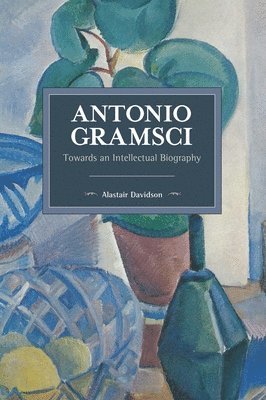
Few revolutionaries have a heritage so contested by rival groups as Antonio Gramsci. Many use his writings as sacred texts' for their own policies, and while others stress any differences with Lenin in order to prove Gramsci a rebel.' In this stirring biography, Davidson cuts through these sterile debates and instead focuses on Gramsci's own political and philosophical ideas.
Del 1 - Migration, Minorities and Modernity
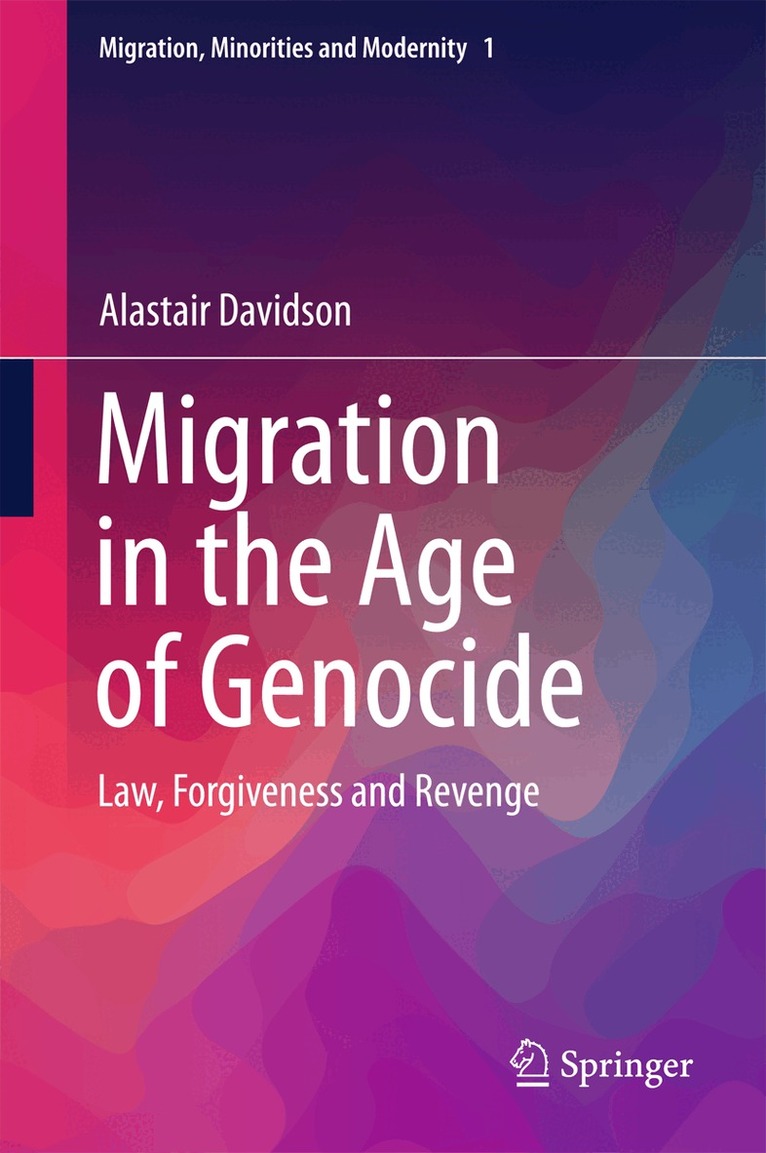
Migration in the Age of Genocide
Law, Forgiveness and Revenge
Inbunden, Engelska, 2015
537 kr
Skickas inom 10-15 vardagar
This book presents a novel proposal for establishing justice and social harmony in the aftermath of genocide.
Del 1 - Migration, Minorities and Modernity
Migration in the Age of Genocide
Law, Forgiveness and Revenge
Häftad, Engelska, 2016
537 kr
Skickas inom 10-15 vardagar
This book presents a novel proposal for establishing justice and social harmony in the aftermath of genocide.
2 118 kr
Skickas inom 10-15 vardagar
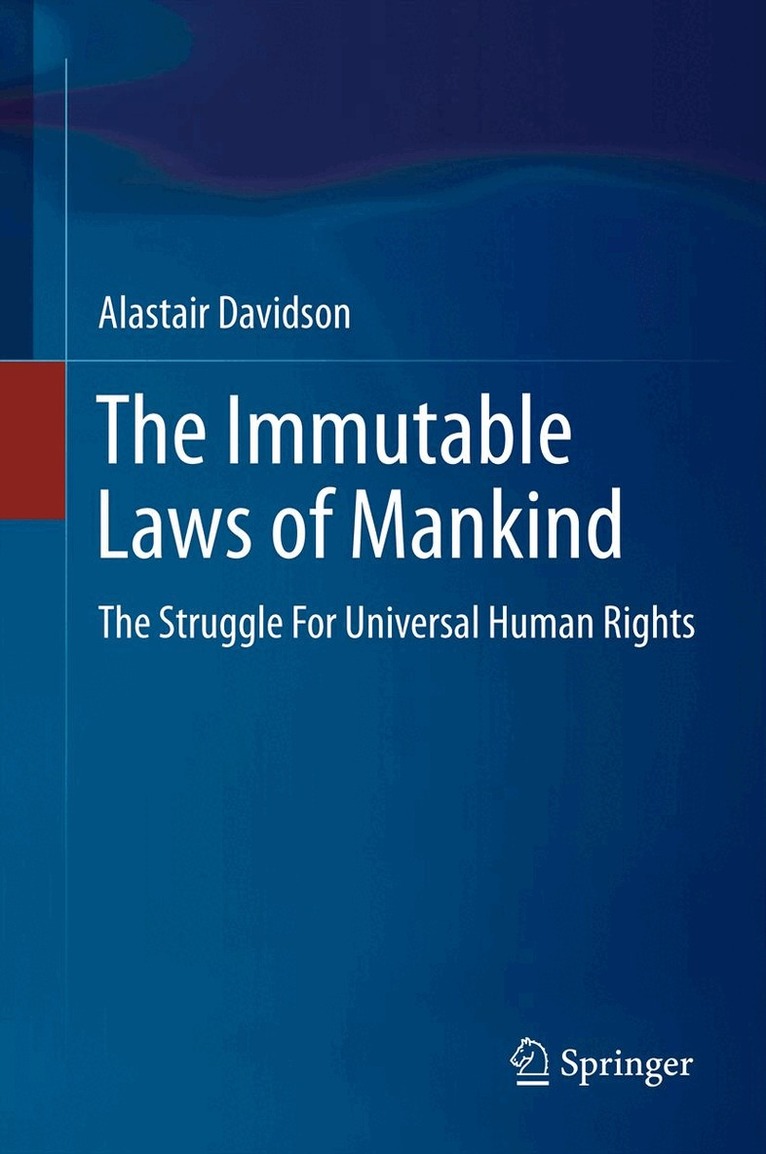
The key question for the history of universal human rights is why it took so long for them to become established as law. The main theme of this book is that the attainment of universal human rights required heroic struggle, first by individuals and then by ever-increasing numbers of people who supported those views against the major historical trends. Universal human rights are won from a hostile majority by outsiders. The chapters in the book describe the milestones in that struggle. The history presented in this book shows that, in most places at most times, even today, for concrete material reasons a great many people oppose the notion that all individuals have equal rights. The dominant history since the 1600s has been that of a mass struggle for the national-democratic state. This book argues that this struggle for national rights has been practically and logically contradictory with the struggle for universal rights. It would only be otherwise if there were free migration and access to citizenship on demand by anybody. This has never been the case. Rather than drawing only on European sources and being limited to major literary figures, this book is written from the Gramscian perspective that ideas mean little until they are taken up as mass ideologies. It draws on sources from Asia and America and on knowledge about mass attitudes, globally and throughout history.
2 118 kr
Skickas inom 10-15 vardagar
The key question for the history of universal human rights is why it took so long for them to become established as law. The main theme of this book is that the attainment of universal human rights required heroic struggle, first by individuals and then by ever-increasing numbers of people who supported those views against the major historical trends. Universal human rights are won from a hostile majority by outsiders. The chapters in the book describe the milestones in that struggle. The history presented in this book shows that, in most places at most times, even today, for concrete material reasons a great many people oppose the notion that all individuals have equal rights. The dominant history since the 1600s has been that of a mass struggle for the national-democratic state. This book argues that this struggle for national rights has been practically and logically contradictory with the struggle for universal rights. It would only be otherwise if there were free migration and access to citizenship on demand by anybody. This has never been the case. Rather than drawing only on European sources and being limited to major literary figures, this book is written from the Gramscian perspective that ideas mean little until they are taken up as mass ideologies. It draws on sources from Asia and America and on knowledge about mass attitudes, globally and throughout history.