Alastair Wright – författare
Visar alla böcker från författaren Alastair Wright. Handla med fri frakt och snabb leverans.
2 produkter
2 produkter
283 kr
Skickas inom 5-8 vardagar
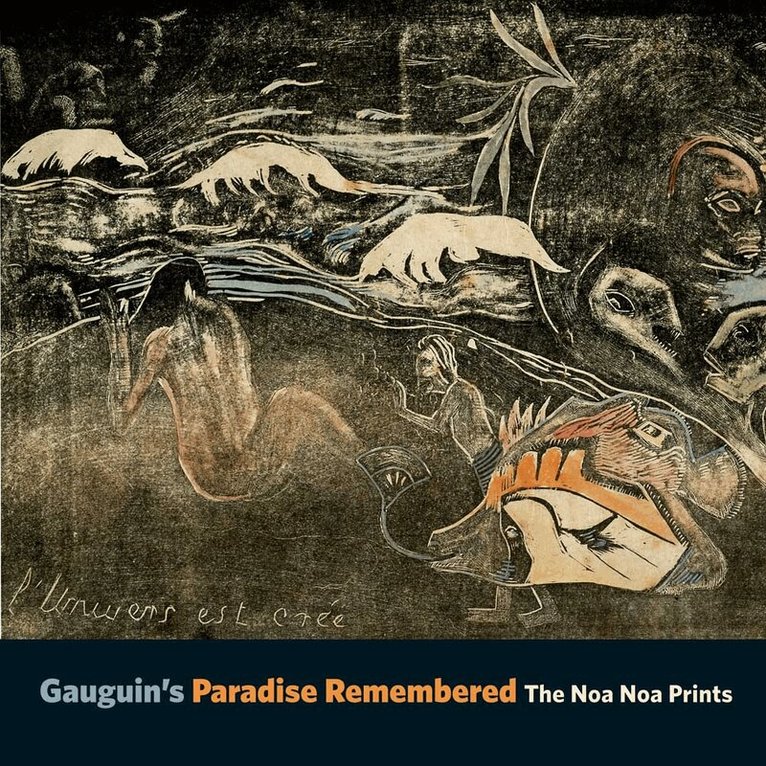
In 1891, Paul Gauguin (1848–1903) traveled to Tahiti in an effort to live simply and to draw inspiration from what he saw as the island’s exotic native culture. Although the artist was disappointed by the rapidly westernizing community he encountered, his works from this period nonetheless celebrate the myth of an untainted Tahitian idyll, a myth he continued to perpetuate upon his return to Paris. He created a travel journal entitled Noa Noa (fragrant scent), a largely fictionalized account that recalled his immersion into the spiritual world of the South Seas. To illustrate his text, Gauguin turned for the first time to the woodcut medium, creating a series of ten dark and brooding prints that he intended to publish alongside his journal—a publication that was never realized. The woodcuts crystallized important themes from his work and are the focus of this major new study. Gauguin's Paradise Remembered addresses both the artist’s representation of Tahiti in the woodcut medium and the impact these works had on his artistic practice. Through its combined sense of immediacy (in the apparent directness of the printing process) and distance (through the mechanical repetition of motifs), the woodcut offered Gauguin the ideal medium to depict a paradise whose real attraction lay in its remaining always unattainable. With two insightful essays, this book posits that Gauguin’s Noa Noa prints allowed him to convey his deeply Symbolist conception of his Tahitian experience while continuing his experiments with reproductive processes and other technical innovations that engaged him at the time.Distributed for the Princeton University Art MuseumExhibition Schedule:Princeton University Art Museum(09/25/10-01/02/11)
614 kr
Tillfälligt slut
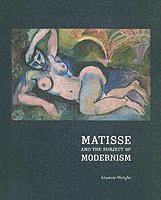
Focusing on the period 1905-1913, this provocative and groundbreaking new book refutes the popular view of Matisse as the painter of relaxed pleasures, the master of decorative line and sensuous color. Alastair Wright discovers a darker, more complex side to Matisse: an artist whose work, caught in the uneasy space between modernism and tradition, was fundamentally engaged with the most pressing of modernity's artistic and ideological debates. Presenting a series of brilliant and highly original analyses of Matisse's most important early paintings, Wright locates the artist within a wider cultural field in which the identities of modernism--and of its viewers--were highly contested. Wright offers a penetrating examination of the public response to Matisse's work, arguing that his early-twentieth-century audience found in his painting a deeply disturbing challenge to contemporary concepts of the self, of the nation, and of the West.This sumptuously illustrated book positions the work of Matisse and a number of his contemporaries in relation to key aspects of modernity--the commodification of the individual, the dislocation of cultural identity, and the effacement of racial boundaries under the pressure of imperial expansion--and provides a compelling account of how these contradictory historical materials fused to give birth to Matisse's modernism. What emerges is a renewed sense of the rich complexity of an artistic practice suspended between the seductive potential of pure color and an always ambivalent engagement with tradition. Tracing the interplay between Matisse's painting and discourses of art and subjectivity, Wright offers a significant new reading of one of the central figures of early-twentieth-century modernism.