Alder Keleman Saxena - Böcker
Visar alla böcker från författaren Alder Keleman Saxena. Handla med fri frakt och snabb leverans.
3 produkter
3 produkter
3 347 kr
Kommande
The Routledge Handbook of Sustainable Forestry offers a comprehensive, global exploration of current practices, foundational concepts, and emerging trends in sustainable forest management, while also reflecting on the critical role of sustainable forestry in promoting the well-being of both people and the planet.Modern forest management must transcend the traditional focus on sustainable yields to address the broader challenges of protecting ecosystems and supporting human and planetary health. This requires considering not only the needs of present populations but also those of future generations in the face of anticipated global changes. This handbook charts the evolution of sustainability in forest management, examines the dominant paradigms shaping current practices, highlights key challenges for the future, and introduces innovative approaches to forest management. Showcasing how modern forestry help support the vision of a thriving world that we wish to live in, the handbook presents a truly global perspective, featuring international case studies spanning diverse biomes and integrates insights from a wide range of disciplines and perspectives. Framing forests as complex adaptive social–ecological systems, the handbook highlights the dynamic interconnections between ecological processes and human dimensions. Organised into seven sections, the chapters delve into sustainable forestry from historical and contemporary perspectives, methods for assessing forest sustainability, policy and legal frameworks, ecosystem services, current threats, and the pivotal role of forestry in advancing beyond sustainable to a thriving future. The Routledge Handbook of Sustainable Forestry places particular emphasis on forward-thinking strategies to prepare forest managers and ecosystems for the challenges ahead.This handbook is an indispensable resource for students and researchers in sustainable forestry, forest management, and forest ecology, as well as those engaged in broader sustainable resource management. It will also prove invaluable to professionals involved in forest management and policy development.
321 kr
Skickas inom 7-10 vardagar
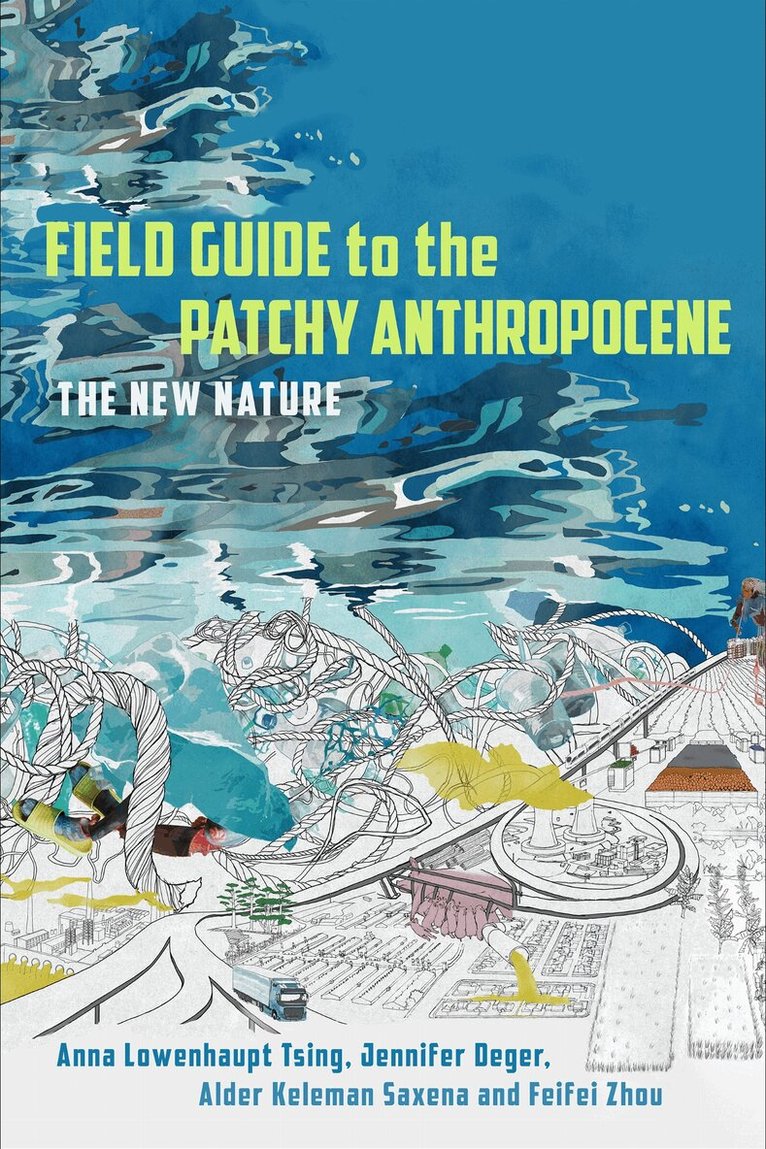
Nature has gone feral. How can we re-attune ourselves to the new nature? A field guide can help.While the global scientific community recently made headlines by ruling the Anthropocene—an era many date to the Industrial Revolution when human action truly began to transform the planet—did not qualify for a geological epoch quite yet, understanding the nature of human transformation of the Earth is more important than ever. The effects of human activity are global in scope, but take shape within distinct social and ecological "patches," discontinuous regions within which the key actors may not be human, but the plants, animals, fungi, viruses, plastics, and chemicals creating our new world. Field Guide to the Patchy Anthropocene takes stock of our current planetary crisis, leading readers through a series of sites, thought experiments, and genre-stretching descriptive practices to nurture a revitalized natural history.Field guides teach us how to notice, name, and so better appreciate more-than-human worlds. They hone our powers of observation and teach us to see the world anew. Field-based observations and place-based knowledge cultivation—getting up-close and personal with patchy dynamics—are vital to truly grapple with the ecological challenges and the historical conjunctures that are bringing us to multiple catastrophic tipping points. How has commercial agriculture runoff given rise to comb jellies in the Black Sea? What role did the Atlantic slave trade play in the worldwide spread of virus-carrying mosquitoes? How did the green revolution transform the brown planthopper into a superpredator in Philippine rice fields? Questions like these open up new ways of understanding, and ways of living through, the epoch that human activity has ushered in.This Field Guide shifts attention away from knowledge extractive practices of globalization to encourage skilled observers of many stripes to pursue their commitments to place, social justice, and multispecies community. It is through attention to the beings, places, ecologies, and histories of the Anthropocene that we can reignite curiosity, wonder, and care for our damaged planet.
241 kr
Kommande
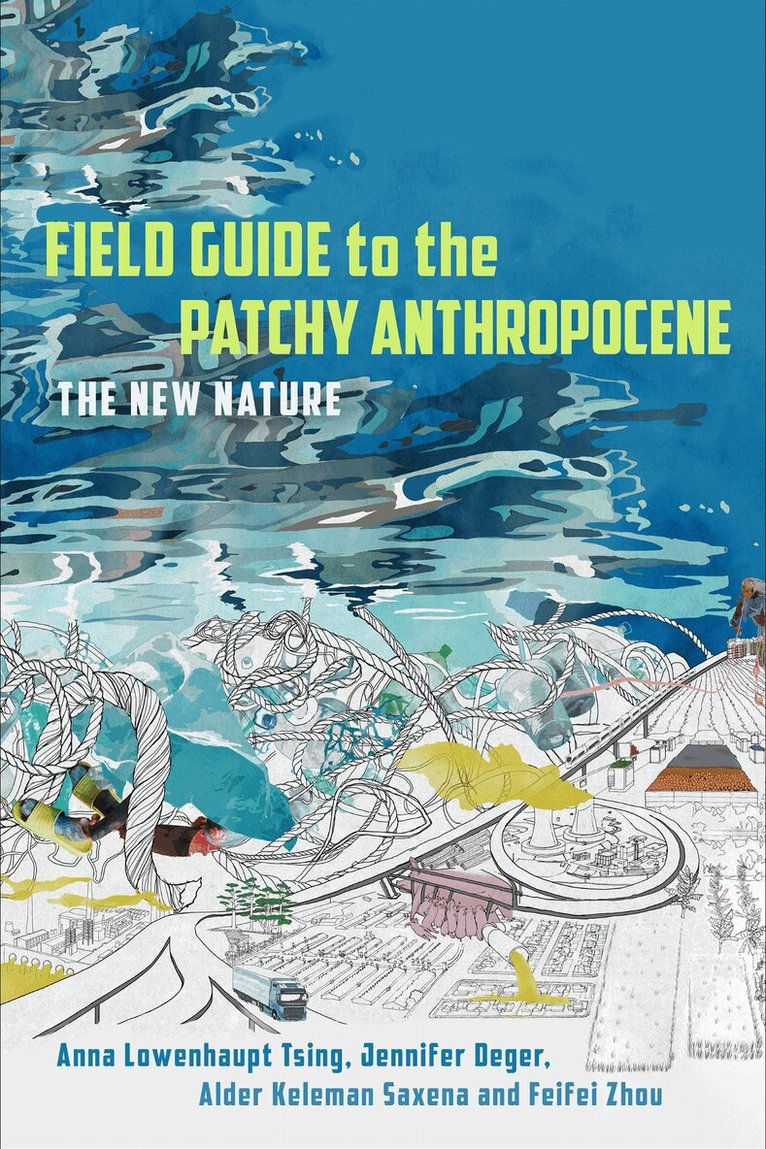
Nature has gone feral. How can we re-attune ourselves to the new nature? A field guide can help.While the global scientific community recently made headlines by ruling the Anthropocene – an era many date to the Industrial Revolution when human action truly began to transform the planet – did not qualify for a geological epoch quite yet, understanding the nature of human transformation of the Earth is more important than ever. The effects of human activity are global in scope, but take shape within distinct social and ecological "patches," discontinuous regions within which the key actors may not be human, but the plants, animals, fungi, viruses, plastics, and chemicals creating our new world. Field Guide to the Patchy Anthropocene takes stock of our current planetary crisis, leading readers through a series of sites, thought experiments, and genre-stretching descriptive practices to nurture a revitalized natural history.Field guides teach us how to notice, name, and so better appreciate more-than-human worlds. They hone our powers of observation and teach us to see the world anew. Field-based observations and place-based knowledge cultivation – getting up-close and personal with patchy dynamics – are vital to truly grapple with the ecological challenges and the historical conjunctures that are bringing us to multiple catastrophic tipping points. How has commercial agriculture runoff given rise to comb jellies in the Black Sea? What role did the Atlantic slave trade play in the worldwide spread of virus-carrying mosquitoes? How did the green revolution transform the brown planthopper into a superpredator in Philippine rice fields? Questions like these open up new ways of understanding, and ways of living through, the epoch that human activity has ushered in.This Field Guide shifts attention away from knowledge extractive practices of globalization to encourage skilled observers of many stripes to pursue their commitments to place, social justice, and multispecies community. It is through attention to the beings, places, ecologies, and histories of the Anthropocene that we can reignite curiosity, wonder, and care for our damaged planet.