Jennifer Deger - Böcker
Visar alla böcker från författaren Jennifer Deger. Handla med fri frakt och snabb leverans.
3 produkter
3 produkter
262 kr
Skickas inom 10-15 vardagar
How does the introduction of modern media influence a community? How does technology coexist with tradition? How do reality and imagination converge in the creation of documentary? Jennifer Deger addresses these questions in her compelling study of one Aboriginal community's relationship with media. Deger spent several years working with the Yolngu community in Gapuwiyak, a remote Aboriginal community in Australia, both as an ethnographic researcher and as a collaborator in the production of media. Shimmering Screens explores the place of technology in Gapuwiyak through discussions about the influence of mainstream television, the changing role of photography in mortuary ceremonies, and the making of local radio and video. A rich ethnographic study, this book examines the productive, and sometimes problematic, conjunctions of technology, culture, and imagination in contemporary Yolngu life. Deger offers a new perspective to ongoing debates regarding "media imperialism." Reconsidering established assumptions about the links between representation, power, and "the gaze," she proposes the possibility of a more culturally specific and, ultimately, a more mutual relationship between subject, image, and viewer.Jennifer Deger is a research fellow in anthropology, Macquarie University, Australia.
324 kr
Skickas inom 7-10 vardagar
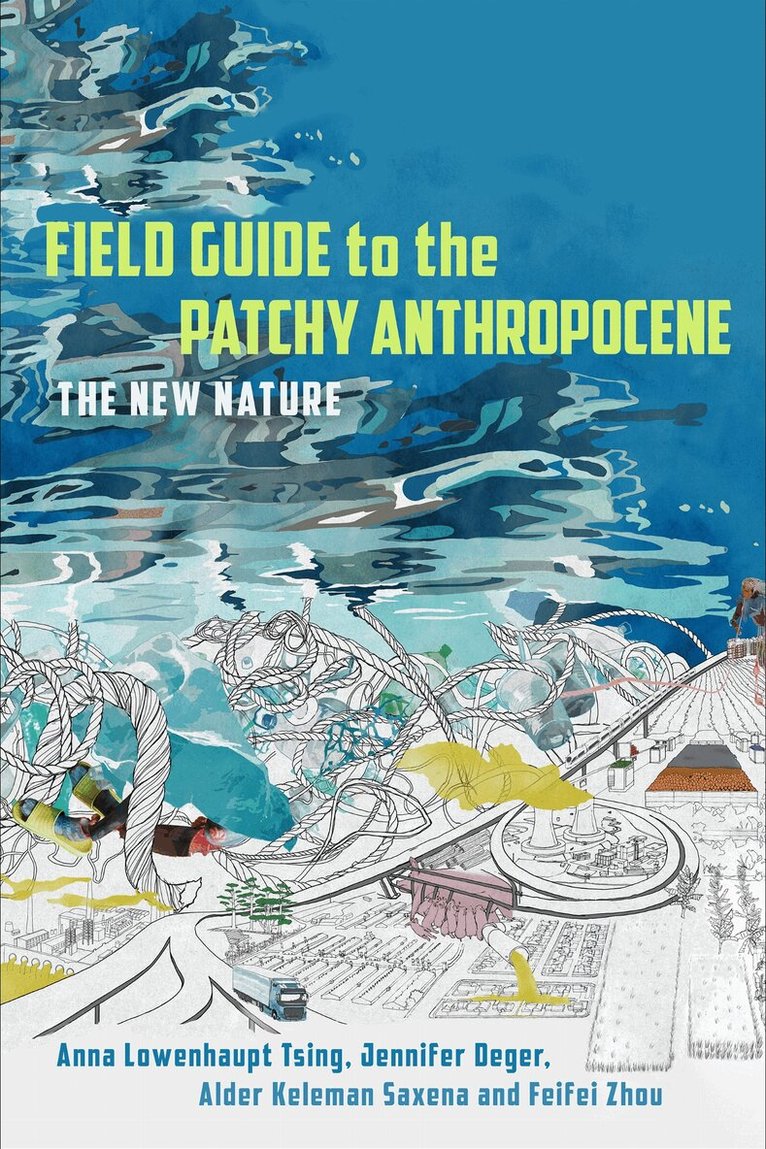
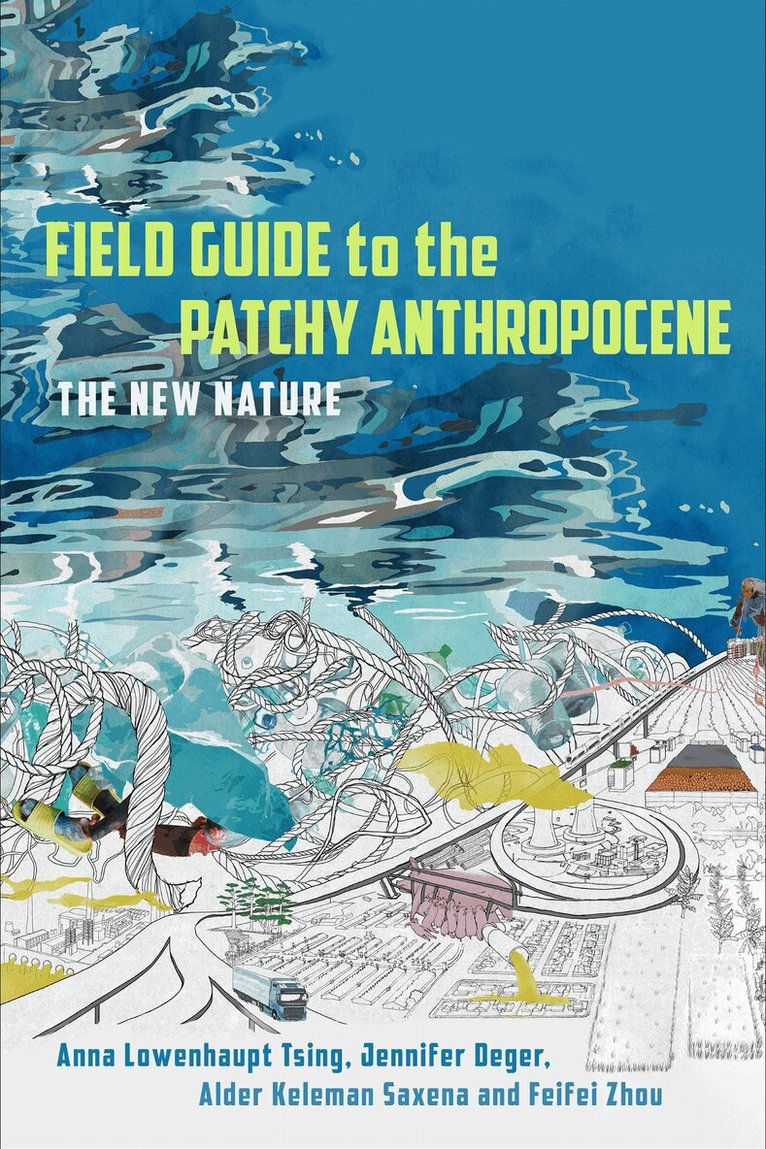
Nature has gone feral. How can we re-attune ourselves to the new nature? A field guide can help.While the global scientific community recently made headlines by ruling the Anthropocene—an era many date to the Industrial Revolution when human action truly began to transform the planet—did not qualify for a geological epoch quite yet, understanding the nature of human transformation of the Earth is more important than ever. The effects of human activity are global in scope, but take shape within distinct social and ecological "patches," discontinuous regions within which the key actors may not be human, but the plants, animals, fungi, viruses, plastics, and chemicals creating our new world. Field Guide to the Patchy Anthropocene takes stock of our current planetary crisis, leading readers through a series of sites, thought experiments, and genre-stretching descriptive practices to nurture a revitalized natural history.Field guides teach us how to notice, name, and so better appreciate more-than-human worlds. They hone our powers of observation and teach us to see the world anew. Field-based observations and place-based knowledge cultivation—getting up-close and personal with patchy dynamics—are vital to truly grapple with the ecological challenges and the historical conjunctures that are bringing us to multiple catastrophic tipping points. How has commercial agriculture runoff given rise to comb jellies in the Black Sea? What role did the Atlantic slave trade play in the worldwide spread of virus-carrying mosquitoes? How did the green revolution transform the brown planthopper into a superpredator in Philippine rice fields? Questions like these open up new ways of understanding, and ways of living through, the epoch that human activity has ushered in.This Field Guide shifts attention away from knowledge extractive practices of globalization to encourage skilled observers of many stripes to pursue their commitments to place, social justice, and multispecies community. It is through attention to the beings, places, ecologies, and histories of the Anthropocene that we can reignite curiosity, wonder, and care for our damaged planet.
241 kr
Kommande
Nature has gone feral. How can we re-attune ourselves to the new nature? A field guide can help.While the global scientific community recently made headlines by ruling the Anthropocene – an era many date to the Industrial Revolution when human action truly began to transform the planet – did not qualify for a geological epoch quite yet, understanding the nature of human transformation of the Earth is more important than ever. The effects of human activity are global in scope, but take shape within distinct social and ecological "patches," discontinuous regions within which the key actors may not be human, but the plants, animals, fungi, viruses, plastics, and chemicals creating our new world. Field Guide to the Patchy Anthropocene takes stock of our current planetary crisis, leading readers through a series of sites, thought experiments, and genre-stretching descriptive practices to nurture a revitalized natural history.Field guides teach us how to notice, name, and so better appreciate more-than-human worlds. They hone our powers of observation and teach us to see the world anew. Field-based observations and place-based knowledge cultivation – getting up-close and personal with patchy dynamics – are vital to truly grapple with the ecological challenges and the historical conjunctures that are bringing us to multiple catastrophic tipping points. How has commercial agriculture runoff given rise to comb jellies in the Black Sea? What role did the Atlantic slave trade play in the worldwide spread of virus-carrying mosquitoes? How did the green revolution transform the brown planthopper into a superpredator in Philippine rice fields? Questions like these open up new ways of understanding, and ways of living through, the epoch that human activity has ushered in.This Field Guide shifts attention away from knowledge extractive practices of globalization to encourage skilled observers of many stripes to pursue their commitments to place, social justice, and multispecies community. It is through attention to the beings, places, ecologies, and histories of the Anthropocene that we can reignite curiosity, wonder, and care for our damaged planet.