Aleš Završnik – författare
638 kr
Skickas inom 10-15 vardagar
2 179 kr
Skickas inom 10-15 vardagar
732 kr
Läs direkt efter köp
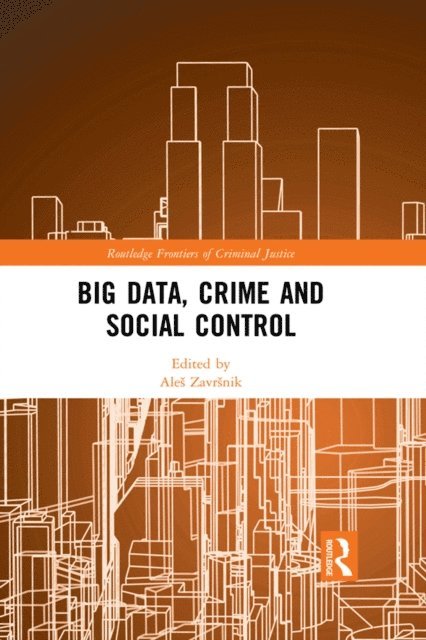
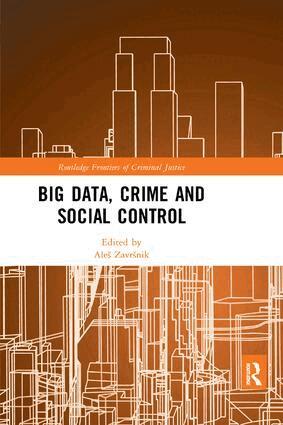
From predictive policing to self-surveillance to private security, the potential uses to of big data in crime control pose serious legal and ethical challenges relating to privacy, discrimination, and the presumption of innocence. The book is about the impacts of the use of big data analytics on social and crime control and on fundamental liberties.
Drawing on research from Europe and the US, this book identifies the various ways in which law and ethics intersect with the application of big data in social and crime control, considers potential challenges to human rights and democracy and recommends regulatory solutions and best practice. This book focuses on changes in knowledge production and the manifold sites of contemporary surveillance, ranging from self-surveillance to corporate and state surveillance. It tackles the implications of big data and predictive algorithmic analytics for social justice, social equality, and social power: concepts at the very core of crime and social control.
This book will be of interest to scholars and students of criminology, sociology, politics and socio-legal studies.
732 kr
Läs direkt efter köp
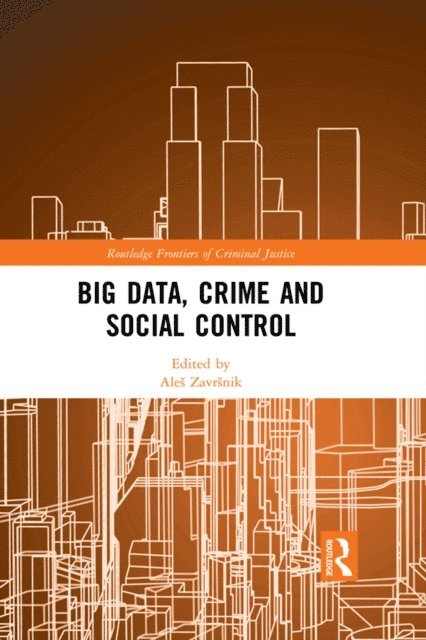
From predictive policing to self-surveillance to private security, the potential uses to of big data in crime control pose serious legal and ethical challenges relating to privacy, discrimination, and the presumption of innocence. The book is about the impacts of the use of big data analytics on social and crime control and on fundamental liberties.
Drawing on research from Europe and the US, this book identifies the various ways in which law and ethics intersect with the application of big data in social and crime control, considers potential challenges to human rights and democracy and recommends regulatory solutions and best practice. This book focuses on changes in knowledge production and the manifold sites of contemporary surveillance, ranging from self-surveillance to corporate and state surveillance. It tackles the implications of big data and predictive algorithmic analytics for social justice, social equality, and social power: concepts at the very core of crime and social control.
This book will be of interest to scholars and students of criminology, sociology, politics and socio-legal studies.
1 091 kr
Skickas inom 10-15 vardagar
1 367 kr
Läs direkt efter köp
Full-scale political change affects every level of a society, but perhaps nowhere as strikingly as in the areas of crime policy and law enforcement. Over the past two decades, the European nations that have moved from totalitarianism toward democracy have come to embody this trend, yet reliable sources on crime and law enforcement in these countries have not been readily accessible to the West.
Representing viewpoints seldom available to outsiders, the contributors to Crime and Transition in Central and Eastern Europe analyze changes in criminal activities and crime control strategies in the region, explain the political background underlying these developments, and assess their long-term social impact. Experts from Slovenia, Hungary, Croatia, Serbia, the Czech Republic, Poland, Bosnia and Herzegovina discuss the politicization of crime, the ongoing paradoxes regarding civil liberties, and the future of crime policy in comparative and country-specific terms. Among the topics featured in the book: Crime and crime control in transitional countries, politics, the media, and public perception of crime, surveillance: from national security to private industry, penal policy and political change, emerging trends: economic and organized crime, human trafficking, juvenile delinquency, new perspectives on corruption in the region.
With this fascinating insight, Crime and Transition in Central and Eastern Europe is a singular reference for researchers and policymakers in criminology and political science, and historians with a special interest in European affairs and policy.
1 091 kr
Skickas inom 10-15 vardagar
1 633 kr
Skickas inom 10-15 vardagar
1 995 kr
Läs direkt efter köp
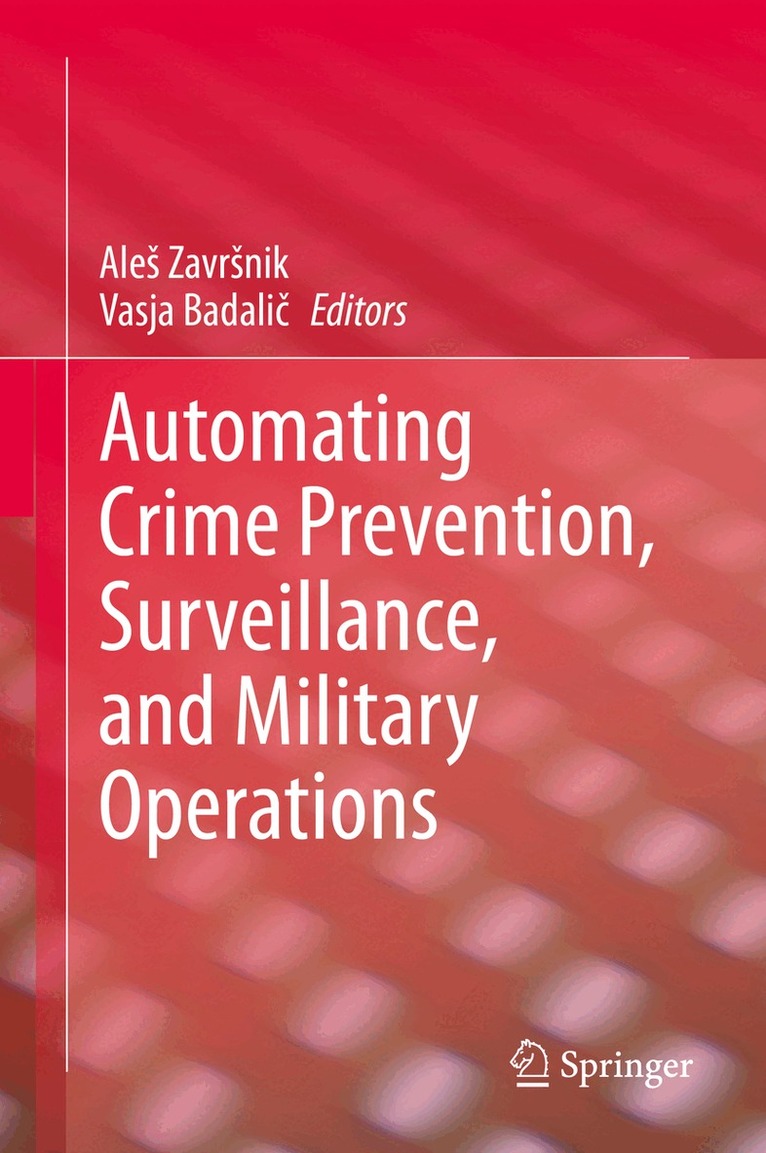
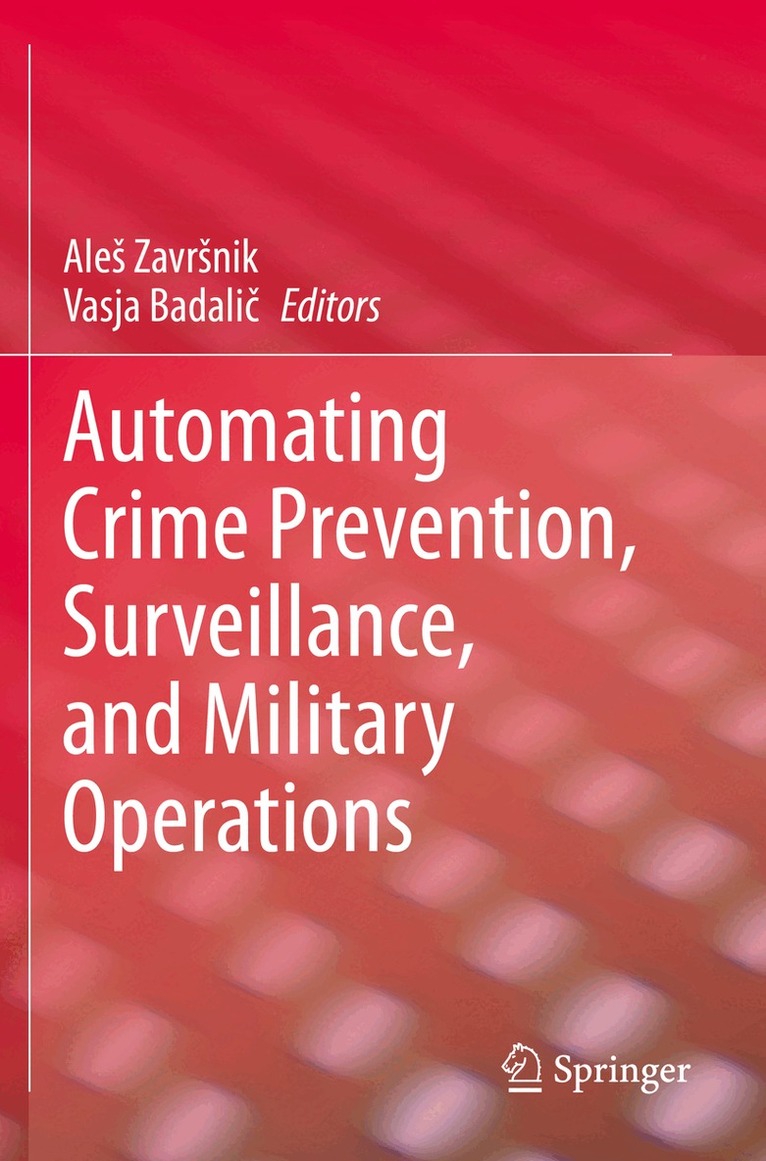
This interdisciplinary volume critically explores how the ever-increasing use of automated systems is changing policing, criminal justice systems, and military operations at the national and international level. The book examines the ways in which automated systems are beneficial to society, while addressing the risks they represent for human rights.
This book starts with a historical overview of how different types of knowledge have transformed crime control and the security domain, comparing those epistemological shifts with the current shift caused by knowledge produced with high-tech information technology tools such as big data analytics, machine learning, and artificial intelligence. The first part explores the use of automated systems, such as predictive policing and platform policing, in law enforcement. The second part analyzes the use of automated systems, such as algorithms used in sentencing and parole decisions, in courts of law. The third part examines the useand misuse of automated systems for surveillance and social control. The fourth part discusses the use of lethal (semi)autonomous weapons systems in armed conflicts.
An essential read for researchers, politicians, and advocates interested in the use and potential misuse of automated systems in crime control, this diverse volume draws expertise from such fields as criminology, law, sociology, philosophy, and anthropology.1 633 kr
Skickas inom 10-15 vardagar
1 524 kr
Skickas inom 10-15 vardagar
1 825 kr
Läs direkt efter köp
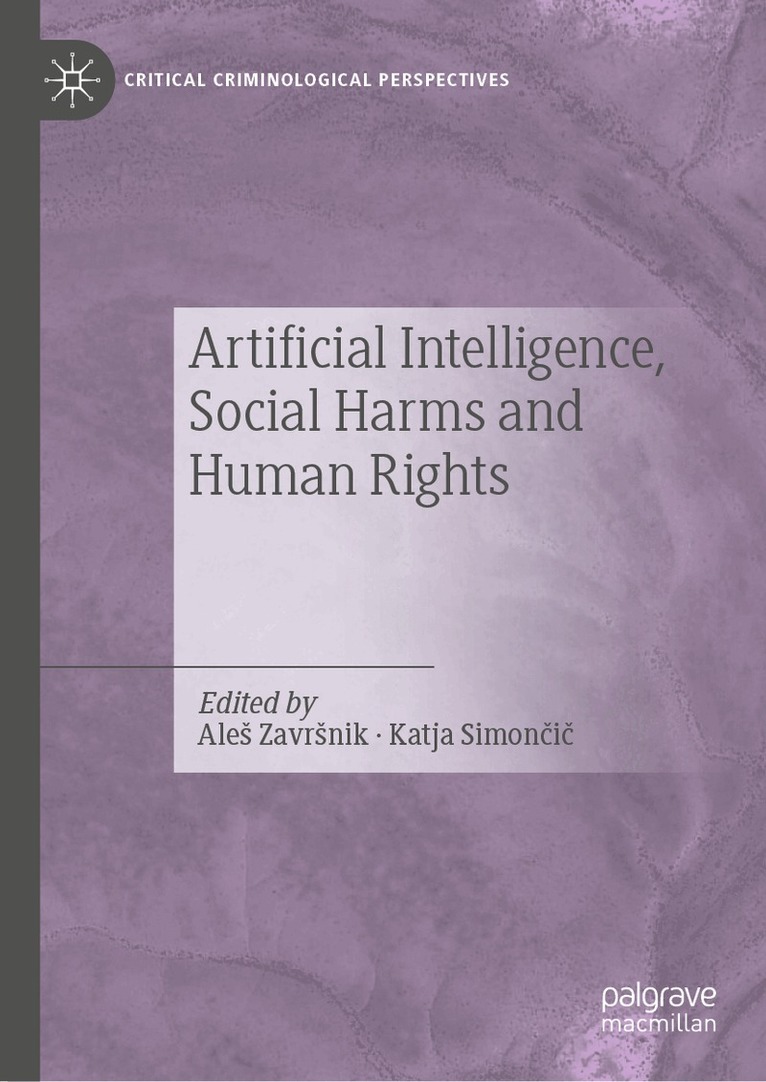
This book critically explores how and to what extent artificial intelligence (AI) can infringe human rights and/or lead to socially harmful consequences and how to avoid these. The European Union has outlined how it will use big data, machine learning, and AI to tackle a number of inherently social problems, including poverty, climate change, social inequality and criminality. The contributors of this book argue that the developments in AI must take place in an appropriate legal and ethical framework and they make recommendations to ensure that harm and human rights violations are avoided. The book is split into two parts: the first addresses human rights violations and harms that may occur in relation to AI in different domains (e.g. border control, surveillance, facial recognition) and the second part offers recommendations to address these issues. It draws on interdisciplinary research and speaks to policy-makers and criminologists, sociologists, scholars in STS studies, security studies scholars and legal scholars.
1 524 kr
Skickas inom 10-15 vardagar
1 701 kr
Skickas inom 10-15 vardagar
2 100 kr
Läs direkt efter köp
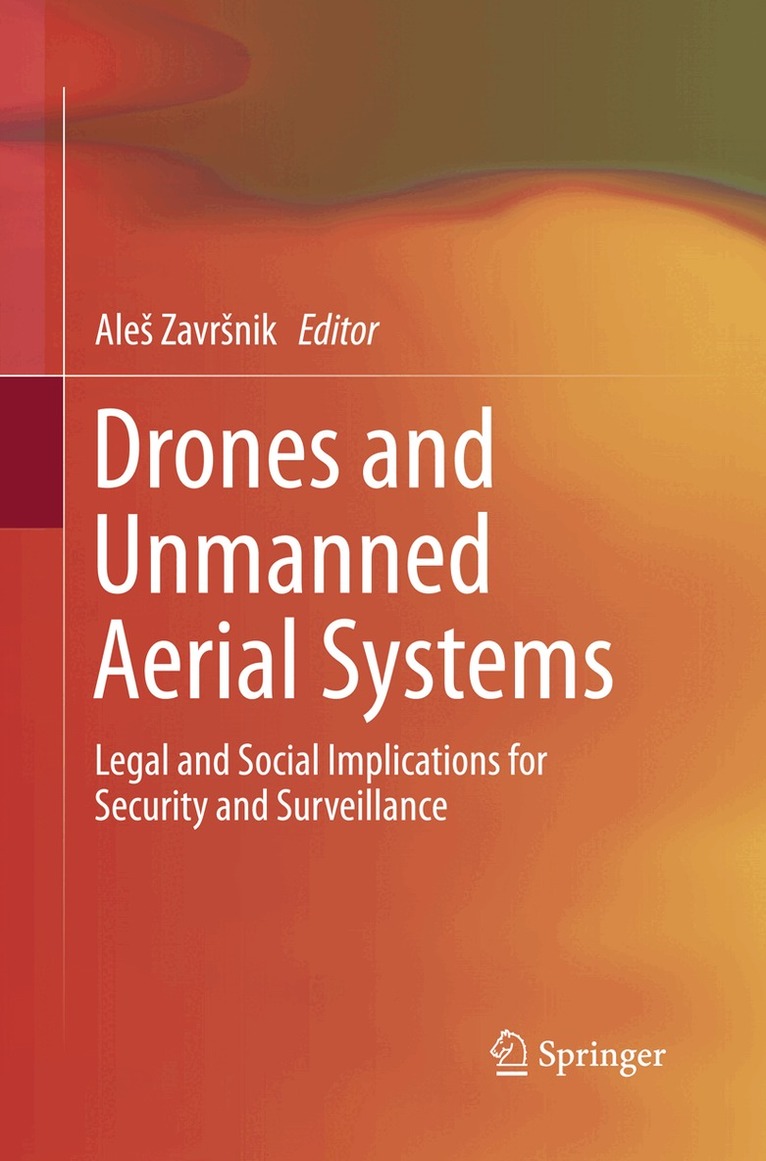
This book tackles the regulatory issues of Unmanned Aerial Systems (UAS) or Remotely-Piloted Aerial Systems (RPAS), which have profound consequences for privacy, security and other fundamental liberties. Collectively known as “drones,” they were initially deployed for military purposes: reconnaissance, surveillance and extrajudicial executions. Today, we are witnessing a growth of their use into the civilian and humanitarian domain. They are increasingly used for goals as diverse as news gathering, aerial inspection of oil refinery flare stacks, mapping of the Amazonian rain-forest, crop spraying and search and rescue operations.
The civil use of drones is becoming a reality in the European Union and in the US.The drone revolution may be a new technological revolution. Proliferation of the next generation of “recreational” drones show how drones will be sold as any other consumer item. The cultural perception of the technology is shifting, as drones are increasingly being used for humanitarian activities, on one hand, but they can also firmly be situated in the prevailing modes of postmodern governance on the other hand.This work will be of interest to researchers in Criminology and Criminal Justice interested in issues related to surveillance, security, privacy, and technology. It will also provide a criminological background for related legal issues, such as privacy law, aviation law, international criminal law, and comparative law.
1 701 kr
Skickas inom 10-15 vardagar
1 041 kr
Skickas inom 5-8 vardagar
879 kr
Läs direkt efter köp
Derived from the renowned multi-volume International Encyclopaedia of Laws, this practical guide to information technology law – the law affecting information and communication technology (ICT) – in Slovenia covers every aspect of the subject, including the regulation of digital markets, intellectual property rights in the digital context, relevant competition rules, drafting and negotiating ICT-related contracts, electronic transactions, and cybercrime. Lawyers who handle transnational matters will appreciate the detailed explanation of specific characteristics of practice and procedure.
Following a general introduction, the monograph assembles its information and guidance in six main areas of practice: (1) the regulatory framework of digital markets, including legal aspects of standardization, international private law applied to the online context, telecommunications law, regulation of audio-visual services and online commercial platforms; (2) online public services including e-government, e-health and online voting; (3) contract law with regard to software, hardware, networks and related services, with special attention to case law in this area, rules with regard to electronic evidence, regulation of electronic signatures, online financial services and electronic commerce; (4) software protection, legal protection of databases or chips, and other intellectual property matters; (5) the legal framework regarding cybersecurity and (6) the application of criminal procedure and substantive criminal law in the area of cybercrime.
Its succinct yet scholarly nature, as well as the practical quality of the information it provides, make this monograph a valuable time-saving tool for business and legal professionals alike. Lawyers representing parties with interests in Japan will welcome this very useful guide, and academics and researchers will appreciate its value in the study of comparative law in this relatively new and challenging field.
879 kr
Läs direkt efter köp
Derived from the renowned multi-volume International Encyclopaedia of Laws, this practical guide to information technology law – the law affecting information and communication technology (ICT) – in Slovenia covers every aspect of the subject, including the regulation of digital markets, intellectual property rights in the digital context, relevant competition rules, drafting and negotiating ICT-related contracts, electronic transactions, and cybercrime. Lawyers who handle transnational matters will appreciate the detailed explanation of specific characteristics of practice and procedure.
Following a general introduction, the monograph assembles its information and guidance in six main areas of practice: (1) the regulatory framework of digital markets, including legal aspects of standardization, international private law applied to the online context, telecommunications law, regulation of audio-visual services and online commercial platforms; (2) online public services including e-government, e-health and online voting; (3) contract law with regard to software, hardware, networks and related services, with special attention to case law in this area, rules with regard to electronic evidence, regulation of electronic signatures, online financial services and electronic commerce; (4) software protection, legal protection of databases or chips, and other intellectual property matters; (5) the legal framework regarding cybersecurity and (6) the application of criminal procedure and substantive criminal law in the area of cybercrime.
Its succinct yet scholarly nature, as well as the practical quality of the information it provides, make this monograph a valuable time-saving tool for business and legal professionals alike. Lawyers representing parties with interests in Japan will welcome this very useful guide, and academics and researchers will appreciate its value in the study of comparative law in this relatively new and challenging field.