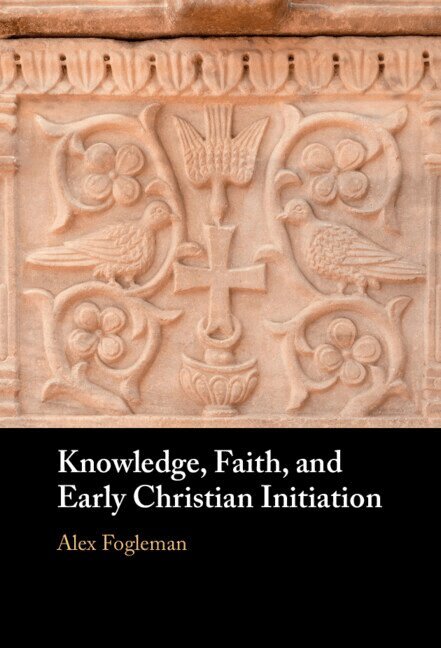
In this book, Alex Fogleman presents a new history of the rise and development of catechesis in Latin Patristic Christianity by focusing on the critical relationship between teaching and epistemology. Through detailed studies of key figures and catechetical texts, he offers a nuanced account of initiation in the Early Christian era to explore fundamental questions in patristic theology: What did early Christians think that it meant to know God, and how could it be taught? What theological commitments and historical circumstances undergirded the formation of the catechumenate? What difference did the Christian confession of Jesus Christ as God-made-flesh make for practices of Christian teaching? Fogleman's study provides a dynamic narrative that encompasses not only the political and social history of Christianity associated with the Constantinian shift in the fourth century but also the modes of teaching and communication that helped to establish Christian identity. This title is part of the Flip it Open Programme and may also be available Open Access. Check our website Cambridge Core for details.
In this book, Alex Fogleman presents a new history of the rise and development of catechesis in Latin Patristic Christianity by focusing on the critical relationship between teaching and epistemology. Through detailed studies of key figures and catechetical texts, he offers a nuanced account of initiation in the Early Christian era to explore fundamental questions in patristic theology: What did early Christians think that it meant to know God, and how could it be taught? What theological commitments and historical circumstances undergirded the formation of the catechumenate? What difference did the Christian confession of Jesus Christ as God-made-flesh make for practices of Christian teaching? Fogleman's study provides a dynamic narrative that encompasses not only the political and social history of Christianity associated with the Constantinian shift in the fourth century but also the modes of teaching and communication that helped to establish Christian identity. This title is part of the Flip it Open Programme and may also be available Open Access. Check our website Cambridge Core for details.
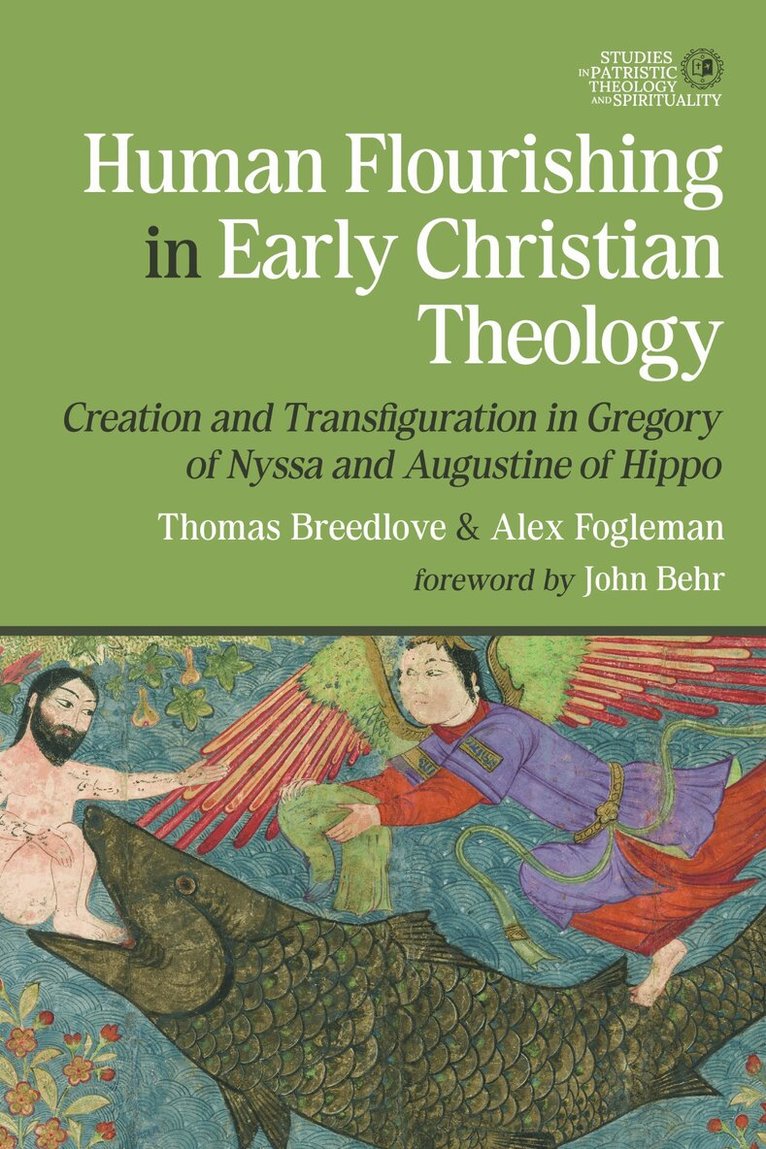
The study of human flourishing has grown dramatically in the past decades, emerging not only as a central topic in the social scientific fields of psychology and sociology but also as an interdisciplinary nexus. Human flourishing is now a topic for literary studies, for theology and religious studies, for history, and all of the humanities. This rapid growth expresses the availability of flourishing as a nearly universal object of interest, a basic and globally-shared human desire: Who does not want to flourish?This advent of attention and scholarship has brought with it attention not only to what might be common in human flourishing but also what is regionally, culturally, and socially distinct. Human Flourishing in Early Christian Theology: Creation and Transfiguration in Gregory of Nyssa and Augustine of Hippo contributes to this broadening of perspective diachronically, bringing central constructs in the contemporary social scientific study of human flourishing into conversation with two key voices in early Christian theology, Gregory of Nyssa and Augustine of Hippo. Taking as points of departure topics such as health, emotion, virtue, community, and friendship, each chapter traces how each late-ancient theologian understood such phenomena within their vision of human nature and its telos.This approach offers both an introduction to the thought of both Gregory and Augustine and brings their writing into fresh perspective, even while these two theologians offer lenses for seeing contemporary flourishing work otherwise. This is, in this sense, a work of theological retrieval, of ressourcement, which explores the intersection of ancient and contemporary to produce new possibilities of understanding. The fundamental possibility advanced here is the determinative importance that conceptions of human nature play in conceptions of human flourishing, and that the distinctively Christian visions of human flourishing found in Gregory and Augustine unfold from their vision of the human being not only as created but as destined for transfiguration in the life of participation in God.