
Thomas Breedlove – författare
Visar alla böcker från författaren Thomas Breedlove. Handla med fri frakt och snabb leverans.
4 produkter
4 produkter
Inbunden, Engelska, 2026
1 187 kr
Skickas inom 10-15 vardagar
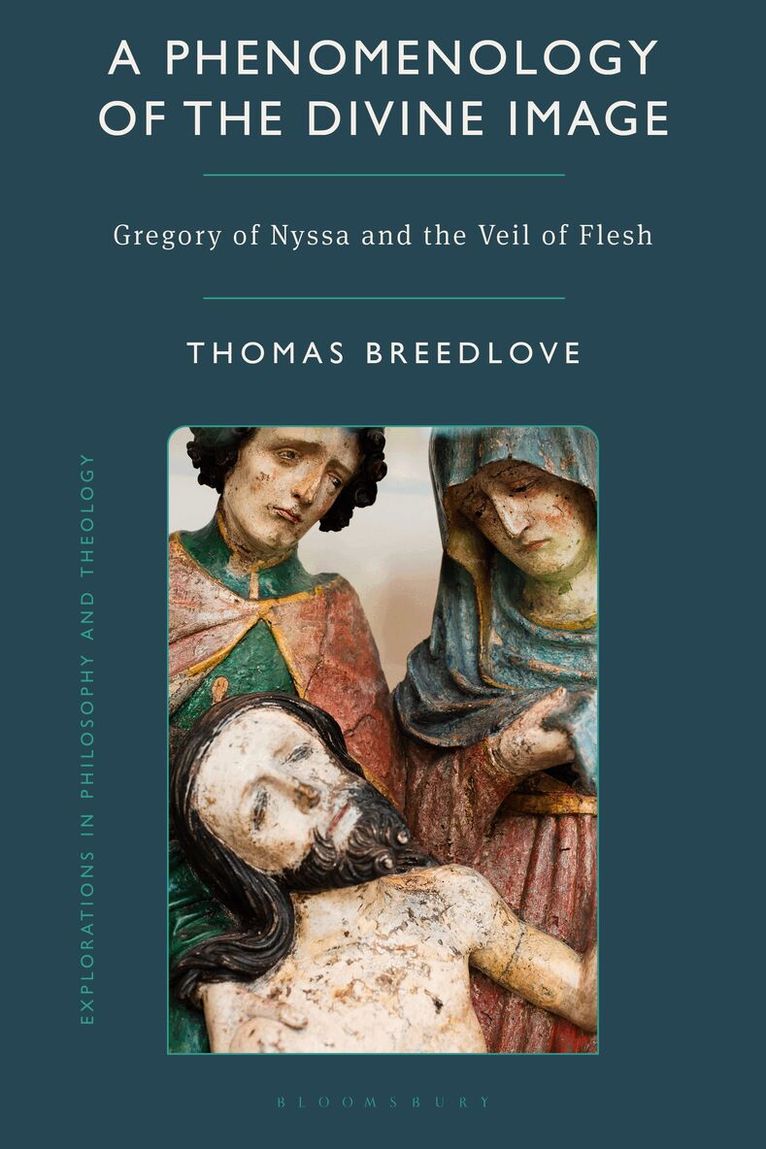
What does it mean to speak of humans as the image of God when apophatic theology speaks of an infinite God who transcends naming, comprehension, and worldly appearance? Bringing Church Father Gregory of Nyssa into dialogue with French phenomenology in Michel Henry, Maurice Merleau-Ponty, and Jean-Louis Chretien, Thomas Breedlove answers this question and explores the importance of embodiment to the doctrine of imago Dei.Divided into three parts, this book presents the divine image not as merely one aspect of the human creature but rather as that which constitutes human creatureliness itself. So constituted, human nature is shaped by likeness and difference to God. Breedlove investigates this relationship between human and divine through three successive approaches. The first, in conversation with Merleau-Ponty, analyses the existential and phenomenological aspects of fleshly finitude as the paradigmatic site of the creature’s difference from God. The second takes up Henry’s philosophy of life alongside Gregory’s metaphysics of participation to offer an account of creaturely life in its likeness or identity to divine life. The third, though conversation with Chrétien, examines the christological aspects of Gregory’s anthropology in order to find the dynamic synthesis in which likeness and difference and presence and absence reveal a creaturely nature wounded by divine love. In blending 4th-century theology with 20th-century phenomenology, Breedlove not only showcases the alternative perspectives they can offer each other, but further presents a novel theological anthropology and a new theological account of the flesh. He argues that the dynamism and groundlessness of creaturely flesh, where mind and body intersect, reveals what it means to be created as images of God. This revelation is founded in Christ, whose life reveals finitude not as an impediment to be overcome but as the very possibility of likeness to the divine.
E-bok
PDF, Engelska, 20261 252 kr
Läs direkt efter köp
What does it mean to speak of humans as the image of God when apophatic theology speaks of an infinite God who transcends naming, comprehension, and worldly appearance? Bringing Church Father Gregory of Nyssa into dialogue with French phenomenology in Michel Henry, Maurice Merleau-Ponty, and Jean-Louis Chretien, Thomas Breedlove answers this question and explores the importance of embodiment to the doctrine of imago Dei. Divided into three parts, this book presents the divine image not as merely one aspect of the human creature but rather as that which constitutes human creatureliness itself. So constituted, human nature is shaped by likeness and difference to God. Breedlove investigates this relationship between human and divine through three successive approaches. The first, in conversation with Merleau-Ponty, analyses the existential and phenomenological aspects of fleshly finitude as the paradigmatic site of the creature's difference from God. The second takes up Henry's philosophy of life alongside Gregory's metaphysics of participation to offer an account of creaturely life in its likeness or identity to divine life. The third, though conversation with Chr tien, examines the christological aspects of Gregory's anthropology in order to find the dynamic synthesis in which likeness and difference and presence and absence reveal a creaturely nature wounded by divine love. In blending 4th-century theology with 20th-century phenomenology, Breedlove not only showcases the alternative perspectives they can offer each other, but further presents a novel theological anthropology and a new theological account of the flesh. He argues that the dynamism and groundlessness of creaturely flesh, where mind and body intersect, reveals what it means to be created as images of God. This revelation is founded in Christ, whose life reveals finitude not as an impediment to be overcome but as the very possibility of likeness to the divine.
E-bok
Engelska, 20261 241 kr
Läs direkt efter köp
What does it mean to speak of humans as the image of God when apophatic theology speaks of an infinite God who transcends naming, comprehension, and worldly appearance? Bringing Church Father Gregory of Nyssa into dialogue with French phenomenology in Michel Henry, Maurice Merleau-Ponty, and Jean-Louis Chretien, Thomas Breedlove answers this question and explores the importance of embodiment to the doctrine of imago Dei. Divided into three parts, this book presents the divine image not as merely one aspect of the human creature but rather as that which constitutes human creatureliness itself. So constituted, human nature is shaped by likeness and difference to God. Breedlove investigates this relationship between human and divine through three successive approaches. The first, in conversation with Merleau-Ponty, analyses the existential and phenomenological aspects of fleshly finitude as the paradigmatic site of the creature's difference from God. The second takes up Henry's philosophy of life alongside Gregory's metaphysics of participation to offer an account of creaturely life in its likeness or identity to divine life. The third, though conversation with Chr tien, examines the christological aspects of Gregory's anthropology in order to find the dynamic synthesis in which likeness and difference and presence and absence reveal a creaturely nature wounded by divine love. In blending 4th-century theology with 20th-century phenomenology, Breedlove not only showcases the alternative perspectives they can offer each other, but further presents a novel theological anthropology and a new theological account of the flesh. He argues that the dynamism and groundlessness of creaturely flesh, where mind and body intersect, reveals what it means to be created as images of God. This revelation is founded in Christ, whose life reveals finitude not as an impediment to be overcome but as the very possibility of likeness to the divine.
Inbunden, Engelska, 2026
377 kr
Kommande
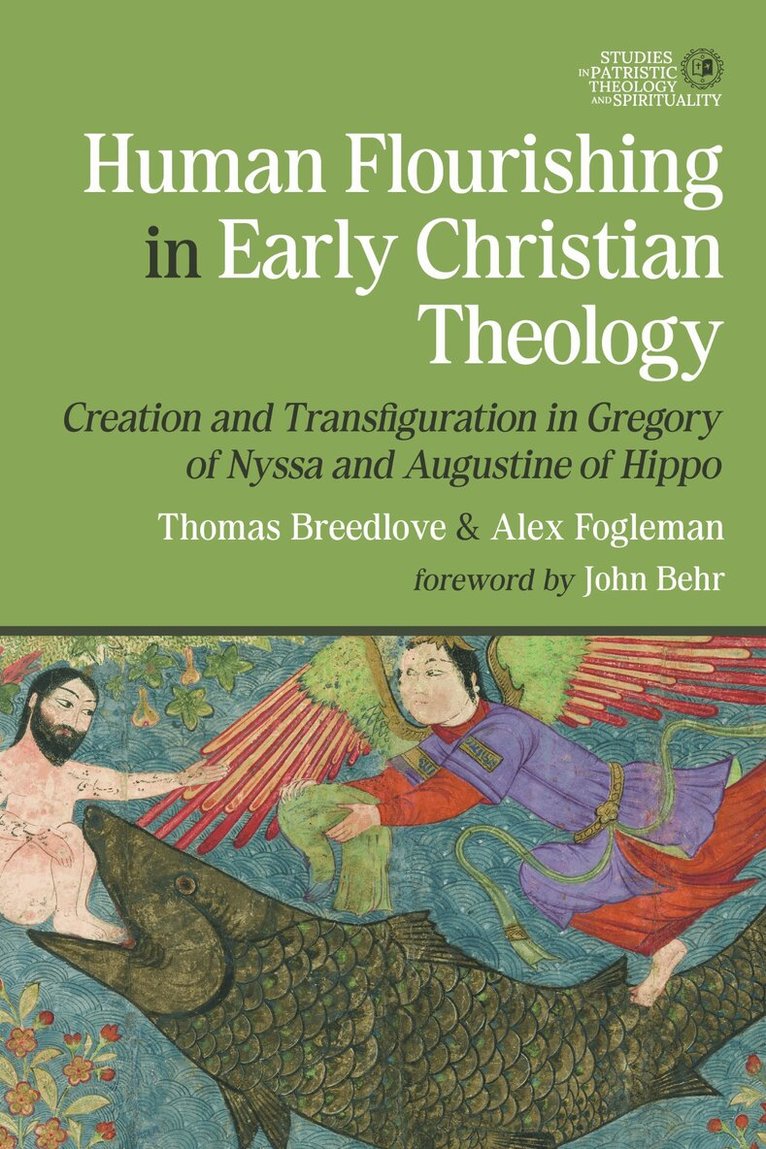
The study of human flourishing has grown dramatically in the past decades, emerging not only as a central topic in the social scientific fields of psychology and sociology but also as an interdisciplinary nexus. Human flourishing is now a topic for literary studies, for theology and religious studies, for history, and all of the humanities. This rapid growth expresses the availability of flourishing as a nearly universal object of interest, a basic and globally-shared human desire: Who does not want to flourish?This advent of attention and scholarship has brought with it attention not only to what might be common in human flourishing but also what is regionally, culturally, and socially distinct. Human Flourishing in Early Christian Theology: Creation and Transfiguration in Gregory of Nyssa and Augustine of Hippo contributes to this broadening of perspective diachronically, bringing central constructs in the contemporary social scientific study of human flourishing into conversation with two key voices in early Christian theology, Gregory of Nyssa and Augustine of Hippo. Taking as points of departure topics such as health, emotion, virtue, community, and friendship, each chapter traces how each late-ancient theologian understood such phenomena within their vision of human nature and its telos.This approach offers both an introduction to the thought of both Gregory and Augustine and brings their writing into fresh perspective, even while these two theologians offer lenses for seeing contemporary flourishing work otherwise. This is, in this sense, a work of theological retrieval, of ressourcement, which explores the intersection of ancient and contemporary to produce new possibilities of understanding. The fundamental possibility advanced here is the determinative importance that conceptions of human nature play in conceptions of human flourishing, and that the distinctively Christian visions of human flourishing found in Gregory and Augustine unfold from their vision of the human being not only as created but as destined for transfiguration in the life of participation in God.