Alexander Cooley - Böcker
Visar alla böcker från författaren Alexander Cooley. Handla med fri frakt och snabb leverans.
12 produkter
12 produkter
572 kr
Skickas inom 3-6 vardagar
We live in a period of great uncertainty about the fate of America's global leadership. Many believe that Donald Trump's presidency marks the end of liberal international order: the very system of global institutions, rules, and values that shaped the American international system since the end of World War II. Trump's repeated rejection of liberal order, criticisms of long-term allies of the US, and affinity for authoritarian leaders certainly undermines the American international system, but the truth is that liberal international order has been quietly eroding for at least 15 years.In Exit from Hegemony, Alexander Cooley and Daniel Nexon develop a new, integrated approach to understanding the rise and decline of hegemonic orders. Their approach identifies three distinct ways in which the liberal international order is undergoing fundamental transformation. First, Russia and China have targeted the order, positioning themselves as revisionist powers by establishing alternative regional institutions and pushing counter-norms. Second, weaker states are hollowing out the order by seeking patronage and security partnership from nations outside of the order, such as Saudi Arabia and China. Even though they do not always seek to disrupt American hegemony, these new patron-client relationships lack the same liberal political and economic conditions as those involving the United States and its democratic allies. Third, a new series of transnational networks emphasizing illiberalism, nationalism, and right-wing values increasing challenges the anti-authoritarian, progressive transnational networks of the 1990s. These three pathways erode the primacy of the liberal international order from above, laterally, and from below. The Trump administration, with its "America First" doctrine, accelerates all three processes, critically lessening America's position as a world power.
246 kr
Skickas inom 5-8 vardagar
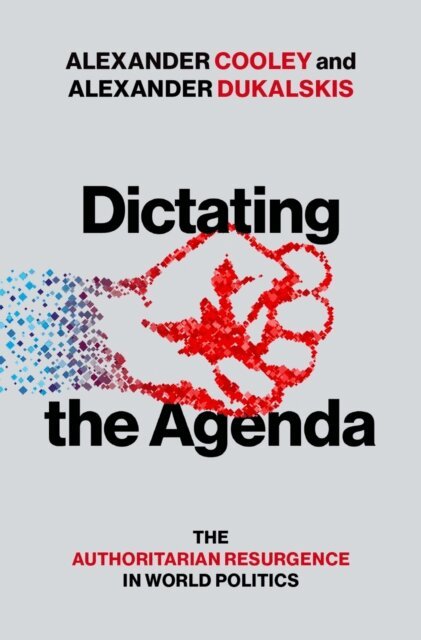
This is a story not just of the limits of liberal influence across the world, but of how authoritarian governments came to dictate the global agenda by repurposing the very actors, tools, and norms that once afforded US-backed liberalism such global prominence. Following the end of the Cold War, the world experienced a remarkable wave of democratization. Over the next two decades, numerous authoritarian regimes transitioned to democracies, and it seemed that authoritarianism as a political model was fading. But as recent events have shown, things have clearly changed. In Dictating the Agenda, authors Alexander Cooley and Alexander Dukalskis reveal how today's authoritarian states are actively countering liberal ideas and advocacy surrounding human rights and democracy across various global governance domains. The transformed global context has unlocked for authoritarian states the possibility to contend with Western liberal soft power in new, traditionally "non-political" ways, including by plugging or even reversing the very channels of influence that originally spread liberalism. Cooley and Dukalskis ultimately advance a theory of authoritarian snapback, the process in which non-democratic states limit the transnational resonance of liberal ideas at home and advance anti-liberal norms and ideas into the global public sphere. Drawing from a range of evidence, including field work interviews and comparative case studies that demonstrate the changing nature of consumer boycotts, a database of authoritarian government administrative actions against foreign journalists, a database of global content-sharing agreement involving Chinese and Russian state media, and a database of transnational higher education partnerships involving authoritarian and democratic countries, this book doesn't just reveal the limits of the liberal influence taken for granted across the world. It offers a novel theory of how authoritarian governments figured out how to exploit and repurpose the same actors, tools, and norms that once exclusively promoted and sustained US-backed liberalism.
325 kr
Skickas inom 5-8 vardagar
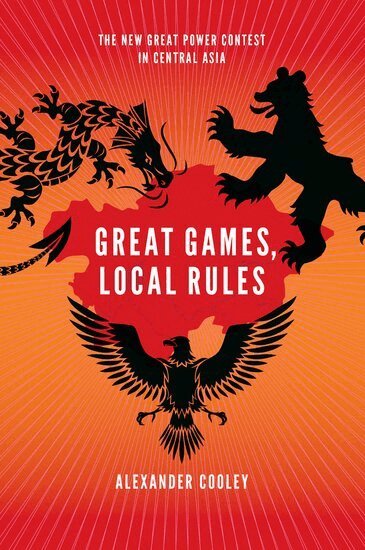
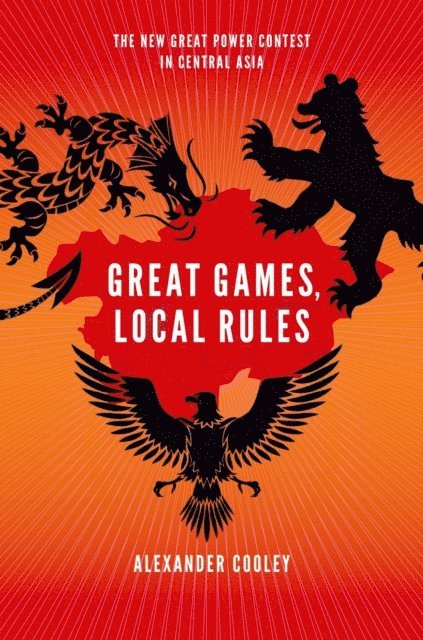
The struggle between Russia and Great Britain over Central Asia in the nineteenth century was the original "great game." But in the past quarter century, a new "great game" has emerged, pitting America against a newly aggressive Russia and a resource-hungry China, all struggling for influence over the same region, now one of the most volatile areas in the world: the long border region stretching from Iran through Pakistan to Kashmir. In Great Games, Local Rules, Alexander Cooley, one of America's most respected international relations scholars, explores the dynamics of the new competition for control of the region since 9/11. All three great powers have crafted strategies to increase their power in the area, which includes Afghanistan and the former Soviet republics of Turkmenistan, Uzbekistan, Kyrgyzstan, and Kazakhstan. Each nation is pursuing important goals: basing rights for the US, access to natural resources for the Chinese, and increased political influence for the Russians. However, overlooked in all of the talk about this new great game is fact that the Central Asian governments have proven themselves critical agents in their own right, establishing local rules for external power involvement that serve to fend off foreign interest. As a result, despite a decade of intense interest from the United States, Russia, and China, Central Asia remains a collection of segmented states, and the external competition has merely reinforced the sovereign authority of the individual Central Asian governments. A careful and surprising analysis of how small states interact with great powers in a vital region, Great Games, Local Rules greatly advances our understanding of how global politics actually works in the contemporary era.
555 kr
Skickas inom 5-8 vardagar
The struggle between Russia and Great Britain over Central Asia in the nineteenth century was the original "great game." But in the past quarter century, a new "great game" has emerged, pitting America against a newly aggressive Russia and a resource-hungry China, all struggling for influence over one of the volatile areas in the world: the long border region stretching from Iran through Pakistan to Kashmir. In Great Games, Local Rules, Alexander Cooley, one of America's most respected Central Asia experts, explores the dynamics of the new competition over the region since 9/11. All three great powers are pursuing important goals: basing rights for the US, access to natural resources for the Chinese, and increased political influence for the Russians. But Central Asian governments have proven themselves powerful forces in their own right, establishing local rules that serve to fend off foreign involvement, enrich themselves and reinforce their sovereign authority. Cooley's careful and surprising explanation of how small states interact with great powers in this vital region greatly advances our understanding of how world politics actually works in this contemporary era.
361 kr
Skickas inom 7-10 vardagar
Increasingly today nation-states are entering into agreements that involve the sharing or surrendering of parts of their sovereign powers and often leave the cession of authority incomplete or vague. But until now, we have known surprisingly little about how international actors design and implement these mixed-sovereignty arrangements. Contracting States uses the concept of "incomplete contracts"--agreements that are intentionally ambiguous and subject to future renegotiation--to explain how states divide and transfer their sovereign territory and functions, and demonstrate why some of these arrangements offer stable and lasting solutions while others ultimately collapse. Building on important advances in economics and law, Alexander Cooley and Hendrik Spruyt develop a highly original, interdisciplinary approach and apply it to a broad range of cases involving international sovereign political integration and disintegration. The authors reveal the importance of incomplete contracting in the decolonization of territories once held by Europe and the Soviet Union; U.S. overseas military basing agreements with host countries; and in regional economic-integration agreements such as the European Union.Cooley and Spruyt examine contemporary problems such as the Arab-Israeli dispute over water resources, and show why the international community inadequately prepared for Kosovo's independence. Contracting States provides guidance to international policymakers about how states with equally legitimate claims on the same territory or asset can create flexible, durable solutions and avoid violent conflict.
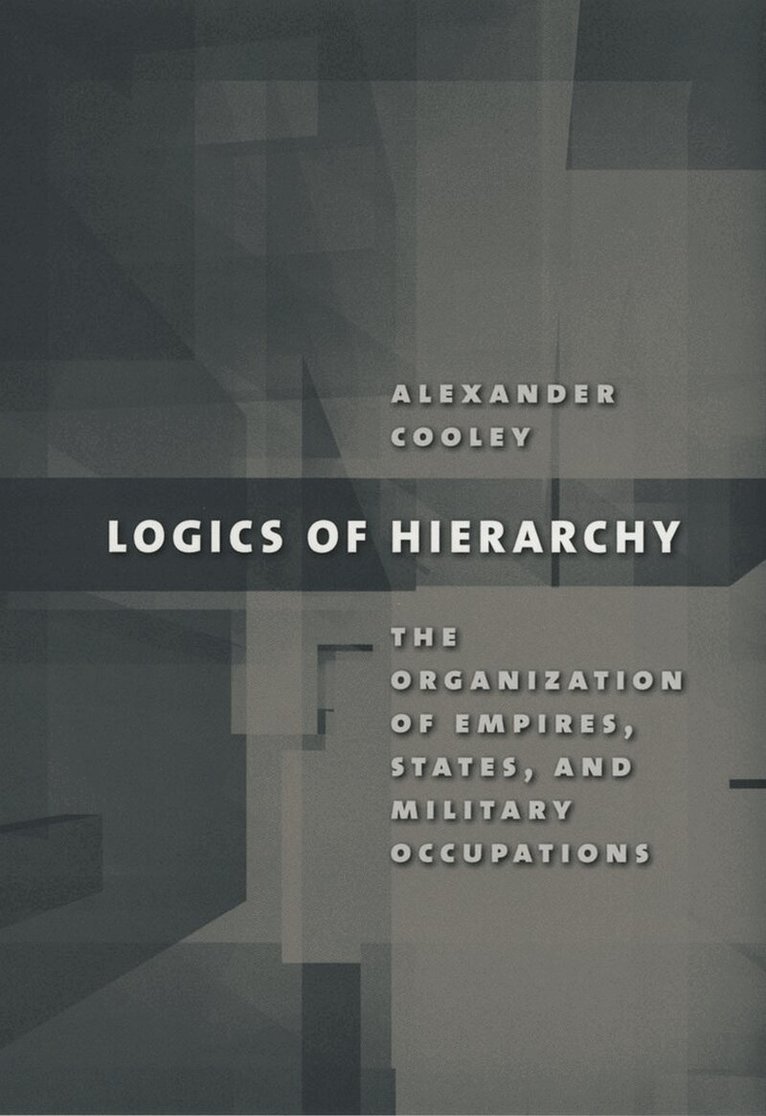
Logics of Hierarchy
The Organization of Empires, States, and Military Occupations
Inbunden, Engelska, 2005
670 kr
Skickas inom 3-6 vardagar
Political science has had trouble generating models that unify the study of the formation and consolidation of various types of states and empires. The business-administration literature, however, has long experience in observing organizations. According to a dominant model in this field, business firms generally take one of two forms: unitary (U) or multidivisional (M). The U-form organizes its various elements along the lines of administrative functions, whereas the M-form governs its periphery according to geography and territory.In Logics of Hierarchy, Alexander Cooley applies this model to political hierarchies across different cultures, geographical settings, and historical eras to explain a variety of seemingly disparate processes: state formation, imperial governance, and territorial occupation. Cooley illustrates the power of this formal distinction with detailed accounts of the experiences of Central Asian republics in the Soviet and post-Soviet eras, and compares them to developments in the former Yugoslavia, the governance of modern European empires, Korea during and after Japanese occupation, and the recent U.S. occupation of Iraq.In applying this model, Logics of Hierarchy reveals the varying organizational ability of powerful states to promote institutional transformation in their political peripheries and the consequences of these formations in determining pathways of postimperial extrication and state-building. Its focus on the common organizational problems of hierarchical polities challenges much of the received wisdom about imperialism and postimperialism.
514 kr
Skickas inom 10-15 vardagar
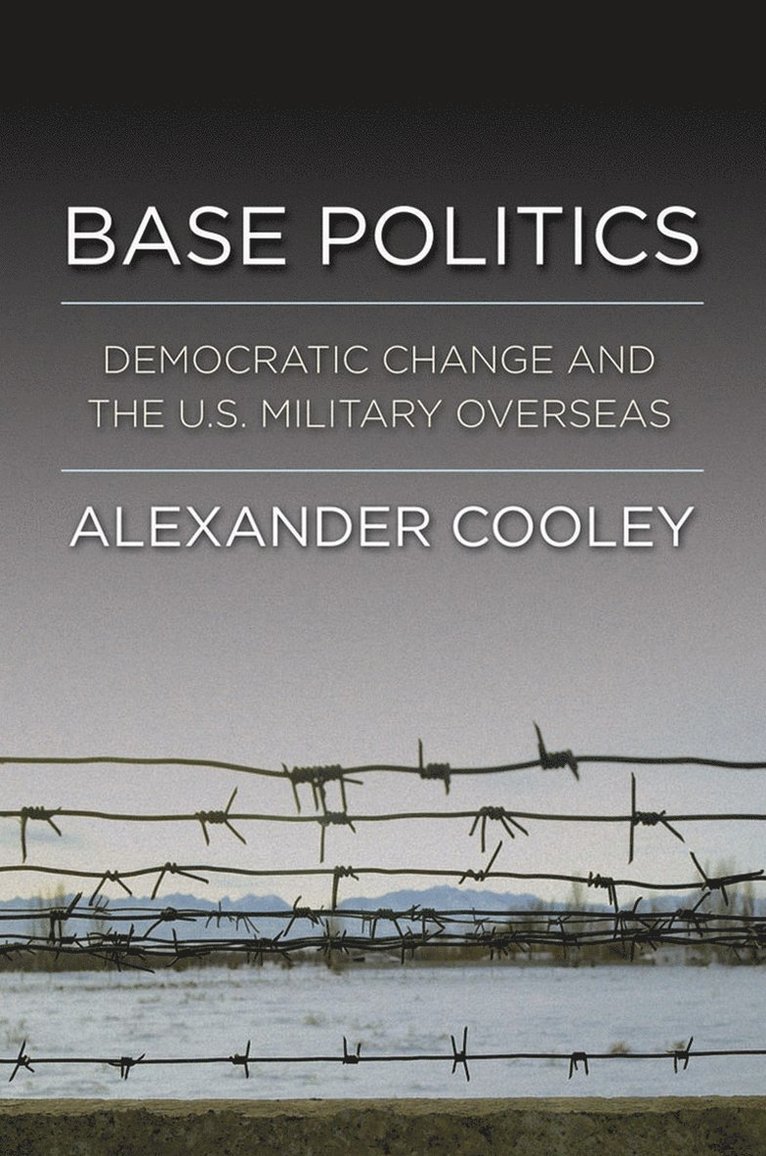
According to the Department of Defense's 2004 Base Structure Report, the United States officially maintains 860 overseas military installations and another 115 on noncontinental U.S. territories. Over the last fifteen years the Department of Defense has been moving from a few large-footprint bases to smaller and much more numerous bases across the globe. This so-called lily-pad strategy, designed to allow high-speed reactions to military emergencies anywhere in the world, has provoked significant debate in military circles and sometimes-fierce contention within the polity of the host countries.In Base Politics, Alexander Cooley examines how domestic politics in different host countries, especially in periods of democratic transition, affect the status of U.S. bases and the degree to which the U.S. military has become a part of their local and national landscapes. Drawing on exhaustive field research in different host nations across East Asia and Southern Europe, as well as the new postcommunist base hosts in the Black Sea and Central Asia, Cooley offers an original and provocative account of how and why politicians in host countries contest or accept the presence of the U.S. military on their territory.Overseas bases, Cooley shows, are not merely installations that serve a military purpose. For host governments and citizens, U.S. bases are also concrete institutions and embodiments of U.S. power, identity, and diplomacy. Analyzing the degree to which overseas bases become enmeshed in local political agendas and interests, Base Politics will be required reading for anyone interested in understanding the extent—and limits—of America's overseas military influence.
Logics of Hierarchy
The Organization of Empires, States, and Military Occupations
Häftad, Engelska, 2008
287 kr
Skickas inom 10-15 vardagar
Political science has had trouble generating models that unify the study of the formation and consolidation of various types of states and empires. The business-administration literature, however, has long experience in observing organizations. According to a dominant model in this field, business firms generally take one of two forms: unitary (U) or multidivisional (M). The U-form organizes its various elements along the lines of administrative functions, whereas the M-form governs its periphery according to geography and territory.In Logics of Hierarchy, Alexander Cooley applies this model to political hierarchies across different cultures, geographical settings, and historical eras to explain a variety of seemingly disparate processes: state formation, imperial governance, and territorial occupation. Cooley illustrates the power of this formal distinction with detailed accounts of the experiences of Central Asian republics in the Soviet and post-Soviet eras, and compares them to developments in the former Yugoslavia, the governance of modern European empires, Korea during and after Japanese occupation, and the recent U.S. occupation of Iraq.In applying this model, Logics of Hierarchy reveals the varying organizational ability of powerful states to promote institutional transformation in their political peripheries and the consequences of these formations in determining pathways of postimperial extrication and state-building. Its focus on the common organizational problems of hierarchical polities challenges much of the received wisdom about imperialism and postimperialism.
1 245 kr
Skickas inom 7-10 vardagar
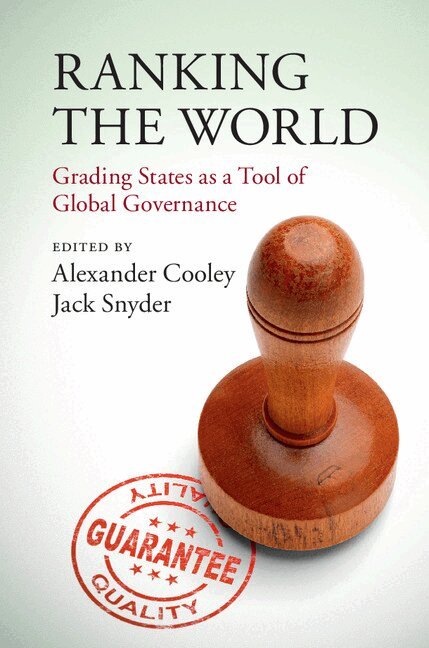
Over the last decade, international rankings have emerged as a critical tool used by international actors engaged in global governance. State practices and performance are now judged by a number of high-profile indices, including assessments of their levels of corruption, quality of democracy, creditworthiness, media freedom, and business environment. However, these rankings always carry value judgments, methodological choices, and implicit political agendas. This volume expertly addresses the important analytical, normative, and policy issues associated with the contemporary practice of 'grading states'. The chapters explore how rankings affect our perceptions of state performance, how states react to being ranked, why some rankings exert more global influence than others, and how states have come to strategize and respond to these public judgments. The book also critically examines how treating state rankings like popular consumer choice indices may actually lead policymakers to internalize questionable normative assumptions and lead to poorer, not improved, public policy outcomes.
428 kr
Skickas inom 7-10 vardagar
Over the last decade, international rankings have emerged as a critical tool used by international actors engaged in global governance. State practices and performance are now judged by a number of high-profile indices, including assessments of their levels of corruption, quality of democracy, creditworthiness, media freedom, and business environment. However, these rankings always carry value judgments, methodological choices, and implicit political agendas. This volume expertly addresses the important analytical, normative, and policy issues associated with the contemporary practice of 'grading states'. The chapters explore how rankings affect our perceptions of state performance, how states react to being ranked, why some rankings exert more global influence than others, and how states have come to strategize and respond to these public judgments. The book also critically examines how treating state rankings like popular consumer choice indices may actually lead policymakers to internalize questionable normative assumptions and lead to poorer, not improved, public policy outcomes.
1 034 kr
Skickas inom 7-10 vardagar
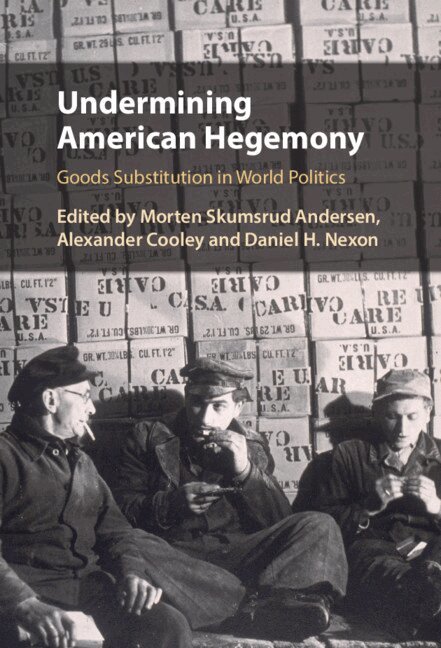
Advancing a new approach to the study of international order, this book highlights the stakes disguised by traditional theoretical languages of power transitions and hegemonic wars. Rather than direct challenges to US military power, the most consequential undermining of hegemony is routine, bottom-up processes of international goods substitution: a slow hollowing out of the existing order through competition to seek or offer alternative sources for economic, military, or social goods. Studying how actors gain access to alternative suppliers of these public goods, this volume shows how states consequently move away from the liberal international order. Examining unfamiliar - but crucial - cases, it takes the reader on a journey from local Faroese politics, to Russian election observers in Central Asia, to South American drug lords. Broadening the debate about the role of public goods in international politics, this book offers a new perspective of one of the key issues of our time.
349 kr
Skickas inom 7-10 vardagar
Advancing a new approach to the study of international order, this book highlights the stakes disguised by traditional theoretical languages of power transitions and hegemonic wars. Rather than direct challenges to US military power, the most consequential undermining of hegemony is routine, bottom-up processes of international goods substitution: a slow hollowing out of the existing order through competition to seek or offer alternative sources for economic, military, or social goods. Studying how actors gain access to alternative suppliers of these public goods, this volume shows how states consequently move away from the liberal international order. Examining unfamiliar - but crucial - cases, it takes the reader on a journey from local Faroese politics, to Russian election observers in Central Asia, to South American drug lords. Broadening the debate about the role of public goods in international politics, this book offers a new perspective of one of the key issues of our time.