
Alexander Douglas – författare
212 kr
Skickas
706 kr
Läs direkt efter köp
Can philosophy be a source of hope? Today it is common to believe that the answer is no – that providing hope, if it is possible at all, belongs either to the predictive sciences or to religion.
In this exciting and stimulating book, however, Alexander Douglas argues that the philosophy of Spinoza can offer something akin to religious hope. Douglas shows how Spinoza is able, without appealing to belief in any traditional afterlife or supernatural grace, to develop a profound and original theory of how humans can escape from the conditions of death and sin.
Douglas argues that this theory of escape, which Spinoza calls beatitude, is the centrepiece of his entire philosophy, though scholars have often downplayed or ignored it.
One reason for this scholarly neglect might be the difficulty of understanding Spinoza’s theory, which departs from the standard doctrines and methods of Western philosophy. Douglas''s interpretation therefore seeks inspiration beyond the Western tradition, drawing especially on the classical Daoist text Zhuangzi and its commentaries. Here, Douglas argues, surprising resonances with Spinoza’s core ideas can be found, leading to a new way of understanding his strange yet compelling theory of beatitude.
706 kr
Läs direkt efter köp
Can philosophy be a source of hope? Today it is common to believe that the answer is no – that providing hope, if it is possible at all, belongs either to the predictive sciences or to religion.
In this exciting and stimulating book, however, Alexander Douglas argues that the philosophy of Spinoza can offer something akin to religious hope. Douglas shows how Spinoza is able, without appealing to belief in any traditional afterlife or supernatural grace, to develop a profound and original theory of how humans can escape from the conditions of death and sin.
Douglas argues that this theory of escape, which Spinoza calls beatitude, is the centrepiece of his entire philosophy, though scholars have often downplayed or ignored it.
One reason for this scholarly neglect might be the difficulty of understanding Spinoza’s theory, which departs from the standard doctrines and methods of Western philosophy. Douglas''s interpretation therefore seeks inspiration beyond the Western tradition, drawing especially on the classical Daoist text Zhuangzi and its commentaries. Here, Douglas argues, surprising resonances with Spinoza’s core ideas can be found, leading to a new way of understanding his strange yet compelling theory of beatitude.
11 kr
Läs direkt efter köp
2 788 kr
Skickas inom 10-15 vardagar
687 kr
Skickas inom 10-15 vardagar
- Nyhet
151 kr
Skickas
122 kr
Läs direkt efter köp
174 kr
Lyssna direkt efter köp
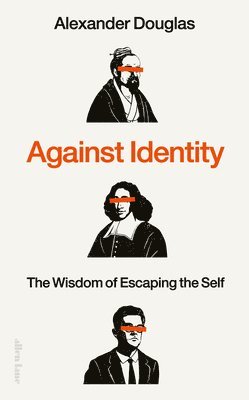
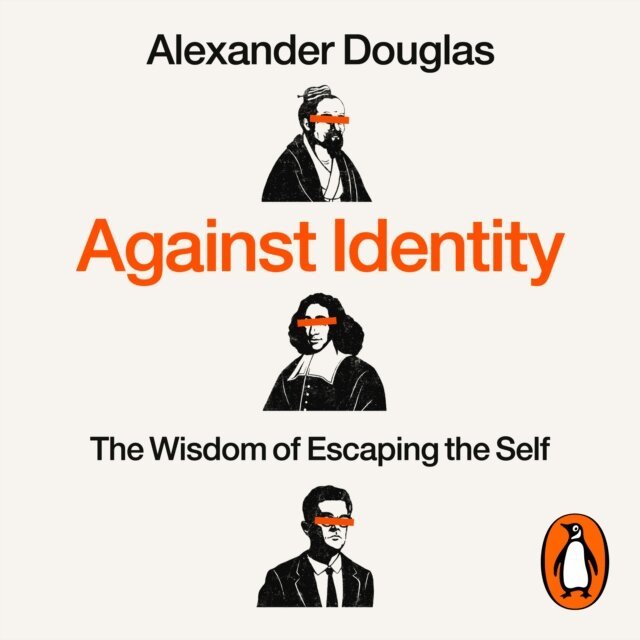
Brought to you by Penguin. Modern life encourages us to pursue the perfect identity. Whether we aspire to become the best lawyer or charity worker, life partner or celebrity influencer, we emulate exemplars that exist in the world – hoping it will bring us happiness. But this often leads to a complex game of envy and pride. We achieve these identities but want others to imitate us. We disagree with those whose identities contradict ours – leading to polarisation and even violence. And yet when they thump against us, we are ashamed to ring hollow.In Against Identity, philosopher Alexander Douglas seeks an alternative wisdom. Searching the work of three thinkers – ancient Chinese philosopher Zhuangzi, Dutch Enlightenment thinker Benedict de Spinoza, and 20th Century French theorist René Girard – he explores how identity can be a spiritual violence that leads us away from truth.Through their worlds and radically different cultures, we discover how, at moments of historical rupture, our hunger for being grows: and yet, it is exactly these times when we should make peace with our indeterminacy and discover the freedom of escaping our selves.© Alexander Douglas 2025 (P) Penguin Audio 2025