Alexander R. Galloway - Böcker
Visar alla böcker från författaren Alexander R. Galloway. Handla med fri frakt och snabb leverans.
12 produkter
12 produkter
399 kr
Skickas inom 5-8 vardagar
296 kr
Tillfälligt slut
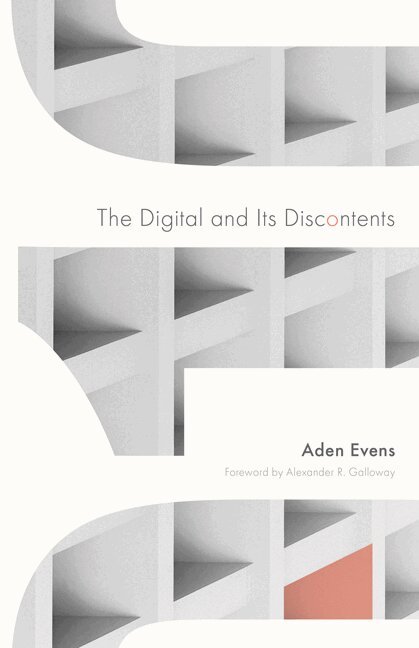
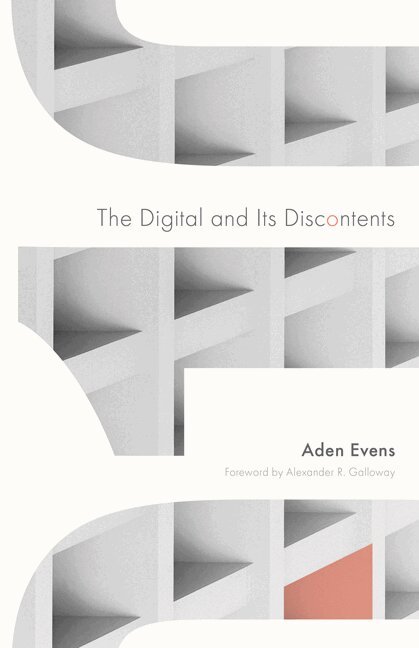
A groundbreaking critique of the digital world that analyzes its universal technological foundationsWhence that nagging sense that something in the digital is amiss-that, as wonderful as our devices are, time spent on smartphones and computers leaves us sour, enervated, alienated? The Digital and Its Discontents uniquely explains that worry and points us toward a more satisfying relationship between our digital lives and our nondigital selves, one that requires a radical change in the way we incorporate technology into our lives. Aden Evens analyzes universal technological principles-in particular, the binary logic-to show that they encourage certain ways of thinking while making others more challenging or impossible. What is out of reach for any digital machine is contingency, the ontological principle that refuses every rule. As humans engage ourselves and our world ever more through digital machines, we are losing touch with contingency and so banishing from our lives the accidental and unexpected that fuel our most creative and novel possibilities for living. Taking cues from philosophy rather than cultural or media theory, Evens argues that the consequences of this erosion of contingency are significant yet often overlooked because the same values that make the digital seem so desirable also make contingency seem unimportant-without contingency the digital is confined to what has already been thought, and yet the digital’s ubiquity has allowed it to disguise this inherent sterility. Responsive only to desires that meet the demands of its narrow logic, the digital requires its users to practice those same ideological dictates, instituting a hegemony of thought and value sustained by the pervasive presence of digital mechanisms. Interweaving technical and philosophical concepts, The Digital and Its Discontents advances a powerful and urgent argument about the digital and its impact on our lives. Retail e-book files for this title are screen-reader friendly.
197 kr
Skickas inom 7-10 vardagar
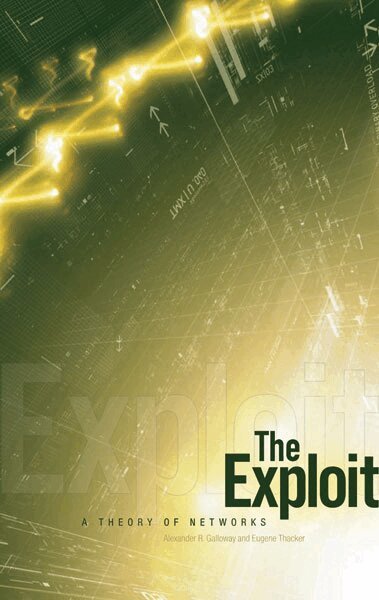
“The Exploit is that rare thing: a book with a clear grasp of how networks operate that also understands the political implications of this emerging form of power. It cuts through the nonsense about how 'free' and 'democratic' networks supposedly are, and it offers a rich analysis of how network protocols create a new kind of control. Essential reading for all theorists, artists, activists, techheads, and hackers of the Net.” -McKenzie Wark, author of A Hacker Manifesto The network has become the core organizational structure for postmodern politics, culture, and life, replacing the modern era’s hierarchical systems. From peer-to-peer file sharing and massive multiplayer online games to contagion vectors of digital or biological viruses and global affiliations of terrorist organizations, the network form has become so invasive that nearly every aspect of contemporary society can be located within it. Borrowing their title from the hacker term for a program that takes advantage of a flaw in a network system, Alexander R. Galloway and Eugene Thacker challenge the widespread assumption that networks are inherently egalitarian. Instead, they contend that there exist new modes of control entirely native to networks, modes that are at once highly centralized and dispersed, corporate and subversive. In this provocative book-length essay, Galloway and Thacker argue that a whole new topology must be invented to resist and reshape the network form, one that is as asymmetrical in relationship to networks as the network is in relation to hierarchy. Alexander R. Galloway is associate professor of culture and communications at New York University and the author of Gaming: Essays on Algorithmic Culture (Minnesota, 2006) and Protocol: How Control Exists after Decentralization. Eugene Thacker is associate professor of new media at the Georgia Institute of Technology and the author of Biomedia (Minnesota, 2004) and The Global Genome: Biotechnology, Politics, and Culture.
191 kr
Skickas inom 7-10 vardagar
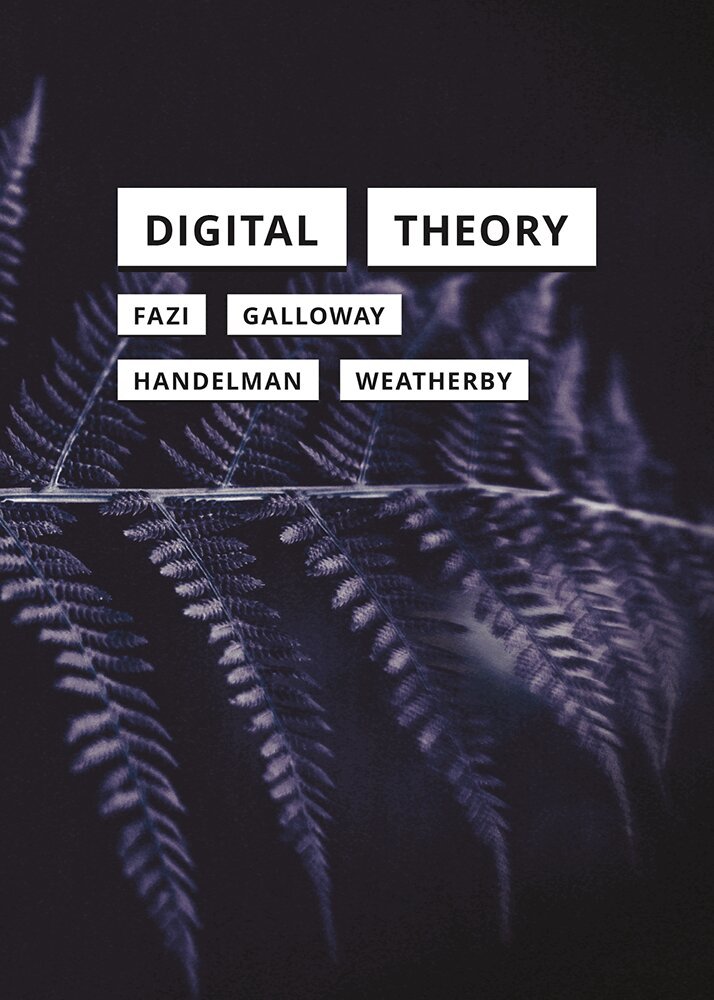
Proposes a powerful new theoretical approach to the concept of the digitalDigital Theory argues that the digital is theoretical and should be understood not uniquely in terms of consumer electronics but rather more broadly as a form of mediation using discrete units. Building on this definition, the three essays in this volume explore digitality’s relation to thinking, signs, and difference. M. Beatrice Fazi begins the discussion by way of three propositions on the ontological reach and epistemological scope of digital theory. Alexander R. Galloway then defines the necessary conditions for any symbolic order of the digital type, specifying a series of ten simple mathemes. Matthew Handelman and Leif Weatherby conclude by characterizing digital theory through the dialectical relation between quality and quantity. Taken together, these works expound productively and provocatively on the digital’s far-reaching theoretical potential. Retail e-book files for this title are screen-reader friendly with images accompanied by short alt text and/or extended description.
785 kr
Skickas inom 7-10 vardagar
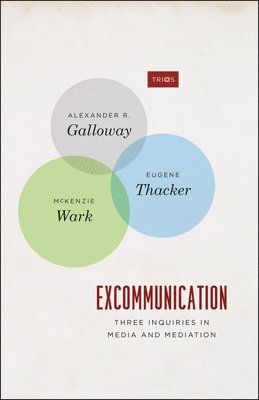
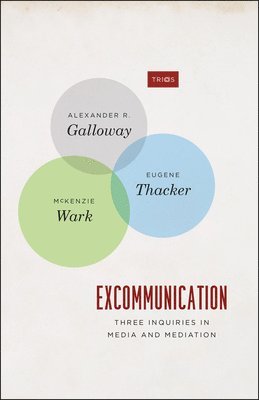
Always connect - that is the imperative of today's media. But what about those moments when media cease to function properly, when messages go beyond the sender and receiver to become excluded from the world of communication itself - those messages that state: "There will be no more messages"? In this book, Alexander R. Galloway, Eugene Thacker, and McKenzie Wark turn our usual understanding of media on its head by arguing that these moments reveal the ways the impossibility of communication is integral to communication itself - instances they call excommunication. In three linked essays, Excommunication pursues this elusive topic by looking at mediation in the face of banishment, exclusion, and heresy, and by contemplating the possibilities of communication with the great beyond. First, Galloway proposes an original theory of mediation based on classical literature and philosophy, using Hermes, Iris, and the Furies to map out three of the most prevalent modes of mediation today-mediation as exchange, as illumination, and as network.Then, Thacker goes boldly beyond Galloway's classification scheme by examining the concept of excommunication through the secret link between the modern horror genre and medieval mysticism. Finally, Wark evokes the poetics of the infuriated swarm as a queer politics of heresy that deviates from both media theory and the traditional left. Reexamining commonplace definitions of media, mediation, and communication, Excommunication offers a glimpse into the realm of the nonhuman to find a theory of mediation adequate to our present condition.
227 kr
Skickas inom 7-10 vardagar
Always connect - that is the imperative of today's media. But what about those moments when media cease to function properly, when messages go beyond the sender and receiver to become excluded from the world of communication itself - those messages that state: "There will be no more messages"? In this book, Alexander R. Galloway, Eugene Thacker, and McKenzie Wark turn our usual understanding of media on its head by arguing that these moments reveal the ways the impossibility of communication is integral to communication itself - instances they call excommunication. In three linked essays, Excommunication pursues this elusive topic by looking at mediation in the face of banishment, exclusion, and heresy, and by contemplating the possibilities of communication with the great beyond. First, Galloway proposes an original theory of mediation based on classical literature and philosophy, using Hermes, Iris, and the Furies to map out three of the most prevalent modes of mediation today-mediation as exchange, as illumination, and as network.Then, Thacker goes boldly beyond Galloway's classification scheme by examining the concept of excommunication through the secret link between the modern horror genre and medieval mysticism. Finally, Wark evokes the poetics of the infuriated swarm as a queer politics of heresy that deviates from both media theory and the traditional left. Reexamining commonplace definitions of media, mediation, and communication, Excommunication offers a glimpse into the realm of the nonhuman to find a theory of mediation adequate to our present condition.
608 kr
Skickas inom 7-10 vardagar
712 kr
Skickas inom 5-8 vardagar
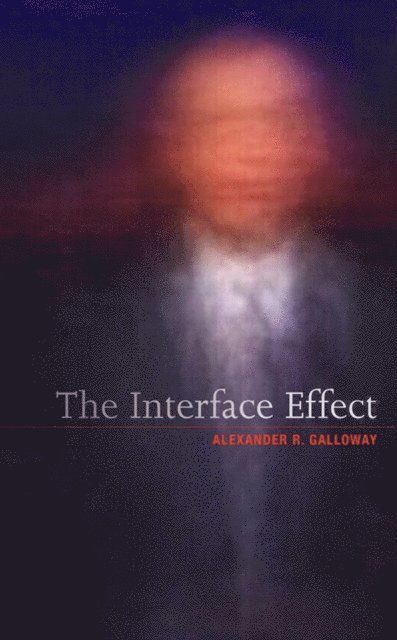
Interfaces are back, or perhaps they never left. The familiar Socratic conceit from the Phaedrus, of communication as the process of writing directly on the soul of the other, has returned to center stage in today's discussions of culture and media. Indeed Western thought has long construed media as a grand choice between two kinds of interfaces. Following the optimistic path, media seamlessly interface self and other in a transparent and immediate connection. But, following the pessimistic path, media are the obstacles to direct communion, disintegrating self and other into misunderstanding and contradiction. In other words, media interfaces are either clear or complicated, either beautiful or deceptive, either already known or endlessly interpretable.Recognizing the limits of either path, Galloway charts an alternative course by considering the interface as an autonomous zone of aesthetic activity, guided by its own logic and its own ends: the interface effect. Rather than praising user-friendly interfaces that work well, or castigating those that work poorly, this book considers the unworkable nature of all interfaces, from windows and doors to screens and keyboards. Considered allegorically, such thresholds do not so much tell the story of their own operations but beckon outward into the realm of social and political life, and in so doing ask a question to which the political interpretation of interfaces is the only coherent answer.Grounded in philosophy and cultural theory and driven by close readings of video games, software, television, painting, and other images, Galloway seeks to explain the logic of digital culture through an analysis of its most emblematic and ubiquitous manifestation – the interface.
217 kr
Skickas inom 7-10 vardagar
Interfaces are back, or perhaps they never left. The familiar Socratic conceit from the Phaedrus, of communication as the process of writing directly on the soul of the other, has returned to center stage in today's discussions of culture and media. Indeed Western thought has long construed media as a grand choice between two kinds of interfaces. Following the optimistic path, media seamlessly interface self and other in a transparent and immediate connection. But, following the pessimistic path, media are the obstacles to direct communion, disintegrating self and other into misunderstanding and contradiction. In other words, media interfaces are either clear or complicated, either beautiful or deceptive, either already known or endlessly interpretable.Recognizing the limits of either path, Galloway charts an alternative course by considering the interface as an autonomous zone of aesthetic activity, guided by its own logic and its own ends: the interface effect. Rather than praising user-friendly interfaces that work well, or castigating those that work poorly, this book considers the unworkable nature of all interfaces, from windows and doors to screens and keyboards. Considered allegorically, such thresholds do not so much tell the story of their own operations but beckon outward into the realm of social and political life, and in so doing ask a question to which the political interpretation of interfaces is the only coherent answer.Grounded in philosophy and cultural theory and driven by close readings of video games, software, television, painting, and other images, Galloway seeks to explain the logic of digital culture through an analysis of its most emblematic and ubiquitous manifestation – the interface.
191 kr
Skickas inom 7-10 vardagar
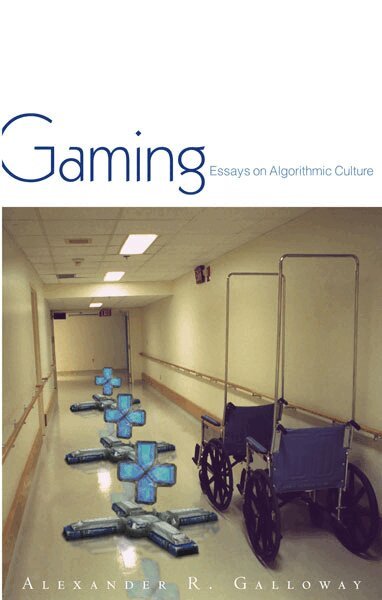
Video games have been a central feature of the cultural landscape for over twenty years and now rival older media like movies, television, and music in popularity and cultural influence. Yet there have been relatively few attempts to understand the video game as an independent medium. Most such efforts focus on the earliest generation of text-based adventures (Zork, for example) and have little to say about such visually and conceptually sophisticated games as Final Fantasy X, Shenmue, Grand Theft Auto, Halo, and The Sims, in which players inhabit elaborately detailed worlds and manipulate digital avatars with a vast-and in some cases, almost unlimited-array of actions and choices. In Gaming, Alexander Galloway instead considers the video game as a distinct cultural form that demands a new and unique interpretive framework. Drawing on a wide range of disciplines, particularly critical theory and media studies, he analyzes video games as something to be played rather than as texts to be read, and traces in five concise chapters how the “algorithmic culture” created by video games intersects with theories of visuality, realism, allegory, and the avant-garde. If photographs are images and films are moving images, then, Galloway asserts, video games are best defined as actions. Using examples from more than fifty video games, Galloway constructs a classification system of action in video games, incorporating standard elements of gameplay as well as software crashes, network lags, and the use of cheats and game hacks. In subsequent chapters, he explores the overlap between the conventions of film and video games, the political and cultural implications of gaming practices, the visual environment of video games, and the status of games as an emerging cultural form. Together, these essays offer a new conception of gaming and, more broadly, of electronic culture as a whole, one that celebrates and does not lament the qualities of the digital age. Alexander R. Galloway is assistant professor of culture and communication at New York University and author of Protocol: How Control Exists after Decentralization.
284 kr
Skickas inom 7-10 vardagar
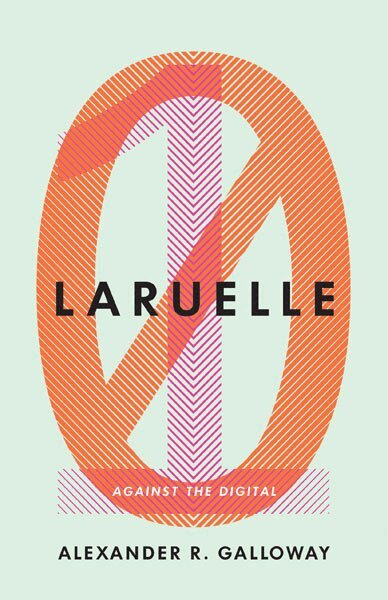
Laruelle is one of the first books in English to undertake in an extended critical survey of the work of the idiosyncratic French thinker FranÇois Laruelle, the promulgator of non-standard philosophy. Laruelle, who was born in 1937, has recently gained widespread recognition, and Alexander R. Galloway suggests that readers may benefit from colliding Laruelle’s concept of the One with its binary counterpart, the Zero, to explore more fully the relationship between philosophy and the digital. In Laruelle, Galloway argues that the digital is a philosophical concept and not simply a technical one, employing a detailed analysis of Laruelle to build this case while referencing other thinkers in the French and Continental traditions, including Alain Badiou, Gilles Deleuze, Martin Heidegger, and Immanuel Kant. In order to explain clearly Laruelle’s concepts such as the philosophical decision and the principle of sufficient philosophy, Galloway lays a broad foundation with his discussions of “the One” as it has developed in continental philosophy, the standard model of philosophy, and how philosophers view “the digital.”Digital machines dominate today’s world, while so-called digital thinking-that is, binary thinking such as presence and absence or self and world-is often synonymous with what it means to think at all. In examining Laruelle and digitality together, Galloway shows how Laruelle remains a profoundly non-digital thinker-perhaps the only non-digital thinker today-and engages in an extensive discussion on the interconnections between media, philosophy, and technology.
1 230 kr
Skickas inom 7-10 vardagar
A groundbreaking critique of the digital world that analyzes its universal technological foundationsWhence that nagging sense that something in the digital is amiss-that, as wonderful as our devices are, time spent on smartphones and computers leaves us sour, enervated, alienated? The Digital and Its Discontents uniquely explains that worry and points us toward a more satisfying relationship between our digital lives and our nondigital selves, one that requires a radical change in the way we incorporate technology into our lives. Aden Evens analyzes universal technological principles-in particular, the binary logic-to show that they encourage certain ways of thinking while making others more challenging or impossible. What is out of reach for any digital machine is contingency, the ontological principle that refuses every rule. As humans engage ourselves and our world ever more through digital machines, we are losing touch with contingency and so banishing from our lives the accidental and unexpected that fuel our most creative and novel possibilities for living. Taking cues from philosophy rather than cultural or media theory, Evens argues that the consequences of this erosion of contingency are significant yet often overlooked because the same values that make the digital seem so desirable also make contingency seem unimportant-without contingency the digital is confined to what has already been thought, and yet the digital’s ubiquity has allowed it to disguise this inherent sterility. Responsive only to desires that meet the demands of its narrow logic, the digital requires its users to practice those same ideological dictates, instituting a hegemony of thought and value sustained by the pervasive presence of digital mechanisms. Interweaving technical and philosophical concepts, The Digital and Its Discontents advances a powerful and urgent argument about the digital and its impact on our lives. Retail e-book files for this title are screen-reader friendly.