Eugene Thacker - Böcker
Visar alla böcker från författaren Eugene Thacker. Handla med fri frakt och snabb leverans.
18 produkter
18 produkter
198 kr
Skickas inom 7-10 vardagar
“The Exploit is that rare thing: a book with a clear grasp of how networks operate that also understands the political implications of this emerging form of power. It cuts through the nonsense about how 'free' and 'democratic' networks supposedly are, and it offers a rich analysis of how network protocols create a new kind of control. Essential reading for all theorists, artists, activists, techheads, and hackers of the Net.” -McKenzie Wark, author of A Hacker Manifesto The network has become the core organizational structure for postmodern politics, culture, and life, replacing the modern era’s hierarchical systems. From peer-to-peer file sharing and massive multiplayer online games to contagion vectors of digital or biological viruses and global affiliations of terrorist organizations, the network form has become so invasive that nearly every aspect of contemporary society can be located within it. Borrowing their title from the hacker term for a program that takes advantage of a flaw in a network system, Alexander R. Galloway and Eugene Thacker challenge the widespread assumption that networks are inherently egalitarian. Instead, they contend that there exist new modes of control entirely native to networks, modes that are at once highly centralized and dispersed, corporate and subversive. In this provocative book-length essay, Galloway and Thacker argue that a whole new topology must be invented to resist and reshape the network form, one that is as asymmetrical in relationship to networks as the network is in relation to hierarchy. Alexander R. Galloway is associate professor of culture and communications at New York University and the author of Gaming: Essays on Algorithmic Culture (Minnesota, 2006) and Protocol: How Control Exists after Decentralization. Eugene Thacker is associate professor of new media at the Georgia Institute of Technology and the author of Biomedia (Minnesota, 2004) and The Global Genome: Biotechnology, Politics, and Culture.
155 kr
Skickas inom 7-10 vardagar
"Thacker's discourse on the intersection of horror and philosophy is utterly original and utterly captivating..." Thomas Ligotti, author of The Conspiracy Against the Human Race The world is increasingly unthinkable, a world of planetary disasters, emerging pandemics, and the looming threat of extinction. In this book Eugene Thacker suggests that we look to the genre of horror as offering a way of thinking about the unthinkable world. To confront this idea is to confront the limit of our ability to understand the world in which we live - a central motif of the horror genre. In the Dust of This Planet explores these relationships between philosophy and horror. In Thacker's hands, philosophy is not academic logic-chopping; instead, it is the thought of the limit of all thought, especially as it dovetails into occultism, demonology, and mysticism. Likewise, Thacker takes horror to mean something beyond the focus on gore and scare tactics, but as the under-appreciated genre of supernatural horror in fiction, film, comics, and music.
311 kr
Skickas inom 7-10 vardagar
Life is one of our most basic concepts, yet when examined directly it proves remarkably contradictory and elusive, encompassing both the broadest and the most specific phenomena. We can see this uncertainty about life in our habit of approaching it as something at once scientific and mystical, in the return of vitalisms of all types, and in the pervasive politicization of life. In short, life seems everywhere at stake and yet is nowhere the same. In "After Life", Eugene Thacker clears the ground for a new philosophy of life by recovering the twists and turns in its philosophical history. Beginning with Aristotle's originary formulation of a philosophy of life, Thacker examines the influence of Aristotle's ideas in medieval and early modern thought, leading him to the work of Immanuel Kant, who notes the inherently contradictory nature of 'life in itself'. Along the way, Thacker shows how early modern philosophy's engagement with the problem of life affects thinkers such as Gilles Deleuze, Georges Bataille, and Alain Badiou, as well as contemporary developments in the 'speculative turn' in philosophy.At a time when life is categorized, measured, and exploited in a variety of ways, "After Life" invites us to delve deeper into the contours and contradictions of the age-old question, 'what is life?'
799 kr
Skickas inom 7-10 vardagar
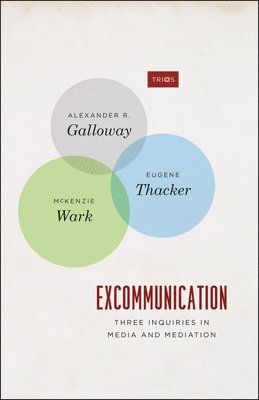
Always connect - that is the imperative of today's media. But what about those moments when media cease to function properly, when messages go beyond the sender and receiver to become excluded from the world of communication itself - those messages that state: "There will be no more messages"? In this book, Alexander R. Galloway, Eugene Thacker, and McKenzie Wark turn our usual understanding of media on its head by arguing that these moments reveal the ways the impossibility of communication is integral to communication itself - instances they call excommunication. In three linked essays, Excommunication pursues this elusive topic by looking at mediation in the face of banishment, exclusion, and heresy, and by contemplating the possibilities of communication with the great beyond. First, Galloway proposes an original theory of mediation based on classical literature and philosophy, using Hermes, Iris, and the Furies to map out three of the most prevalent modes of mediation today-mediation as exchange, as illumination, and as network.Then, Thacker goes boldly beyond Galloway's classification scheme by examining the concept of excommunication through the secret link between the modern horror genre and medieval mysticism. Finally, Wark evokes the poetics of the infuriated swarm as a queer politics of heresy that deviates from both media theory and the traditional left. Reexamining commonplace definitions of media, mediation, and communication, Excommunication offers a glimpse into the realm of the nonhuman to find a theory of mediation adequate to our present condition.
231 kr
Skickas inom 7-10 vardagar
Always connect - that is the imperative of today's media. But what about those moments when media cease to function properly, when messages go beyond the sender and receiver to become excluded from the world of communication itself - those messages that state: "There will be no more messages"? In this book, Alexander R. Galloway, Eugene Thacker, and McKenzie Wark turn our usual understanding of media on its head by arguing that these moments reveal the ways the impossibility of communication is integral to communication itself - instances they call excommunication. In three linked essays, Excommunication pursues this elusive topic by looking at mediation in the face of banishment, exclusion, and heresy, and by contemplating the possibilities of communication with the great beyond. First, Galloway proposes an original theory of mediation based on classical literature and philosophy, using Hermes, Iris, and the Furies to map out three of the most prevalent modes of mediation today-mediation as exchange, as illumination, and as network.Then, Thacker goes boldly beyond Galloway's classification scheme by examining the concept of excommunication through the secret link between the modern horror genre and medieval mysticism. Finally, Wark evokes the poetics of the infuriated swarm as a queer politics of heresy that deviates from both media theory and the traditional left. Reexamining commonplace definitions of media, mediation, and communication, Excommunication offers a glimpse into the realm of the nonhuman to find a theory of mediation adequate to our present condition.
99 kr
Tillfälligt slut
269 kr
Skickas inom 5-8 vardagar
276 kr
Skickas inom 10-15 vardagar
The merging of computer science and molecular biology, genetic codes and computer codesAs biotechnology defines the new millennium, genetic codes and computer codes increasingly merge-life understood as data, flesh rendered programmable. Where this trend will take us, and what it might mean, is what concerns Eugene Thacker in this timely book, a penetrating look into the intersection of molecular biology and computer science in our day and its likely ramifications for the future.Integrating approaches from science and media studies, Biomedia is a critical analysis of research fields that explore relationships between biologies and technologies, between genetic and computer “codes.” In doing so, the book looks beyond the familiar examples of cloning, genetic engineering, and gene therapy-fields based on the centrality of DNA or genes-to emerging fields in which “life” is often understood as “information.” Focusing especially on interactions between genetic and computer codes, or between “life” and “information,” Thacker shows how each kind of “body” produced-from biochip to DNA computer-demonstrates how molecular biology and computer science are interwoven to provide unique means of understanding and controlling living matter.Throughout, Thacker provides in-depth accounts of theoretical issues implicit in biotechnical artifacts-issues that arise in the fields of bioinformatics, proteomics, systems biology, and biocomputing. Research in biotechnology, Biomedia suggests, flouts our assumptions about the division between biological and technological systems. New ways of thinking about this division are needed if we are to understand the cultural, social, and philosophical dimensions of such research, and this book marks a significant advance in the coming intellectual revolution.
555 kr
Skickas inom 7-10 vardagar
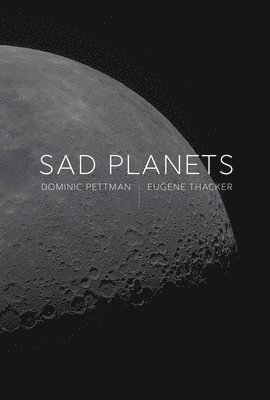
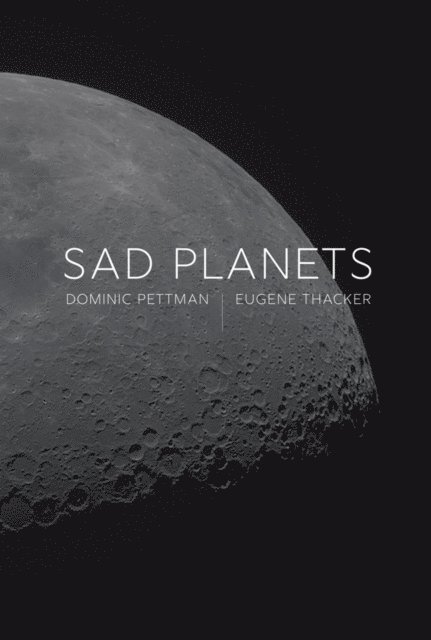
“Everything is sad,” wrote the Ancient poets. But is this sadness merely a human experience, projected onto the world, or is there a gloom attributable to the world itself? Could the universe be forever weeping the “tears of things”? In this series of meditations, Dominic Pettman and Eugene Thacker explore some of the key “negative affects” – both eternal and emergent – associated with climate change, environmental destruction, and cosmic solitude. In so doing they unearth something so obvious that it has gone largely unnoticed: the question of how we should feel about climate change. Between the information gathered by planetary sensors and the simple act of breathing the air, new unsettling moods are produced for which we currently lack an adequate language. Should we feel grief over the loss of our planet? Or is the strange feeling of witnessing mass extinction an indicator that the planet was never “ours” to begin with? Sad Planets explores this relationship between our all-too-human melancholia and a more impersonal sorrow, nestled in the heart of the cosmic elements.Spanning a wide range of topics – from the history of cosmology to the “existential threat” of climate change – this book is a reckoning with the limits of human existence and comprehension. As Pettman and Thacker observe, never before have we known so much about the planet and the cosmos, and yet never before have we felt so estranged from that same planet, to say nothing of the stars beyond.
145 kr
Skickas inom 7-10 vardagar
“Everything is sad,” wrote the Ancient poets. But is this sadness merely a human experience, projected onto the world, or is there a gloom attributable to the world itself? Could the universe be forever weeping the “tears of things”? In this series of meditations, Dominic Pettman and Eugene Thacker explore some of the key “negative affects” – both eternal and emergent – associated with climate change, environmental destruction, and cosmic solitude. In so doing they unearth something so obvious that it has gone largely unnoticed: the question of how we should feel about climate change. Between the information gathered by planetary sensors and the simple act of breathing the air, new unsettling moods are produced for which we currently lack an adequate language. Should we feel grief over the loss of our planet? Or is the strange feeling of witnessing mass extinction an indicator that the planet was never “ours” to begin with? Sad Planets explores this relationship between our all-too-human melancholia and a more impersonal sorrow, nestled in the heart of the cosmic elements.Spanning a wide range of topics – from the history of cosmology to the “existential threat” of climate change – this book is a reckoning with the limits of human existence and comprehension. As Pettman and Thacker observe, never before have we known so much about the planet and the cosmos, and yet never before have we felt so estranged from that same planet, to say nothing of the stars beyond.
115 kr
Skickas inom 7-10 vardagar
Our contemporary horror stories are written in a world where there seems little faith, lost hope, and no salvation. All that remains is the fragmentary and occasionally lyrical testimony of the human being struggling to confront its lack of reason for being in the vast cosmos. This is the terrain of the horror genre. Eugene Thacker explores this situation in Tentacles Longer Than Night. Extending the ideas presented in his book In The Dust of This Planet, Thacker considers the relationship between philosophy and the horror genre. But instead of taking fiction as the mere illustration of ideas, Thacker reads horror stories as if they themselves were works of philosophy, driven by a speculative urge to question human knowledge and the human-centric view of the world, ultimately leading to the limit of the human-thought undermining itself, in thought. Tentacles Longer Than Night is the third volume of the "Horror of Philosophy" trilogy, together with the first volume, In The Dust of This Planet, and the second volume, Starry Speculative Corpse.
115 kr
Skickas inom 7-10 vardagar
Could it be that the more we know about the world, the less we understand it? Could it be that, while everything has been explained, nothing has meaning? Extending the ideas presented in his book In The Dust of This Planet, Eugene Thacker explores these and other issues in Starry Speculative Corpse. But instead of using philosophy to define or to explain the horror genre, Thacker reads works of philosophy as if they were horror stories themselves, revealing a rift between human beings and the unhuman world of which they are part. Along the way we see philosophers grappling with demons, struggling with doubt, and wrestling with an indifferent cosmos. At the center of it all is the philosophical drama of the human being confronting its own limits. Not a philosophy of horror, but a horror of philosophy. Thought that stumbles over itself, as if at the edge of an abyss. Starry Speculative Corpse is the second volume of the "Horror of Philosophy" trilogy, together with the first volume, In The Dust of This Planet, and the third volume, Tentacles Longer Than Night.
344 kr
Skickas inom 7-10 vardagar
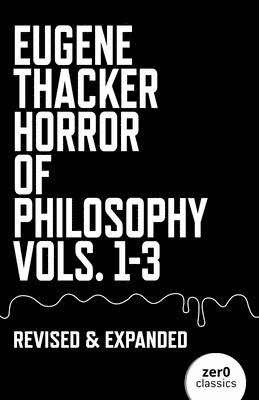
Zer0 Books presents a new, omnibus edition of a cult classic: all three volumes of Eugene Thacker s Horror of Philosophy trilogy, revised and expanded by the author. Across the three volumes of the series Thacker adopts a unique approach, reading works of horror as if they were philosophy, and works of philosophy as if they were horror, leading to far-reaching questions: Could it be that the more we know about the world, the less we understand it? Could it be that, while everything has been explained, nothing has meaning? At the center of Thacker s project is the idea of the 'world without us,' an increasingly unthinkable world of planetary disasters, emerging pandemics, and the looming threat of extinction. To confront this idea is to confront the limit of our ability to understand the world in which we live - not a philosophy of horror, but a horror of philosophy.
178 kr
Skickas
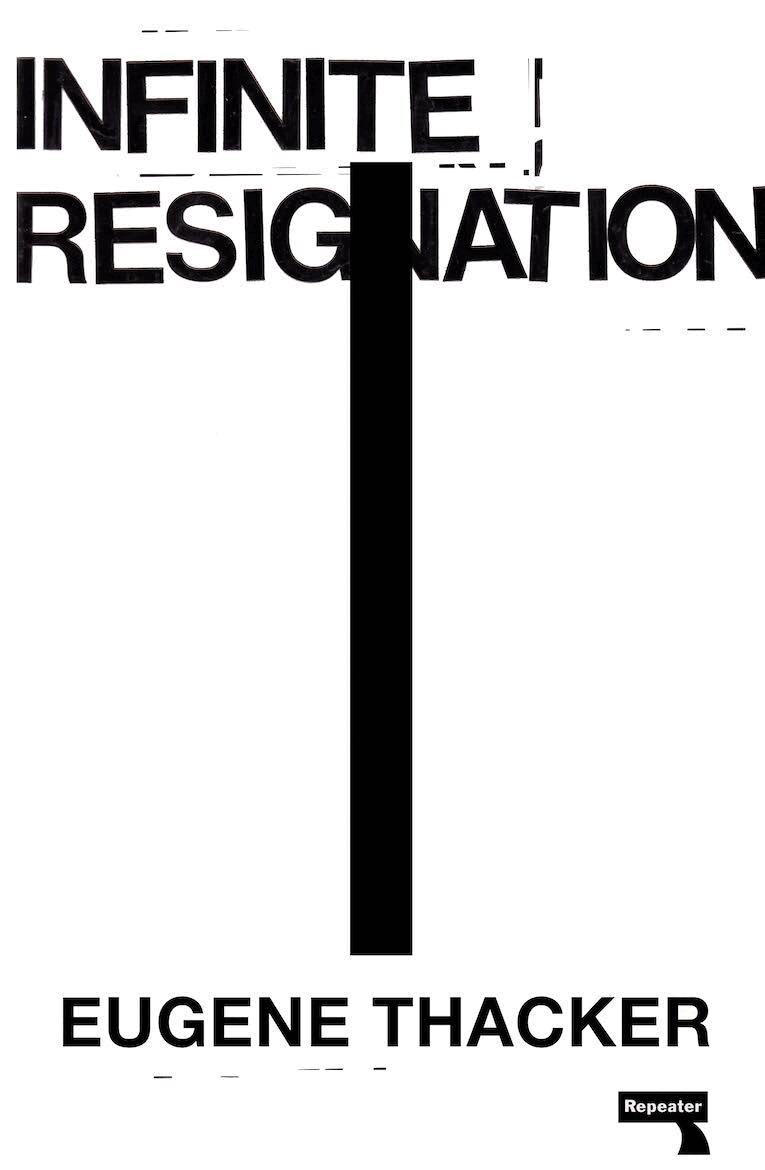
The author of the contemporary classic, In the Dust of This Planet, is back with another raw and unsettling look at the human condition. Comprised of aphorisms, fragments, and observations both philosophical and personal, Thacker’s new book traces the contours of pessimism, caught as it often is between a philosophical position and a bad attitude. Reflecting on the universe’s “looming abyss of indifference,” Thacker explores the pessimism of a range of philosophers, from the well-known (Nietzsche, Schopenhauer, Camus), to the lesser-known (E.M. Cioran, Lev Shestov, Miguel de Unamuno). Readers will find food for thought in Thacker’s handling of a range of themes in Christianity and Buddhism, as well as his engagement with literary figures (from Dostoevsky to Thomas Bernhard, Osamu Dazai, and Fernando Pessoa), whose pessimism about the world both inspires and depresses Thacker. By turns melancholic, misanthropic, and darkly funny, (“Birth is a metaphysical injury — healing takes time — the span of one's life”), many will find Infinite Resignation a welcome antidote to the exuberant imbecility of our times.
158 kr
Skickas
Edited and with an introduction by Eugene Thacker, On the Suffering of the World comprises a core selection of Schopenhauer's later writings, gathered together for the first time in print. These texts, produced during the last decades of Schopenhauer's long life, reveal a unique kind of philosophy, expressed in a singular style. Eschewing the tradition of dry, totalizing, academic philosophy prevalent during the time, Schopenhauer's later writings mark a shift towards a philosophy of aphorisms, fragments, anecdotes and observations, written in a literary style that is by turns antagonistic, resigned, confessional, and filled with all the fragile contours of an intellectual memoir. Here Schopenhauer allows himself to pose challenging questions regarding the fate of the human species, the role of suffering in the world, and the rift between self and world that increasingly has come to define human existence, to this day. It is these writings of Schopenhauer that later generations of artists, poets, musicians, and philosophers would identify as exemplifying the pessimism of their era, and perhaps of our own as well. On the Suffering of the Worldis presented with an introduction that places Schopenhauer's thought in its intellectual context, while also connecting it to contemporary concerns over climate change, the anthropocene, and the spectre of human extinction. The book also includes a bibliography and chronology of Schopenhauer's life.
205 kr
Tillfälligt slut
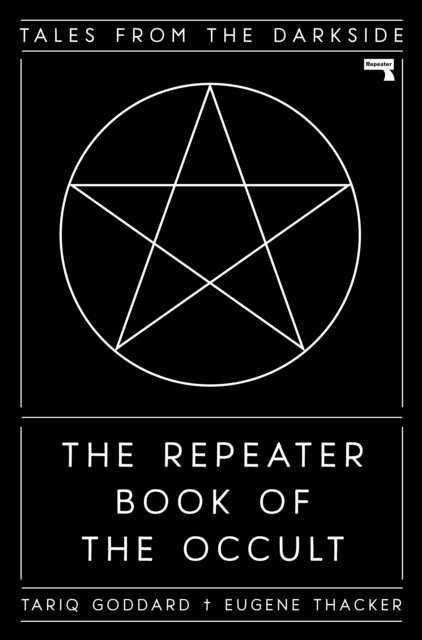
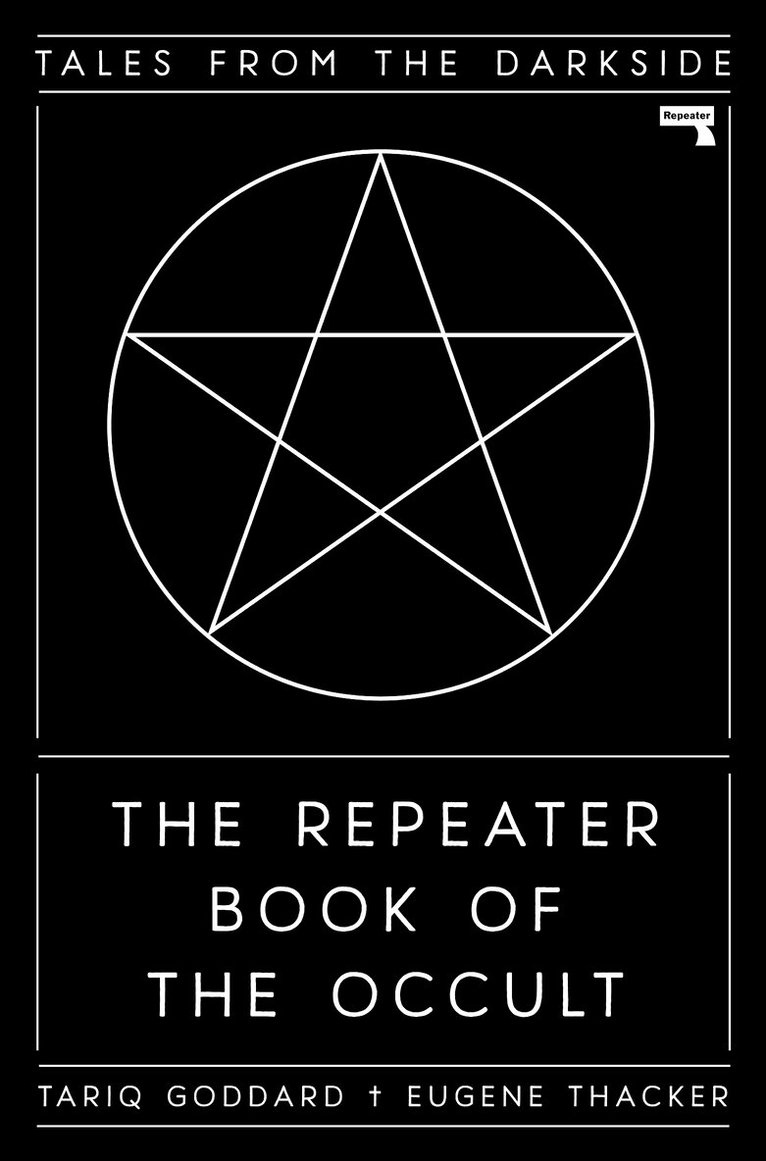
A selection of Repeater authors choose their favourite horror stories for this new anthology, with each writing a critical introduction for the story of their choice.Edited by novelist and Repeater publisher Tariq Goddard and “horror philosopher” Eugene Thacker, The Repeater Book of the Occult is a new anthology of horror stories that explores the ever-shifting boundaries between the natural and supernatural, between the real and the unreal. As the editors note, “In the grey zone between what appears and what is, lies horror. But horror writing is also a certain disposition, a way of thinking based on a suspicion regarding the world as it is given to us, and a doubt regarding the accepted ways of explaining that world to us – and for us.”The Repeater Book of the Occult includes introductions by Repeater authors such as Leila Taylor, Carl Neville, Rhian E Jones, and Elvia Wilk, and features horror classics by Algernon Blackwood, Charlotte Perkins Gilman, and Edgar Allan Poe, as well as forgotten gems by authors such as W.W. Jacobs, Mark Twain, and Sheridan Le Fanu.
226 kr
Skickas inom 7-10 vardagar
“We’re doomed.” So begins the work of the philosopher whose unabashed and aphoristic indictments of the human condition have been cropping up recently in popular culture. Today we find ourselves in an increasingly inhospitable world that is, at the same time, starkly indifferent to our species-specific hopes, desires, and disappointments. In the Anthropocene, pessimism is felt everywhere but rarely given its proper place. Though pessimism may be, as Eugene Thacker says, the lowest form of philosophy, it may also contain an enigma central to understanding the horizon of the human. Written in a series of fragments, aphorisms, and prose poems, Thacker’s Cosmic Pessimism explores the varieties of pessimism and its often-conflicted relation to philosophy. “Crying, laughing, sleeping-what other responses are adequate to a life that is so indifferent?”
307 kr
Skickas inom 3-6 vardagar