Alexander Rosenberg - Böcker
Visar alla böcker från författaren Alexander Rosenberg. Handla med fri frakt och snabb leverans.
10 produkter
10 produkter
711 kr
Tillfälligt slut
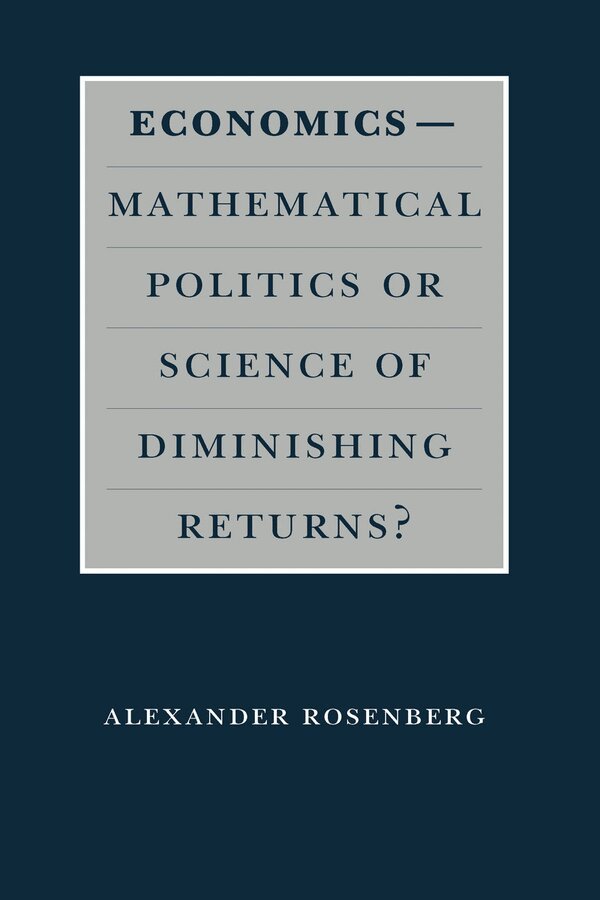
Economics today cannot predict the likely outcome of specific events any better than it could in the time of Adam Smith. This is Alexander Rosenberg's controversial challenge to the scientific status of economics. Rosenberg explains that the defining characteristic of any science is predictive improvability--the capacity to create more precise forecasts by evaluating the success of earlier predictions--and he forcefully argues that because economics has not been able to increase its predictive power for over two centuries, it is not a science.
284 kr
Skickas inom 7-10 vardagar
Economics today cannot predict the likely outcome of specific events any better than it could in the time of Adam Smith. This is Alexander Rosenberg's controversial challenge to the scientific status of economics. Rosenberg explains that the defining characteristic of any science is predictive improvability—the capacity to create more precise forecasts by evaluating the success of earlier predictions—and he forcefully argues that because economics has not been able to increase its predictive power for over two centuries, it is not a science.
763 kr
Tillfälligt slut
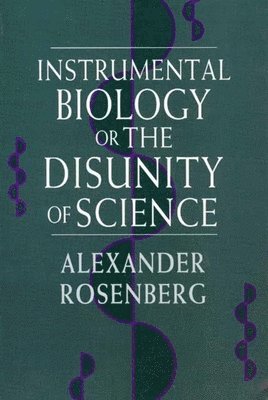
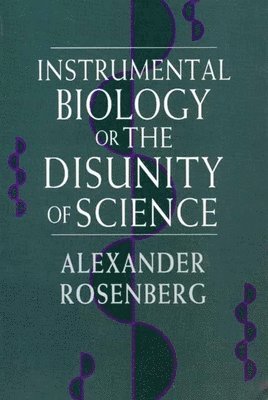
Do the sciences aim to uncover the structure of nature, or are they ultimately a practical means of controlling our environment? This work argues that while physics and chemistry can develop laws that reveal the structure of natural phenomena, biology is fated to be a practical, instrumental discipline. Because of the complexity produced by natural selection and because of the limits on human cognition, scientists are prevented from uncovering the basic structure of biological phenomena. Consequently, biology and all of the disciplines that rest upon it, such as psychology and the other human sciences, must aim to provide practical tools for coping with the natural world rather than a complete theoretical understanding of it.
300 kr
Skickas inom 7-10 vardagar
Do the sciences aim to uncover the structure of nature, or are they ultimately a practical means of controlling our environment? This work argues that while physics and chemistry can develop laws that reveal the structure of natural phenomena, biology is fated to be a practical, instrumental discipline. Because of the complexity produced by natural selection and because of the limits on human cognition, scientists are prevented from uncovering the basic structure of biological phenomena. Consequently, biology and all of the disciplines that rest upon it, such as psychology and the other human sciences, must aim to provide practical tools for coping with the natural world rather than a complete theoretical understanding of it.
2 113 kr
Skickas inom 10-15 vardagar
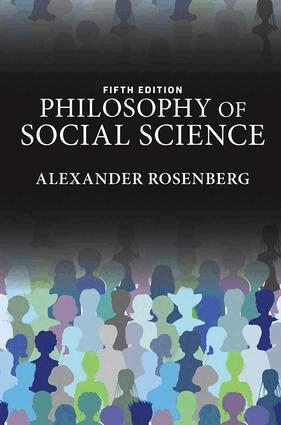
Philosophy of Social Science provides a tightly argued yet accessible introduction to the philosophical foundations of the human sciences, including economics, anthropology, sociology, political science, psychology, history, and the disciplines emerging at the intersections of these subjects with biology. Philosophy is unavoidable for social scientists because the choices they make in answering questions in their disciplines force them to take sides on philosophical matters. Conversely, the philosophy of social science is equally necessary for philosophers since the social and behavior sciences must inform their understanding of human action, norms, and social institutions.The fifth edition retains from previous editions an illuminating interpretation of the enduring relations between the social sciences and philosophy, and reflects on developments in social research over the past two decades that have informed and renewed debate in the philosophy of social science. An expanded discussion of philosophical anthropology and modern and postmodern critical theory is new for this edition.
548 kr
Skickas inom 7-10 vardagar
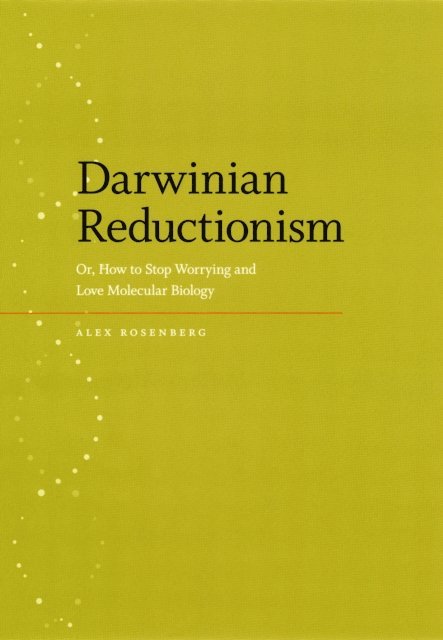
This book provides a comprehensive guide to the conceptual methodological, and epistemological problems of biology, and treats in depth the major developments in molecular biology and evolutionary theory that have transformed both biology and its philosophy in recent decades. At the same time the work is a sustained argument for a particular philosophy of biology that unifies disparate issues and offers a framework for expectations about the future directions of the life sciences. The argument explores differences between autonomist and anti-autonomist views of biology. The result is a vindication of reductionism, but one that is unexpectedly hollow. For it leaves the exponents of the autonomy of biology from physical science with as much as their view of biology really requires - and rather more than the reductionist might comfortably concede. Professor Rosenberg shows how the problems of the philosophy of biology are interconnected and how their solutions are interdependent, However, this book focuses more on the direct concerns of biologists, rather than the traditional agenda of philosophers' problems about biology. This departure from earlier books on the subject results both in greater understanding and relevance of the philosophy of science to biology as a whole.
600 kr
Skickas inom 7-10 vardagar
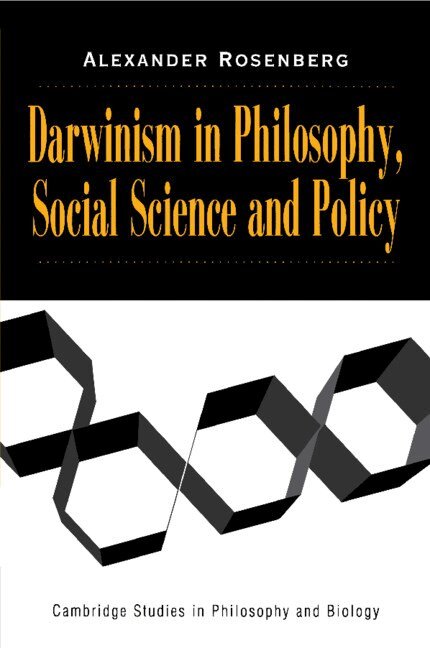
A collection of essays by Alexander Rosenberg, the distinguished philosopher of science. The essays cover three broad areas related to Darwinian thought and naturalism: the first deals with the solution of philosophical problems such as reductionism, the second with the development of social theories, and the third with the intersection of evolutionary biology with economics, political philosophy, and public policy. Specific papers deal with naturalistic epistemology, the limits of reductionism, the biological justification of ethics, the so-called 'trolley problem' in moral philosophy, the political philosophy of biological endowments, and the Human Genome Project and its implications for policy. Rosenberg's important writings on a variety of issues are here organized into a coherent philosophical framework which promises to be a significant and controversial contribution to scholarship in many areas.
639 kr
Skickas inom 10-15 vardagar
Philosophy of Social Science provides a tightly argued yet accessible introduction to the philosophical foundations of the human sciences, including economics, anthropology, sociology, political science, psychology, history, and the disciplines emerging at the intersections of these subjects with biology. Philosophy is unavoidable for social scientists because the choices they make in answering questions in their disciplines force them to take sides on philosophical matters. Conversely, the philosophy of social science is equally necessary for philosophers since the social and behavior sciences must inform their understanding of human action, norms, and social institutions.The fifth edition retains from previous editions an illuminating interpretation of the enduring relations between the social sciences and philosophy, and reflects on developments in social research over the past two decades that have informed and renewed debate in the philosophy of social science. An expanded discussion of philosophical anthropology and modern and postmodern critical theory is new for this edition.
220 kr
Skickas inom 5-8 vardagar
513 kr
Skickas inom 7-10 vardagar
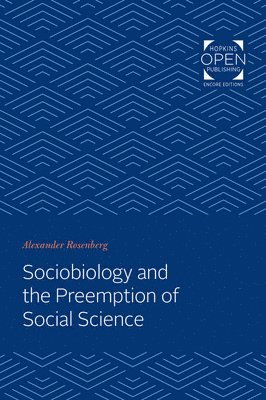
Originally published in 1981. Why have the social sciences in general failed to produce results with the ever-increasing explanatory power and predictive strength of the natural sciences? In seeking an answer to this question, Alexander Rosenberg, a philosopher of science, plunges into the controversial discipline of sociobiology. Sociobiology, Rosenberg asserts, deals in those forces governing human behavior that traditional social science has unsuccessfully attempted to slip between: neurophysiology, on the one hand, and selective forces, on the other. Unlike previous works in the two fields it straddles, Rosenberg's book brings thinking about the nature of scientific theorizing to bear on the most traditional issues in the philosophy of social science. The author finds that the subjects of conventional social science do not reflect the operation of laws that social scientists are equipped to discover. The author argues that much of the debate surrounding sociobiology is irrelevant to the issue of its ultimate success. Although largely conceptual, the book is an unequivocal defense of this new theory in the explanation of human behavior.