Alexander Rust – författare
2 747 kr
Skickas inom 5-8 vardagar
2 326 kr
Läs direkt efter köp
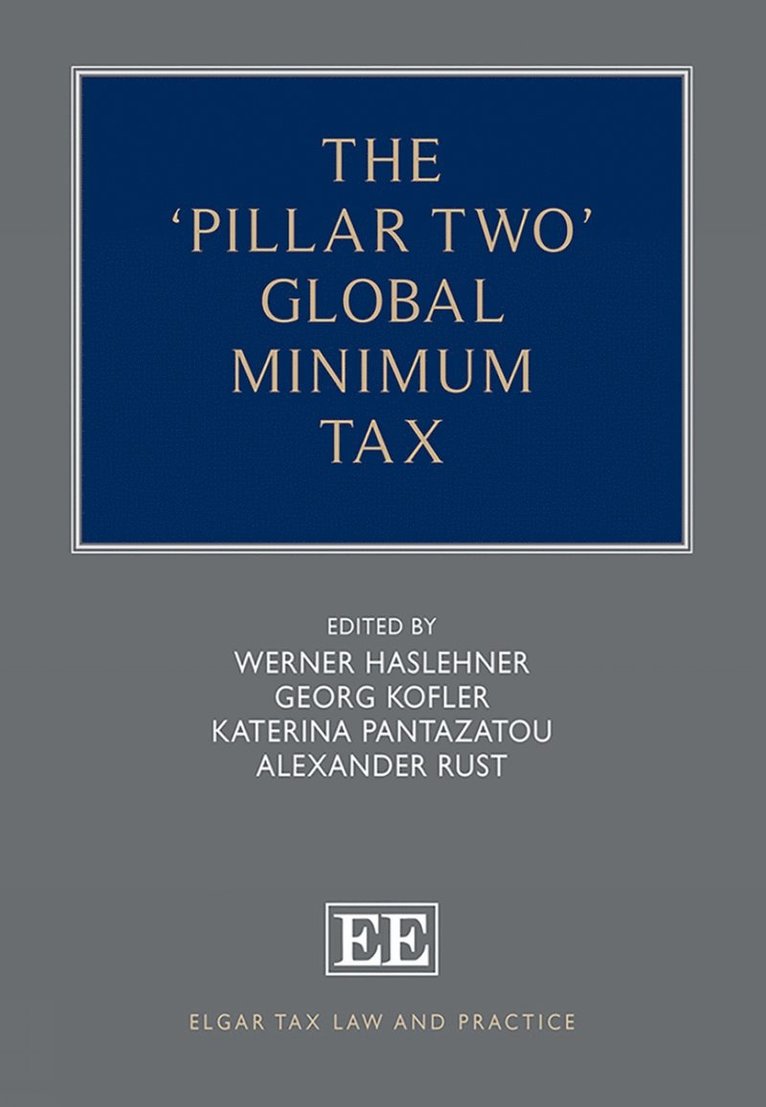
Key Features:
Exploration of the Pillar 2 proposal’s formative developmentDetailed discussion of key concepts such as process legitimacyExamination of the Pillar 2 objectives and the reasons which led to its adoptionAssessment of the interaction between the GloBE rules and national law, European law and existing bilateral tax treatiesConsideration of the impact of the new regime on multinational businesses and the future interaction of states through tax competitionStep-by-step analysis of the complex set of GloBE model rules that have been put in place to make the minimum taxation regime effectiveThis authoritative book is an essential resource for legal practitioners practising in tax law, fiscal policy and commercial law. The applied nature of the text is also of great benefit to policymakers working in the taxation sphere. Scholars and students of international taxation will similarly find this to be a useful reference.
2 716 kr
Skickas inom 5-8 vardagar
2 293 kr
Läs direkt efter köp
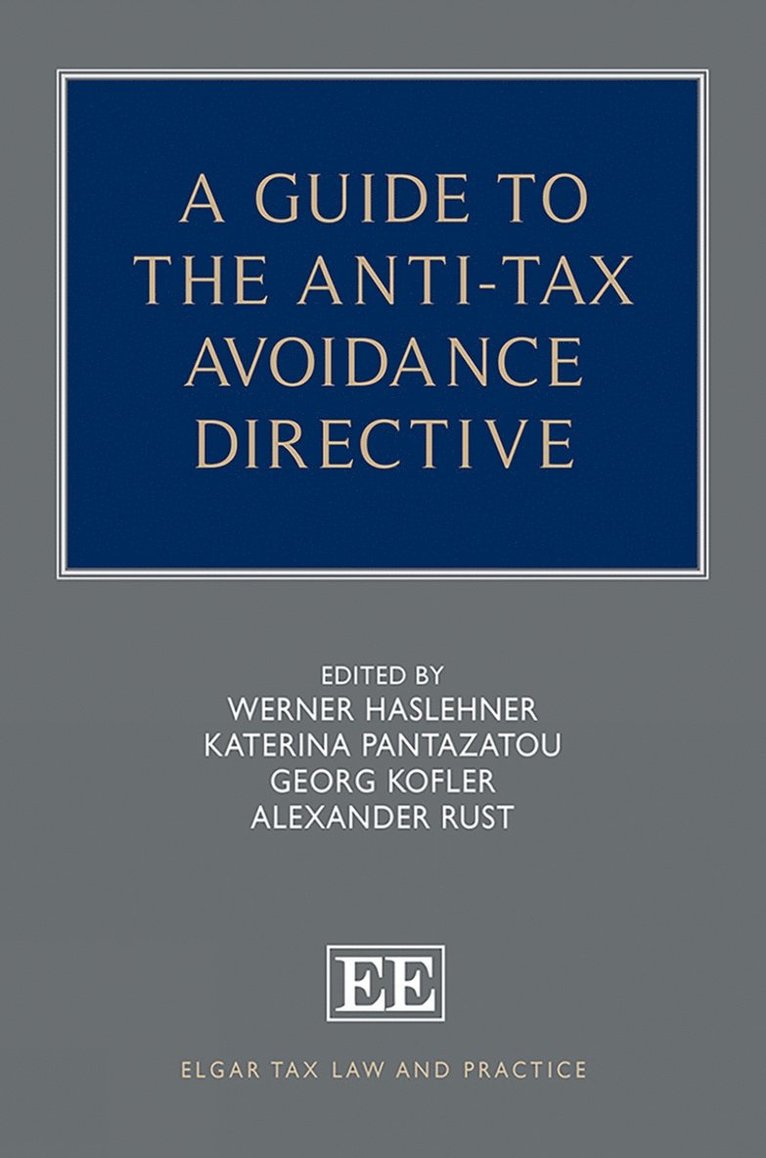
Key features include:
critical, article-by-article analysis of the ATAD contextual information on the legislative environment in which the ATAD operates, embedding it in the wider landscape of CJEU jurisprudence insights into the day-to-day application of the ATAD rules in practice contributions from leading academics and practitioners in the field of tax law examples of the challenges to the interpretation and implementation of ATAD, taken from a range of EU Member States.European and international tax advisors, along with policy makers in the field of tax law, will find this book to be a comprehensive yet accessible guide to the ATAD and its correct application. Those who carry out research in European tax law can also benefit from this book''s critical approach to the ATAD and the questions that surround anti-tax avoidance legislation in the European Union.
Contributors include: D. Gutmann, W. Haslehner, R. Ismer, B. Kuzniacki, K. Pantazatou, L. Parada, I. Richelle, A. Rust, P. Schwarz, K. Spies, B. van Raaij, F. Vanistendael
2 670 kr
Skickas inom 5-8 vardagar
2 181 kr
Läs direkt efter köp
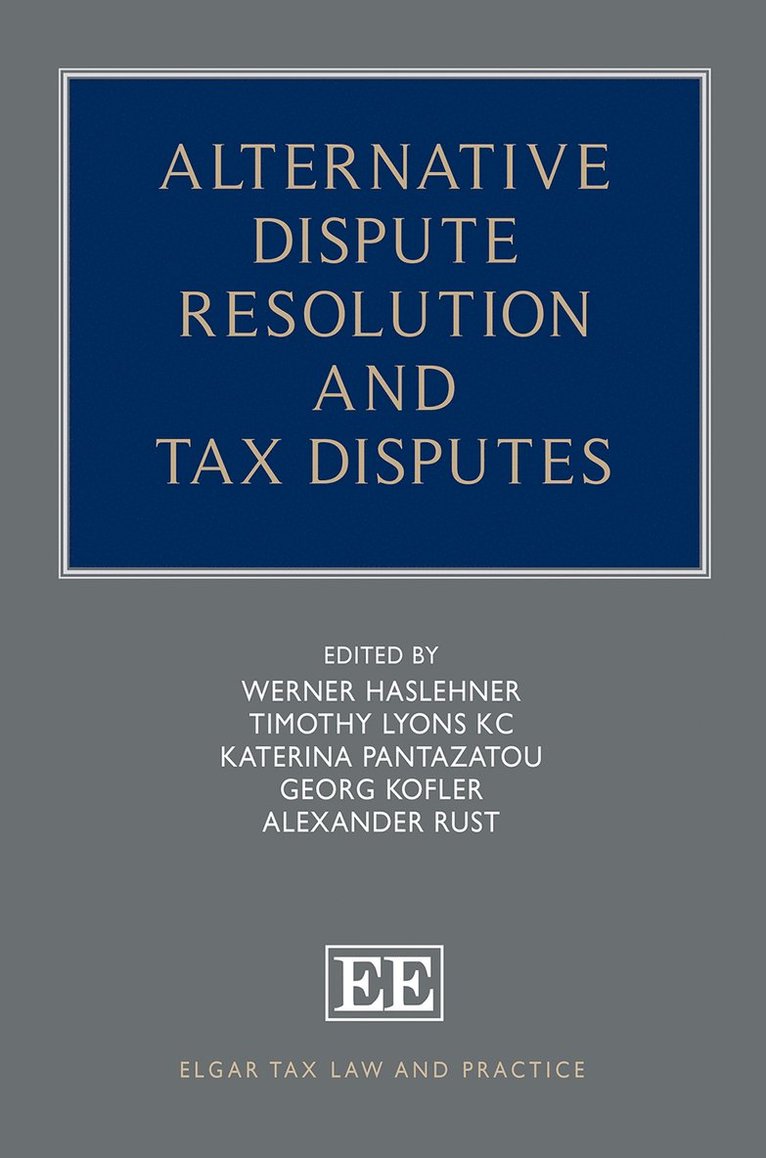
Key Features:
Comprehensive analysis of the existing tax treaty framework and their application to MAP and arbitrationUp-to-date guidance on the best practices in alternative dispute resolution to ensure effective and efficient dispute resolutionOriginal insights from dispute resolution mechanisms found in non-tax areas such as trade and investment lawIn-depth discussion of primary and secondary EU law rules on tax dispute resolution, including implications of EU general principles, fundamental rights and internal market rulesIdentifying some of the new issues in tax arbitration and offering views on how to tackle them in the most appropriate way, this book will be a key resource for tax law practitioners looking for the latest insights on how to navigate the legal framework for alternative tax dispute resolution. Students and academics focusing on commercial and tax law will also benefit from this detailed guide.
617 kr
Skickas inom 3-6 vardagar
681 kr
Skickas inom 3-6 vardagar
332 kr
Skickas inom 3-6 vardagar
CJEU - Recent Developments in Value Added Tax 2024
1 157 kr
Skickas inom 3-6 vardagar
Tax Treaty Case Law around the Globe 2024
1 231 kr
Skickas inom 3-6 vardagar
2 326 kr
Läs direkt efter köp
2 340 kr
Läs direkt efter köp
2 326 kr
Läs direkt efter köp
2 340 kr
Läs direkt efter köp
Among the areas of incompatibility between EU law and national tax law, one of the more troublesome is the repayment obligation that can burden enterprises that have received advantages from State Aid deemed illegal by the Commission. The number of infringement proceedings against Member States for violation of the State Aid provisions is increasing, and as a result more and more taxpayers are exposed to severe financial risk.
1 892 kr
Läs direkt efter köp
Major changes in EU tax law demand an analysis of not just the current state of the field, but also forthcoming EU-level policy initiatives and their likely implications for taxpayers, regulators, and national legislatures alike. This book, the first in-depth commentary and analysis of such developments, offers exactly that. Twenty EU tax and policy experts examine the impact of EU Treaty provisions and recent ECJ case law on EU tax law, and provide well-informed assessments of current and anticipated EU tax policy initiatives and their potential impacts.
Taxpayers, their advisors, national tax administrations, and national legislators will find relevant chapters to aid their understanding of, and to allow them to proactively address, EU tax law issues, such as:
– non-discrimination;– state aid rules;– fundamental freedoms;– discretionary power of national tax authorities;– tax competition in the internal market;– cross-border exchange of tax information; – corporate tax harmonization; – EU and Member States’ external relations; and– the limits of judicial authority in tax policy.As an authoritative,detailed guide to recent and future developments in EU tax law, with highly informed insights into their practical effect, this book will be a welcome addition to the arsenal available to tax practitioners dealing with European tax matters, as well as interested policymakers and academics.
1 892 kr
Läs direkt efter köp
Major changes in EU tax law demand an analysis of not just the current state of the field, but also forthcoming EU-level policy initiatives and their likely implications for taxpayers, regulators, and national legislatures alike. This book, the first in-depth commentary and analysis of such developments, offers exactly that. Twenty EU tax and policy experts examine the impact of EU Treaty provisions and recent ECJ case law on EU tax law, and provide well-informed assessments of current and anticipated EU tax policy initiatives and their potential impacts.
Taxpayers, their advisors, national tax administrations, and national legislators will find relevant chapters to aid their understanding of, and to allow them to proactively address, EU tax law issues, such as:
– non-discrimination;– state aid rules;– fundamental freedoms;– discretionary power of national tax authorities;– tax competition in the internal market;– cross-border exchange of tax information; – corporate tax harmonization; – EU and Member States’ external relations; and– the limits of judicial authority in tax policy.As an authoritative,detailed guide to recent and future developments in EU tax law, with highly informed insights into their practical effect, this book will be a welcome addition to the arsenal available to tax practitioners dealing with European tax matters, as well as interested policymakers and academics.
1 782 kr
Skickas inom 5-8 vardagar
1 513 kr
Läs direkt efter köp
The Multilateral Instrument (MLI) proposed in OECD BEPS Action 15 will lead to the modification of numerous tax treaties. As tax treaties can have different wording, terminology and structure, a great challenge is to find a proper way to accomplish their modification without distorting the underlying framework or triggering undesirable effects.
This book analyses the MLI, which was signed by over seventy jurisdictions on 7 June 2017. The topics covered include:
• the procedural mechanisms on how the new measures to prevent base erosion and profit shifting (BEPS) will interact with and complement existing tax treaties;• the scope of the MLI in order to ascertain which tax treaties and taxes are covered;• the interpretation of terms used in the MLI and the relationship between the languages used in the MLI and in the particular tax treaties;• the implementation of the minimum standard through the MLI, as well as how states can exercise various options offered by the MLI and reserve the right not to apply certain provisions of the MLI;• the legal consequences of the exercise of options and reservations for the other states;• the notification procedure through which states declare their choices; and• the possibilities and procedure for withdrawal from the obligations entered into upon signing the MLI.Finally, the book discusses whether the mechanism of the MLI can serve as a role model for future changes to the OECD Model Convention.
The book incorporates the analyses of leading scholars and practitioners dealing with international tax matters. Critical insights are offered for academics, practitioners, tax officials and judges who deal with or are interested in the field of international taxation.
1 513 kr
Läs direkt efter köp
The Multilateral Instrument (MLI) proposed in OECD BEPS Action 15 will lead to the modification of numerous tax treaties. As tax treaties can have different wording, terminology and structure, a great challenge is to find a proper way to accomplish their modification without distorting the underlying framework or triggering undesirable effects.
This book analyses the MLI, which was signed by over seventy jurisdictions on 7 June 2017. The topics covered include:
• the procedural mechanisms on how the new measures to prevent base erosion and profit shifting (BEPS) will interact with and complement existing tax treaties;• the scope of the MLI in order to ascertain which tax treaties and taxes are covered;• the interpretation of terms used in the MLI and the relationship between the languages used in the MLI and in the particular tax treaties;• the implementation of the minimum standard through the MLI, as well as how states can exercise various options offered by the MLI and reserve the right not to apply certain provisions of the MLI;• the legal consequences of the exercise of options and reservations for the other states;• the notification procedure through which states declare their choices; and• the possibilities and procedure for withdrawal from the obligations entered into upon signing the MLI.Finally, the book discusses whether the mechanism of the MLI can serve as a role model for future changes to the OECD Model Convention.
The book incorporates the analyses of leading scholars and practitioners dealing with international tax matters. Critical insights are offered for academics, practitioners, tax officials and judges who deal with or are interested in the field of international taxation.
1 460 kr
Läs direkt efter köp
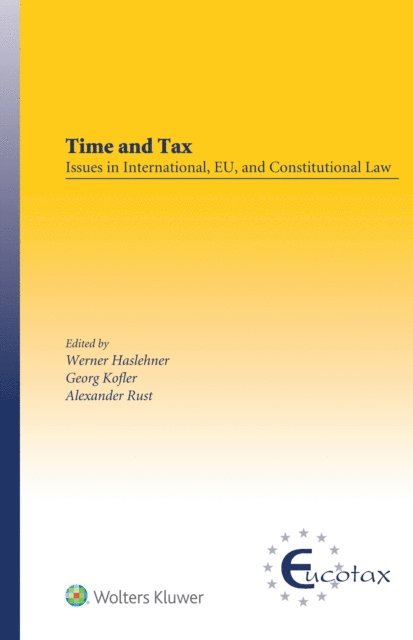
Time is a crucial dimension in the application of any law. In tax law, however, where an environment characterized by rapid change on the national, European, and international levels complicates the provision of accurate legal advice, timing is particularly sensitive. This book is the first to analyse the relationship between time and three key areas of tax: treaties, EU law, and constitutional law issues, such as legal certainty and individual rights.
Among the numerous timing issues arising out of applying tax rules, the book addresses the following:
– time limits within which relief must be requested;– statutes of limitation for claiming a tax refund;– transitional issues relating to changes in tax treaties;– attribution of profits and expenses to a moving or closed-down business;– effect of tax-related CJEU decisions and EU directives;– compliance of exit tax regimes with free movement;– limits of retroactivity under principles protected by the EU Charter and the ECHR; and– conflict between efficiency of taxation and individual rights.Derived from a recent conference organized by the prestigious ATOZ Chair for European and International Taxation at the University of Luxembourg, the book brings together contributions from leading tax experts from various areas of tax practice, academia, and the judiciary. Among other issues, the book notably expands on how economic theory can inform a constitutional analysis of the timing of taxation.
There is no other work that concentrates so usefully on the difficulties associated with applying tax rules – whether arising from treaties, jurisprudence, or policy – to changing circumstances over time. This book will quickly prove itself to be an indispensable resource for European tax lawyers, policymakers, company counsels, and academics.
1 556 kr
Läs direkt efter köp
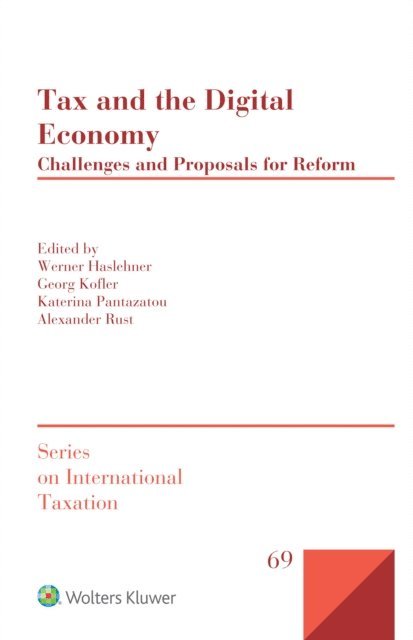
The increasingly digitalized global economy is undermining the usefulness of many traditional tax concepts. In addition to issues of double taxation and double non-taxation, important questions arise concerning the allocation of taxing rights in respect of income from cross-border digital transactions. This is the first book to analyse what changes are possible, necessary and feasible in order to forestall the unravelling of the existing international tax framework.
Focusing in turn on the legal framework, specific proposals for adapting tax concepts for the digital economy, types of transactions and administrative issues such as those around data protection and digital currencies, the expert contributors discuss such challenges to taxation as the following:
the pervasiveness of intangible assets; new value creation models; the ascendance of the sharing economy and digital services; virtual currencies; the importance of user participation for digital platforms; cloud computing; the impact of Big Data on tax enforcement; virtual business presence; and the influence of robotization.Throughout, the authors describe and analyse proposals made by the Organisation for Economic Co-operation and Development (OECD), the European Union (EU) and individual countries and their likely impact going forward. They also attend to the limits imposed on reform possibilities by public international law, EU law and constitutional law.
It is generally acknowledged that there is a need to monitor how the digital transformation may be impacting value creation. This book is a key milestone toward developing a durable, long-term solution to the tax challenges posed by the digitalization of the economy. With its thorough scrutiny of proposals for digital services tax and virtual permanent establishments, insightful analysis of digital services and detailed description of the impact of big data on tax administration and taxpayer protection, it will quickly prove indispensable for tax practitioners and the international tax community more generally.
1 460 kr
Läs direkt efter köp
Time is a crucial dimension in the application of any law. In tax law, however, where an environment characterized by rapid change on the national, European, and international levels complicates the provision of accurate legal advice, timing is particularly sensitive. This book is the first to analyse the relationship between time and three key areas of tax: treaties, EU law, and constitutional law issues, such as legal certainty and individual rights.
Among the numerous timing issues arising out of applying tax rules, the book addresses the following:
– time limits within which relief must be requested;– statutes of limitation for claiming a tax refund;– transitional issues relating to changes in tax treaties;– attribution of profits and expenses to a moving or closed-down business;– effect of tax-related CJEU decisions and EU directives;– compliance of exit tax regimes with free movement;– limits of retroactivity under principles protected by the EU Charter and the ECHR; and– conflict between efficiency of taxation and individual rights.Derived from a recent conference organized by the prestigious ATOZ Chair for European and International Taxation at the University of Luxembourg, the book brings together contributions from leading tax experts from various areas of tax practice, academia, and the judiciary. Among other issues, the book notably expands on how economic theory can inform a constitutional analysis of the timing of taxation.
There is no other work that concentrates so usefully on the difficulties associated with applying tax rules – whether arising from treaties, jurisprudence, or policy – to changing circumstances over time. This book will quickly prove itself to be an indispensable resource for European tax lawyers, policymakers, company counsels, and academics.
1 556 kr
Läs direkt efter köp
The increasingly digitalized global economy is undermining the usefulness of many traditional tax concepts. In addition to issues of double taxation and double non-taxation, important questions arise concerning the allocation of taxing rights in respect of income from cross-border digital transactions. This is the first book to analyse what changes are possible, necessary and feasible in order to forestall the unravelling of the existing international tax framework.
Focusing in turn on the legal framework, specific proposals for adapting tax concepts for the digital economy, types of transactions and administrative issues such as those around data protection and digital currencies, the expert contributors discuss such challenges to taxation as the following:
the pervasiveness of intangible assets; new value creation models; the ascendance of the sharing economy and digital services; virtual currencies; the importance of user participation for digital platforms; cloud computing; the impact of Big Data on tax enforcement; virtual business presence; and the influence of robotization.Throughout, the authors describe and analyse proposals made by the Organisation for Economic Co-operation and Development (OECD), the European Union (EU) and individual countries and their likely impact going forward. They also attend to the limits imposed on reform possibilities by public international law, EU law and constitutional law.
It is generally acknowledged that there is a need to monitor how the digital transformation may be impacting value creation. This book is a key milestone toward developing a durable, long-term solution to the tax challenges posed by the digitalization of the economy. With its thorough scrutiny of proposals for digital services tax and virtual permanent establishments, insightful analysis of digital services and detailed description of the impact of big data on tax administration and taxpayer protection, it will quickly prove indispensable for tax practitioners and the international tax community more generally.
5 604 kr
Läs direkt efter köp
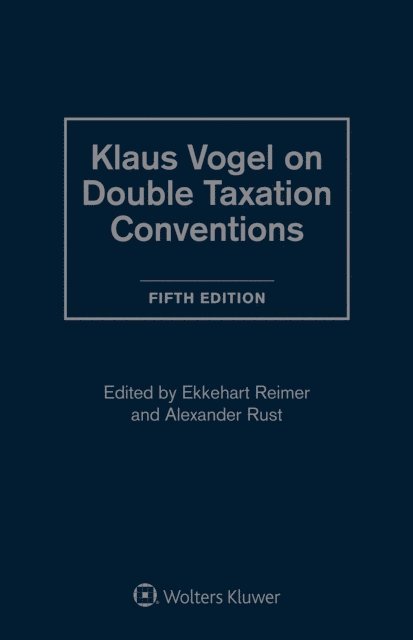
Klaus Vogel on Double Taxation Conventions is regarded as the international gold standard on the law of tax treaties. This article-by-article commentary has been completely revised and updated to give you a full and current account of double tax conventions (DTCs).
DTCs form the backbone of international taxation, but they raise many interpretational questions. This market leading work will provide you with the answers.
Based on the OECD/G20 Multilateral Instrument, the OECD MC and Commentary published in 2017 and the most recent amendments to the UN MC, the book also includes relevant case law and scholarly literature upto and including 2020.
Previous editions of the Vogel have been routinely relied on by courts around the world including Australia, Canada, Germany, India, South Africa, the Netherlands and United Kingdom.
What’s new in this edition?
There have been many important developments in this area since the last edition in 2015. The authors discuss these developments and the effect they will have upon practitioners working in this area. They also provide a wealth of new and revised case law, along with the DTCs of emerging countries.
You’ll find:
Reports about major features in the DTC practice of many leading jurisdictions, such as:
the DTC practice of Austria, Canada, France, Germany, India, the Netherlands, Switzerland, the UK and the US
Sections on divergent country practice covering their national models and networks of bilateral DTCs
Thorough analysis of the OECD and UN model, as well as the implementation of these models in practice
Amendments of bilateral DTCs, textual or in substance, on the basis of the 2017 Anti-BEPS Multilateral Instrument
Coverage of a full range of the latest tax treaties around the world, including important treaties between OECD and BRICS countries
This new Fifth Edition of Klaus Vogel on Double Taxation Conventions continues to reflect the unchallenged role of the OECD. The OECD MC, accompanied by the official Commentary, guidelines, reports and other recommendations, has sustained its position as the most important legal instrument in the area of DTCs.
On occasion, the UN MC and Commentary diverge from the OECD texts. When this happens, the authors deal with the specifics of the UN MC in separate annotations and analyses, explaining and making sure you understand the differences.
How this will help you:
All the information you need to confidently advise on issues such as the taxation of income, taxation of capital and the elimination of double taxation
Know that your advice to clients is based on the most up-to-date and respected information available, from an outstanding team of editors and authors
The editors, Professors Ekkehart Reimer and Alexander Rust, have worked with the late Professor Vogel as well as an international team of top experts to completely update and enhance the content. The writing team comprises:
Editors:
Prof. Dr Ekkehart Reimer, Heidelberg University and Prof. Dr Alexander Rust, WU Vienna.
Authors:
Johannes Becker, Federal Ministry of Finance, Berlin; Alexander Blank, University of Erlangen-Nuremberg; Katharina Blank, Federal Ministry of Finance, Berlin; Michael Blank, University of Erlangen-Nuremberg, Prof. Dr Luc De Broe, Catholic University of Leuven; Laga; Prof. Dr Axel Cordewener, Catholic University of Leuven and Flick Gocke Schaumburg ; Prof. Dr Ana Paula Dourado, University of Lisbon; Daniela Endres-Reich, University of Erlangen-Nuremberg; Prof. Dr Werner Haslehner, University of Luxembourg; Prof. Dr Roland Ismer, University of Erlangen-Nuremberg; Prof. Dr Eric C. C. M. Kemmeren , Tilburg University; Prof. Dr Georg Kofler, WU Vienna; Sophia Piotrowski, University of Erlangen-Nuremberg; Prof. Dr Ekkehart Reimer, Heidelberg University; Prof. Dr Alexander Rust, WU Vienna; Annika Streicher, WU Vienna; Prof. Dr. Matthias Valta, Duesseldorf University; Jens Wittendorff, Ernst & Young, Copenhagen and University of Aarhus; Kamilla Zembala, Heidelberg University
5 408 kr
Läs direkt efter köp
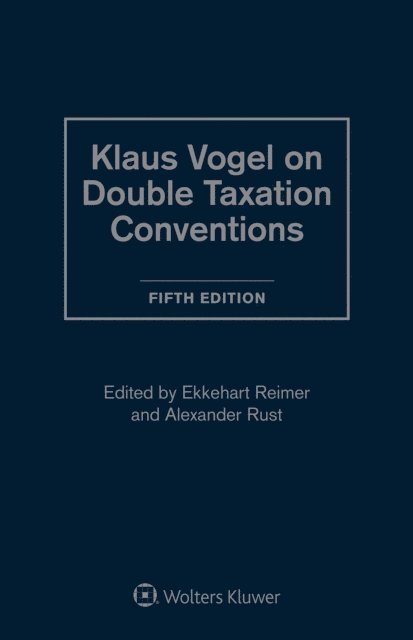
Klaus Vogel on Double Taxation Conventions is regarded as the international gold standard on the law of tax treaties. This article-by-article commentary has been completely revised and updated to give you a full and current account of double tax conventions (DTCs).
DTCs form the backbone of international taxation, but they raise many interpretational questions. This market leading work will provide you with the answers.
Based on the OECD/G20 Multilateral Instrument, the OECD MC and Commentary published in 2017 and the most recent amendments to the UN MC, the book also includes relevant case law and scholarly literature upto and including 2020.
Previous editions of the Vogel have been routinely relied on by courts around the world including Australia, Canada, Germany, India, South Africa, the Netherlands and United Kingdom.
What’s new in this edition?
There have been many important developments in this area since the last edition in 2015. The authors discuss these developments and the effect they will have upon practitioners working in this area. They also provide a wealth of new and revised case law, along with the DTCs of emerging countries.
You’ll find:
Reports about major features in the DTC practice of many leading jurisdictions, such as:
the DTC practice of Austria, Canada, France, Germany, India, the Netherlands, Switzerland, the UK and the US
Sections on divergent country practice covering their national models and networks of bilateral DTCs
Thorough analysis of the OECD and UN model, as well as the implementation of these models in practice
Amendments of bilateral DTCs, textual or in substance, on the basis of the 2017 Anti-BEPS Multilateral Instrument
Coverage of a full range of the latest tax treaties around the world, including important treaties between OECD and BRICS countries
This new Fifth Edition of Klaus Vogel on Double Taxation Conventions continues to reflect the unchallenged role of the OECD. The OECD MC, accompanied by the official Commentary, guidelines, reports and other recommendations, has sustained its position as the most important legal instrument in the area of DTCs.
On occasion, the UN MC and Commentary diverge from the OECD texts. When this happens, the authors deal with the specifics of the UN MC in separate annotations and analyses, explaining and making sure you understand the differences.
How this will help you:
All the information you need to confidently advise on issues such as the taxation of income, taxation of capital and the elimination of double taxation
Know that your advice to clients is based on the most up-to-date and respected information available, from an outstanding team of editors and authors
The editors, Professors Ekkehart Reimer and Alexander Rust, have worked with the late Professor Vogel as well as an international team of top experts to completely update and enhance the content. The writing team comprises:
Editors:
Prof. Dr Ekkehart Reimer, Heidelberg University and Prof. Dr Alexander Rust, WU Vienna.
Authors:
Johannes Becker, Federal Ministry of Finance, Berlin; Alexander Blank, University of Erlangen-Nuremberg; Katharina Blank, Federal Ministry of Finance, Berlin; Michael Blank, University of Erlangen-Nuremberg, Prof. Dr Luc De Broe, Catholic University of Leuven; Laga; Prof. Dr Axel Cordewener, Catholic University of Leuven and Flick Gocke Schaumburg ; Prof. Dr Ana Paula Dourado, University of Lisbon; Daniela Endres-Reich, University of Erlangen-Nuremberg; Prof. Dr Werner Haslehner, University of Luxembourg; Prof. Dr Roland Ismer, University of Erlangen-Nuremberg; Prof. Dr Eric C. C. M. Kemmeren , Tilburg University; Prof. Dr Georg Kofler, WU Vienna; Sophia Piotrowski, University of Erlangen-Nuremberg; Prof. Dr Ekkehart Reimer, Heidelberg University; Prof. Dr Alexander Rust, WU Vienna; Annika Streicher, WU Vienna; Prof. Dr. Matthias Valta, Duesseldorf University; Jens Wittendorff, Ernst & Young, Copenhagen and University of Aarhus; Kamilla Zembala, Heidelberg University