Alexandra Eckert – författare
Visar alla böcker från författaren Alexandra Eckert. Handla med fri frakt och snabb leverans.
4 produkter
4 produkter
Del 60 - Millennium Studien/Millennium Studies
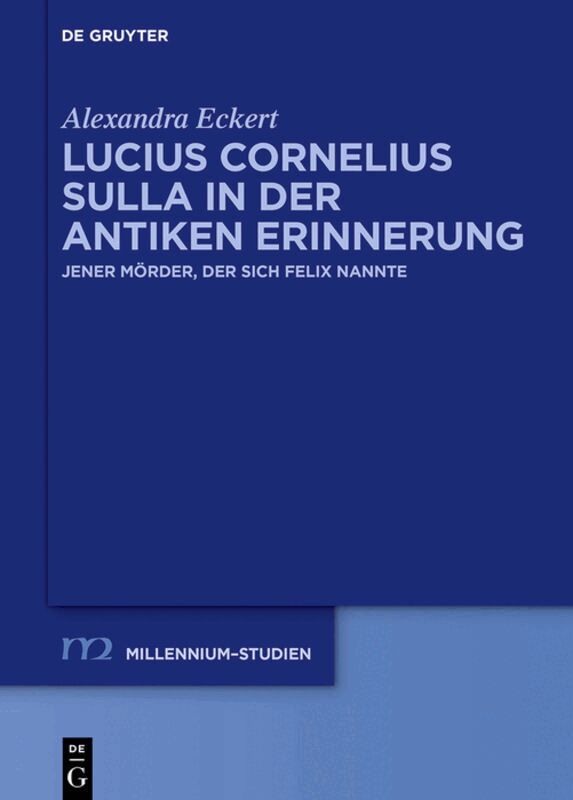
Lucius Cornelius Sulla in der antiken Erinnerung
Jener Mörder, der sich Felix nannte
Inbunden, Tyska, 2016
1 403 kr
Skickas inom 5-8 vardagar
Millennium transcends boundaries – between epochs and regions, and between disciplines. Like the journal Millennium-Jahrbuch, the Millennium-Studien pursues an international, interdisciplinary approach that cuts across historical eras. The editorial and the advisory board represent a broad spectrum of disciplines: contributions from the fields of art and literature are just as well represented as historical, theological and philosophical contributions, and studies on Latin and Greek cultures as well as North African and Near Eastern cultures. In addition to offering a forum for monographs and edited collections on diverse topics, Millennium-Studien publishes commentaries and editions. Publication languages are primarily German and English; French, Italian and Spanish studies may be included. Series editorsWolfram Brandes, Frankfurt, Germany (Byzantine Studies and Early Middle Ages): brandeswolfram@gmail.comLaura Carrara, Pisa, Italy (Greek language and literature): laura.carrara@unipi.itDennis Pausch, Marburg, Germany (Latin language and literature): dennis.pausch@uni-marburg.deRene Pfeilschifter, Würzburg, Germany (Ancient History): Rene.Pfeilschifter@uni-wuerzburg.deKarla Pollmann, Tübingen, Germany (Early Christianity and Patristics): karla.pollmann@uni-tuebingen.de If you want to submit a manuscript for the Millennium Studies please send it to the series editor from the most relevant discipline. All manuscript submissions will be reviewed by the series editor and one outside specialist (single-blind peer review). Editorial Board:Phil Booth, University of Oxford, UKPatricia Ciner, National University of SanJuan, ArgentiniaBabett Edelmann-Singer, Freie Universität Berlin, GermanyPhilip Forness, Katholieke Universiteit Leuven, BelgiumLea Niccolai, Trinity College, University of Cambridge, UKClaudia Rapp, Universität Wien, AustriaVerena Schulz, Katholische Universität Eichstätt, GermanyChiara Tommasi, Università di Pisa, Italy Lieve Van Hoof, Ghent University, Belgium
1 403 kr
Skickas inom 5-8 vardagar
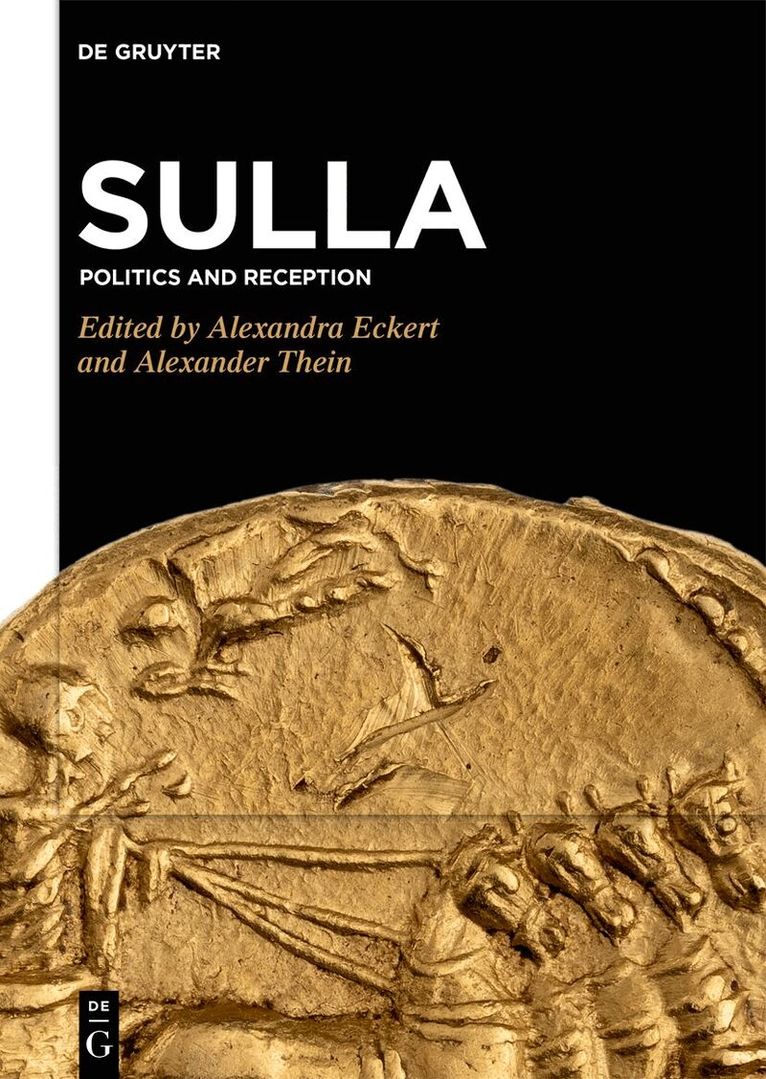
This book brings together an international group of scholars to offer new perspectives on the political impact and afterlife of the dictator Lucius Cornelius Sulla Felix (138–78 B.C.), one of the most important figures in the complex history of the last century of the Roman Republic. It looks beyond the march on Rome, the violence of the proscriptions, or the logic of his political reforms, and offers case studies to illustrate his relations with the Roman populace, the subject peoples of the Greek East, and his own supporters, both veterans and elites, highlighting his long-term political impact and, at times, the limits on his exercise of power. The chapters on reception reassess the good/bad dichotomy of Sulla as tyrant and reformer, focusing on Cicero, while also examining his importance for Sallust, and his characterisation as the antithesis of philhellenism in Greek writers of the Imperial period. Sulla was not straightforward, either as a historical figure or exemplum, and the case studies in this book use the twin approach of politics and reception to offer new readings of Sulla’s aims and impact, both at home and abroad, and why he remained of interest to authors from Sallust to Plutarch and Aelian.
308 kr
Skickas inom 5-8 vardagar
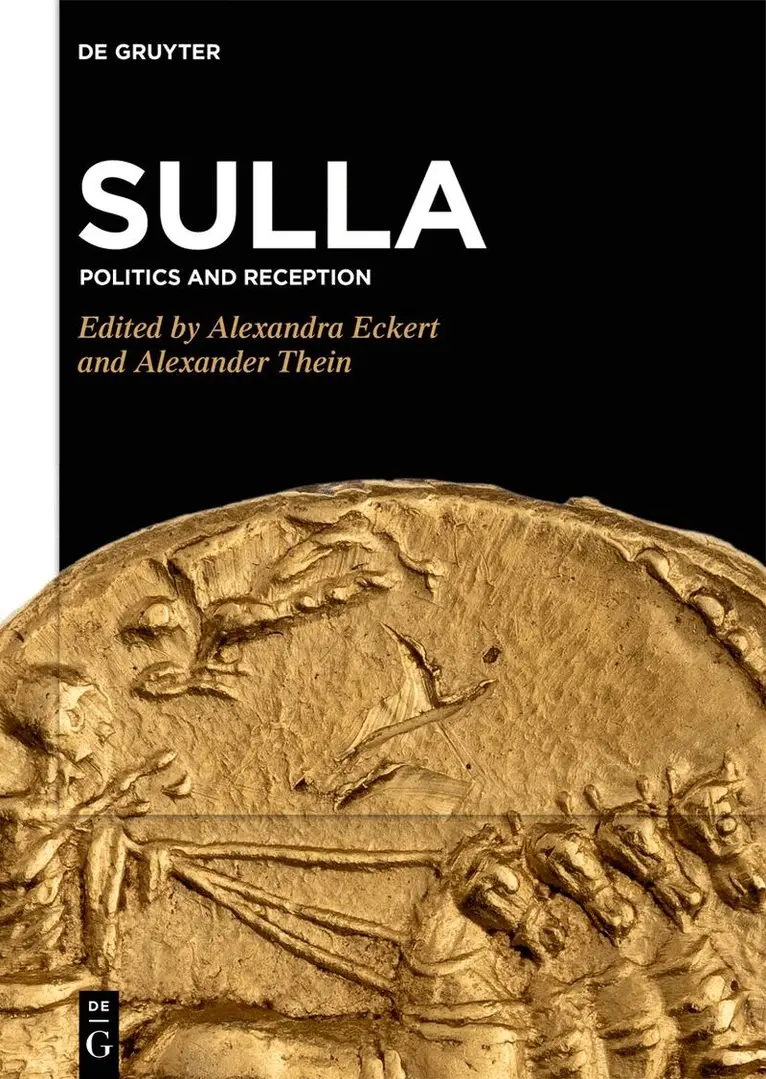
This book brings together an international group of scholars to offer new perspectives on the political impact and afterlife of the dictator Lucius Cornelius Sulla Felix (138–78 B.C.), one of the most important figures in the complex history of the last century of the Roman Republic. It looks beyond the march on Rome, the violence of the proscriptions, or the logic of his political reforms, and offers case studies to illustrate his relations with the Roman populace, the subject peoples of the Greek East, and his own supporters, both veterans and elites, highlighting his long-term political impact and, at times, the limits on his exercise of power. The chapters on reception reassess the good/bad dichotomy of Sulla as tyrant and reformer, focusing on Cicero, while also examining his importance for Sallust, and his characterisation as the antithesis of philhellenism in Greek writers of the Imperial period. Sulla was not straightforward, either as a historical figure or exemplum, and the case studies in this book use the twin approach of politics and reception to offer new readings of Sulla’s aims and impact, both at home and abroad, and why he remained of interest to authors from Sallust to Plutarch and Aelian.
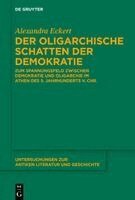
Der Oligarchische Schatten Der Demokratie: Zum Spannungsfeld Zwischen Demokratie Und Oligarchie Im Athen Des 5. Jahrhunderts V. Chr.
Inbunden, Tyska, 2026
1 814 kr
Kommande