Alexandra Gray - Böcker
Visar alla böcker från författaren Alexandra Gray. Handla med fri frakt och snabb leverans.
4 produkter
4 produkter
2 412 kr
Skickas inom 10-15 vardagar
Popular novelist, female aesthete, Victorian radical and proto-modernist, Lucas Malet (Mary St. Leger Harrison, 1852-1931) was one of the most successful writers of her day, yet few of her remarkable novels remain in print. Malet was a daughter of the ‘broad church’ priest and well-known Victorian author Charles Kingsley; her sister Rose, uncle, Henry Kingsley and her cousin Mary Henrietta Kingsley were also published authors. Malet was part of a creative dynasty from which she drew inspiration but against which she rebelled both in her personal life and her published work. This collection brings together for the first time a selection of scholarly essays on Malet’s life and writing, foregrounding her contributions to nineteenth- and twentieth-century discourses surrounding disability, psychology, religion, sexuality, the New Woman, and decadent, aesthetic and modernist cultural movements. The essays contained in this volume explore Malet’s authorial experience—from both within the mainstream of the British literary tradition and, curiously, from outside it—supplementing and nuancing current debates about fin-de-siècle women’s writing. The collection asks the question ‘who was Lucas Malet?’ and ‘how—despite its popularity—did her courageous, unique and fascinating writing disappear from view for so long?’
760 kr
Skickas inom 10-15 vardagar
Popular novelist, female aesthete, Victorian radical and proto-modernist, Lucas Malet (Mary St. Leger Harrison, 1852-1931) was one of the most successful writers of her day, yet few of her remarkable novels remain in print. Malet was a daughter of the ‘broad church’ priest and well-known Victorian author Charles Kingsley; her sister Rose, uncle, Henry Kingsley and her cousin Mary Henrietta Kingsley were also published authors. Malet was part of a creative dynasty from which she drew inspiration but against which she rebelled both in her personal life and her published work. This collection brings together for the first time a selection of scholarly essays on Malet’s life and writing, foregrounding her contributions to nineteenth- and twentieth-century discourses surrounding disability, psychology, religion, sexuality, the New Woman, and decadent, aesthetic and modernist cultural movements. The essays contained in this volume explore Malet’s authorial experience—from both within the mainstream of the British literary tradition and, curiously, from outside it—supplementing and nuancing current debates about fin-de-siècle women’s writing. The collection asks the question ‘who was Lucas Malet?’ and ‘how—despite its popularity—did her courageous, unique and fascinating writing disappear from view for so long?’
2 169 kr
Skickas inom 3-6 vardagar
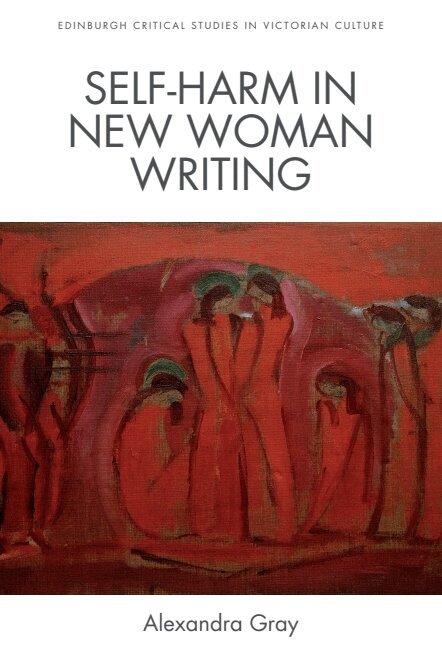
Self-Harm in New Woman Writing offers a trans-disciplinary study of Victorian literature, culture and medicine through engagement with the recurrent trope of self-harm in writing by and about the British New Woman. Focusing on self-starvation, excessive drinking and self-mutilation, this study explores narratives of female resistance to Victorian patriarchy embedded in the work of both canonical and largely unknown women writers of the 1880s and 1890s, including Mary Angela Dickens and Victoria Cross. The book argues that the conditions of modernity now associated with self-harm in twentieth-century psychiatry (but beginning at the Fin de Siecle) provided the socio-cultural backdrop for a surge of interest in self-harm as a site of imaginative exploration at a time when women's role in society was rapidly changing.
635 kr
Skickas inom 3-6 vardagar
Traces Victorian self-harm through an engagement with literary fictionSelf-Harm in New Woman Writing offers a trans-disciplinary study of Victorian literature, culture and medicine through engagement with the recurrent trope of self-harm in writing by and about the British New Woman. Focusing on self-starvation, excessive drinking and self-mutilation, this study explores narratives of female resistance to Victorian patriarchy embedded in the work of both canonical and largely unknown women writers of the 1880s and 1890s, including Mary Angela Dickens and Victoria Cross. The book argues that the conditions of modernity now associated with self-harm in twentieth-century psychiatry (but beginning at the Fin de Siècle) provided the socio-cultural backdrop for a surge of interest in self-harm as a site of imaginative exploration at a time when women’s role in society was rapidly changing. Key FeaturesHighly interdisciplinary, combining medical history, archival and periodical research, art history, gender studies and literary studiesRe-assessment of well-known New Woman authors as well as original research into newly discovered New Woman authorsFirst book-length examination of self-harm in Victorian literary fictionFirst study to suggest that Victorian self-harm (broadly speaking) can be traced through an engagement with literary fiction long before its emergence as a clinical category of behavior in the twentieth centuryReappraisal of New Woman studies suggesting some of the ways very different types of New Woman writing converged around a single thematic concern, and attempts to account for this in socio-historic (and formal) termsDetailed discussion of the work of Mary Angela Dickens and Victoria Cross, two comparatively unknown authors (almost no scholarly work currently exists on Dickens’s writing)