Alexandra Huneeus – författare
Visar alla böcker från författaren . Handla med fri frakt och snabb leverans.
6 produkter
6 produkter
Inbunden, Engelska, 2025
1 535 kr
Skickas inom 5-8 vardagar
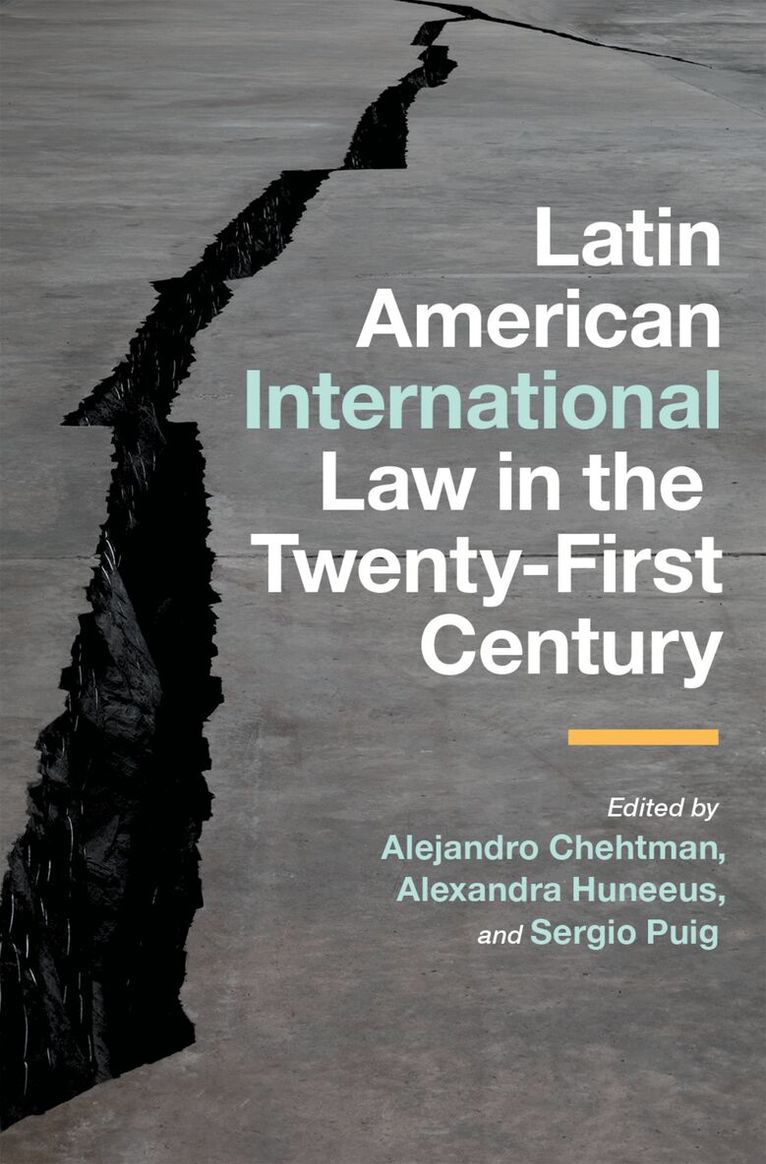
Latin America has been a pivotal site for influential and innovative developments in international law since the colonial era. Throughout much of the twentieth century, Latin American politics were entangled with the political and economic interests of the United States. Today, as the global order shifts, scholars and legal practitioners are grappling with the current restructuring and potential transformation of international relations—and what this means for international law in the region.This collection of essays brings together a group of highly regarded scholars to present a broad survey of Latin America's approaches and contributions, historically and presently, to the field of international law.Comprehensive, diverse, and multidisciplinary, the book covers recent developments in areas like environmental regulation, internet regulation, Indigenous rights, LGBTIQ rights, and public health, among others. It also considers more traditional themes, such as law and development, the doctrine of nonintervention, human rights, and jurisdictional disputes in the Spanish colonies.A timely publication covering an ever-evolving region, Latin American International Law in the Twenty-First Century explores the role of Latin American politics on the world stage. Theories, perspectives, and methods of international law are expertly interwoven with those of sociology, political science, anthropology, philosophy, history, and economics to present a dynamic and multifaceted work of scholarship.
E-bok
Engelska, 20251 572 kr
Läs direkt efter köp
Latin America has been a pivotal site for influential and innovative developments in international law since the colonial era. Throughout much of the twentieth century, Latin American politics were entangled with the political and economic interests of the United States. Today, as the global order shifts, scholars and legal practitioners are grappling with the current restructuring and potential transformation of international relations-and what this means for international law in the region. This collection of essays brings together a group of highly regarded scholars to present a broad survey of Latin Americas approaches and contributions, historically and presently, to the field of international law. Comprehensive, diverse, and multidisciplinary, the book covers recent developments in areas like environmental regulation, internet regulation, Indigenous rights, LGBTIQ rights, and public health, among others. It also considers more traditional themes, such as law and development, the doctrine of nonintervention, human rights, and jurisdictional disputes in the Spanish colonies. A timely publication covering an ever-evolving region, Latin American International Law in the Twenty-First Century explores the role of Latin American politics on the world stage. Theories, perspectives, and methods of international law are expertly interwoven with those of sociology, political science, anthropology, philosophy, history, and economics to present a dynamic and multifaceted work of scholarship.
E-bok
PDF, Engelska, 20251 572 kr
Läs direkt efter köp
Latin America has been a pivotal site for influential and innovative developments in international law since the colonial era. Throughout much of the twentieth century, Latin American politics were entangled with the political and economic interests of the United States. Today, as the global order shifts, scholars and legal practitioners are grappling with the current restructuring and potential transformation of international relations-and what this means for international law in the region. This collection of essays brings together a group of highly regarded scholars to present a broad survey of Latin Americas approaches and contributions, historically and presently, to the field of international law. Comprehensive, diverse, and multidisciplinary, the book covers recent developments in areas like environmental regulation, internet regulation, Indigenous rights, LGBTIQ rights, and public health, among others. It also considers more traditional themes, such as law and development, the doctrine of nonintervention, human rights, and jurisdictional disputes in the Spanish colonies. A timely publication covering an ever-evolving region, Latin American International Law in the Twenty-First Century explores the role of Latin American politics on the world stage. Theories, perspectives, and methods of international law are expertly interwoven with those of sociology, political science, anthropology, philosophy, history, and economics to present a dynamic and multifaceted work of scholarship.
Inbunden, Engelska, 2010
1 355 kr
Skickas inom 7-10 vardagar
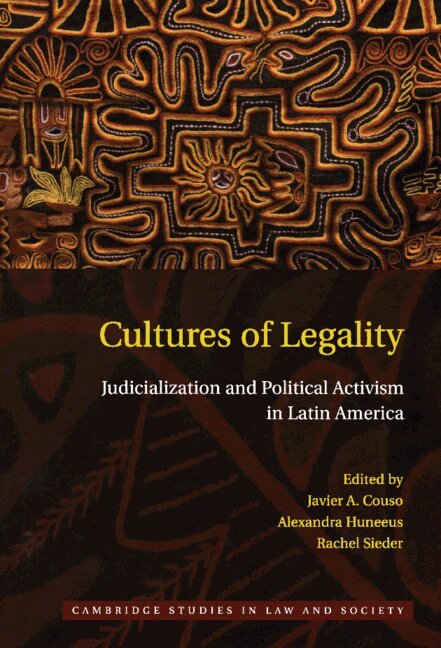
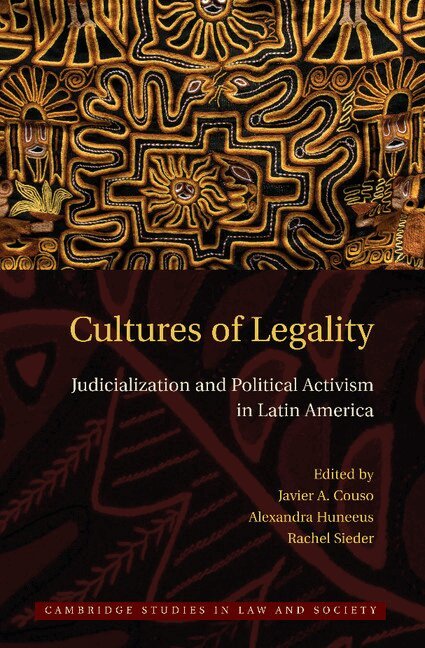
Ideas about law are undergoing dramatic change in Latin America. The consolidation of democracy as the predominant form of government and the proliferation of transnational legal instruments have ushered in an era of new legal conceptions and practices. Law has become a core focus of political movements and policy-making. This volume explores the changing legal ideas and practices that accompany, cause, and are a consequence of the judicialization of politics in Latin America. It is the product of a three-year international research effort, sponsored by the Law and Society Association, the Latin American Studies Association, and the Ford Foundation, that gathered leading and emerging scholars of Latin American courts from across disciplines and across continents.
Häftad, Engelska, 2013
477 kr
Skickas inom 7-10 vardagar
Ideas about law are undergoing dramatic change in Latin America. The consolidation of democracy as the predominant form of government and the proliferation of transnational legal instruments have ushered in an era of new legal conceptions and practices. Law has become a core focus of political movements and policy-making. This volume explores the changing legal ideas and practices that accompany, cause, and are a consequence of the judicialization of politics in Latin America. It is the product of a three-year international research effort, sponsored by the Law and Society Association, the Latin American Studies Association, and the Ford Foundation, that gathered leading and emerging scholars of Latin American courts from across disciplines and across continents.
E-bok
Spanska, 202686 kr
Läs direkt efter köp
En 1909, el jurista chileno Alejandro Álvarez expuso un argumento que se volvería extraordinariamente influyente: debía existir, dijo, un orden jurídico que abarcara a todo el continente, con los Estados Unidos a la cabeza. No estaba solo en esa cruzada. Otros juristas compartían la necesidad de promover un derecho internacional latinoamericano, pero cuestionaron el modo en que la región debía posicionarse frente a las grandes potencias. Más de cien años después, el escenario cambió dramáticamente, pero la región sigue siendo una usina de doctrinas, teorías y prácticas jurídicas de derecho regional. Este libro viene a ofrecer el panorama más exhaustivo y ambicioso del derecho internacional latinoamericano que se ha escrito, a cargo de un verdadero seleccionado de autores y autoras especialistas de distintos países. El eje central es claro: en nuestra época ha emergido un nuevo canon del derecho regional, más plural e inclusivo, que no se limita a pensar formas de interlocución con los Estados Unidos y Europa ni a recoger las ideas de los diplomáticos, sino que se abre a jueces, sociedad civil, pueblos indígenas, mujeres, académicos y otros actores que antes estaban ausentes. Que tiene en los derechos humanos una de sus marcas de identidad más fuertes, y que entiende el derecho como una herramienta de poder y de resistencia. En un mundo sin hegemonías claras, de retroceso democrático y volatilidad política, este libro dibuja una América Latina que no se limita a proyectarse al exterior, sino que piensa –a veces con tensiones y desacuerdos– cómo reforzar instituciones y prácticas jurídicas de y para la región.