Alexandre Gefen - Böcker
Visar alla böcker från författaren Alexandre Gefen. Handla med fri frakt och snabb leverans.
3 produkter
3 produkter
3 513 kr
Skickas inom 10-15 vardagar
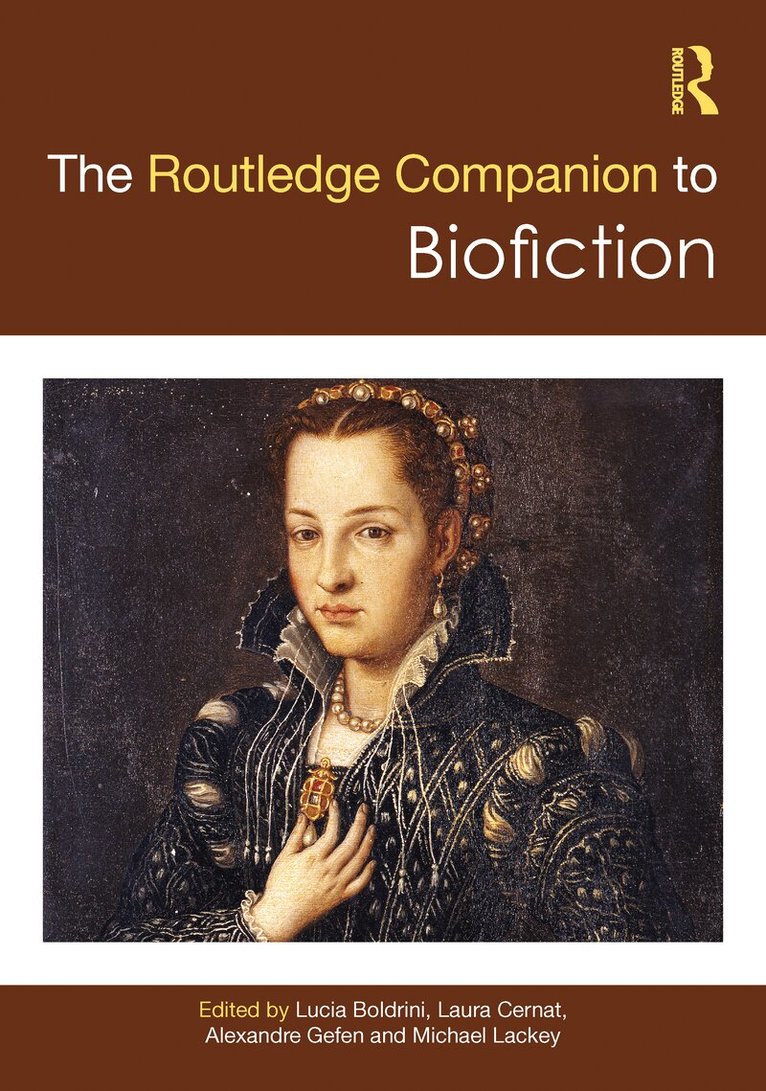
The Routledge Companion to Biofiction provides readers with the history, origins, and evolution of this popular genre. Featuring contributions from leading scholars in the field, this authoritative collection foregrounds analyses of biofiction's core foundations through contemporary debates. The volume is organized into seven sections: Histories of biofiction; Theoretical reflections on biofiction; Biofiction, national models and (trans)national constructions; Biofiction as political intervention; Biofictional case studies; Activating lives: early modern women; and Authorial reflections. This groundbreaking collection features works that refine our understanding of the genesis and evolution of biofiction; theorize its unique and distinctive modes of signifying; reflect on its value for the future and social justice; chart new approaches for doing biofictional analysis; and offer insights from authors of biofiction into the creative process.This is the first collection to bring together the two main schools of interpreting biofiction – the Francophone and Anglophone – while also shedding light on biofictions in many languages, from or about many continents, and offering a platform to established and new voices alike. It will be essential reading for students as well as advanced scholars interested in biographical fiction.
1 761 kr
Skickas inom 3-6 vardagar
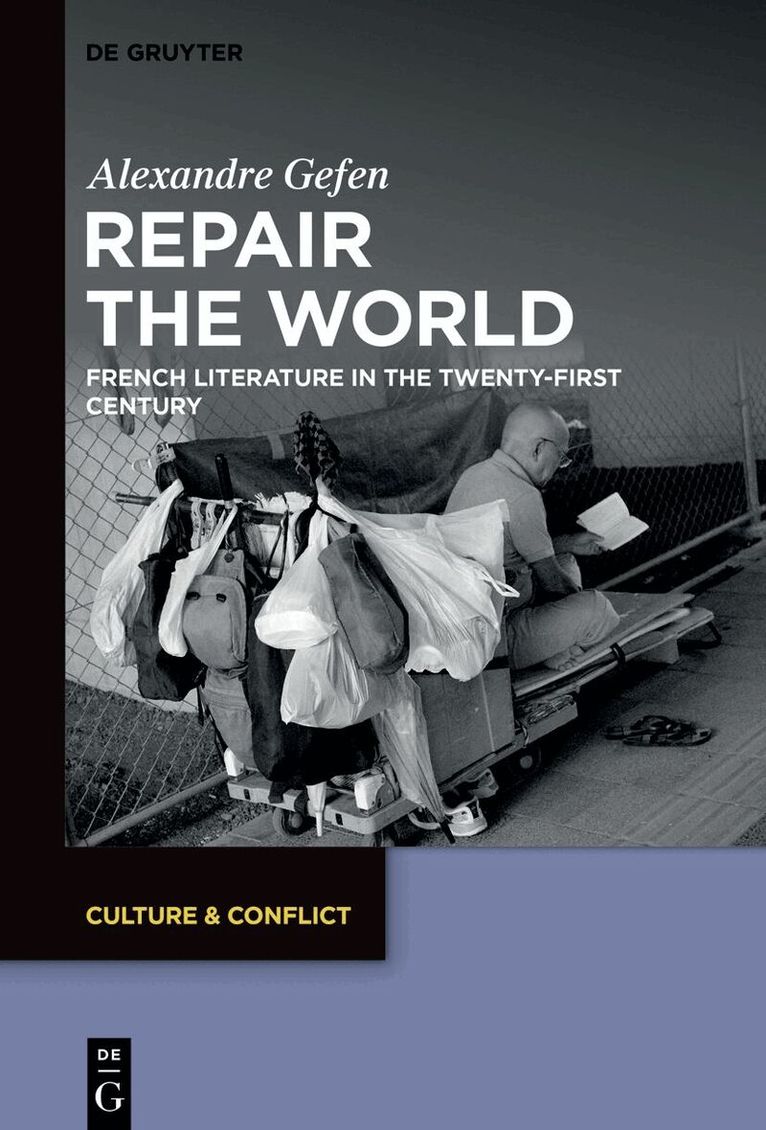
Talk of repair has become ubiquitous in recent years. In the age of trauma culture, art and literature have a new purpose: to do justice, to console, comfort, and heal. Drawing on works of twenty-first-century French-language literature, this monograph shows how literature can not only serve as a means of "personal development", but expand our capacity for empathy, help repair the "brokenness" implied in victimhood, and redress individual and collective traumas. Centered on a critical reflection on discourses of repair (and reparations), it questions the canonical theories on the functions of literature and proposes a new way of writing (and reading) literary history. Praise "Repair the World is an invigorating and essential call to arms. The modern category of the literary, it declares, is being outpaced by the contemporary uses of literature: as a medium of exorcism, empathy, reparation, testimony, commemoration, existential renewal, and ethical or political connectivity. Neither celebrating nor condemning such uses, Gefen models a much-needed style of criticism – interdisciplinary, pragmatic, relational – that comes to grips with their importance." – Rita Felski, the John Stewart Bryan Professor and Professor of English at the University of Virginia (USA) "In an era where self-help, memoir, and autobiography command more than their fair share of publisher’s lists in France, it’s tempting, some fifty years after post-structuralism’s heyday, to ascribe an impending ‘death of literature’ to a taste for narcissistic exhibitionism in French literary culture. But why bemoan the waning relevance of the question ‘what is literature?,’ asks Alexandre Gefen, when evidence abounds in the new century that literary writing increasingly posits itself as a restorative, reparative act? In the best instances, authors who give form to embodied experience imaginatively forge with their readers empathetic bonds of the sort that secular and religious institutions long sustained. Repair the World is not only a capacious study of writers who hail from surprisingly broad sectors of French society, from health and social workers to skilled laborers, journalists, and educators; it’s a situated call for a pragmatics of reading that makes of each book an intervention into the fabric of the real. Harnessing sources in affect theory, trauma studies, ethics, and cognitive science, Alexandre Gefen performs a critically reparative act all his own, reminding us that the notion of literature as autonomous object was itself a historical construct, in short: an ideology. Reading and writing have always conjoined care for the self and care for others, and it’s upon that reciprocity that the communities of sense of tomorrow can flourish in a spirit of reparative humanism". – Derek Schilling, Professor of French, Director of the Centre Louis Marin, Department of Modern Languages and Literatures, Johns Hopkins University (USA) "Alexandre Gefen’s wide-ranging, thought-provoking study takes stock of a paradigm shift in contemporary French literature, away from a model of autonomy and intransitivity to ways of writing and reading that seek to repair, restore, reassure, and rebuild. From the varied forms of expressivity found in self-narratives to the empathetic projections of fiction, Repair the World maps out an expanding literary territory that seeks not critical negativity but rather the power to intervene for good in individual and collective life. While reserving judgment on the actual extent of literature’s effects, Gefen demonstrates that contemporary projects and discourses undeniably center the therapeutic and remediative uses of literature. With its nuanced readings and keen insights, Repair the World has been rightly influential in France; its powerful diagnosis of contemporary sensibilities resonates far beyond, revealing both the promises and predicaments of literature in the twenty-first century". – Alison James, Professor of French and Chair of the Department of Romance Languages and Literatures at the University of Chicago (USA) "What would it mean to ask Sartre’s post-war question ‘What is literature?’ in the 21st century? In this wonderful essay, Alexandre Gefen argues convincingly that the main purpose of literature today is to repair a broken world and memorialise forgotten lives. Taking examples from, predominantly, contemporary French literature, he proposes that literature as therapy has replaced religions of salvation, a politics of emancipation and formal experimentation. Today, literature’s mission is to heal traumatised individuals and communities, resurrect the lives of the vulnerable and commemorate their deeds in the face of the forces of oblivion. For Gefen, Patrick Modiano’s Dora Bruder (1997) is ‘the contemporary literary archetype of these lost identities to be rehabilitated and reinhabited’. Gefen describes this new role for literature without taking sides; the writing is lucid, compelling and non-partisan. In an age of victimhood, testimony, empathy, self-expression and identity, Gefen’s reparative paradigm is as persuasive as Sartre’s political version in the age of ideology." – Max Silverman, Professor of Modern French Studies, University of Leeds (UK)
Del 46 - Chiasma
Territoires de la non-fiction
Cartographie d’un genre émergent
Inbunden, Franska, 2020
2 174 kr
Skickas inom 5-8 vardagar
Si les siècles qui précédaient avaient vu le couronnement du roman, la littérature du XXIe siècle débute avec le triomphe du document : écritures de voyage, d’investigation, enquêtes judiciaires ou ethnologiques, autobiographies, factographies, factions, rapports et enregistrements littéraires, et autres formes de récits refusant de se dire fictions occupent nos librairies : émerge sous nos yeux une toute nouvelle littérature d'information, de témoignage, d’inventaire ou de documentation. Or ces textes ne se contentent pas de déjouer les critères des classements des bibliothèques et d’intriguer les théoriciens du récit, ils modifient profondément les catégories du littéraire et imposent leur poétique propre. C’est dire si l’heure est à inventorier et à comprendre les territoires de la non-fiction, genre capital de notre contemporain. If the previous centuries had seen the crowning of the novel, the literature of the 21st century begins with the triumph of the document: travel writings, investigative, criminal or ethnological investigations, autobiographies, “factographies”, factions, literary reports and recordings, and other forms of narrative that refuse to call themselves fictions occupy our bookstores : a whole new literature of information, testimony, inventory or documentation is emerging before our eyes. Yet these texts not only thwart the criteria of library classifications and intrigue narrative theorists, they also profoundly modify the categories of the literary and impose their own poetics. In other words, the time has come to inventory and understand the territories of non-fiction, the capital genre of our time.