Alexandre Pelletier – författare
Visar alla böcker från författaren . Handla med fri frakt och snabb leverans.
4 produkter
4 produkter
Inbunden, Engelska, 2022
1 666 kr
Skickas inom 10-15 vardagar
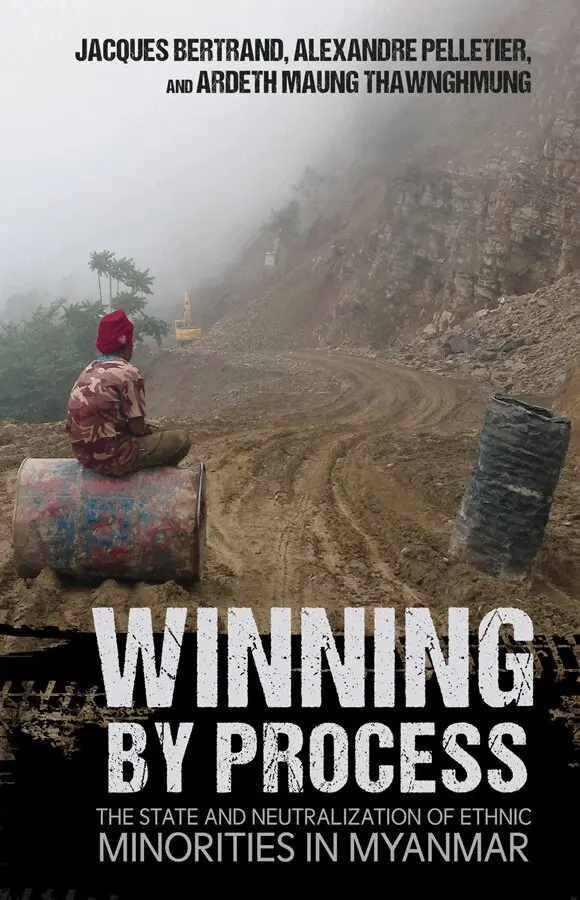
Winning by Process asks why the peace process stalled in the decade from 2011 to 2021 despite a liberalizing regime, a national ceasefire agreement, and a multilateral peace dialogue between the state and ethnic minorities. Winning by Process argues that stalled conflicts are more than pauses or stalemates. "Winning by process," as opposed to winning by war or agreement, represents the state's ability to gain advantage by manipulating the rules of negotiation, bargaining process, and sites of power and resources. In Myanmar, five such strategies allowed the state to gain through process: locking in, sequencing, layering, outflanking, and outgunning. The Myanmar case shows how process can shift the balance of power in negotiations intended to bring an end to civil war. During the last decade, the Myanmar state and military controlled the process, neutralized ethnic minority groups, and continued to impose their vision of a centralized state even as they appeared to support federalism.
Häftad, Engelska, 2022
365 kr
Skickas inom 10-15 vardagar
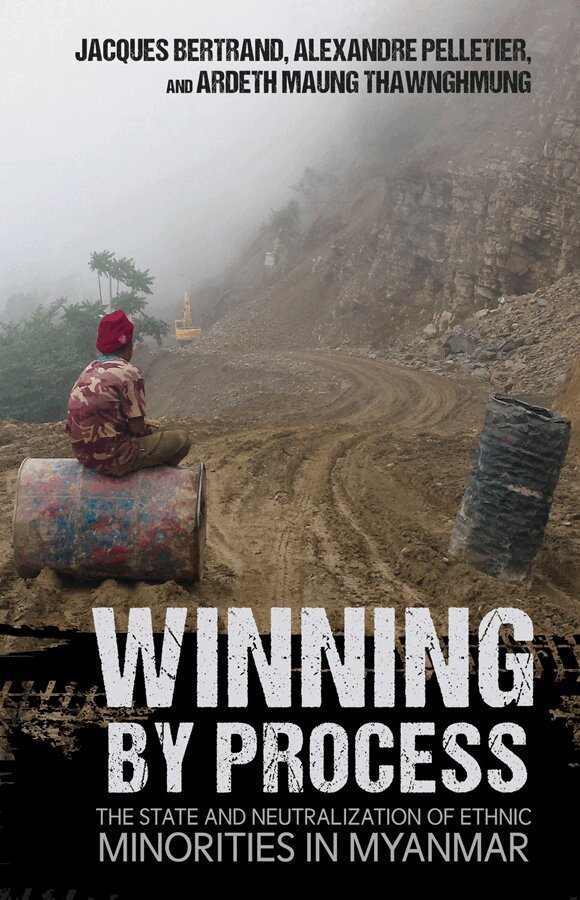
Winning by Process asks why the peace process stalled in the decade from 2011 to 2021 despite a liberalizing regime, a national ceasefire agreement, and a multilateral peace dialogue between the state and ethnic minorities. Winning by Process argues that stalled conflicts are more than pauses or stalemates. "Winning by process," as opposed to winning by war or agreement, represents the state's ability to gain advantage by manipulating the rules of negotiation, bargaining process, and sites of power and resources. In Myanmar, five such strategies allowed the state to gain through process: locking in, sequencing, layering, outflanking, and outgunning. The Myanmar case shows how process can shift the balance of power in negotiations intended to bring an end to civil war. During the last decade, the Myanmar state and military controlled the process, neutralized ethnic minority groups, and continued to impose their vision of a centralized state even as they appeared to support federalism.
Inbunden, Engelska, 2026
1 609 kr
Kommande
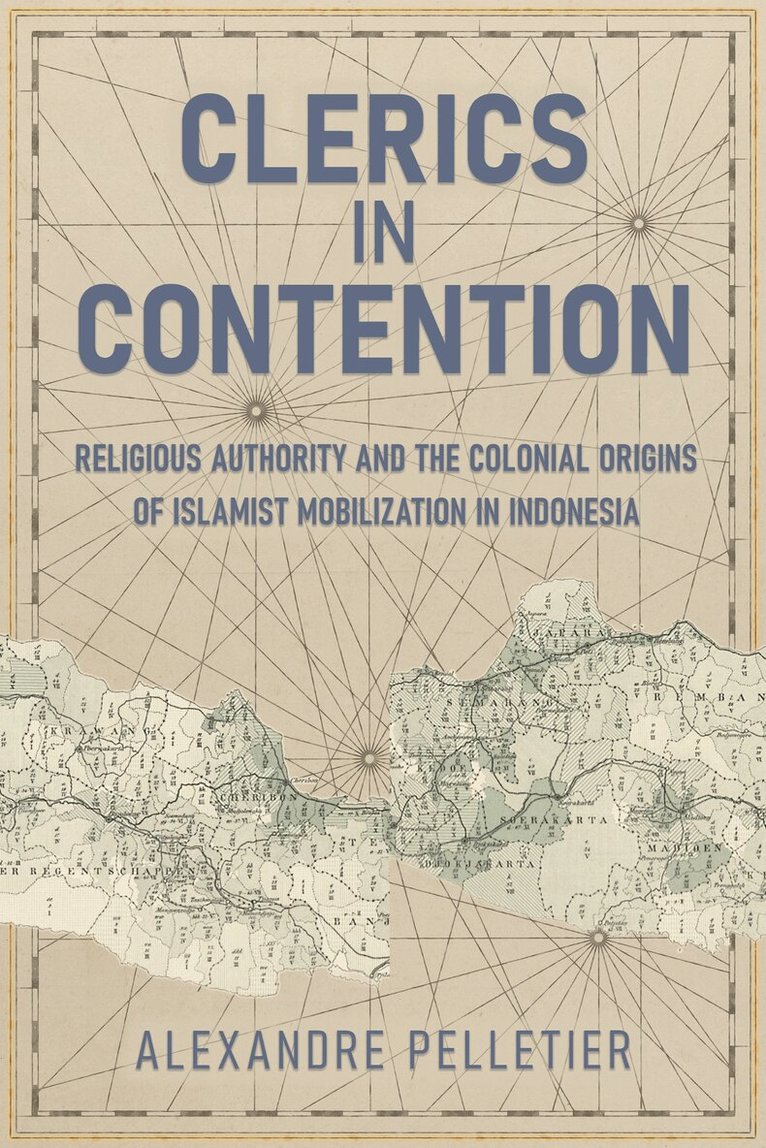
In Clerics in Contention, Alexandre Pelletier investigates why Islamist mobilization takes root in some regions of Java but not in others. Drawing on a dataset of thousands of Islamic schools and clerics, more than a hundred interviews, and archival research, he shows that West Java's religious field is uniquely fragmented and competitive. In that environment, clerics face constant pressure to compete for followers through evermore provocative mobilization. Islamist movements thus flourish where Islamic authority is fragmented and competitive.Pelletier traces these patterns back to Dutch rule, showing how colonial land regimes and administrative structures produced enduring divergences in religious authority. Where communal land and village institutions existed, as in East Java, clerics consolidated lasting authority; where private property and extractive colonial control prevailed, as in West Java, religious authority fractured. These legacies forged enduring local political cleavages and left West Java more vulnerable to Islamist mobilization. Clerics in Contention rethinks the history of Islam in Indonesia, demonstrating that moderation and radicalism arise not from belief alone, but from the institutional world that anchors religious authority.
Häftad, Engelska, 2026
353 kr
Kommande
In Clerics in Contention, Alexandre Pelletier investigates why Islamist mobilization takes root in some regions of Java but not in others. Drawing on a dataset of thousands of Islamic schools and clerics, more than a hundred interviews, and archival research, he shows that West Java's religious field is uniquely fragmented and competitive. In that environment, clerics face constant pressure to compete for followers through evermore provocative mobilization. Islamist movements thus flourish where Islamic authority is fragmented and competitive.Pelletier traces these patterns back to Dutch rule, showing how colonial land regimes and administrative structures produced enduring divergences in religious authority. Where communal land and village institutions existed, as in East Java, clerics consolidated lasting authority; where private property and extractive colonial control prevailed, as in West Java, religious authority fractured. These legacies forged enduring local political cleavages and left West Java more vulnerable to Islamist mobilization. Clerics in Contention rethinks the history of Islam in Indonesia, demonstrating that moderation and radicalism arise not from belief alone, but from the institutional world that anchors religious authority.