
Alexis TadiA(c) – författare
Visar alla böcker från författaren . Handla med fri frakt och snabb leverans.
4 produkter
4 produkter
E-bok
Engelska, 2016746 kr
Läs direkt efter köp
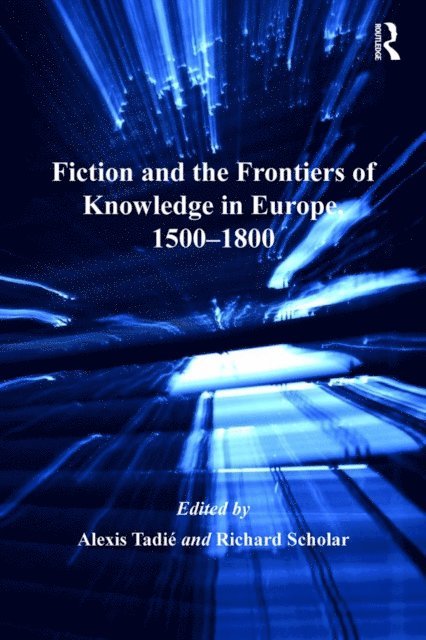
The uses of fiction in early modern Europe are far more varied than is often assumed by those who consider fiction to be synonymous with the novel. The contributors to this volume demonstrate the significant role that fiction plays in early modern European culture, not only in a variety of its literary genres, but also in its formation of philosophical ideas, political theories, and the law. The volume explores these uses of fiction in a series of interrelated case studies, ranging from the Italian Renaissance to the French Revolution and examining the work of, among others, Montaigne, Corneille, Descartes, Hobbes, Locke, and Diderot. It asks: Where does fiction live, and thrive? Under what conditions, and to what ends? It suggests that fiction is best understood not as a genre or a discipline but, instead, as a frontier: one that demarcates literary genres and disciplines of knowledge and which, crucially, allows for the circulation of ideas between them.
E-bok
PDF, Engelska, 2016774 kr
Läs direkt efter köp
The uses of fiction in early modern Europe are far more varied than is often assumed by those who consider fiction to be synonymous with the novel. The contributors to this volume demonstrate the significant role that fiction plays in early modern European culture, not only in a variety of its literary genres, but also in its formation of philosophical ideas, political theories, and the law. The volume explores these uses of fiction in a series of interrelated case studies, ranging from the Italian Renaissance to the French Revolution and examining the work of, among others, Montaigne, Corneille, Descartes, Hobbes, Locke, and Diderot. It asks: Where does fiction live, and thrive? Under what conditions, and to what ends? It suggests that fiction is best understood not as a genre or a discipline but, instead, as a frontier: one that demarcates literary genres and disciplines of knowledge and which, crucially, allows for the circulation of ideas between them.
E-bok
Engelska, 2017890 kr
Läs direkt efter köp
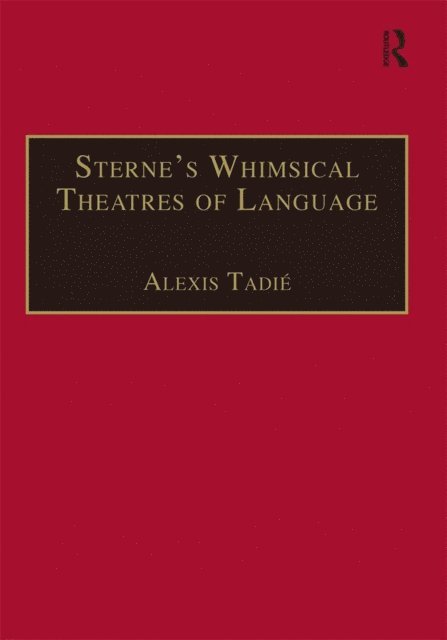
This study addresses the intricate links between oral culture and literate culture in the eighteenth century. Tadié traces how perceptions and representations of language move from a dominance of the spoken work to a dominance of the written word; and this is echoed in the order of the five chapters on conversation, gesture, theatre, fiction, and print. Tadié offers a reading of Sterne''s works, arguing that the use of language lies at the centre of Sterne''s art; he approaches the historical dimension of the texts in the context of eighteenth-century theories of language. He brings into focus the heterogeneity of Sterne''s texts; and he demonstrates how Sterne''s awareness for the variations of language links up with his interest in the form of the book, and with the use of all the potentialities of print. The study broaches the issue of the ''rise of the novel'' in the eighteenth century. it refuses the idea of progress, or of slow emergence of the novel in the eighteenth century, which would lead progressively from Defoe to the Fielding-Richardson debate, to a possible view of Sterne as the great ironist of the form of the novel. Tadié asserts that Sterne''s writings do not simply address the nature of the novel, but they engage with all the forms of language representation made available by the culture of the age.
E-bok
PDF, Engelska, 2017890 kr
Läs direkt efter köp
This study addresses the intricate links between oral culture and literate culture in the eighteenth century. Tadié traces how perceptions and representations of language move from a dominance of the spoken work to a dominance of the written word; and this is echoed in the order of the five chapters on conversation, gesture, theatre, fiction, and print. Tadié offers a reading of Sterne''s works, arguing that the use of language lies at the centre of Sterne''s art; he approaches the historical dimension of the texts in the context of eighteenth-century theories of language. He brings into focus the heterogeneity of Sterne''s texts; and he demonstrates how Sterne''s awareness for the variations of language links up with his interest in the form of the book, and with the use of all the potentialities of print. The study broaches the issue of the ''rise of the novel'' in the eighteenth century. it refuses the idea of progress, or of slow emergence of the novel in the eighteenth century, which would lead progressively from Defoe to the Fielding-Richardson debate, to a possible view of Sterne as the great ironist of the form of the novel. Tadié asserts that Sterne''s writings do not simply address the nature of the novel, but they engage with all the forms of language representation made available by the culture of the age.