Alf Hiltebeitel – författare
Visar alla böcker från författaren Alf Hiltebeitel. Handla med fri frakt och snabb leverans.
19 produkter
19 produkter
Inbunden, Engelska, 2018
1 633 kr
Skickas inom 3-6 vardagar
Though Freud never overtly refers to the Mahābhārata, many of the Sanskrit epic's themes are illuminated by Freud's thought and, conversely, many incidents in the epic can be used to illustrate Freud's theories. In Freud's Mahābhārata, the companion volume to Freud's India, Alf Hiltebeitel offers what he calls a "pointillist introduction" to a new theory about the Mahābhārata based on Freud. Chapter 1 introduces the concept of the preoedipal, along with Freud's discussion of burial alive, ghosts and doubles, and castration anxiety, and looks at parallels with Indian theories of karma and reincarnation. In Chapter 2 Hiltebeitel draws on André Green's concept of "the dead mother," alive but dead to her child, to tell the epic's main story through the interactions between the peace-loving King Yudhisthira and his bellicose mother Kunti. Chapter 3 takes up three "dead mother" stories in the Mahābhārata's early books, all of them featuring Kunti, among a plethora of really dead or divine past mothers in the Pandava lineage. Next, Chapter 4 looks at Fernando Wulff Alonso's hypothesis that the Mahābhārata poets worked from Greek sources in modeling their stories. Hiltebeitel explores the epic's divine plan of the unburdening of the Earth, the goddess Earth, and its Greek counterpart in the Iliad's plan of Zeus. Girindrasekhar Bose's concept of the "Oedipus mother" is introduced in Chapter 5 through a discussion of Aravan, a minor figure throughout the Sanskrit epic tradition but one who looms in importance in the Draupadi cult and has a cult of his own, where he is called Kuttantavar. In both cults Aravan is worshiped for his self-mutilating sacrifice as a battle-opening offering to "mother" Kali, and he is worshipped in his own cult by Indian eunuchs or castrati called Aravanis in his honor. The book concludes with a new theory of the epic based on Freud's Moses and Monotheism, in which he argued that religious traditions deserve to be studied not only in what they say consciously about themselves, but in what they have registered unconsciously from past traumas, loss of memory, and the return of the repressed.
Inbunden, Engelska, 2018
839 kr
Skickas inom 5-8 vardagar
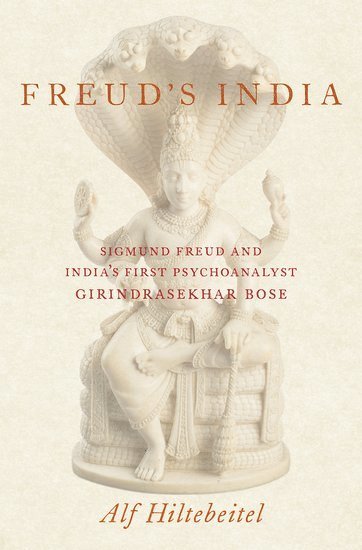
The sharp contrast between cultures with a monotheistic paternal deity and those with pluralistic maternal deities is a theme of abiding interest in religious studies. Attempts to understand the implications of these two vast organizing principles for religious life lead to an overwhelmingly diverse set of facts and their meanings. In Freud's India, the companion volume to Freud's Mahābhārata, Alf Hiltebeitel takes up this enormously engaging question, focusing on the thinking of two spokespeople for the inner life of their cultures-- Sigmund Freud and Girindrasekhar Bose. Hiltebeitel examines the attempts of these two men to communicate with and understand each other and these issues in the heated context of emotionally divisive allegiances. The book is elegant in its nuanced attention to these two thinkers and its tightly controlled exploration of what their interactions reveal about their contributions and limitations as representatives of the psychology and religion of their respective cultures. Anxieties about mothers, says Hiltebeitel, separate Eastern from Western imaginations. They separate Freud from Bose, and they separate Hindu foundational texts from the foundational texts of Judaism.
Inbunden, Engelska, 2011
1 406 kr
Skickas inom 5-8 vardagar
Between 300 BCE and 200 CE, concepts and practices of dharma attained literary prominence throughout India. Both Buddhist and Brahmanical authors sought to clarify and classify their central concerns, and dharma proved a means of thinking through and articulating those concerns. Alf Hiltebeitel shows the different ways in which dharma was interpreted during that formative period: from the grand cosmic chronometries of kalpas and yugas to narratives about divine plans, gendered nuances of genealogical time, royal biography (even autobiography, in the case of the emperor Asoka), and guidelines for daily life, including meditation. He reveals the vital role dharma has played across political, religious, legal, literary, ethical, and philosophical domains and discourses about what holds life together. Through dharma, these traditions have articulated their distinct visions of the good and well-rewarded life. This insightful study explores the diverse and changing significance of dharma in classical India in nine major dharma texts, as well some shorter ones. Dharma proves to be a term by which to make a fresh cut through these texts, and to reconsider their own chronology, their import, and their relation to each other.
Häftad, Engelska, 1988
270 kr
Skickas inom 5-8 vardagar
The preeminent scholar of comparative studies of Indo-European society, Georges Dumézil theorized that ancient and prehistoric Indo-European culture and literature revolved around three major functions: sovereignty, force, and fertility. This work treats these functions as they are articulated through "first king" legends found in Indian, Iranian, and Celtic epics, particularly the Mahabharata. Dumézil, drawing on an extraordinarily broad range of Indo-European sources from Scandinavia to India and offering an original and provocative analytic method, set a new agenda for studies in comparative oral literature, historical linguistics, comparative mythology, and history of religions. The Destiny of a King examines one of the "little" epics within the Mahabharata—the legend of King Yayati, a distant ancestor of the Pandavas, the heroes of the larger epic. Dumézil compares Yayati's attributes and actions with those of the legendary Celtic king Eochaid Feidlech and also finds striking similarities in the stories surrounding the daughters of these two kings, the Indian Madhavi and the Celtic Medb. When he compares these two traditions with the "first king" legends from Iran, he finds such common themes as the apportionment of the earth and the "sin of the sovereign."
Häftad, Engelska, 1988
517 kr
Skickas inom 5-8 vardagar
Häftad, Engelska, 1991
962 kr
Skickas inom 3-6 vardagar
Häftad, Engelska, 1999
830 kr
Skickas inom 5-8 vardagar
Throughout India and Southeast Asia, ancient classical epics - the "Mahabharata" and the "Ramayana" - continue to exert considerable cultural influence. This work offers an exploration into South Asia's regional epic traditions. Using his own fieldwork as a starting point, Alf Hiltebeitel analyzes how the oral tradition of the south Indian cult of the goddess Draupadi and five regional martial oral epics compare with one another and tie in with the Sanskrit epics. Drawing on literary theory and cultural studies, he reveals the shared subtexts of the Draupadi cult "Mahabharata" and the five oral epics, and shows how the traditional plots are twisted and classical characters reshaped to reflect local history and religion. In doing so, Hiltebeitel sheds light on the intertwining oral traditions of medieval Rajput military culture, Dalits ("former Untouchables"), and Muslims.
Häftad, Engelska, 2001
336 kr
Skickas inom 5-8 vardagar
The ancient Indian Sanskrit tradition produced no text more intriguing, or more persistently misunderstood or underappreciated, than the Mahabharata. Its intricacies have waylaid generations of scholars and ignited dozens of unresolved debates. In this text, Alf Hiltebeitel offers a unique model for understanding the great epic. Employing a range of literary and narrative theories, he draws on historical and comparative research in an attempt to discern the spirit and techniques behind the epic's composition. The author focuses on the education of Yudhisthira, also known as the Dharma King, and shows how the relationship of this figure to others - especially his author-grandfather Vyasa and his wife Draupadi - provides a thread through the bewildering array of frames and stories embedded within stories. Hiltebeital also offers a revisionist theory regarding the dating and production of the original text and its relation to the Veda.
Häftad, Engelska, 2018
685 kr
Skickas inom 10-15 vardagar
In Indian mythological texts like the Mahābhārata and Rāmāyaṇa, there are recurrent tales about gleaners. The practice of "gleaning" in India had more to do with the house-less forest life than with residential village or urban life or with gathering residual post-harvest grains from cultivated fields. Gleaning can be seen a metaphor for the Mahābhārata poets’ art: an art that could have included their manner of gleaning what they made the leftovers (what they found useful) from many preexistent texts into Vyāsa’s “entire thought”—including oral texts and possibly written ones, such as philosophical debates and stories.This book explores the notion of non-violence in the epic Mahābhārata. In examining gleaning as an ecological and spiritual philosophy nurtured as much by hospitality codes as by eating practices, the author analyses the merits and limitations of the 9th century Kashmiri aesthetician Anandavardhana that the dominant aesthetic sentiment or rasa of the Mahābhārata is shanta (peace). Mahatma Gandhi's non-violent reading of the Mahabharata via the Bhagavad Gita are also studied.This book by one of the leaders in Mahābhārata studies is of interest to scholars of South Asian Literary Studies, Religious Studies as well as Peace Studies, South Asian Anthropology and History.
Häftad, Engelska, 1990
367 kr
Skickas inom 7-10 vardagar
This book is a study of India's great epic, the Mahābhārata, against the background of Indo-European myth, epic, and ritual. It builds upon the pioneering studies in these areas by Georges Dumezil and Stig Wikander to work toward the goal of understanding how this epic's Indo-European heritage is interpreted and reshaped within the setting of bhakti or devotional Hinduism.The book begins with a comparative typology of traditional classical epics, arguing that epic is a distinctive mythical genre, and that the Mahābhārata in particular should be studied as part of an Indo-European epic and (and not just mythical) continuum. The reshaping of Indo-European themes is then examined in relation to the Mahābhārata's central mystery: the figure of Krishna, hero and ally of the Panbrothers in their struggles against their cousins, the Kauravas, and incarnation of Vis.The study argues that Krishna figures in the epic at the center of a coherent theological ensemble that builds upon continuities in Indo-European, Vedic, and particularly Brahmanic sacrificial idioms. Ultimately, Krishna guides the forces of dharma or righteousness through a great "sacrifice of battle" whose eschatological background recalls Indo-European and Vedic themes, while projecting them into the Hindu bhakti cosmology of universal dissolutions, recreations, and divine grace. The study vigorously opposes attempts to "explain" Krishna by arbitrary theories of the Mahābhārata's growth through interpolations.
Inbunden, Engelska, 2000
1 389 kr
Skickas inom 5-8 vardagar
In India, God can be female. The goddesses of Hinduism and Buddhism represent the largest extant collection of living goddesses anywhere on the planet. Feminists in the West often draw upon South Asian goddesses as theological resources in the contemporary rediscovery of the Goddess. Yet, these goddesses are products of a male supremacist society. What is the impact of powerful female deities--their images, projections, textuality, and history--on the social standing and psychological health of women? Do they empower women, or serve the interests of patriarchal culture? Is the Goddess a Feminist? looks at the goddesses of South Asia to address these questions directly. Not a book about a single goddess or even about a variety of South Asian goddesses, the volume raises questions about images of deities as symbols and the ways in which they function. Contributors discuss contemporary Indian women who have embraced goddesses as spiritually and socially liberating, as well as the seeming contradictions between the power of Indian goddesses and the lives of Indian women.They also explore such topics as the element of male desire in the embodiment of female deities, the question of who speaks for the goddesses, and the politics and theology of Western feminist use of Hindu and Buddhist goddesses as models for their feminist reflections.
Häftad, Engelska, 2000
461 kr
Skickas inom 5-8 vardagar
In India, God can be female. The goddesses of Hinduism and Buddhism represent the largest extant collection of living goddesses anywhere on the planet. Feminists in the West often draw upon South Asian goddesses as theological resources in the contemporary rediscovery of the Goddess. Yet, these goddesses are products of a male supremacist society. What is the impact of powerful female deities--their images, projections, textuality, and history--on the social standing and psychological health of women? Do they empower women, or serve the interests of patriarchal culture? Is the Goddess a Feminist? looks at the goddesses of South Asia to address these questions directly. Not a book about a single goddess or even about a variety of South Asian goddesses, the volume raises questions about images of deities as symbols and the ways in which they function. Contributors discuss contemporary Indian women who have embraced goddesses as spiritually and socially liberating, as well as the seeming contradictions between the power of Indian goddesses and the lives of Indian women.They also explore such topics as the element of male desire in the embodiment of female deities, the question of who speaks for the goddesses, and the politics and theology of Western feminist use of Hindu and Buddhist goddesses as models for their feminist reflections.
Inbunden, Engelska, 2010
534 kr
Skickas inom 10-15 vardagar
Häftad, Engelska, 2010
181 kr
Skickas inom 5-8 vardagar
This introductory work proposes a fresh take on the ancient Indian concept dharma. By unfolding how, even in its developments as "law" and custom, dharma participates in nuanced and multifarious understandings of the term that play out in India’s great spiritual traditions, the book offers insights into the innovative character of both Hindu and Buddhist usages of the concept. Alf Hiltebeitel, in an original approach to early Buddhist usages, explores how the Buddhist canon brought out different meanings of dharma. This is followed by an exposition of the hypothesis that most, if not all, of the Hindu law books flowered after the third-century BC emperor Asoka, a Buddhist, made dharma the guiding principle of an entire realm and culture. A discussion built around the author’s expertise on the Sanskrit epics shows how their narratives amplified the new Brahmanical norms and brought out the ethical dilemmas and spiritual teachings that arose from inquiry into dharma.A chapter on the tale of the Life of the Buddha considers the relation between dharma, moksa/nirvana (salvation), and bhakti (devotion). Here, Hiltebeitel ties together a thread that runs through the entire story, which is the Buddha’s tendency to present dharma as a kind of civil discourse. In this sense, dharma challenges people to think critically or at least more creatively about their ethical principles and the foundations of their own spiritual values. A closing chapter on dharma in the twenty-first century explores its new cachet in an era of globalization, its diasporic implications, its openings into American popular culture, some implications for women, and the questions it is still raising for modern India.
Inbunden, Engelska, 2016
2 220 kr
Skickas inom 10-15 vardagar
In Indian mythological texts like the Mahābhārata and Rāmāyaṇa, there are recurrent tales about gleaners. The practice of "gleaning" in India had more to do with the house-less forest life than with residential village or urban life or with gathering residual post-harvest grains from cultivated fields. Gleaning can be seen a metaphor for the Mahābhārata poets’ art: an art that could have included their manner of gleaning what they made the leftovers (what they found useful) from many preexistent texts into Vyāsa’s “entire thought”—including oral texts and possibly written ones, such as philosophical debates and stories.This book explores the notion of non-violence in the epic Mahābhārata. In examining gleaning as an ecological and spiritual philosophy nurtured as much by hospitality codes as by eating practices, the author analyses the merits and limitations of the 9th century Kashmiri aesthetician Anandavardhana that the dominant aesthetic sentiment or rasa of the Mahābhārata is shanta (peace). Mahatma Gandhi's non-violent reading of the Mahabharata via the Bhagavad Gita are also studied.This book by one of the leaders in Mahābhārata studies is of interest to scholars of South Asian Literary Studies, Religious Studies as well as Peace Studies, South Asian Anthropology and History.
Inbunden, Engelska, 2001
802 kr
Tillfälligt slut
The ancient Indian Sanskrit tradition produced no text more intriguing, or more persistently misunderstood or underappreciated, than the Mahabharata. Its intricacies have waylaid generations of scholars and ignited dozens of unresolved debates. In this text, Alf Hiltebitel offers a unique model for understanding the great epic. Employing a range of literary and narrative theories, he draws on historical and comparative research in an attempt to discern the spirit and techniques behind the epic's composition. The author focuses on the education of Yudhisthira, also known as the Dharma King, and shows how the relationship of this figure to others - especially his author-grandfather Vyasa and his wife Draupadi - provides a thread through the bewildering array of frames and stories embedded within stories. Hiltebeital also offers a revisionist theory regarding the dating and production of the original text and its relation to the Veda.
Inbunden, Engelska, 1998
1 042 kr
Tillfälligt slut
An interdisciplinary exploration of the meanings of hair in Asia from classical times to contemporary contexts.Hair-whether present or absent, restored or removed, abundant or scarce, long or short, bound or unbound, colored or natural-marks a person as clearly as speech, clothing, and smell. It defines a person's gender, sexual availability and desirability, age, social status, and even political stance. It may also act as a basis for discrimination in treatment by others. While hair's high salience as both sign and symbol extends cross-culturally through time, its denotations are far from universal. Hair is an interdisciplinary look at the meanings of hair, hairiness, and hairlessness in Asian cultures, from classical to contemporary contexts.The contributors draw on a variety of literary, archaeological, religious, and ethnographic evidence. They examine scientific, medical, political, and popular cultural discourses. Topics covered include monastic communities and communities of fashion, hair codes and social conventions of rank, attitudes of enforcement and rebellion, and positions of privilege and destitution. Different interpretations include hair as a key aspect of female beauty, of virility, as obscene, as impure, and linked with other symbolic markers in bodily, social, political, and cosmological constructs.
Häftad, Engelska, 1998
397 kr
Tillfälligt slut
An interdisciplinary exploration of the meanings of hair in Asia from classical times to contemporary contexts.Hair-whether present or absent, restored or removed, abundant or scarce, long or short, bound or unbound, colored or natural-marks a person as clearly as speech, clothing, and smell. It defines a person's gender, sexual availability and desirability, age, social status, and even political stance. It may also act as a basis for discrimination in treatment by others. While hair's high salience as both sign and symbol extends cross-culturally through time, its denotations are far from universal. Hair is an interdisciplinary look at the meanings of hair, hairiness, and hairlessness in Asian cultures, from classical to contemporary contexts.The contributors draw on a variety of literary, archaeological, religious, and ethnographic evidence. They examine scientific, medical, political, and popular cultural discourses. Topics covered include monastic communities and communities of fashion, hair codes and social conventions of rank, attitudes of enforcement and rebellion, and positions of privilege and destitution. Different interpretations include hair as a key aspect of female beauty, of virility, as obscene, as impure, and linked with other symbolic markers in bodily, social, political, and cosmological constructs.
Häftad, Engelska, 1989
430 kr
Tillfälligt slut
The Hindu sacred order is guarded by the very gods who violate it and the demons who oppose it. This book is a who's who of such transgressive figures, both familiar and unfamiliar, showing their place within the Hindu order that they violate. It is also a reflection of the serious scholarly debate over the nature and composition of this Hindu order.The chapters range from pan-Hindu deities such as Bhairava and Virabhadra to guardian gods of specific regions and lineages and of different goddess cults. Chapters cover violent themes in SAaivite hagiography, the position of Brahmans in relation to cultic carnivorism, guardian heroes in folk epic, the deified dead, the royal mythology of a "criminal caste," and a wide-ranging overview of transgressive sacrality.