Alfio Borzì – författare
Visar alla böcker från författaren Alfio Borzì. Handla med fri frakt och snabb leverans.
6 produkter
6 produkter
2 404 kr
Skickas inom 10-15 vardagar
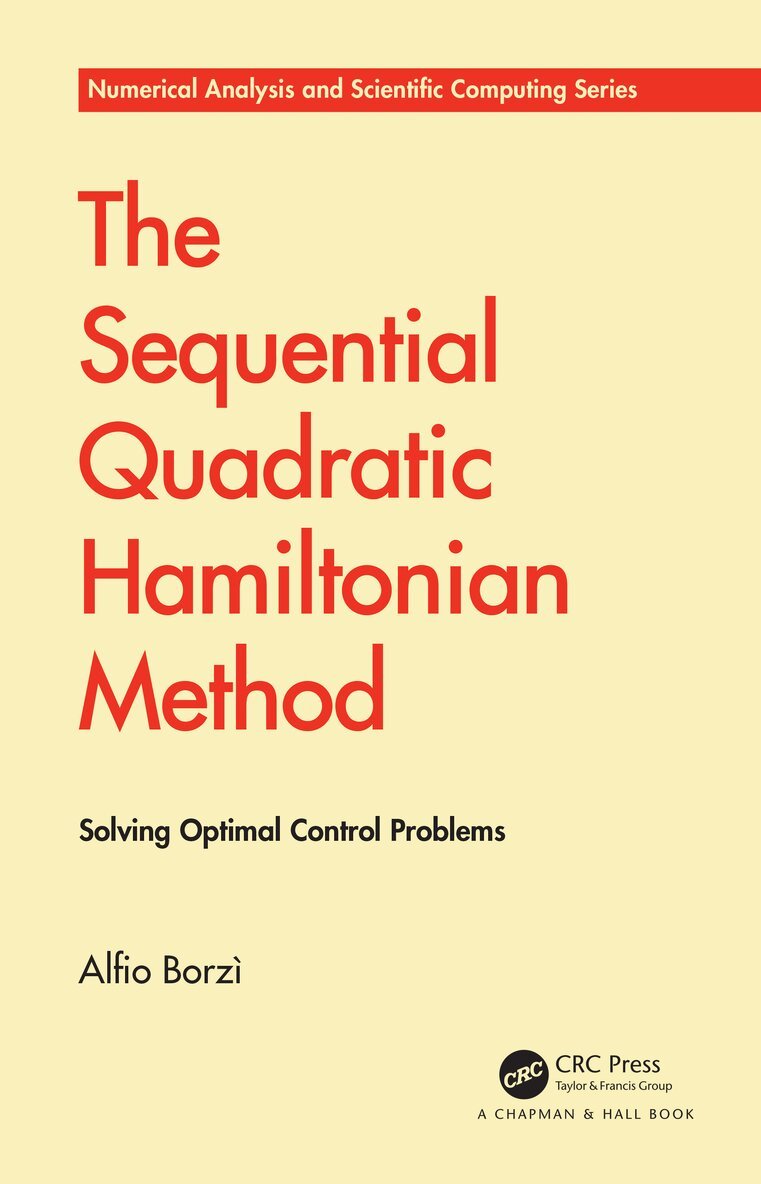
The sequential quadratic hamiltonian (SQH) method is a novel numerical optimization procedure for solving optimal control problems governed by differential models. It is based on the characterisation of optimal controls in the framework of the Pontryagin maximum principle (PMP).The SQH method is a powerful computational methodology that is capable of development in many directions. The Sequential Quadratic Hamiltonian Method: Solving Optimal Control Problems discusses its analysis and use in solving nonsmooth ODE control problems, relaxed ODE control problems, stochastic control problems, mixed-integer control problems, PDE control problems, inverse PDE problems, differential Nash game problems, and problems related to residual neural networks.This book may serve as a textbook for undergraduate and graduate students, and as an introduction for researchers in sciences and engineering who intend to further develop the SQH method or wish to use it as a numerical tool for solving challenging optimal control problems and for investigating the Pontryagin maximum principle on new optimisation problems.Features Provides insight into mathematical and computational issues concerning optimal control problems, while discussing many differential models of interest in different disciplines.Suitable for undergraduate and graduate students and as an introduction for researchers in sciences and engineering.Accompanied by codes which allow the reader to apply the SQH method to solve many different optimal control and optimisation problems.
1 925 kr
Skickas inom 10-15 vardagar
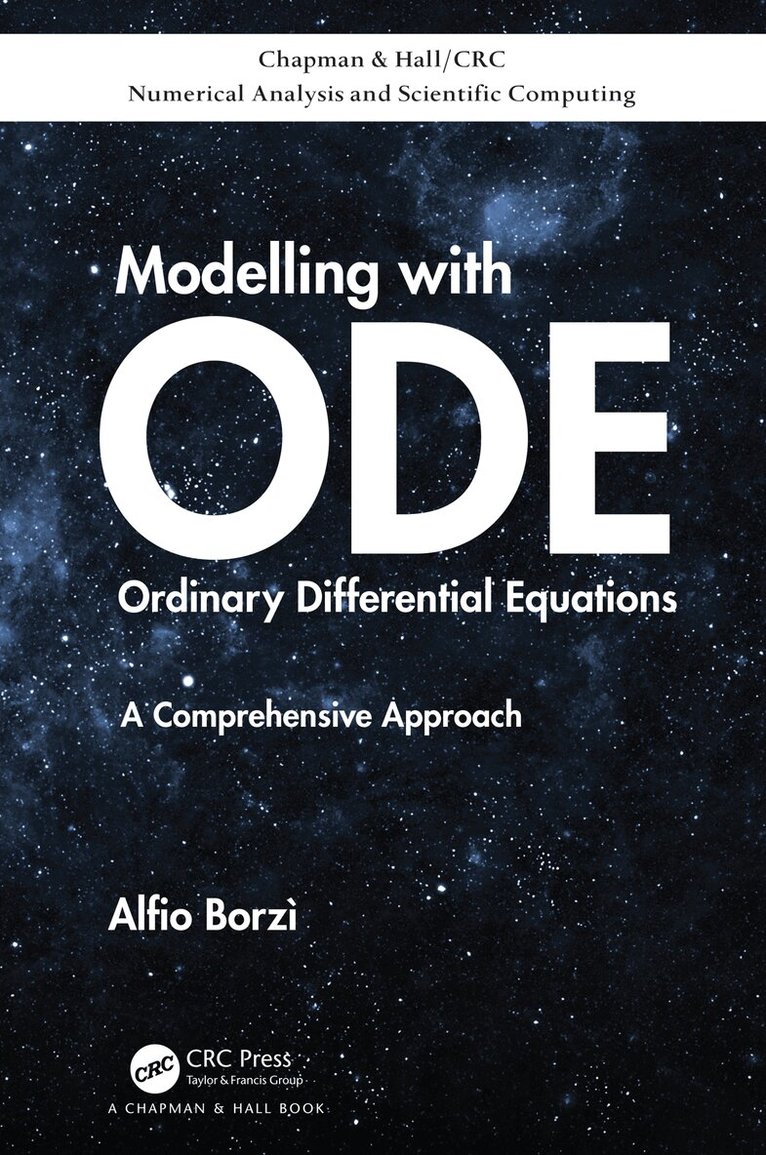
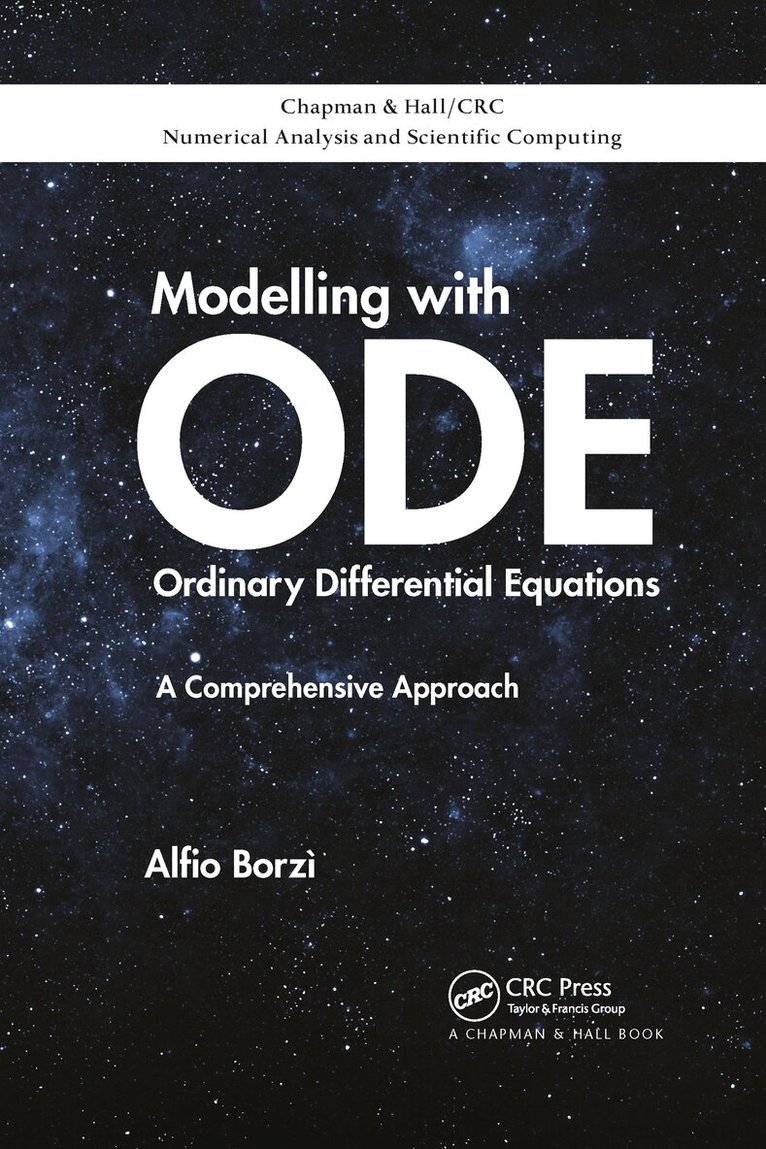
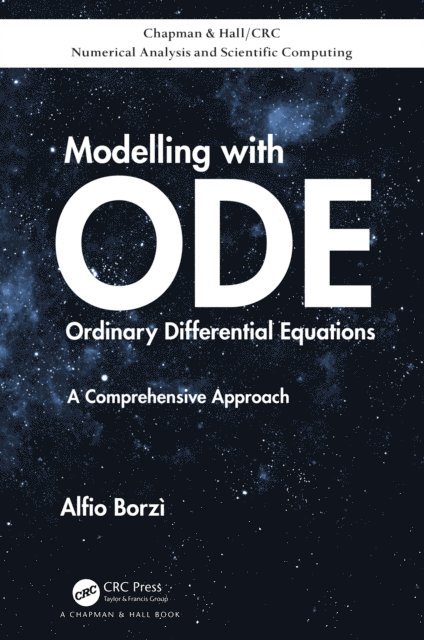
Modelling with Ordinary Differential Equations: A Comprehensive Approach aims to provide a broad and self-contained introduction to the mathematical tools necessary to investigate and apply ODE models. The book starts by establishing the existence of solutions in various settings and analysing their stability properties. The next step is to illustrate modelling issues arising in the calculus of variation and optimal control theory that are of interest in many applications. This discussion is continued with an introduction to inverse problems governed by ODE models and to differential games.The book is completed with an illustration of stochastic differential equations and the development of neural networks to solve ODE systems. Many numerical methods are presented to solve the classes of problems discussed in this book.Features: Provides insight into rigorous mathematical issues concerning various topics, while discussing many different models of interest in different disciplines (biology, chemistry, economics, medicine, physics, social sciences, etc.) Suitable for undergraduate and graduate students and as an introduction for researchers in engineering and the sciences Accompanied by codes which allow the reader to apply the numerical methods discussed in this book in those cases where analytical solutions are not available
719 kr
Skickas inom 10-15 vardagar
Modelling with Ordinary Differential Equations: A Comprehensive Approach aims to provide a broad and self-contained introduction to the mathematical tools necessary to investigate and apply ODE models. The book starts by establishing the existence of solutions in various settings and analysing their stability properties. The next step is to illustrate modelling issues arising in the calculus of variation and optimal control theory that are of interest in many applications. This discussion is continued with an introduction to inverse problems governed by ODE models and to differential games.The book is completed with an illustration of stochastic differential equations and the development of neural networks to solve ODE systems. Many numerical methods are presented to solve the classes of problems discussed in this book.Features:Provides insight into rigorous mathematical issues concerning various topics, while discussing many different models of interest in different disciplines (biology, chemistry, economics, medicine, physics, social sciences, etc.)Suitable for undergraduate and graduate students and as an introduction for researchers in engineering and the sciencesAccompanied by codes which allow the reader to apply the numerical methods discussed in this book in those cases where analytical solutions are not available
3 127 kr
Kommande
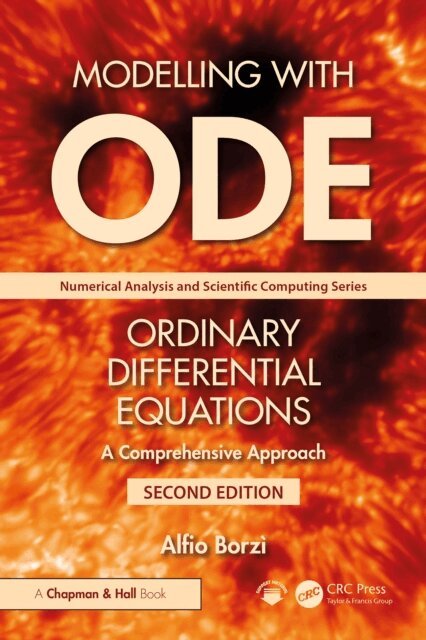
“Alfio Borzì's Modelling with Ordinary Differential Equations is a remarkably comprehensive text that succeeds in something rare: it covers the classical foundations of ODE theory with precision and rigour, while consistently opening windows to advanced and genuinely original applications that are hard to find in comparable textbooks”—Professor Volker Schulz, Universität Trier"Expertly written, organized and presented, Modelling with Ordinary Differential Equations: A Comprehensive Approach is an ideal textbook for college and university Numerical Analysis & Scientific Computing curriculums. [. . . ] unreservedly recommended as a critically important addition to academic library collections"—Midwest Book ReviewModelling with Ordinary Differential Equations: A Comprehensive Approach aims to provide a broad and self-contained introduction to the mathematical tools necessary to investigate and apply ODE models. The book starts by establishing the existence of solutions in various settings and analysing their stability properties. The next step is to illustrate modelling issues arising in the calculus of variation and optimal control theory that are of interest in many applications. This discussion is continued with an introduction to inverse problems governed by ODE models and to differential games.The book is completed with an illustration of stochastic differential equations and the development of neural networks to solve ODE systems. Many numerical methods are presented to solve the classes of problems discussed in this book.New to the Second Edition:This second edition has been thoroughly revised, reorganised, and expanded with new material across most chapters. The theoretical foundations are strengthened by additional results on existence and uniqueness, Lipschitz conditions, blow-up phenomena, and Green functions, as well as new sections on compartment models and Hamiltonian systems. A major addition is a new chapter on mechanics, ranging from classical to relativistic and quantum frameworks. The numerical analysis part now includes the Verlet method, while stability theory has been extended to cover chaos and synchronization.Optimal control is treated in greater depth, with new material on the HJB equation, controllability, and free-horizon problems. Further additions include evolutionary differential games and enhanced inverse problem examples.The chapter on neural networks has been also expanded, introducing residual networks, and reservoir computing for dynamical systems.
1 163 kr
Kommande
“Alfio Borzì's Modelling with Ordinary Differential Equations is a remarkably comprehensive text that succeeds in something rare: it covers the classical foundations of ODE theory with precision and rigour, while consistently opening windows to advanced and genuinely original applications that are hard to find in comparable textbooks”—Professor Volker Schulz, Universität Trier"Expertly written, organized and presented, Modelling with Ordinary Differential Equations: A Comprehensive Approach is an ideal textbook for college and university Numerical Analysis & Scientific Computing curriculums. [. . . ] unreservedly recommended as a critically important addition to academic library collections"—Midwest Book ReviewModelling with Ordinary Differential Equations: A Comprehensive Approach aims to provide a broad and self-contained introduction to the mathematical tools necessary to investigate and apply ODE models. The book starts by establishing the existence of solutions in various settings and analysing their stability properties. The next step is to illustrate modelling issues arising in the calculus of variation and optimal control theory that are of interest in many applications. This discussion is continued with an introduction to inverse problems governed by ODE models and to differential games.The book is completed with an illustration of stochastic differential equations and the development of neural networks to solve ODE systems. Many numerical methods are presented to solve the classes of problems discussed in this book.New to the Second Edition:This second edition has been thoroughly revised, reorganised, and expanded with new material across most chapters. The theoretical foundations are strengthened by additional results on existence and uniqueness, Lipschitz conditions, blow-up phenomena, and Green functions, as well as new sections on compartment models and Hamiltonian systems. A major addition is a new chapter on mechanics, ranging from classical to relativistic and quantum frameworks. The numerical analysis part now includes the Verlet method, while stability theory has been extended to cover chaos and synchronization.Optimal control is treated in greater depth, with new material on the HJB equation, controllability, and free-horizon problems. Further additions include evolutionary differential games and enhanced inverse problem examples.The chapter on neural networks has been also expanded, introducing residual networks, and reservoir computing for dynamical systems.
1 203 kr
Skickas inom 5-8 vardagar
This book provides an introduction to representative nonrelativistic quantum control problems and their theoretical analysis and solution via modern computational techniques. The quantum theory framework is based on the Schrödinger picture, and the optimization theory, which focuses on functional spaces, is based on the Lagrange formalism. The computational techniques represent recent developments that have resulted from combining modern numerical techniques for quantum evolutionary equations with sophisticated optimization schemes. Both finite and infinite-dimensional models are discussed, including the three-level Lambda system arising in quantum optics, multispin systems in NMR, a charged particle in a well potential, Bose–Einstein condensates, multiparticle spin systems, and multiparticle models in the time-dependent density functional framework.This self-contained book covers the formulation, analysis, and numerical solution of quantum control problems and bridges scientific computing, optimal control and exact controllability, optimization with differential models, and the sciences and engineering that require quantum control methods.