Ali Ghodsi – författare
Visar alla böcker från författaren Ali Ghodsi. Handla med fri frakt och snabb leverans.
5 produkter
5 produkter
Inbunden, Engelska, 2023
1 116 kr
Skickas inom 10-15 vardagar
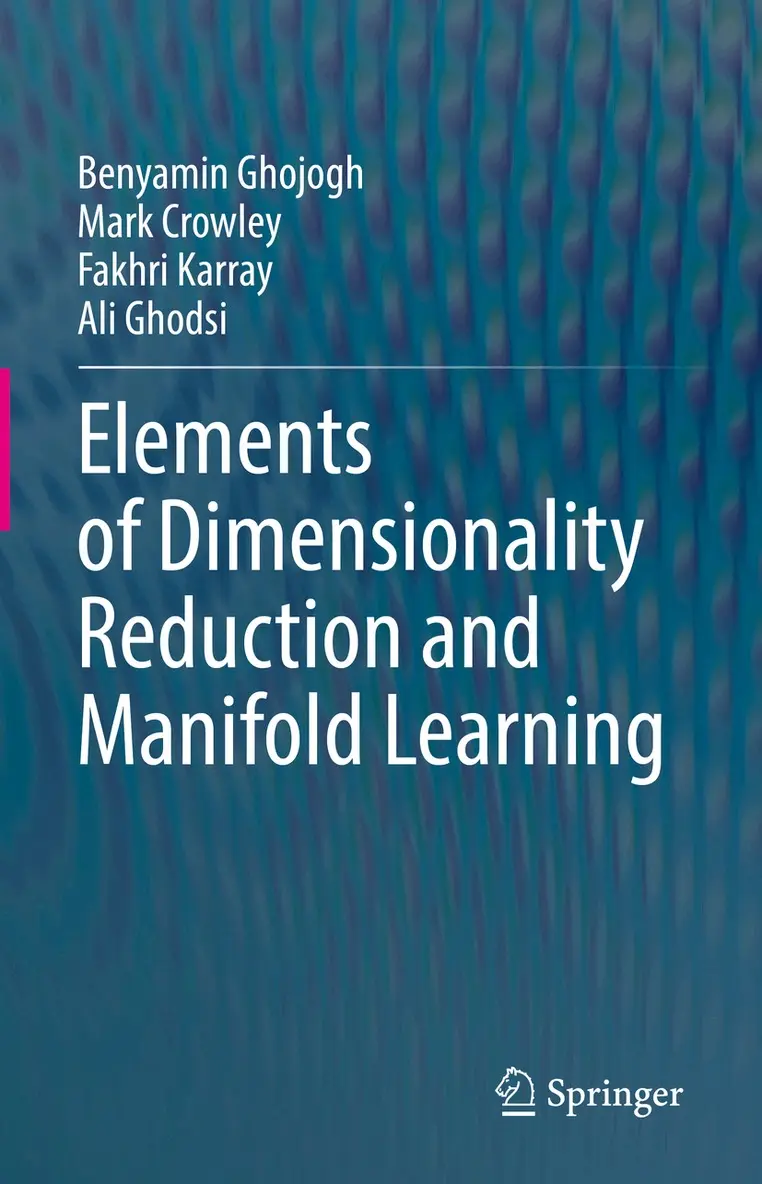
Dimensionality reduction, also known as manifold learning, is an area of machine learning used for extracting informative features from data for better representation of data or separation between classes. This book presents a cohesive review of linear and nonlinear dimensionality reduction and manifold learning. Three main aspects of dimensionality reduction are covered: spectral dimensionality reduction, probabilistic dimensionality reduction, and neural network-based dimensionality reduction, which have geometric, probabilistic, and information-theoretic points of view to dimensionality reduction, respectively. The necessary background and preliminaries on linear algebra, optimization, and kernels are also explained to ensure a comprehensive understanding of the algorithms.The tools introduced in this book can be applied to various applications involving feature extraction, image processing, computer vision, and signal processing. This book is applicable to a wide audience who would like to acquire a deep understanding of the various ways to extract, transform, and understand the structure of data. The intended audiences are academics, students, and industry professionals. Academic researchers and students can use this book as a textbook for machine learning and dimensionality reduction. Data scientists, machine learning scientists, computer vision scientists, and computer scientists can use this book as a reference. It can also be helpful to statisticians in the field of statistical learning and applied mathematicians in the fields of manifolds and subspace analysis. Industry professionals, including applied engineers, data engineers, and engineers in various fields of science dealing with machine learning, can use this as a guidebook for feature extraction from their data, as the raw data in industry often require preprocessing.The book is grounded in theory but provides thorough explanations and diverseexamples to improve the reader’s comprehension of the advanced topics. Advanced methods are explained in a step-by-step manner so that readers of all levels can follow the reasoning and come to a deep understanding of the concepts. This book does not assume advanced theoretical background in machine learning and provides necessary background, although an undergraduate-level background in linear algebra and calculus is recommended.
E-bok
Engelska, 2023978 kr
Läs direkt efter köp
Dimensionality reduction, also known as manifold learning, is an area of machine learning used for extracting informative features from data for better representation of data or separation between classes. This book presents a cohesive review of linear and nonlinear dimensionality reduction and manifold learning. Three main aspects of dimensionality reduction are covered: spectral dimensionality reduction, probabilistic dimensionality reduction, and neural network-based dimensionality reduction, which have geometric, probabilistic, and information-theoretic points of view to dimensionality reduction, respectively. The necessary background and preliminaries on linear algebra, optimization, and kernels are also explained to ensure a comprehensive understanding of the algorithms.The tools introduced in this book can be applied to various applications involving feature extraction, image processing, computer vision, and signal processing. This book is applicable to a wide audience who would like to acquire a deep understanding of the various ways to extract, transform, and understand the structure of data. The intended audiences are academics, students, and industry professionals. Academic researchers and students can use this book as a textbook for machine learning and dimensionality reduction. Data scientists, machine learning scientists, computer vision scientists, and computer scientists can use this book as a reference. It can also be helpful to statisticians in the field of statistical learning and applied mathematicians in the fields of manifolds and subspace analysis. Industry professionals, including applied engineers, data engineers, and engineers in various fields of science dealing with machine learning, can use this as a guidebook for feature extraction from their data, as the raw data in industry often require preprocessing.The book is grounded in theory but provides thorough explanations and diverseexamples to improve the reader’s comprehension of the advanced topics. Advanced methods are explained in a step-by-step manner so that readers of all levels can follow the reasoning and come to a deep understanding of the concepts. This book does not assume advanced theoretical background in machine learning and provides necessary background, although an undergraduate-level background in linear algebra and calculus is recommended.
Häftad, Engelska, 2024
783 kr
Skickas inom 10-15 vardagar
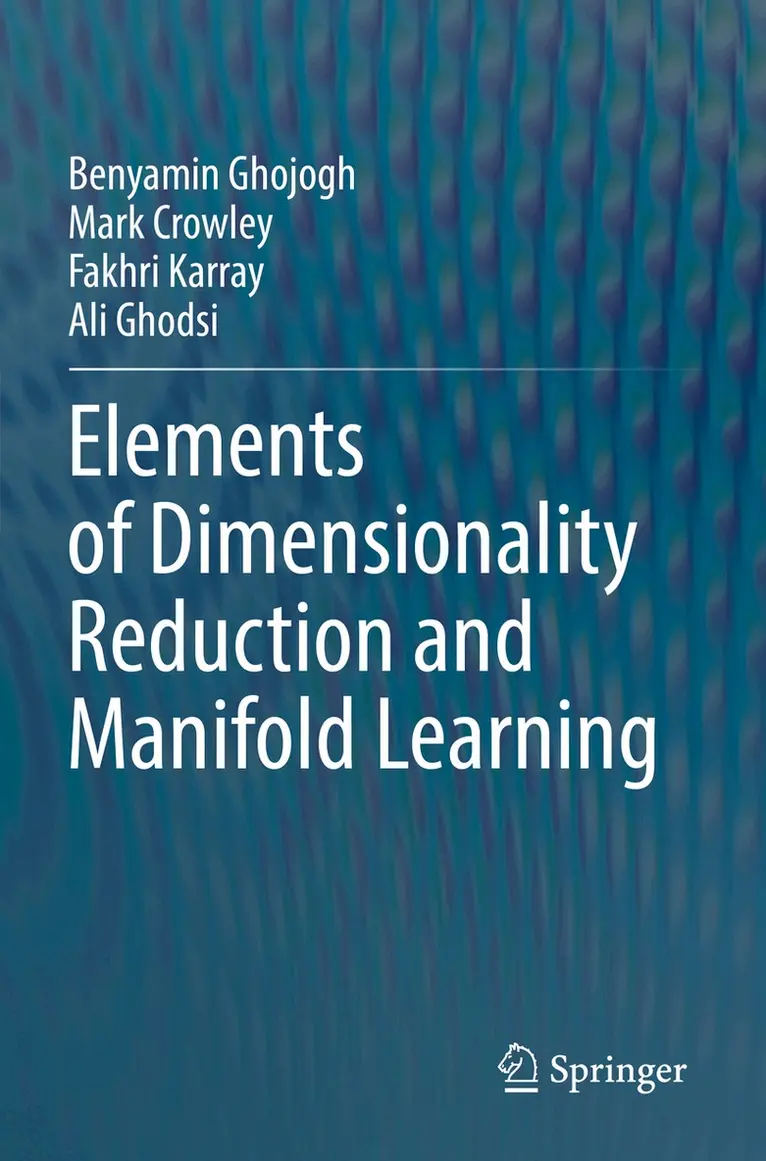
Dimensionality reduction, also known as manifold learning, is an area of machine learning used for extracting informative features from data for better representation of data or separation between classes. This book presents a cohesive review of linear and nonlinear dimensionality reduction and manifold learning. Three main aspects of dimensionality reduction are covered: spectral dimensionality reduction, probabilistic dimensionality reduction, and neural network-based dimensionality reduction, which have geometric, probabilistic, and information-theoretic points of view to dimensionality reduction, respectively. The necessary background and preliminaries on linear algebra, optimization, and kernels are also explained to ensure a comprehensive understanding of the algorithms.The tools introduced in this book can be applied to various applications involving feature extraction, image processing, computer vision, and signal processing. This book is applicable to a wide audience who would like to acquire a deep understanding of the various ways to extract, transform, and understand the structure of data. The intended audiences are academics, students, and industry professionals. Academic researchers and students can use this book as a textbook for machine learning and dimensionality reduction. Data scientists, machine learning scientists, computer vision scientists, and computer scientists can use this book as a reference. It can also be helpful to statisticians in the field of statistical learning and applied mathematicians in the fields of manifolds and subspace analysis. Industry professionals, including applied engineers, data engineers, and engineers in various fields of science dealing with machine learning, can use this as a guidebook for feature extraction from their data, as the raw data in industry often require preprocessing.The book is grounded in theory but provides thorough explanations and diverseexamples to improve the reader’s comprehension of the advanced topics. Advanced methods are explained in a step-by-step manner so that readers of all levels can follow the reasoning and come to a deep understanding of the concepts. This book does not assume advanced theoretical background in machine learning and provides necessary background, although an undergraduate-level background in linear algebra and calculus is recommended.
Inbunden, Engelska, 2026
1 227 kr
Skickas inom 10-15 vardagar
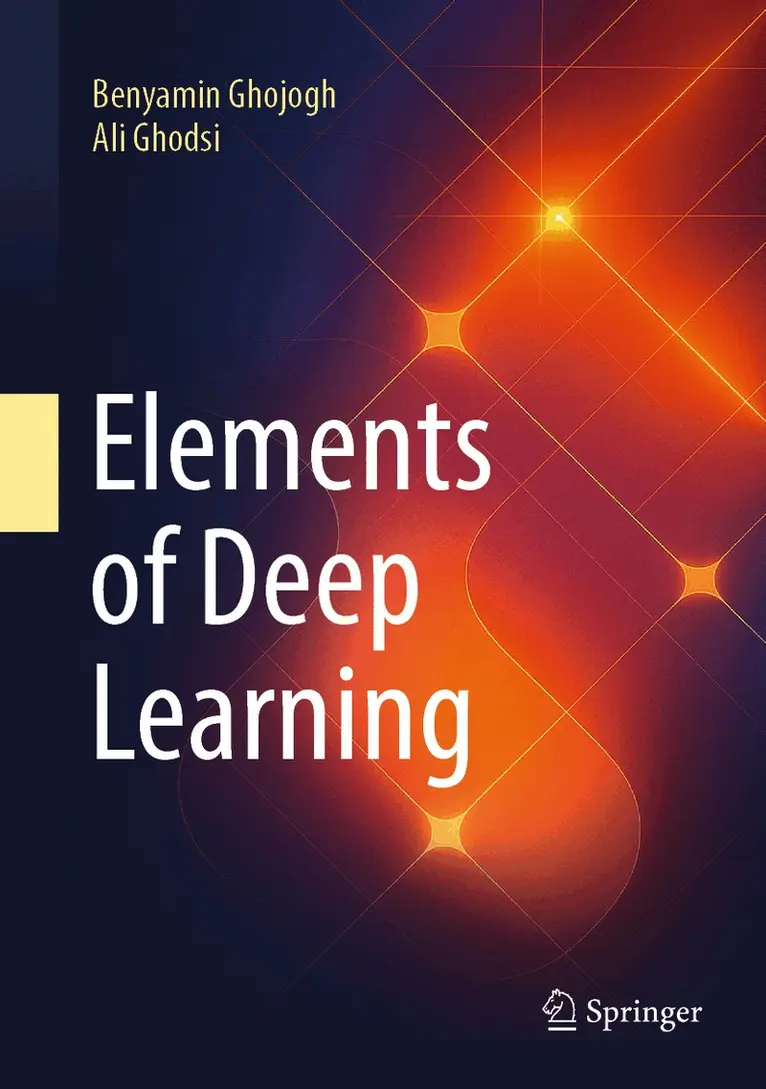
This textbook offers a comprehensive introduction to deep learning and neural networks, integrating core foundations with the latest advances. It begins with essential machine learning concepts and classic neural network architectures before progressing through convolutional models, backpropagation, regularization, generalization theory, PAC learning, and Boltzmann machines. Advanced chapters cover sequence models — including recurrent networks, LSTMs, attention, Transformers, state-space models, and large language models — alongside deep generative approaches such as VAEs, GANs, and diffusion models. Emerging topics include graph neural networks, self-supervised learning, metric learning, reinforcement learning, meta-learning, model compression, and knowledge distillation.Balancing mathematical rigor with hands-on practice, Elements of Deep Learning emphasizes both theoretical depth and real-world application. Different theories are introduced with PyTorch-based code examples, helping readers to translate theory into implementation. Organized into five sections—fundamentals, sequence models, generative models, emerging topics, and practice—the text provides a unified roadmap for mastering modern deep learning.Designed for advanced undergraduates, graduate students, instructors, and professionals in engineering, computer science, mathematics, and related fields, this book serves both as a primary course text and a reliable reference. With minimal prerequisites in linear algebra and calculus, it offers accessible explanations while equipping readers with practical tools for applications in vision, language, signal processing, healthcare, and beyond.
E-bok
Engelska, 20261 622 kr
Läs direkt efter köp
This textbook offers a comprehensive introduction to deep learning and neural networks, integrating core foundations with the latest advances. It begins with essential machine learning concepts and classic neural network architectures before progressing through convolutional models, backpropagation, regularization, generalization theory, PAC learning, and Boltzmann machines. Advanced chapters cover sequence models — including recurrent networks, LSTMs, attention, Transformers, state-space models, and large language models — alongside deep generative approaches such as VAEs, GANs, and diffusion models. Emerging topics include graph neural networks, self-supervised learning, metric learning, reinforcement learning, meta-learning, model compression, and knowledge distillation.Balancing mathematical rigor with hands-on practice, Elements of Deep Learning emphasizes both theoretical depth and real-world application. Different theories are introduced with PyTorch-based code examples, helping readers to translate theory into implementation. Organized into five sections—fundamentals, sequence models, generative models, emerging topics, and practice—the text provides a unified roadmap for mastering modern deep learning.Designed for advanced undergraduates, graduate students, instructors, and professionals in engineering, computer science, mathematics, and related fields, this book serves both as a primary course text and a reliable reference. With minimal prerequisites in linear algebra and calculus, it offers accessible explanations while equipping readers with practical tools for applications in vision, language, signal processing, healthcare, and beyond.