Ali Meghji - Böcker
Visar alla böcker från författaren Ali Meghji. Handla med fri frakt och snabb leverans.
8 produkter
8 produkter
1 138 kr
Skickas inom 7-10 vardagar
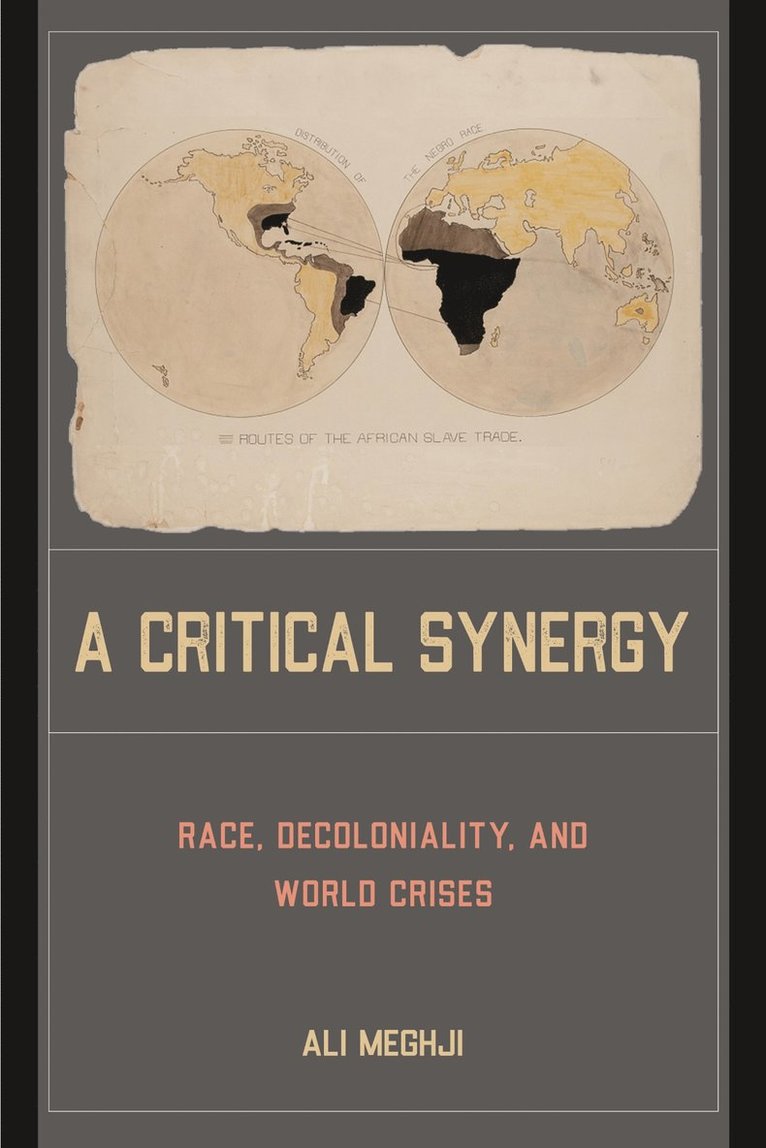
Practitioners of decolonial theory and critical race theory (CRT) often use one or the other, but not both. In his provocative book, A Critical Synergy, Ali Meghji suggests using the two theories in tandem rather than attempting to hierarchize or synthesize them. Doing so allows for the study of social phenomena in a way that captures their global and historical roots, while acknowledging their local, national, and contemporary particularities.The differences between decolonial thought and CRT, Meghji insists, does not necessarily imply one approach is stronger. Rather, he asserts, they often provide alternative but not incompatible viewpoints of the same social problem. Meghji presents case studies of capitalism, the COVID-19 pandemic, climate crisis, and twenty-first-century far-right populism to show that with both theories, we can understand more, as insights may be lost by using only one.Meghji is not calling for a universal theoretical synthesis in A Critical Synergy, but rather a practice that can help open sociology and social science to the tradition of pluriversality much more broadly.
290 kr
Skickas inom 7-10 vardagar
Practitioners of decolonial theory and critical race theory (CRT) often use one or the other, but not both. In his provocative book, A Critical Synergy, Ali Meghji suggests using the two theories in tandem rather than attempting to hierarchize or synthesize them. Doing so allows for the study of social phenomena in a way that captures their global and historical roots, while acknowledging their local, national, and contemporary particularities.The differences between decolonial thought and CRT, Meghji insists, does not necessarily imply one approach is stronger. Rather, he asserts, they often provide alternative but not incompatible viewpoints of the same social problem. Meghji presents case studies of capitalism, the COVID-19 pandemic, climate crisis, and twenty-first-century far-right populism to show that with both theories, we can understand more, as insights may be lost by using only one.Meghji is not calling for a universal theoretical synthesis in A Critical Synergy, but rather a practice that can help open sociology and social science to the tradition of pluriversality much more broadly.
637 kr
Skickas inom 7-10 vardagar
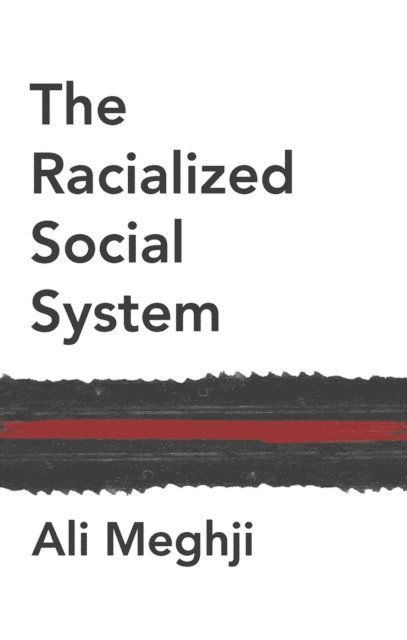
Far from its origins in US legal studies in the 1980s, critical race theory has grown to become a leading approach to the analysis of racial inequality around the world. It has courted much controversy along the way, often misunderstood and poorly defined. So what precisely is critical race theory and what makes it different from other theories of race, racialization and racism?In this incisive book, Ali Meghji defines the contours of critical race theory through the notion of the 'racialized social system'. He thereby excavates a solid social theory that clears up many empirical and conceptual questions that continue to surface, offering a flexible, practical model for studying structural racism. In making his case, Meghji pays attention to the multiple dimensions of the racialized social system, focusing on core phenomena such as interaction orders, material interests, ideologies, emotions, and organizations.In a context where any work mentioning 'race' gets defined as critical race theory, this book expounds an approach that promises to be more generative for the social scientific study of race.
216 kr
Skickas inom 7-10 vardagar
Far from its origins in US legal studies in the 1980s, critical race theory has grown to become a leading approach to the analysis of racial inequality around the world. It has courted much controversy along the way, often misunderstood and poorly defined. So what precisely is critical race theory and what makes it different from other theories of race, racialization and racism?In this incisive book, Ali Meghji defines the contours of critical race theory through the notion of the 'racialized social system'. He thereby excavates a solid social theory that clears up many empirical and conceptual questions that continue to surface, offering a flexible, practical model for studying structural racism. In making his case, Meghji pays attention to the multiple dimensions of the racialized social system, focusing on core phenomena such as interaction orders, material interests, ideologies, emotions, and organizations.In a context where any work mentioning 'race' gets defined as critical race theory, this book expounds an approach that promises to be more generative for the social scientific study of race.
661 kr
Skickas inom 7-10 vardagar
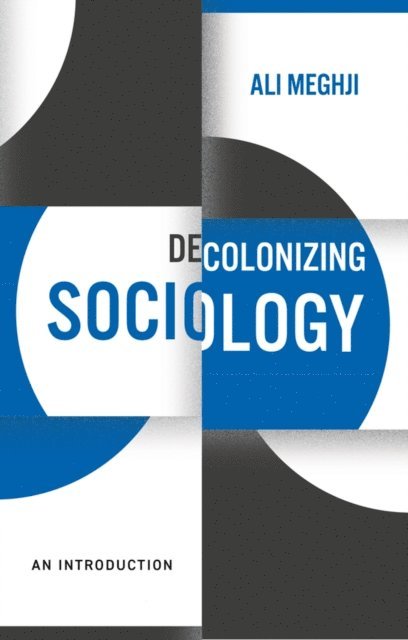
Sociology, as a discipline, was born at the height of global colonialism and imperialism. Over a century later, it is yet to shake off its commitment to colonial ways of thinking.This book explores why, and how, sociology needs to be decolonized. It analyses how sociology was integral in reproducing the colonial order, as dominant sociologists constructed theories either assuming or proving the supposed barbarity and backwardness of colonized people. Ali Meghji reveals how colonialism continues to shape the discipline today, dominating both social theory and the practice of sociology, how exporting the Eurocentric sociological canon erased social theories from the Global South, and how sociologists continue to ignore the relevance of coloniality in their work.This guide will be necessary reading for any student or proponent of sociology. In opening up the work of other decolonial advocates and under-represented thinkers to readers, Meghji offers key suggestions for what teachers and students can do to decolonize sociology. With curriculum reform, innovative teaching and a critical awareness of these issues, it is possible to make sociology more equitable on a global scale.
216 kr
Skickas inom 7-10 vardagar
Sociology, as a discipline, was born at the height of global colonialism and imperialism. Over a century later, it is yet to shake off its commitment to colonial ways of thinking.This book explores why, and how, sociology needs to be decolonized. It analyses how sociology was integral in reproducing the colonial order, as dominant sociologists constructed theories either assuming or proving the supposed barbarity and backwardness of colonized people. Ali Meghji reveals how colonialism continues to shape the discipline today, dominating both social theory and the practice of sociology, how exporting the Eurocentric sociological canon erased social theories from the Global South, and how sociologists continue to ignore the relevance of coloniality in their work.This guide will be necessary reading for any student or proponent of sociology. In opening up the work of other decolonial advocates and under-represented thinkers to readers, Meghji offers key suggestions for what teachers and students can do to decolonize sociology. With curriculum reform, innovative teaching and a critical awareness of these issues, it is possible to make sociology more equitable on a global scale.
1 167 kr
Skickas inom 5-8 vardagar
This book analyses how racism and anti-racism affects Black British middle-class cultural consumption. In doing so, it challenges the dominant understanding of British middle-class identity and culture as being ‘beyond race’.Paying attention to the relationship between cultural capital and cultural repertoires, Meghji argues that there are three modes of black middle-class identity: strategic assimilation, ethnoracial autonomous, and class-minded. Individuals within each of these identity modes use specific cultural repertoires to organise their cultural consumption. Those employing strategic assimilation draw on repertoires of code-switching and cultural equity, consuming traditional middle-class culture to maintain equality with the white middle-class in levels of cultural capital. Ethnoracial autonomous individuals draw on repertoires of ‘browning’ and Afro-centrism, self-selecting traditional middle-class cultural pursuits they decode as ‘Eurocentric’ while showing a preference for cultural forms that uplift black diasporic histories and cultures. Lastly, class-minded individuals draw on repertoires of post-racialism and de-racialisation, polarising between ‘Black’ and middle-class cultural forms. Black middle class Britannia examines how such individuals display an unequivocal preference for the latter, lambasting other black people who avoid middle-class culture as being culturally myopic or culturally uncultivated.
346 kr
Skickas
This book analyses how racism and anti-racism affects Black British middle-class cultural consumption. In doing so, it challenges the dominant understanding of British middle-class identity and culture as being ‘beyond race’.Paying attention to the relationship between cultural capital and cultural repertoires, Meghji argues that there are three modes of black middle-class identity: strategic assimilation, ethnoracial autonomous, and class-minded. Individuals within each of these identity modes use specific cultural repertoires to organise their cultural consumption. Those employing strategic assimilation draw on repertoires of code-switching and cultural equity, consuming traditional middle-class culture to maintain equality with the white middle-class in levels of cultural capital. Ethnoracial autonomous individuals draw on repertoires of ‘browning’ and Afro-centrism, self-selecting traditional middle-class cultural pursuits they decode as ‘Eurocentric’ while showing a preference for cultural forms that uplift black diasporic histories and cultures. Lastly, class-minded individuals draw on repertoires of post-racialism and de-racialisation, polarising between ‘Black’ and middle-class cultural forms. Black middle class Britannia examines how such individuals display an unequivocal preference for the latter, lambasting other black people who avoid middle-class culture as being culturally myopic or culturally uncultivated.