Amarpal Singh - Böcker
Visar alla böcker från författaren Amarpal Singh. Handla med fri frakt och snabb leverans.
5 produkter
5 produkter
163 kr
Skickas
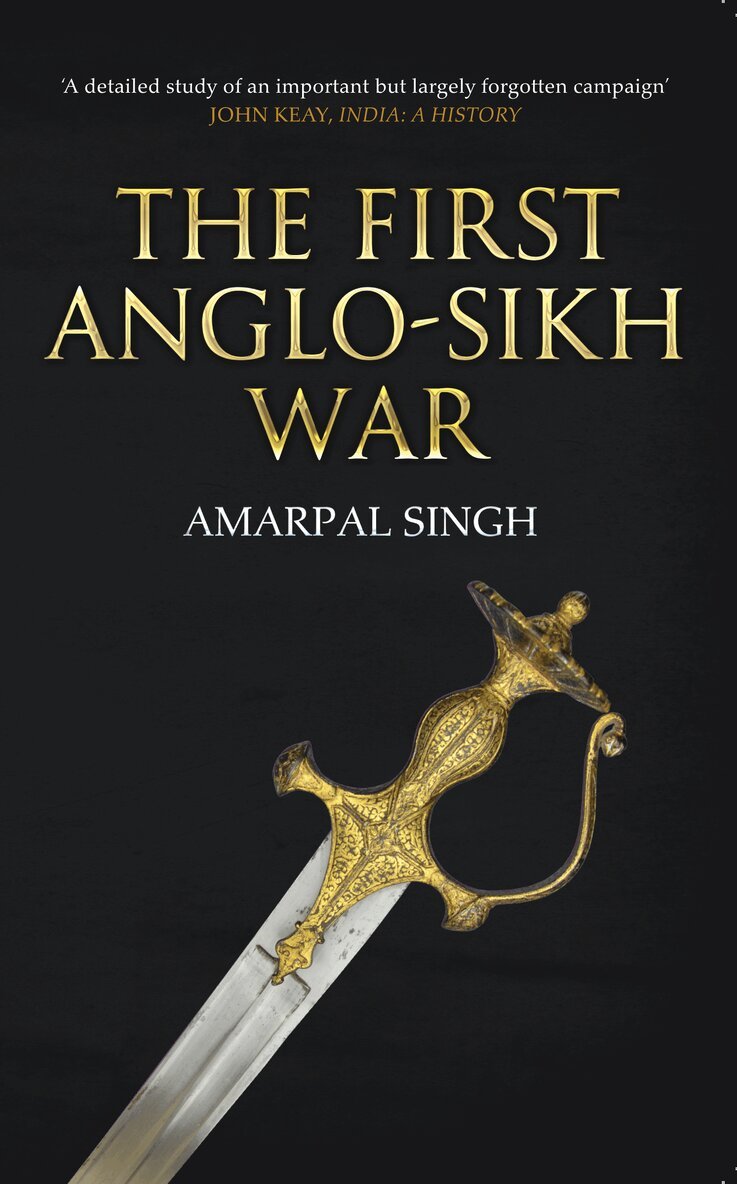
During the eighteenth and early years of the nineteenth century, the red tide of British expansion had covered almost the entire Indian subcontinent, stretching to the borders of the Punjab. There the great Sikh ruler Ranjit Singh had developed his military forces to thwart any British advance into his kingdom north of the River Sutlej. Yet on the death of Ranjit Singh, unworthy successors and disparate forces fought over his legacy while the British East India Company seized on the opportunity and prepared for battle. In the winter of 1845, the First Anglo-Sikh War broke out. From the start, the two-month campaign was marred by Victorian arrogance and bluster on the British side and personal ambition, intrigue and treason in the Sikh camp. Five keenly fought contests ensued, including the great battle of Ferozeshah where the British force found itself caught between two powerful Sikh armies and came close to destruction. Declining to retreat, Sir Hugh Gough, the British Commander-in-Chief, told his second in command: ‘My mind is made up. If we must perish, it is better that our bones should bleach honourably at Ferozeshah than rot at Ferozepore: but they shall do neither the one nor the other.’ The fate of the British Empire in India would be decided that day. Amarpal Singh writes a warts-and-all tale of a conflict characterised by treachery, tragedy and incredible bravery on both sides. In an innovative approach to history writing, the narrative of the campaign is accompanied by battlefield guides that draw on eyewitness accounts and invite the reader to take a tour of the battlefields, either physically or virtually. Fully illustrated with period drawings, modern-day photographs and new maps, The First Anglo-Sikh War gives a forgotten conflict the meticulous attention it deserves.
266 kr
Skickas inom 11-20 vardagar
This is the tale of the bloody war that ended in the conquest and annexation of the Punjab by the East India Company.A disgruntled garrison’s chance killing of two young British officers sent to govern the city of Multan sparks an unexpected war between the East India Company and the Sikh Empire. Following calls for retribution, Sir Hugh Gough, the veteran British Commander-in-Chief, strikes into the heart of the Punjab with a large force to face the Sikh army. After two inconclusive contests at Ramnuggar and Sadulpore, he nearly comes to grief at the small village of Chillianwalla by the Jhelum River, with half his line repulsed and his force in confusion. Only the fast‑gathering darkness and jungle obscure the advantage lying with the Sikh army and prevent a complete British disaster. Recovering from the setback, Gough would achieve a decisive victory at the final battle of Gujrat, paving the way for British rule up to the Khyber Pass.The Second Anglo-Sikh War is the warts-and-all story of the conflict that led to the demise of the Sikh Empire. Continuing his innovative approach to history writing from The First Anglo-Sikh War, Amarpal Singh augments the narrative of the campaign with battlefield guides that draw on eyewitness accounts and invite the reader to take a tour of the battlefields, either physically or virtually. Fully illustrated with period drawings, modern-day photographs and new maps, The Second Anglo-Sikh War gives this neglected conflict the attention it sorely deserves.
214 kr
Tillfälligt slut
This is the tale of the bloody war that ended in the conquest and annexation of the Punjab by the East India Company.A disgruntled garrison’s chance killing of two young British officers sent to govern the city of Multan sparks an unexpected war between the East India Company and the Sikh Empire. Following calls for retribution, Sir Hugh Gough, the veteran British Commander-in-Chief, strikes into the heart of the Punjab with a large force to face the Sikh army. After two inconclusive contests at Ramnuggar and Sadulpore, he nearly comes to grief at the small village of Chillianwalla by the Jhelum River, with half his line repulsed and his force in confusion. Only the fast‑gathering darkness and jungle obscure the advantage lying with the Sikh army and prevent a complete British disaster. Recovering from the setback, Gough would achieve a decisive victory at the final battle of Gujrat, paving the way for British rule up to the Khyber Pass.The Second Anglo-Sikh War is the warts-and-all story of the conflict that led to the demise of the Sikh Empire. Continuing his innovative approach to history writing from The First Anglo-Sikh War, Amarpal Singh augments the narrative of the campaign with battlefield guides that draw on eyewitness accounts and invite the reader to take a tour of the battlefields, either physically or virtually. Fully illustrated with period drawings, modern-day photographs and new maps, The Second Anglo-Sikh War gives this neglected conflict the attention it sorely deserves.
318 kr
Skickas
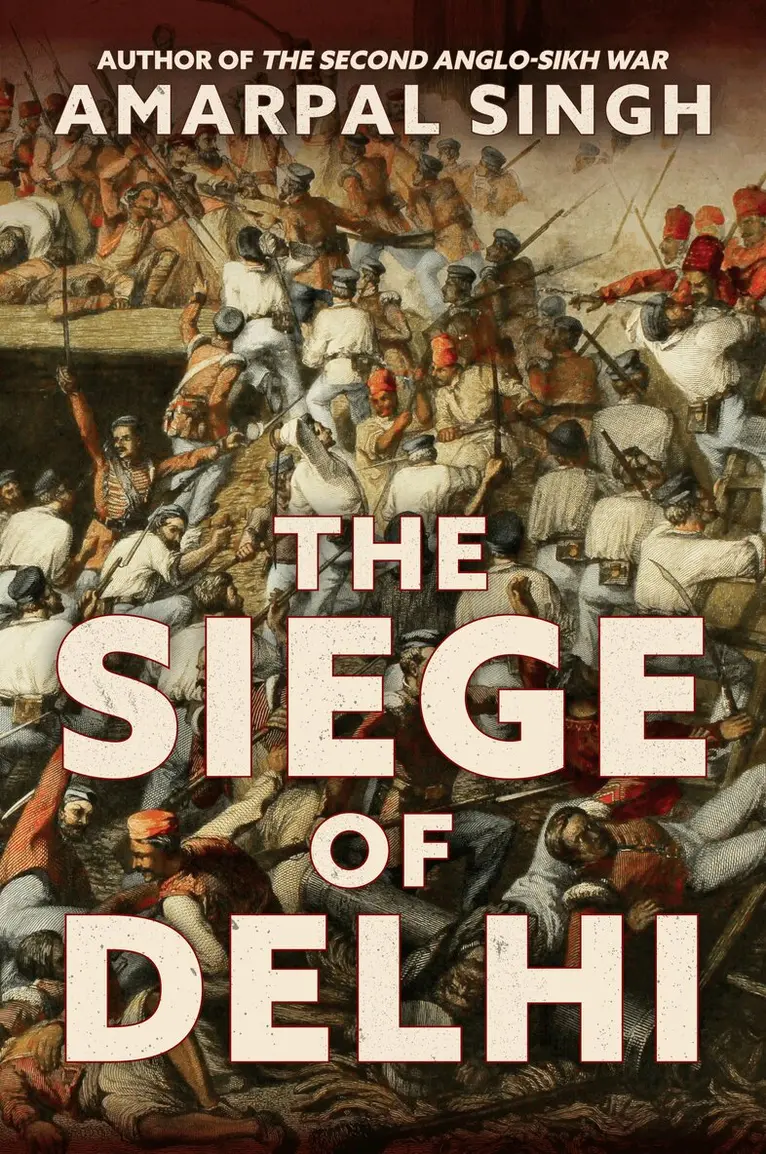
On 10 May 1857, the most serious threat to British supremacy in India appeared at Meerut, a large military station near Delhi. After months of increasing tension, sepoys of the 3rd Light Cavalry along with the 11th and 20th Native Infantry pointedly refused to use the new cartridges supplied to them. ‘The company Raj is over forever,’ declared the men to their British officers as they burned their cantonments, and the cry of ‘Dilhi chalo’ (Let's go to Delhi) was heard as they marched to the old Mughal capital. There the Mughal empire was declared resurrected and the Emperor Bahadur Shah Zafar, an ageing pensioner of the British Government, affirmed as the ruler of all Hindustan once again. With the mutiny spreading rapidly, it became imperative for the British to recapture Delhi as the success or failure of the uprising hinged entirely on the possession of the city and the destruction of the rebel army. It would take three months of bloody fighting for the British Delhi Field Force to defeat the rebel sepoys and recapture the city, a period in which it became unclear quite who besieged whom. Singh comprehensively narrates the story from the uprising at Meerut to the climactic capture and sack of Delhi.
266 kr
Skickas inom 11-20 vardagar
During the eighteenth and early years ofthe nineteenth century, the red tide of British expansion had covered almost the entire Indian subcontinent, stretching to the borders of the Punjab. There the great Sikh ruler Ranjit Singh had developed his military forces to thwart any British advance into his kingdom north of the River Sutlej. Yet on the death of Ranjit Singh, unworthy successors and disparate forces fought over his legacy while the British East India Company seized on the opportunity and prepared for battle. In the winter of 1845 the First Anglo-Sikh War broke out. From the start, the two-month campaign was marred by Victorian arrogance and bluster on the British side and personal ambition, intrigue and treason in the Sikh camp. Five keenly fought contests ensued, including the great battle of Ferozeshah where the British force found itself caught between two powerful Sikh armies and came close to destruction. Declining to retreat, Sir Hugh Gough, the British Commander-in-Chief, told his second in command: 'My mind is made up. If we must perish, it is better that our bones should bleach honourably at Ferozeshah than rot at Ferozepore: but they shall do neither the one nor the other.' The fate of the British Empire in India would be decided that day. Amarpal S. Sidhu writes a warts and all tale of a confl ict characterised by treachery, tragedy and incredible bravery on both sides. In an innovative approach to history writing, the narrative of the campaign is accompanied by battlefi eld guides that draw on eyewitness accounts and invite the reader to take a tour of the battlefi elds, either physically or virtually. Fully illustrated with period drawings, modern-day photographs and new maps, The First Anglo-Sikh War gives a forgotten conflict the meticulous attention it deserves.