Ambassador Midas Touch GEMS – författare
346 kr
Läs direkt efter köp
PRESENT day controversy that rages around the authenticity of the Scriptures and how human life began on this planet must pause to consider the Adam and Eve story. Where does it come from? What does it mean? The familiar version in Genesis is not the source of this fundamental legend, it is not a spontaneous, Heaven-born account that sprang into place in the Old Testament. It is simply a version, unexcelled perhaps, but a version of a myth or belief or account handed down by word of mouth from generation to generation of mankind-through the incoherent, unrecorded ages of man it came--like an inextinguishable ray of light that ties the time when human life began, with the time when the human mind could express itself and the human hand could write.
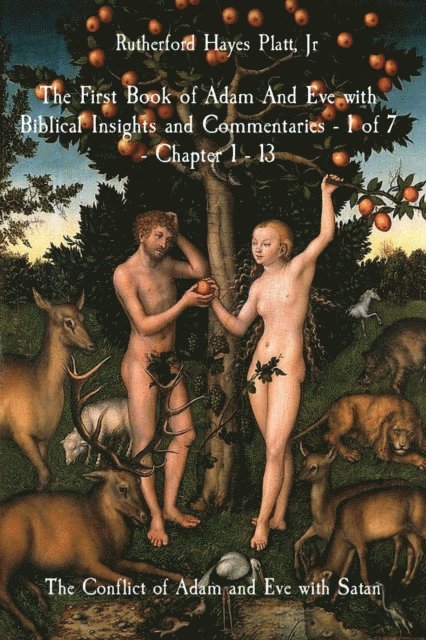
The First Book of Adam and Eve details the life and times of Adam and Eve after they were expelled from the garden to the time that Cain kills his brother Abel. It tells of Adam and Eve''s first dwelling-the Cave of Treasures; their trials and temptations; Satan''s many apparitions to them; the birth of Cain, Abel, and their twin sisters; and Cain''s love for his beautiful twin sister, Luluwa, whom Adam and Eve wished to join to Abel.
This book is considered by many scholars to be part of the "Pseudepigrapha" (soo-duh-pig-ruh-fuh). The "Pseudepigrapha" is a collection of historical biblical works that are considered to be
fiction. Because of that stigma, this book was not included in the compilation of the Holy Bible. This book is a written history of what happened in the days of Adam and Eve after they were cast out of the garden. Although considered to be pseudepigraphic by some, it carries
significant meaning and insight into events of that time. It is doubtful that these writings could have survived all the many centuries if there were no substance to them.
This book is simply a version of an account handed down by word of mouth, from generation to generation, linking the time that the first human life was created to the time when somebody finally decided to write it down. This particular version is the work of unknown Egyptians. The lack of historical allusion makes it difficult to precisely date the writing, however, using other pseudepigraphical works as a reference, it was probably written a few hundred years
before the birth of Christ. Parts of this version are found in the Jewish Talmud, and the Islamic Koran, showing what a vital role it played in the original literature of human wisdom. The Egyptian author wrote in Arabic, but later translations were found written in Ethiopic.
The present English translation was translated in the late 1800''s by Dr. S. C. Malan and Dr. E. Trumpp. They translated into King James English from both the Arabic version and the Ethiopic version which was then published in The Forgotten Books of Eden in 1927 by The World
Publishing Company. In 1995, the text was extracted from a copy of The Forgotten Books of Eden and converted to electronic form by Dennis Hawkins. It was then translated into more modern English by simply exchanging ''Thou'' s for ''You''s, ''Art''s for ''Are''s, and so forth. The
text was then carefully re-read to ensure its integrity.
542 kr
Skickas inom 5-8 vardagar
455 kr
Läs direkt efter köp
It was the best of times, it was the worst of times, it was the age of wisdom, it was the age of foolishness. . . .
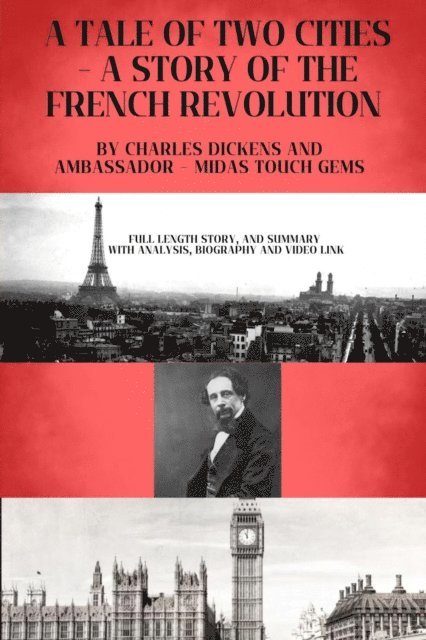
As its title promises, this brief chapter establishes the era in which the novel takes place: England and France in 1775. The age is marked by competing and contradictory attitudes-"It was the best of times, it was the worst of times"-but resembles the "present period" in which Dickens writes. In England, the public worries over religious prophecies, popular paranormal phenomena in the form of "the Cock-lane ghost," and the messages that a colony of British subjects in America has sent to King George III. France, on the other hand, witnesses excessive spending and extreme violence, a trend that anticipates the erection of the guillotine. Yet in terms of peace and order, English society cannot "justify much national boasting" either-crime and capital punishment abound.
In a brief note, Dickens mentions the source of inspiration for A Tale of Two Cities: a play in which he acted, called The Frozen Deep, written by his friend Wilkie Collins. He adds that he hopes that he can further his readers'' understanding of the French Revolution-"that terrible time"-but that no one can truly hope to surpass Thomas Carlyle''s The French Revolution (published in 1837).
215 kr
Läs direkt efter köp
The 100 best nonfiction books: No 94 - Leviathan by Thomas Hobbes (1651)Thomas Hobbes''s essay on the social contract is both a founding text of western thought and a masterpiece of wit and imagination
According to the 17th-century historian and gossip John Aubrey, Thomas Hobbes "was wont to say that if he had read as much as other men, he should have known no more than other men." As a great thinker, Hobbes epitomises English common sense and the amateur spirit, and is all the more appealing for deriving his philosophy from his experience as a scholar and man of letters, a contemporary and occasional associate of Galileo, Descartes and the young Charles Stuart, prince of Wales, before the Restoration.
Hobbes himself was born an Elizabethan, and liked to say that his premature birth in 1588 was caused by his mother''s anxiety at the threat of the Spanish Armada:
... it was my mother dear
Did bring forth twins at once, both me, and fear.
Throughout his long life, Hobbes was never far either from the jeopardy of the times (notably the thirty years'' war and the English civil war) or the jeopardy sponsored by the brooding realism and pragmatic clarity of his philosophy. What, asked Hobbes, was the form of politics that would provide the security that he and his contemporaries longed for, but were always denied?
frontispeice of leviathan by thomas hobbes
The famous frontispiece to Leviathan. Photograph: Alamy
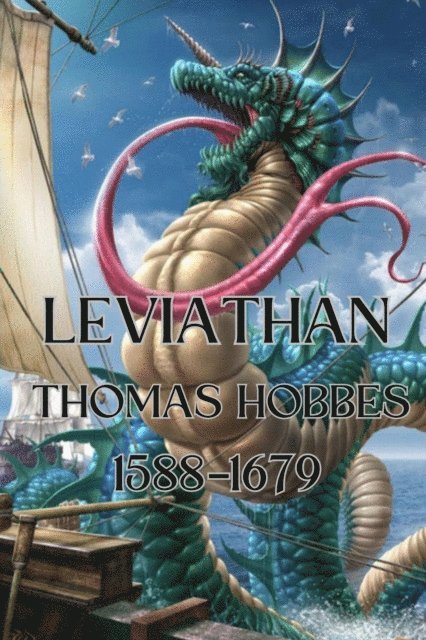
Subtitled The Matter, Forme and Power of a Commonwealth Ecclesiasticall and Civil, Leviathan first appeared in 1651, during the Cromwell years, with perhaps the most famous title page in the English canon, an engraving of an omnipotent giant, composed of myriad tiny human figures, looming above a pastoral landscape with sword and crosier erect.
Thus "the Leviathan" (sovereign power) entered the English lexicon, and Hobbes''s vision of man as not naturally a social being, animated by a respect for community, but a purely selfish creature, motivated by personal advantage, became condensed into his celebrated summary of mankind''s existence as "solitary, poore, nasty, brutish, and short".
It was Hobbes''s argument that, to ameliorate these conditions, man should adopt certain "Laws of Nature" by which human society would be forbidden to do "that which is destructive" of life, whereby virtue would be the means of "peaceful, sociable and comfortable living."
The first law of nature is: "every man ought to endeavour peace". This, he argues, will be a hard goal: the general inclination of all mankind is "a perpetual and restless desire of power after power, that ceaseth only in death". The second law of nature is: "a man [must] be willing when others are so too ... to lay down his right to all things; and be contented with so much liberty against other men, as he would allow other men against himself." The third law of nature is: "men performe their Covenants made."
This, in essence, adds up to Hobbes''s social contract, enforced by an external power. Accordingly, members of civil society should enter into a contract to confer their power and strength "upon one Man, or upon an Assembly of men ... This done, the Multitude so united in one Person, is called a Common-wealth." For Hobbes, the contracting of such power is the only guarantee of peace and prosperity: "During the time men live without a common power to keep them all in awe, they are in that condition which is called war; and such a war as is every man against every man."
315 kr
Läs direkt efter köp
PRESENT day controversy that rages around the authenticity of the Scriptures and how human life began on this planet must pause to consider the Adam and Eve story. Where does it come from? What does it mean? The familiar version in Genesis is not the source of this fundamental legend, it is not a spontaneous, Heaven-born account that sprang into place in the Old Testament. It is simply a version, unexcelled perhaps, but a version of a myth or belief or account handed down by word of mouth from generation to generation of mankind-through the incoherent, unrecorded ages of man it came--like an inextinguishable ray of light that ties the time when human life began, with the time when the human mind could express itself and the human hand could write.
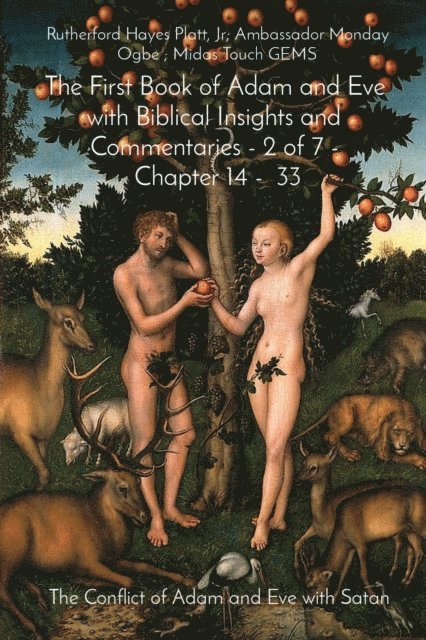
The First Book of Adam and Eve details the life and times of Adam and Eve after they were expelled from the garden to the time that Cain kills his brother Abel. It tells of Adam and Eve''s first dwelling-the Cave of Treasures; their trials and temptations; Satan''s many apparitions to them; the birth of Cain, Abel, and their twin sisters; and Cain''s love for his beautiful twin sister, Luluwa, whom Adam and Eve wished to join to Abel.
This book is considered by many scholars to be part of the "Pseudepigrapha" (soo-duh-pig-ruh-fuh). The "Pseudepigrapha" is a collection of historical biblical works that are considered to be
fiction. Because of that stigma, this book was not included in the compilation of the Holy Bible. This book is a written history of what happened in the days of Adam and Eve after they were cast out of the garden. Although considered to be pseudepigraphic by some, it carries
significant meaning and insight into events of that time. It is doubtful that these writings could have survived all the many centuries if there were no substance to them.
This book is simply a version of an account handed down by word of mouth, from generation to generation, linking the time that the first human life was created to the time when somebody finally decided to write it down. This particular version is the work of unknown Egyptians. The lack of historical allusion makes it difficult to precisely date the writing, however, using other pseudepigraphical works as a reference, it was probably written a few hundred years
before the birth of Christ. Parts of this version are found in the Jewish Talmud, and the Islamic Koran, showing what a vital role it played in the original literature of human wisdom. The Egyptian author wrote in Arabic, but later translations were found written in Ethiopic.
The present English translation was translated in the late 1800''s by Dr. S. C. Malan and Dr. E. Trumpp. They translated into King James English from both the Arabic version and the Ethiopic version which was then published in The Forgotten Books of Eden in 1927 by The World
Publishing Company. In 1995, the text was extracted from a copy of The Forgotten Books of Eden and converted to electronic form by Dennis Hawkins. It was then translated into more modern English by simply exchanging ''Thou'' s for ''You''s, ''Art''s for ''Are''s, and so forth. The
text was then carefully re-read to ensure its integrity.