Ambrogio A. Caiani - Böcker
Visar alla böcker från författaren Ambrogio A. Caiani. Handla med fri frakt och snabb leverans.
10 produkter
10 produkter
272 kr
Skickas inom 7-10 vardagar
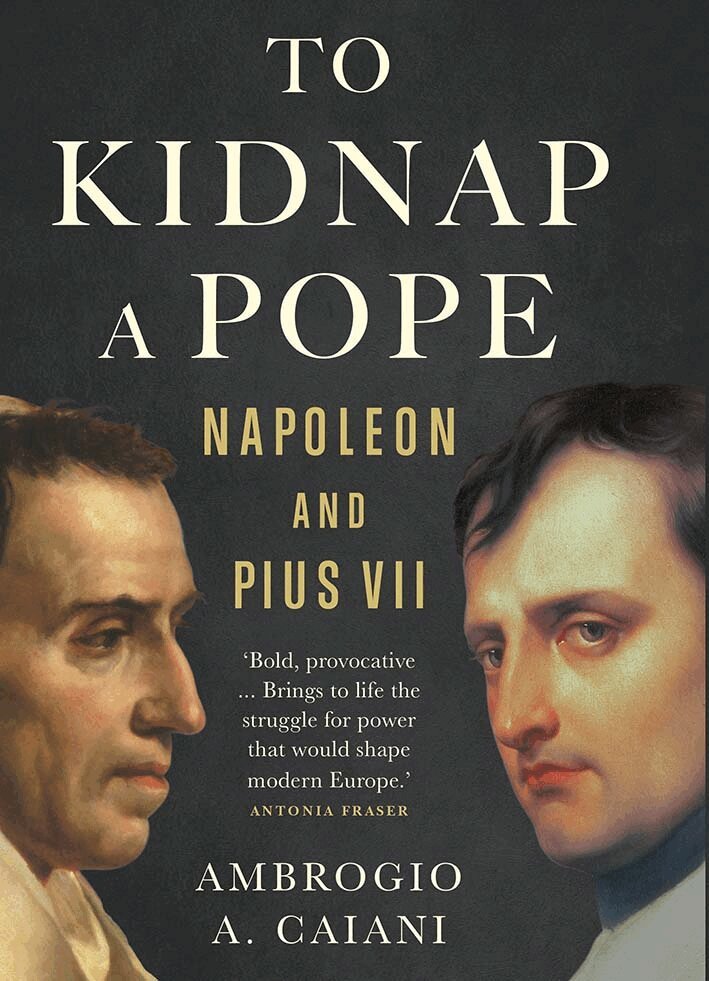
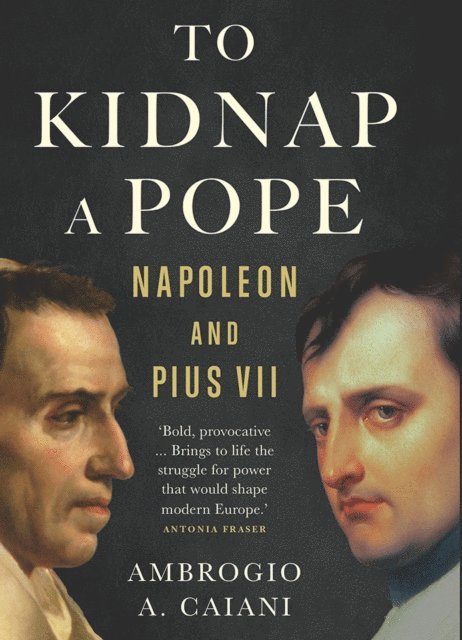
A groundbreaking account of Napoleon Bonaparte, Pope Pius VII, and the kidnapping that would forever divide church and state “In gripping, vivid prose, Caiani brings to life the struggle for power that would shape modern Europe. It all makes for a historical read which is both original and enjoyable.”—Antonia Fraser, author of Marie Antoinette “The story of the struggle, fought with cunning, not force, between the forgotten Roman nobleman Barnaba Chiaramonti, who became Pope Pius VII, and the all-too-well-remembered Napoleon.”—Jonathan Sumption, The Spectator, “Books of the Year” In the wake of the French Revolution, Napoleon Bonaparte, First Consul of France, and Pope Pius VII shared a common goal: to reconcile the church with the state. But while they were able to work together initially, formalizing an agreement in 1801, relations between them rapidly deteriorated. In 1809, Napoleon ordered the Pope’s arrest. Ambrogio Caiani provides a pioneering account of the tempestuous relationship between the emperor and his most unyielding opponent. Drawing on original findings in the Vatican and other European archives, Caiani uncovers the nature of Catholic resistance against Napoleon’s empire; charts Napoleon’s approach to Papal power; and reveals how the Emperor attempted to subjugate the church to his vision of modernity. Gripping and vivid, this book shows the struggle for supremacy between two great individuals—and sheds new light on the conflict that would shape relations between the Catholic church and the modern state for centuries to come.
1 350 kr
Skickas inom 7-10 vardagar
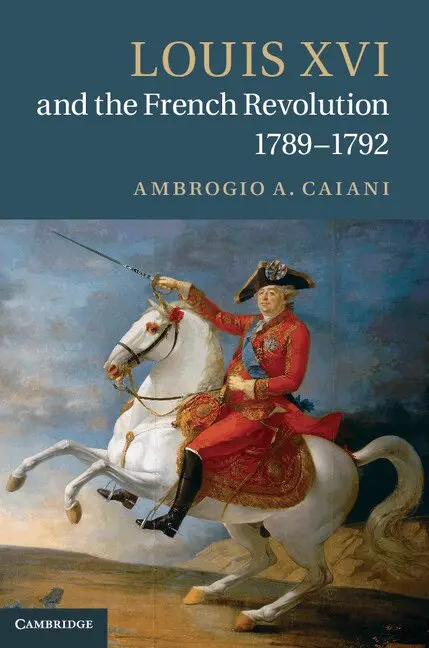
The experience, and failure, of Louis XVI's short-lived constitutional monarchy of 1789-92 deeply influenced the politics and course of the French Revolution. The dramatic breakdown of the political settlement of 1789 steered the French state into the decidedly stormy waters of political terror and warfare on an almost global scale. This book explores how the symbolic and political practices which underpinned traditional Bourbon kingship ultimately succumbed to the radical challenge posed by the Revolution's new 'proto-republican' culture. While most previous studies have focused on Louis XVI's real and imagined foreign counterrevolutionary plots, Ambrogio A. Caiani examines the king's hitherto neglected domestic activities in Paris. Drawing on previously unexplored archival source material, Caiani provides an alternative reading of Louis XVI in this period, arguing that the monarch's symbolic behaviour and the organisation of his daily activities and personal household were essential factors in the people's increasing alienation from the newly established constitutional monarchy.
441 kr
Skickas inom 7-10 vardagar
The experience, and failure, of Louis XVI's short-lived constitutional monarchy of 1789-92 deeply influenced the politics and course of the French Revolution. The dramatic breakdown of the political settlement of 1789 steered the French state into the decidedly stormy waters of political terror and warfare on an almost global scale. This book explores how the symbolic and political practices which underpinned traditional Bourbon kingship ultimately succumbed to the radical challenge posed by the Revolution's new 'proto-republican' culture. While most previous studies have focused on Louis XVI's real and imagined foreign counterrevolutionary plots, Ambrogio A. Caiani examines the king's hitherto neglected domestic activities in Paris. Drawing on previously unexplored archival source material, Caiani provides an alternative reading of Louis XVI in this period, arguing that the monarch's symbolic behaviour and the organisation of his daily activities and personal household were essential factors in the people's increasing alienation from the newly established constitutional monarchy.
461 kr
Skickas inom 10-15 vardagar
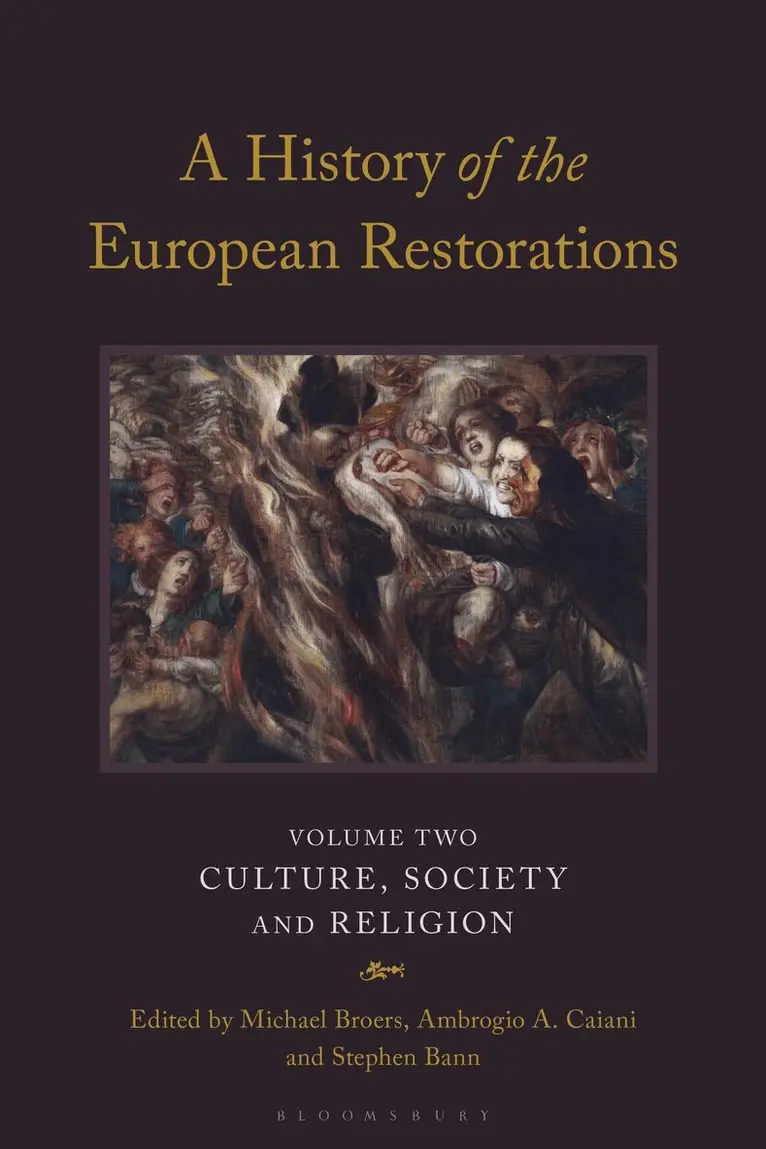
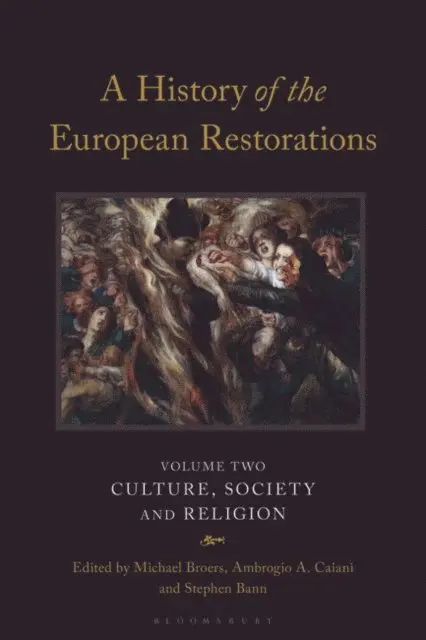
The second volume shines a light on the cultural and social changes that took place during the epoch of European Restorations, when the death of the Napoleonic empire existed as a crucial moment for contemporaries. Expanding the transnational approach of Volume I, the chapters focus on the transmutation of ordinary experiences of war into folklore and popular culture, the emergence of grassroots radical politics and conspiracies on the Left and Right, and the relationship between literacy and religion, with new cases included from Spain, Norway and Russia. A wide-ranging and impressive work, this book completes a collection on the history of the European Restorations.
461 kr
Skickas inom 10-15 vardagar
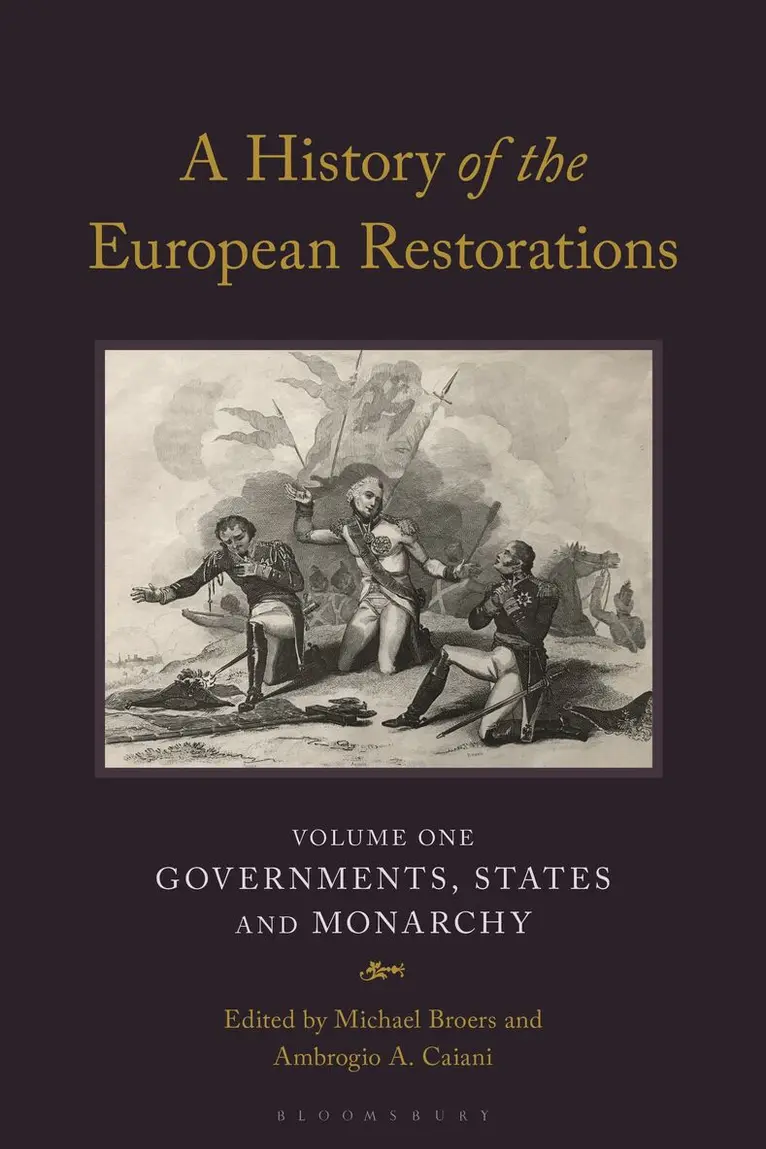
Europe’s Restorations were characterised by their evolving dialectics. The chapters in this first volume address the key questions and controversies of Napoleonic history from a national and international perspective. From the re-ordering of the European world through the tools of intervention, occupation and diplomacy, to the creation of new constitutional monarchies across France, Scandinavia and Germany the volume outlines the processes that realigned national priorities and the accompanying dynamics of social and political identity. In a structure that makes sense of what Luigi Mascilli Migliorini describes as the ‘fiendishly complex’ process of reconstructing order in post-Napoleonic Europe, this collection of essays brings together experts in the field to set a new precedent for transnational research frameworks in the study of the European Restorations.
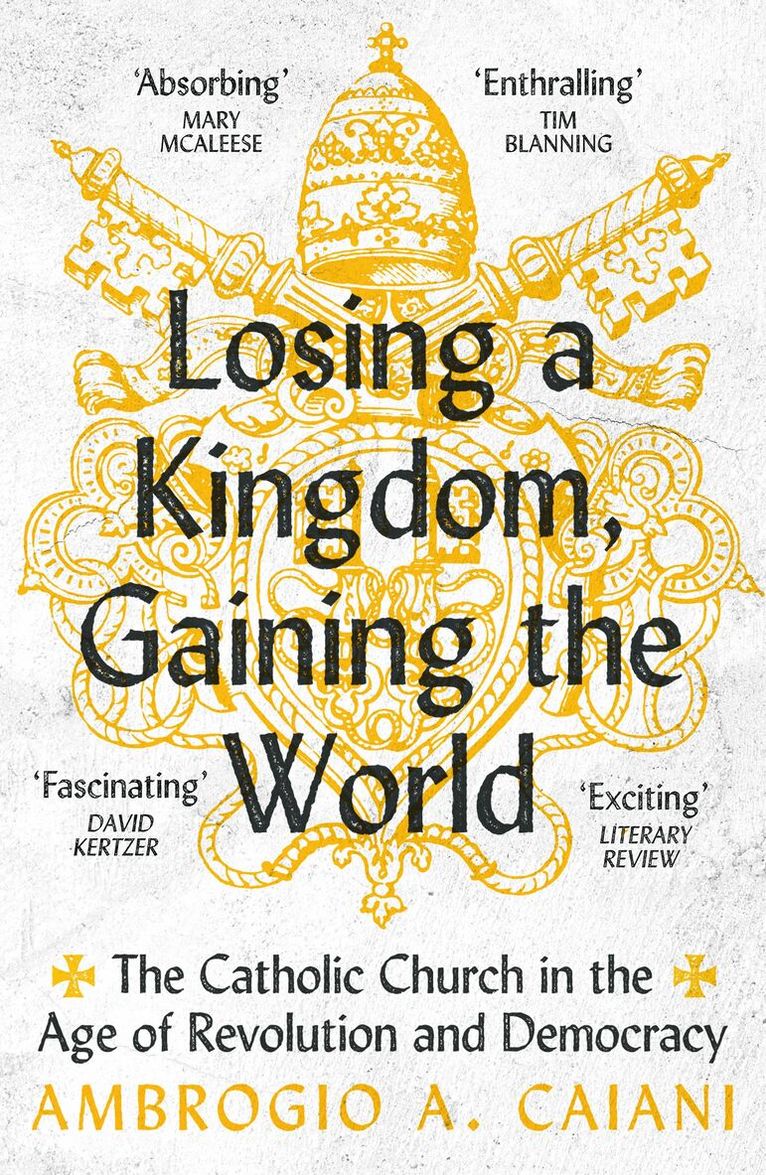
Losing a Kingdom, Gaining the World
The Catholic Church in the Age of Revolution and Democracy
Inbunden, Engelska, 2023
332 kr
Skickas inom 7-10 vardagar
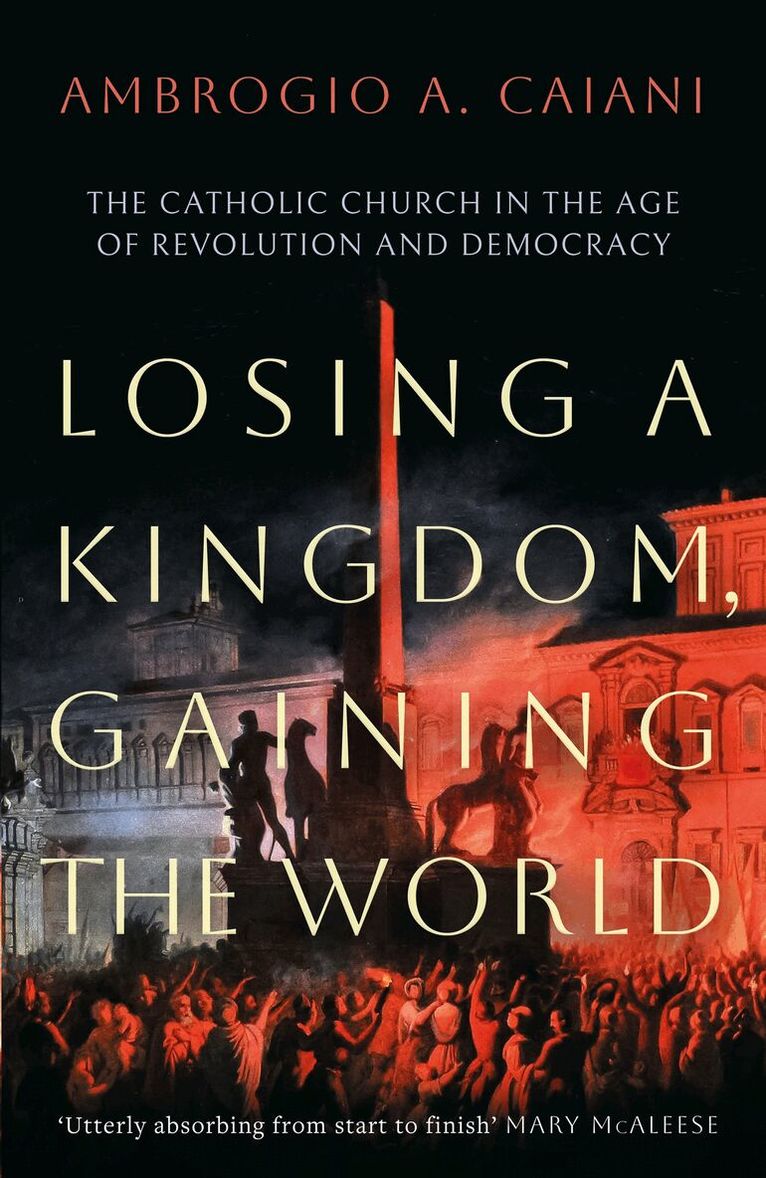
Despite its many crises, especially in Western Europe, there are 1.3 billion Catholics in the world today. The Church remains a powerful but controversial institution.In Losing a Kingdom, Gaining the World, Ambrogio A. Caiani explores the epic history of the Roman Catholic Church. Throughout the early modern period, the Pope was a secular prince in central Italy. Catholicism was not merely a religion but also a political force to be reckoned with.After the French Revolution, the Church retreated into a fortress of unreason and denounced almost every aspect of modern life. The Pope proclaimed his infallibility; the cult of the Virgin Mary and her apparitions became articles of faith; the Vatican refused all accommodation with the modern state, until a disastrous series of concordats with fascist states in the 1930s.These dark days threatened the very existence of the Church. But as Catholicism lost its temporal power, it made significant spiritual strides and expanded across continents. Between 1700 and 1903, it lost a kingdom but gained the world.Ambitious and authoritative, this is an account of the Church’s fraught encounter with modernity in all its forms: from liberalism, socialism and democracy, to science, literature and the rise of secular culture.
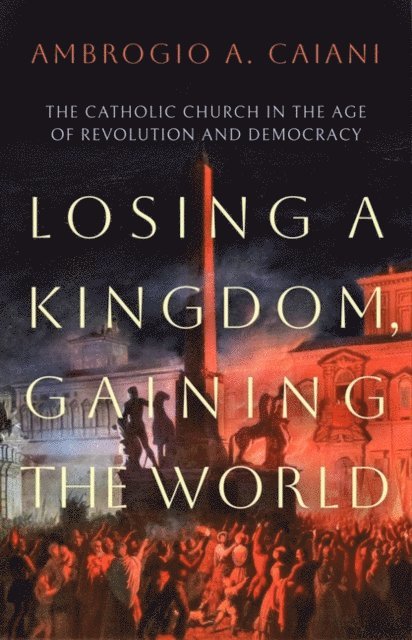
Losing a Kingdom, Gaining the World
The Catholic Church in the Age of Revolution and Democracy
Häftad, Engelska, 2023
191 kr
Skickas inom 7-10 vardagar
Despite its many crises, especially in Western Europe, there are 1.3 billion Catholics in the world today. The Church remains a powerful but controversial institution.In Losing a Kingdom, Gaining the World, Ambrogio A. Caiani explores the epic history of the Roman Catholic Church. Throughout the early modern period, the Pope was a secular prince in central Italy. Catholicism was not merely a religion but also a political force to be reckoned with.After the French Revolution, the Church retreated into a fortress of unreason and denounced almost every aspect of modern life. The Pope proclaimed his infallibility; the cult of the Virgin Mary and her apparitions became articles of faith; the Vatican refused all accommodation with the modern state, until a disastrous series of concordats with fascist states in the 1930s.These dark days threatened the very existence of the Church. But as Catholicism lost its temporal power, it made significant spiritual strides and expanded across continents. Between 1700 and 1903, it lost a kingdom but gained the world.Ambitious and authoritative, this is an account of the Church’s fraught encounter with modernity in all its forms: from liberalism, socialism and democracy, to science, literature and the rise of secular culture.
Losing a Kingdom, Gaining the World
The Catholic Church in the Age of Revolution and Democracy
Häftad, Engelska, 2025
148 kr
Skickas inom 7-10 vardagar
Despite its many crises, especially in Western Europe, there are 1.3 billion Catholics in the world today. The Church remains a powerful but controversial institution.In Losing a Kingdom, Gaining the World, Ambrogio A. Caiani explores the epic history of the Roman Catholic Church. Throughout the early modern period, the Pope was a secular prince in central Italy. Catholicism was not merely a religion but also a political force to be reckoned with.After the French Revolution, the Church retreated into a fortress of unreason and denounced almost every aspect of modern life. The Pope proclaimed his infallibility; the cult of the Virgin Mary and her apparitions became articles of faith; the Vatican refused all accommodation with the modern state, until a disastrous series of concordats with fascist states in the 1930s.These dark days threatened the very existence of the Church. But as Catholicism lost its temporal power, it made significant spiritual strides and expanded across continents. Between 1700 and 1903, it lost a kingdom but gained the world.Ambitious and authoritative, this is an account of the Church’s fraught encounter with modernity in all its forms: from liberalism, socialism and democracy, to science, literature and the rise of secular culture.
Flirting with Evil
The Catholic Church in the Age of Total War and Globalisation
Inbunden, Engelska, 2026
332 kr
Kommande
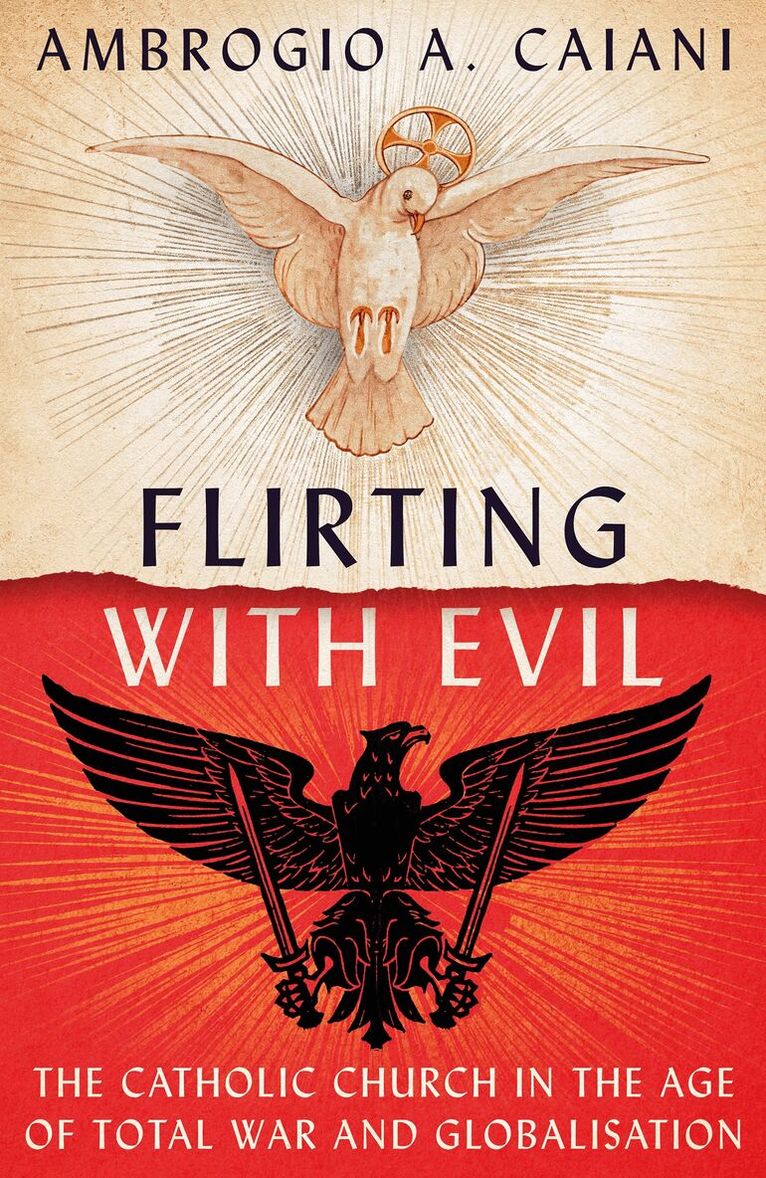
The history of the Catholic Church in the twentieth century is one of spies, scandals and bad political choices. It’s a shadowy, ornate world of cover-ups and hidden motives. In this book, Ambrogio Caiani lifts back the heavy velvet curtains of the chancel and peers behind the locked mahogany doors of the Vatican to reveal the shocking truths that make up a century of Catholic corruption.For many, Catholicism’s flirtation with evil has become impossible to ignore: a pope courting Nazi officials and, horribly, turning a blind eye to the Holocaust; the Vatican becoming embroiled in a series of dodgy financial dealings; the child abuse continuously perpetrated by members of the clergy. Time and time again, Catholic figures have made terrible choices in private and preached in public about goodness and morality.This is the first history that focuses exclusively on Catholicism throughout the twentieth century, sketching not only scandalous stories of corruption but also lively portrayals of Catholicism’s key characters – from a beret-clad communist revolutionary priest to the bizarre morning routine of the pope who followed a daily cold bath with dry unbuttered toast. Caiani, a critical Catholic himself, takes a frank and sceptical look at the trajectory of global Catholicism and wrestles with vital questions about the future of the church. Taking in the wider socio-political contexts of a world at war and the accumulating momentum of social progress, this brilliant history traces the evolution of the Catholic church alongside the development of our modern society right up to the election of Pope Leo XIV in 2025.
Flirting with Evil
The Catholic Church in the Age of Total War and Globalisation
Häftad, Engelska, 2026
191 kr
Kommande
The history of the Catholic Church in the twentieth century is one of spies, scandals and bad political choices. It’s a shadowy, ornate world of cover-ups and hidden motives. In this book, Ambrogio Caiani lifts back the heavy velvet curtains of the chancel and peers behind the locked mahogany doors of the Vatican to reveal the shocking truths that make up a century of Catholic corruption.For many, Catholicism’s flirtation with evil has become impossible to ignore: a pope courting Nazi officials and, horribly, turning a blind eye to the Holocaust; the Vatican becoming embroiled in a series of dodgy financial dealings; the child abuse continuously perpetrated by members of the clergy. Time and time again, Catholic figures have made terrible choices in private and preached in public about goodness and morality.This is the first history that focuses exclusively on Catholicism throughout the twentieth century, sketching not only scandalous stories of corruption but also lively portrayals of Catholicism’s key characters – from a beret-clad communist revolutionary priest to the bizarre morning routine of the pope who followed a daily cold bath with dry unbuttered toast. Caiani, a critical Catholic himself, takes a frank and sceptical look at the trajectory of global Catholicism and wrestles with vital questions about the future of the church. Taking in the wider socio-political contexts of a world at war and the accumulating momentum of social progress, this brilliant history traces the evolution of the Catholic church alongside the development of our modern society right up to the election of Pope Leo XIV in 2025.