American Institute for Cancer Research – författare
Visar alla böcker från författaren American Institute for Cancer Research. Handla med fri frakt och snabb leverans.
16 produkter
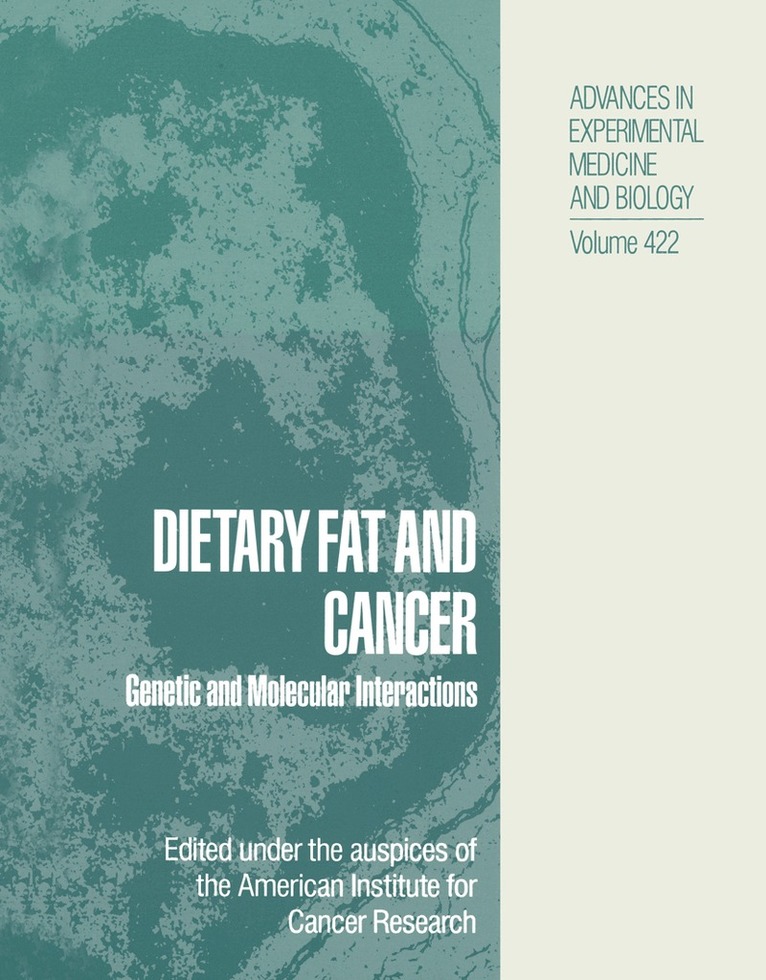
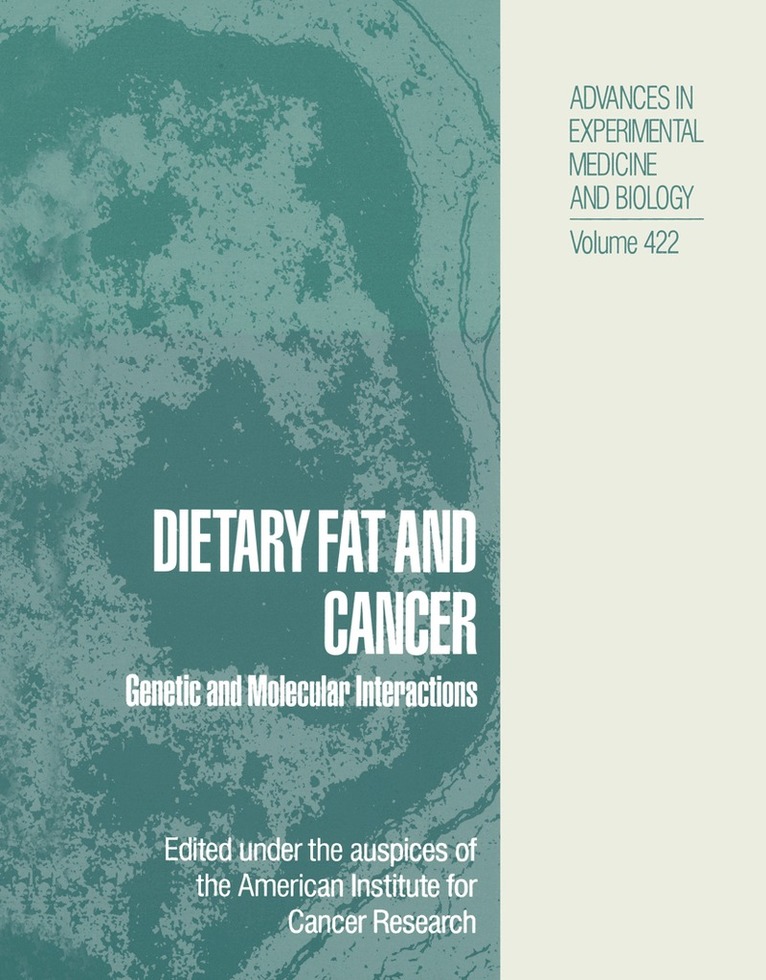
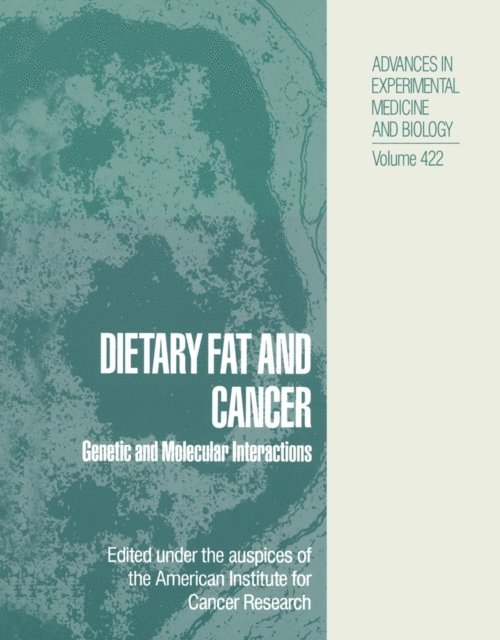
Dietary Fat and Cancer
Genetic and Molecular Interactions
Av American Institute for Cancer Research
Inbunden, 1997
1126 kr
Lägg i varukorg
The annual research conference for 1996 of the American Institute for Cancer Re search was again held at the Loews L'Enfant Plaza Hotel in Washington, DC, August 29 and 30. The topic for this, the seventh in the series, was "Dietary Fat and Cancer: Genetic and Molecular Mechanisms. " Two separate …
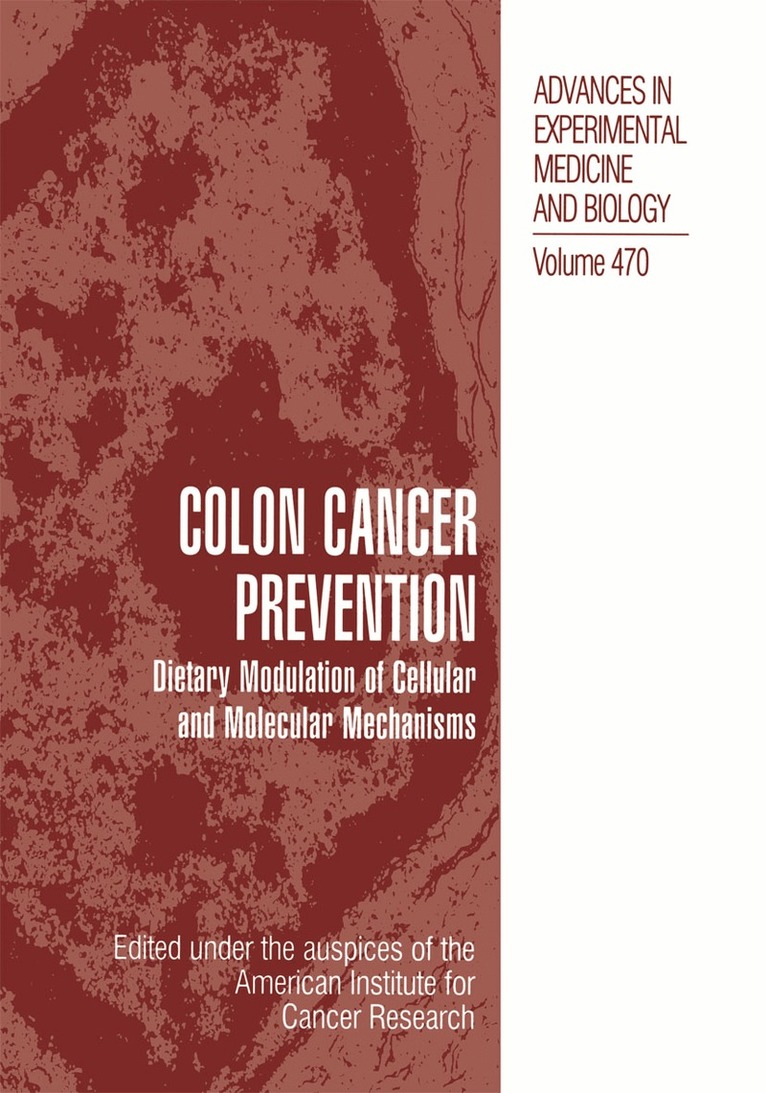
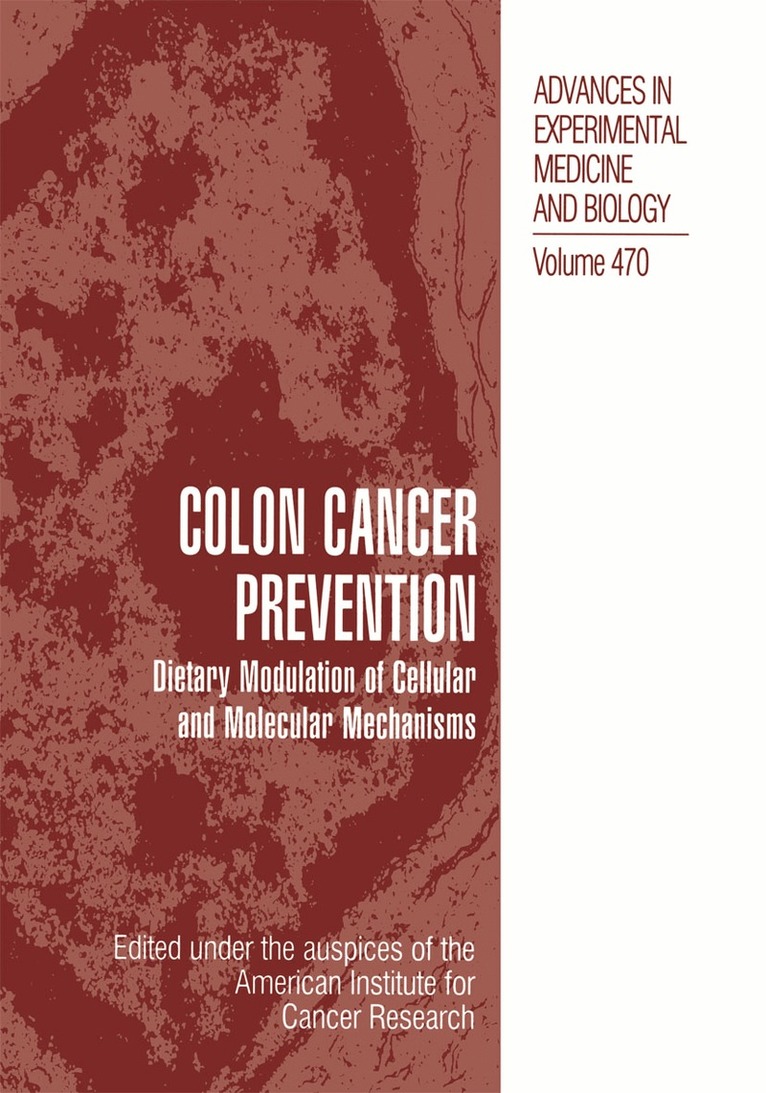
Colon Cancer Prevention
Dietary Modulation of Cellular and Molecular Mechanisms
Av American Institute for Cancer Research
Inbunden, 2000
1126 kr
Lägg i varukorg
This volume covers recent research on all aspects of colon cancer prevention in the 1990s, including normal and abnormal colonic development, chemoprevention of colon cancer, the role of dietary factors in prevention, experimental approaches and mechanisms in prevention, as well as whether cell …
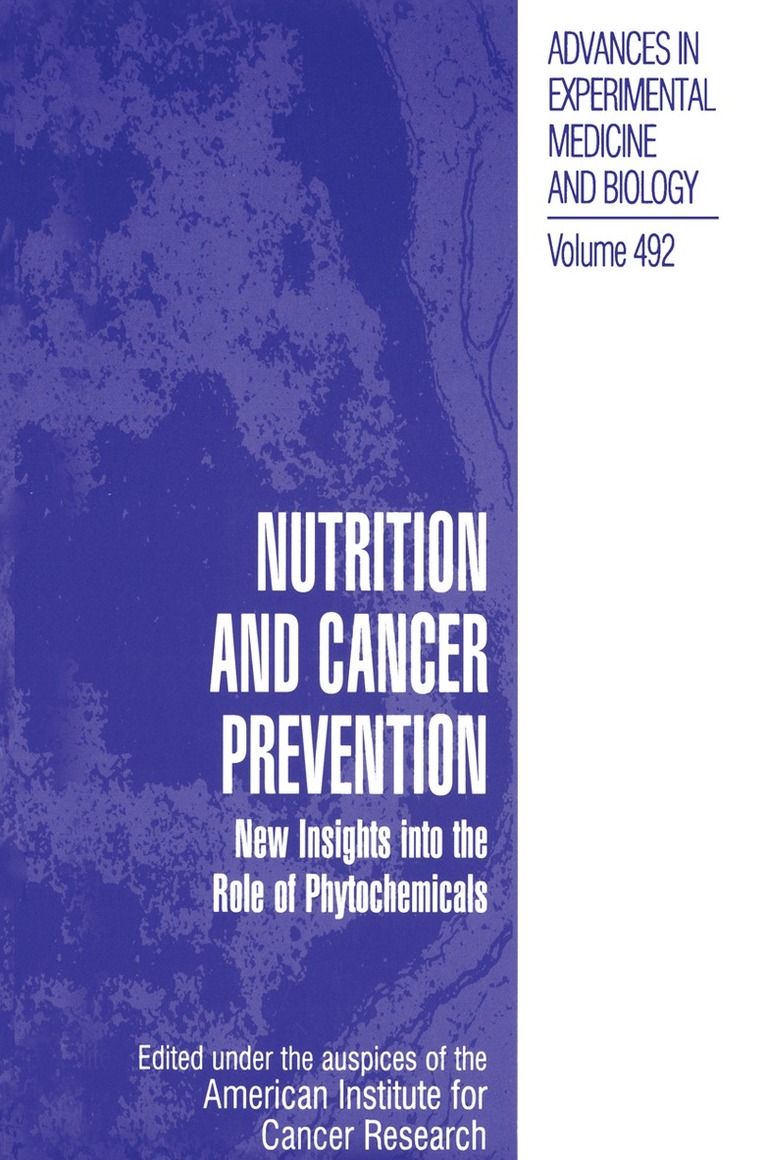
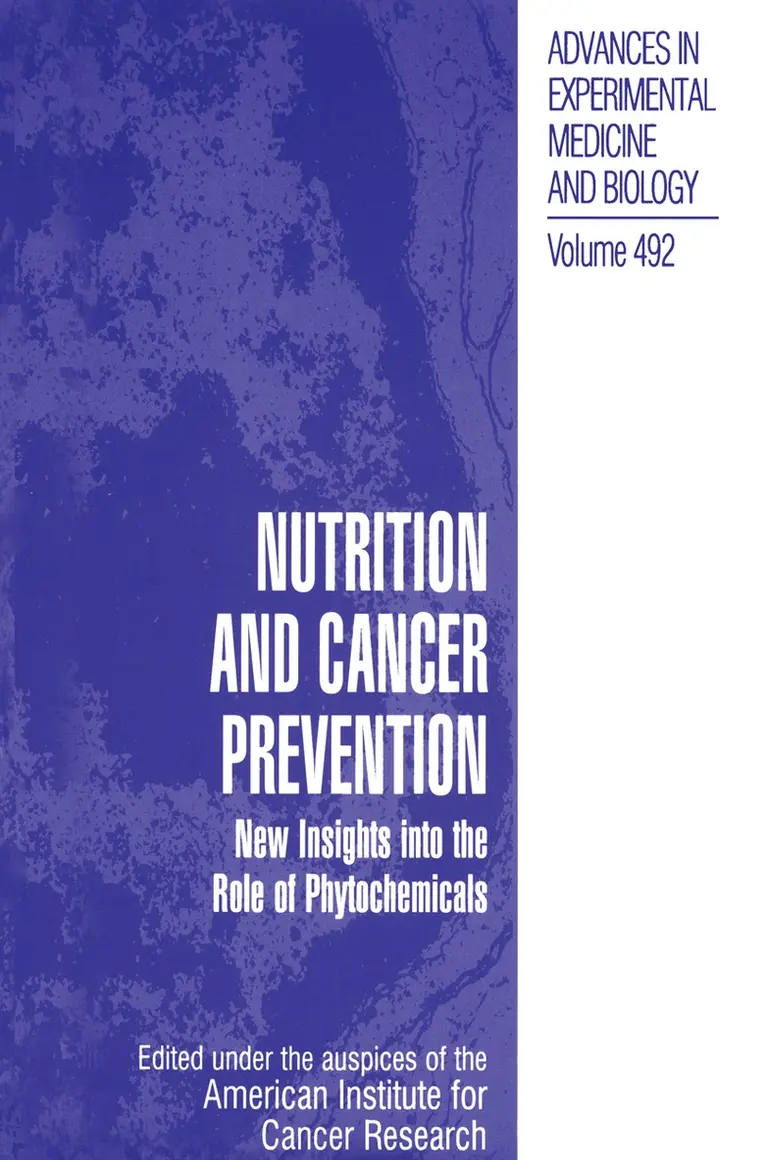
Nutrition and Cancer Prevention
New Insights into the Role of Phytochemicals
Av American Institute for Cancer Research
Inbunden, 2001
2244 kr
Lägg i varukorg
Recent advances have contributed to our understanding of how a plant-based diet confers many health advantages and how substances from plants may be effective in the prevention of specific cancers. The Ninth Annual Research Conference of the American Institute for Cancer Research has focused on the …
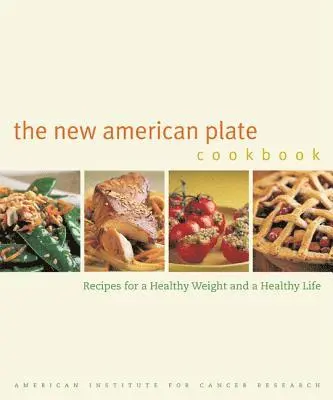
New American Plate Cookbook
Recipes for a Healthy Weight and a Healthy Life
Av American Institute for Cancer Research
Inbunden, 2005
323 kr
Lägg i varukorg
We all want great-tasting meals, but we also want meals that help us maintain a healthy weight and live longer, healthier lives. Marrying the art and science of food, "The New American Plate Cookbook" is the first cookbook designed to accomplish all three goals. A team of cooks, nutritionists, food …
Dietary Fat and Cancer
Genetic and Molecular Interactions
Av American Institute for Cancer Research
Häftad, 2010
1126 kr
Lägg i varukorg
The annual research conference for 1996 of the American Institute for Cancer Re search was again held at the Loews L'Enfant Plaza Hotel in Washington, DC, August 29 and 30. The topic for this, the seventh in the series, was "Dietary Fat and Cancer: Genetic and Molecular Mechanisms. " Two separate …
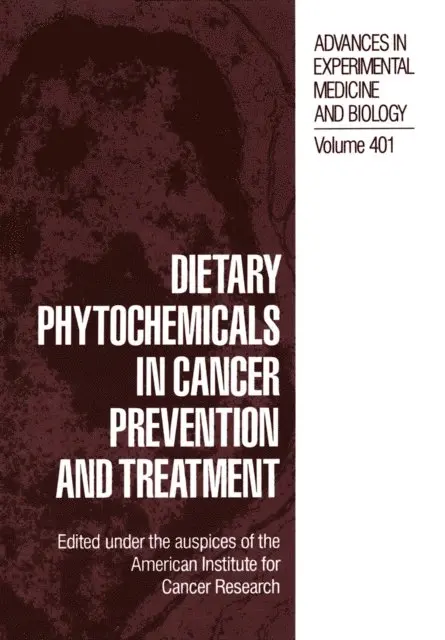
Dietary Phytochemicals in Cancer Prevention and Treatment
Av American Institute for Cancer Research
E-bok, 2012
734 kr
Lägg i varukorg
The sixth annual research conference of the American Institute for Cancer Research was held August 31 and September 1, 1995, at the Loews L''Enfant Plaza Hotel in Washing ton, DC. In view of the promising leads in the diet/nutrition and cancer research field, the conference was devoted to "Dietary …
Nutrition and Cancer Prevention
New Insights into the Role of Phytochemicals
Av American Institute for Cancer Research
Häftad, 2012
2244 kr
Lägg i varukorg
Recent advances have contributed to our understanding of how a plant-based diet confers many health advantages and how substances from plants may be effective in the prevention of specific cancers. The Ninth Annual Research Conference of the American Institute for Cancer Research has focused on the …
Diet and Breast Cancer
Av American Institute for Cancer Research, Elizabeth K. Weisburger
Häftad, 2012
566 kr
Lägg i varukorg
The fourth annual American Institute for Cancer Research (AICR) conference on diet, nutrition and cancer was held at the L'Enfant Plaza Hotel in Washington, D. C. , September 2~3, 1993. In keeping with present concerns and in line with current trends, the theme was "Diet and Breast Cancer. " This …
Colon Cancer Prevention
Dietary Modulation of Cellular and Molecular Mechanisms
Av American Institute for Cancer Research
Häftad, 2012
1126 kr
Lägg i varukorg
The Eighth Annual Research Conference of the American Institute for Cancer Research, held in Washington, D.C., September 3-4, 1998, was on the subject "Colon Cancer Prevention: Dietary Modulation of Cellular and Molecular Mechanisms," with participants representing various disciplines interested in …
Dietary Phytochemicals in Cancer Prevention and Treatment
Av American Institute for Cancer Research
Häftad, 2011
566 kr
Lägg i varukorg
The sixth annual research conference of the American Institute for Cancer Research was held August 31 and September 1, 1995, at the Loews L'Enfant Plaza Hotel in Washing ton, DC. In view of the promising leads in the diet/nutrition and cancer research field, the conference was devoted to "Dietary …
Nutrition and Cancer Prevention
New Insights into the Role of Phytochemicals
Av American Institute for Cancer Research
E-bok, 2012
3013 kr
Lägg i varukorg
Recent advances have contributed to our understanding of how a plant-based diet confers many health advantages and how substances from plants may be effective in the prevention of specific cancers. The Ninth Annual Research Conference of the American Institute for Cancer Research has focused on the …
Diet and Breast Cancer
Av Elizabeth K. Weisburger, American Institute for Cancer Research
E-bok, 2012
755 kr
Lägg i varukorg
The fourth annual American Institute for Cancer Research (AICR) conference on diet, nutrition and cancer was held at the L''Enfant Plaza Hotel in Washington, D. C. , September 2~3, 1993. In keeping with present concerns and in line with current trends, the theme was "Diet and Breast Cancer. " This …
Colon Cancer Prevention
Dietary Modulation of Cellular and Molecular Mechanisms
Av American Institute for Cancer Research
E-bok, 2012
1502 kr
Lägg i varukorg
The Eighth Annual Research Conference of the American Institute for Cancer Research, held in Washington, D.C., September 3-4, 1998, was on the subject "Colon Cancer Prevention: Dietary Modulation of Cellular and Molecular Mechanisms," with participants representing various disciplines interested in …
Dietary Fat and Cancer
Genetic and Molecular Interactions
Av American Institute for Cancer Research
E-bok, 2013
1502 kr
Lägg i varukorg
The annual research conference for 1996 of the American Institute for Cancer Re search was again held at the Loews L''Enfant Plaza Hotel in Washington, DC, August 29 and 30. The topic for this, the seventh in the series, was "Dietary Fat and Cancer: Genetic and Molecular Mechanisms. " Two separate …
Dietary Fat and Cancer : Genetic and Molecular Interactions
Av American Institute for Cancer Research
2013
686 kr
Lägg i varukorg