Amir Beck - Böcker
Visar alla böcker från författaren Amir Beck. Handla med fri frakt och snabb leverans.
3 produkter
3 produkter
1 164 kr
Skickas inom 7-10 vardagar
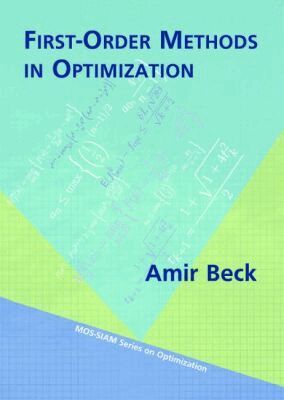
The primary goal of this book is to provide a self-contained, comprehensive study of the main ?rst-order methods that are frequently used in solving large-scale problems. First-order methods exploit information on values and gradients/subgradients (but not Hessians) of the functions composing the model under consideration. With the increase in the number of applications that can be modeled as large or even huge-scale optimization problems, there has been a revived interest in using simple methods that require low iteration cost as well as low memory storage.The author has gathered, reorganized, and synthesized (in a unified manner) many results that are currently scattered throughout the literature, many of which cannot be typically found in optimization books.First-Order Methods in Optimization offers comprehensive study of first-order methods with the theoretical foundations; provides plentiful examples and illustrations; emphasizes rates of convergence and complexity analysis of the main first-order methods used to solve large-scale problems; and covers both variables and functional decomposition methods.
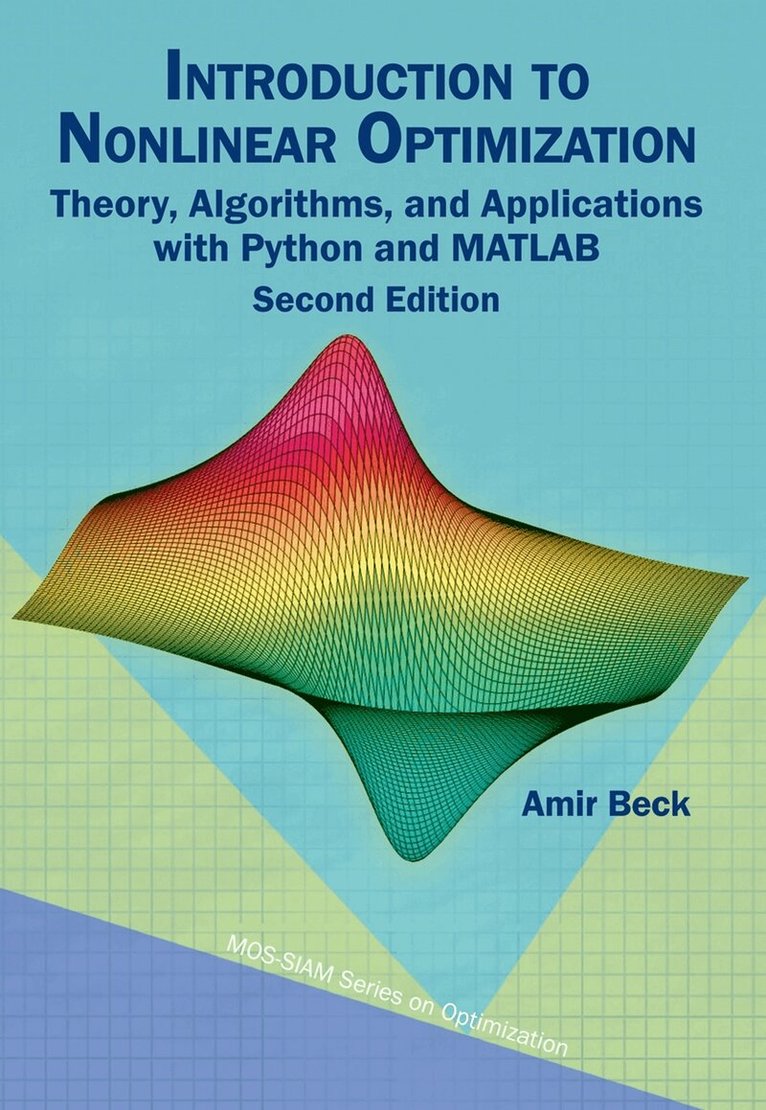
Introduction to Nonlinear Optimization
Theory, Algorithms, and Applications with Python and MATLAB
Häftad, Engelska, 2023
954 kr
Skickas inom 7-10 vardagar
Built on the framework of the successful first edition, this book serves as a modern introduction to the field of optimization. The author's objective is to provide the foundations of theory and algorithms of nonlinear optimization as well as to present a variety of applications from diverse areas of applied sciences. Introduction to Nonlinear Optimization gradually yet rigorously builds connections between theory, algorithms, applications, and actual implementation. The book contains several topics not typically included in optimization books, such as optimality conditions in sparsity constrained optimization, hidden convexity, and total least squares. Readers will discover a wide array of applications such as circle fitting, Chebyshev center, the Fermat–Weber problem, denoising, clustering, total least squares, and orthogonal regression. These applications are studied both theoretically and algorithmically, illustrating concepts such as duality. Python and MATLAB programs are used to show how the theory can be implemented. The extremely popular CVX toolbox (MATLAB) and CVXPY module (Python) are described and used.More than 250 theoretical, algorithmic, and numerical exercises enhance the reader's understanding of the topics. (More than 70 of the exercises provide detailed solutions, and many others are provided with final answers.) The theoretical and algorithmic topics are illustrated by Python and MATLAB examples.
849 kr
Skickas inom 7-10 vardagar
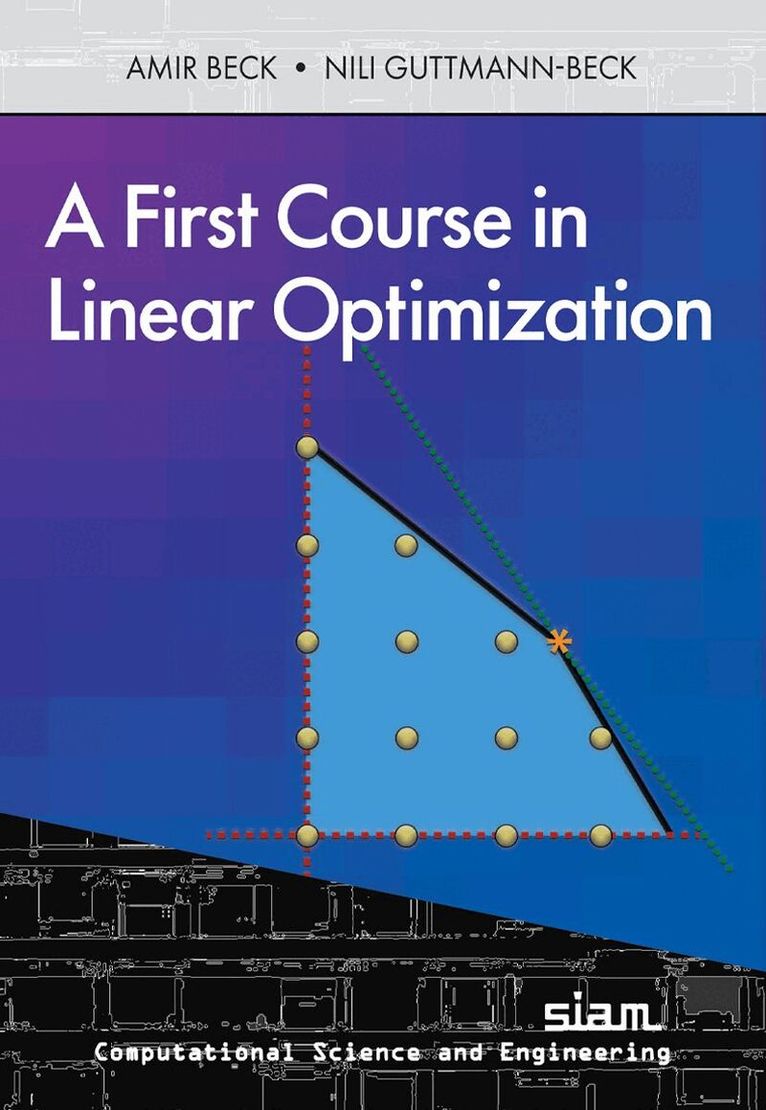
This self-contained textbook provides the foundations of linear optimization, covering topics in both continuous and discrete linear optimization. It gradually builds the connection between theory, algorithms, and applications so that readers gain a theoretical and algorithmic foundation, familiarity with a variety of applications, and the ability to apply the theory and algorithms to actual problems.To deepen the reader’s understanding, the authors provide many applications from diverse areas of applied sciences, such as resource allocation, line fitting, graph coloring, the traveling salesman problem, game theory, and network flows. The book also includes more than 180 exercises, most of them with partial answers and about 70 with complete solutions, as well as a continuous illustration of the theory through examples and exercises.A First Course in Linear Optimization is intended to be read cover to cover and requires only a first course in linear algebra as a prerequisite. Its 13 chapters can be used as lecture notes for a first course in linear optimization.AudienceThis book is for a first undergraduate course in linear optimization, such as linear programming, linear optimization, and operations research. It is appropriate for students in operations research, mathematics, economics, and industrial engineering, as well as those studying computer science and engineering disciplines.