Amita Dhanda – författare
Visar alla böcker från författaren Amita Dhanda. Handla med fri frakt och snabb leverans.
9 produkter
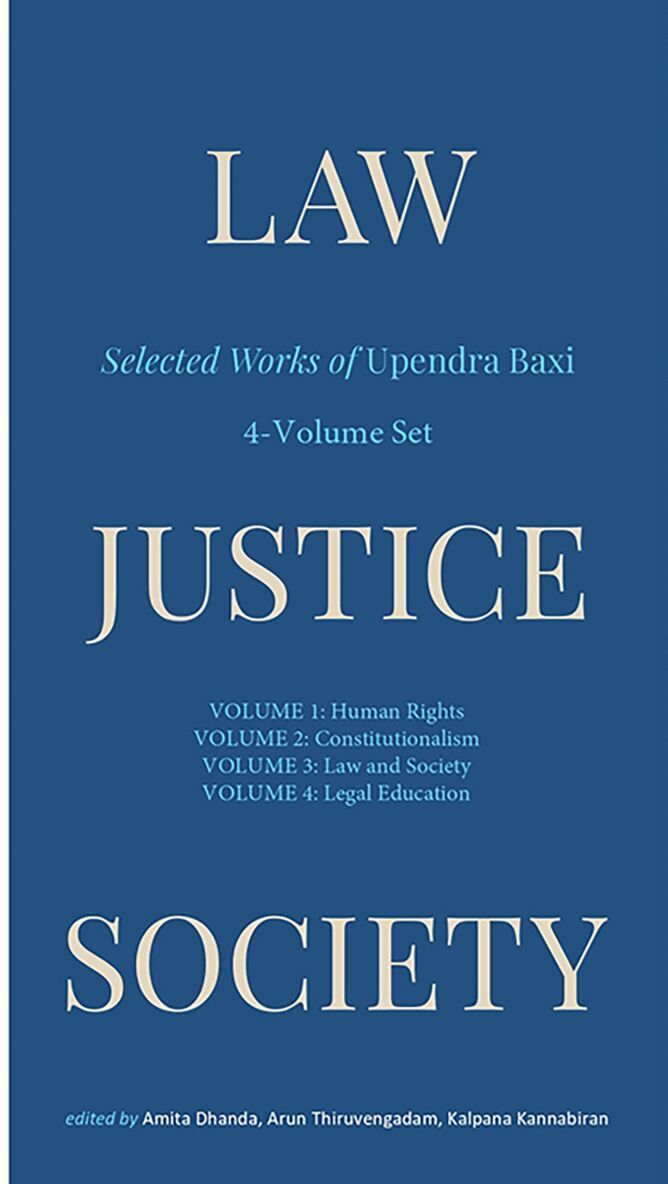
Law, Justice, Society
Selected Works of Upendra Baxi
Av Upendra Baxi, Amita Dhanda m. fl.
Inbunden, 2025
6237 kr
Lägg i varukorg
Widely regarded as one of the most eminent legal thinkers of his time, Upendra Baxi is a leading scholar on matters relating to human rights, legal and social theory, and comparative constitutional law and theory. A set of four volumes, Law, Justice, Society: Selected Works of Upendra Baxi …
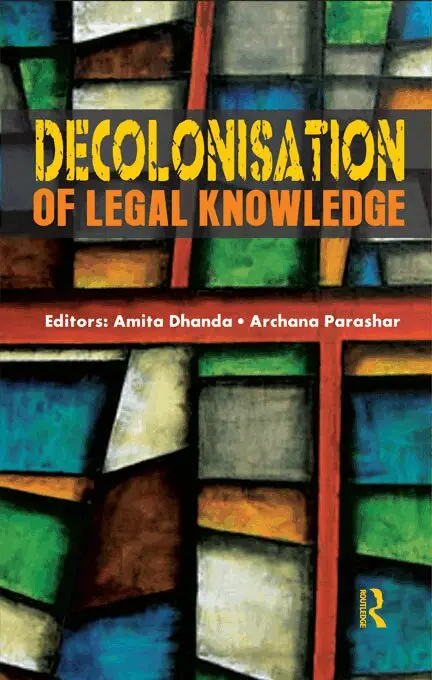
Decolonisation of Legal Knowledge
Av Amita Dhanda, Archana Parashar
Häftad, 2019
691 kr
Lägg i varukorg
The premise of this book is that legal theory in general, and critical legal theory in particular, do not facilitate the identification of choices being made in the different facets of law -- whether in the enacting, interpreting, administering or theorising of law.
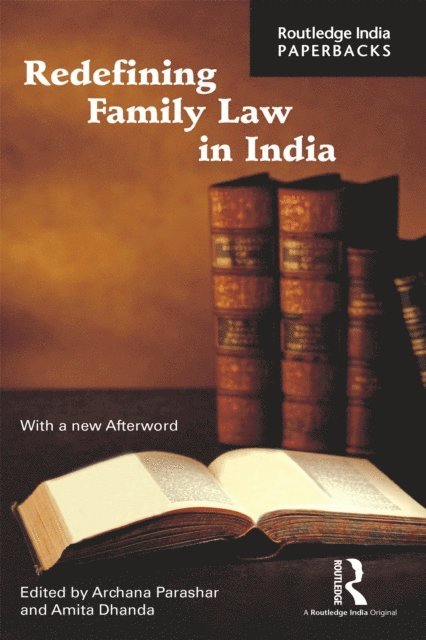
Redefining Family Law in India
Av Archana Parashar, Amita Dhanda
Inbunden, 2009
1402 kr
Lägg i varukorg
This volume is a collection of articles by scholars across disciplines to create a discourse of family law independent of Religious Personal Law, whilst striving for fairness and justice to all. It demonstrates the artificiality of the public–private divide and seeks the systematic development of …
Decolonisation of Legal Knowledge
Av Amita Dhanda, Archana Parashar
Inbunden, 2009
2314 kr
Lägg i varukorg
The premise of this book is that legal theory in general, and critical legal theory in particular, do not facilitate the identification of choices being made in the different facets of law -- whether in the enacting, interpreting, administering or theorising of law.
Redefining Family Law in India
Av Amita Dhanda, Archana Parashar
E-bok, 2020
622 kr
Lägg i varukorg
This volume is a collection of articles by scholars across disciplines to create a discourse of family law independent of Religious Personal Law, whilst striving for fairness and justice to all. It demonstrates the artificiality of the public–private divide and seeks the systematic development of …
Redefining Family Law in India
Av Amita Dhanda, Archana Parashar
E-bok, 2020
622 kr
Lägg i varukorg
This volume is a collection of articles by scholars across disciplines to create a discourse of family law independent of Religious Personal Law, whilst striving for fairness and justice to all. It demonstrates the artificiality of the public–private divide and seeks the systematic development of …
Decolonisation of Legal Knowledge
Av Amita Dhanda, Archana Parashar
E-bok, 2012
871 kr
Lägg i varukorg
The premise of this book is that legal theory in general, and critical legal theory in particular, do not facilitate the identification of choices being made in the different facets of law -- whether in the enacting, interpreting, administering or theorising of law.
Decolonisation of Legal Knowledge
Av Amita Dhanda, Archana Parashar
E-bok, 2012
871 kr
Lägg i varukorg
The premise of this book is that legal theory in general, and critical legal theory in particular, do not facilitate the identification of choices being made in the different facets of law -- whether in the enacting, interpreting, administering or theorising of law.
Redefining Family Law in India
Av Archana Parashar, Amita Dhanda
Häftad, 2015
530 kr
Lägg i varukorg
This volume is a collection of articles by scholars across disciplines to create a discourse of family law independent of Religious Personal Law, whilst striving for fairness and justice to all. It demonstrates the artificiality of the public–private divide and seeks the systematic development of …