Ammasi Periasamy – författare
Visar alla böcker från författaren Ammasi Periasamy. Handla med fri frakt och snabb leverans.
7 produkter
Molecular Imaging
FRET Microscopy and Spectroscopy
Av Richard Day, Ammasi Periasamy
E-bok, 2011
1239 kr
Lägg i varukorg
The detection and measurement of the dynamic interactions of proteins within the living cell are critical to our understanding of cell physiology and pathophysiology. With FRET microscopy and spectroscopy techniques, basic and clinical scientists can make such measurements at very high spatial and …
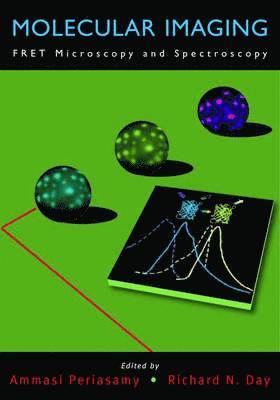
Molecular Imaging
FRET Microscopy and Spectroscopy
Av Ammasi Periasamy, Richard Day
Inbunden, 2008
1369 kr
Lägg i varukorg
The detection and measurement of the dynamic interactions of proteins within the living cell are critical to our understanding of cell physiology and pathophysiology. With FRET microscopy and spectroscopy techniques, basic and clinical scientists can make such measurements at very high spatial and …
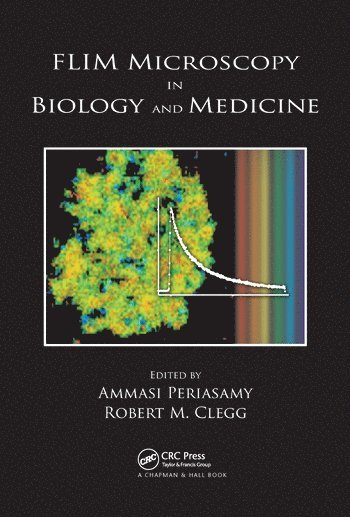
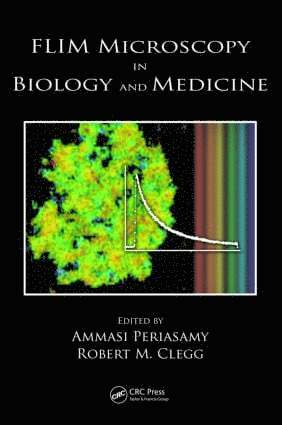
FLIM Microscopy in Biology and Medicine
Av Ammasi Periasamy, Robert M. Clegg
Häftad, 2020
791 kr
Lägg i varukorg
Detecting Signals at the Single Molecule Level: Pioneering Achievements in MicroscopyRecent advances have led to such remarkable improvements in fluorescence lifetime imaging microscopy’s (FLIM) capacity for contrast and sensitivity that researchers can now employ it to detect signals at the single …
FLIM Microscopy in Biology and Medicine
Av Robert M. Clegg, Ammasi Periasamy
E-bok, 2009
963 kr
Lägg i varukorg
Detecting Signals at the Single Molecule Level: Pioneering Achievements in MicroscopyRecent advances have led to such remarkable improvements in fluorescence lifetime imaging microscopy''s (FLIM) capacity for contrast and sensitivity that researchers can now employ it to detect signals at the …
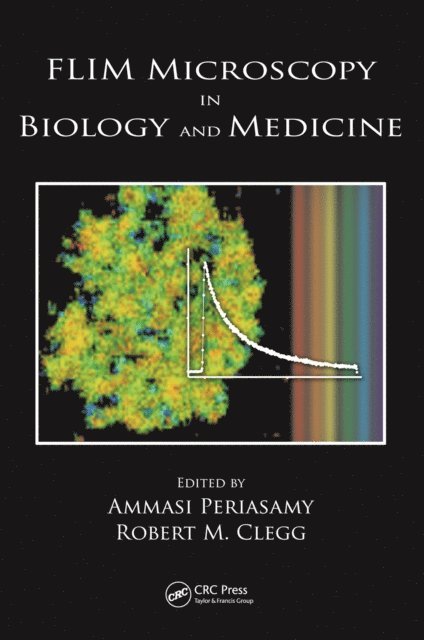
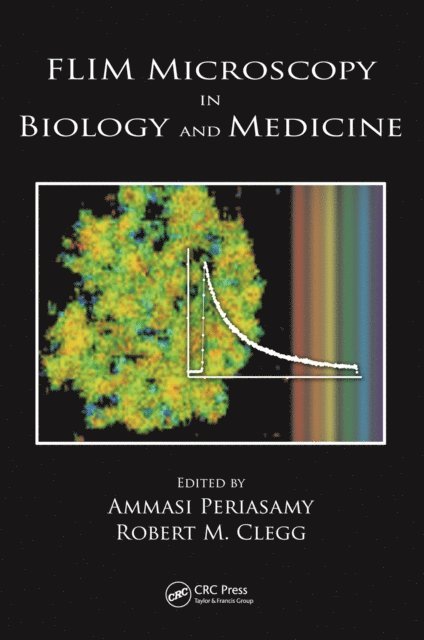
FLIM Microscopy in Biology and Medicine
Av Ammasi Periasamy, Robert M. Clegg
Inbunden, 2009
3055 kr
Lägg i varukorg
Detecting Signals at the Single Molecule Level: Pioneering Achievements in MicroscopyRecent advances have led to such remarkable improvements in fluorescence lifetime imaging microscopy’s (FLIM) capacity for contrast and sensitivity that researchers can now employ it to detect signals at the single …
FLIM Microscopy in Biology and Medicine
Av Robert M. Clegg, Ammasi Periasamy
E-bok, 2009
935 kr
Lägg i varukorg
Detecting Signals at the Single Molecule Level: Pioneering Achievements in MicroscopyRecent advances have led to such remarkable improvements in fluorescence lifetime imaging microscopy''s (FLIM) capacity for contrast and sensitivity that researchers can now employ it to detect signals at the …
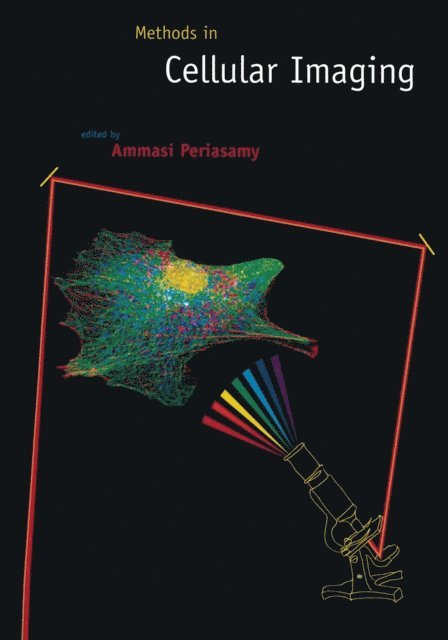
Methods in Cellular Imaging
E-bok, 2013
1258 kr
Lägg i varukorg
Advances in technology have revolutionized the development of light microscopy techniques in biomedical research, thus improving visualization of the microstructure of cells and tissues under physiological conditions. Fluorescence microscopy methods are non-contact and non-invasive and provide high …