Richard Day – författare
Visar alla böcker från författaren Richard Day. Handla med fri frakt och snabb leverans.
8 produkter
Molecular Imaging
FRET Microscopy and Spectroscopy
Av Richard Day, Ammasi Periasamy
E-bok, 2011
1239 kr
Lägg i varukorg
The detection and measurement of the dynamic interactions of proteins within the living cell are critical to our understanding of cell physiology and pathophysiology. With FRET microscopy and spectroscopy techniques, basic and clinical scientists can make such measurements at very high spatial and …
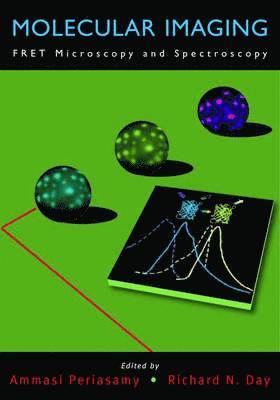
Molecular Imaging
FRET Microscopy and Spectroscopy
Av Ammasi Periasamy, Richard Day
Inbunden, 2008
1369 kr
Lägg i varukorg
The detection and measurement of the dynamic interactions of proteins within the living cell are critical to our understanding of cell physiology and pathophysiology. With FRET microscopy and spectroscopy techniques, basic and clinical scientists can make such measurements at very high spatial and …
Advanced Composite Materials and Technologies for Aerospace Applications
Häftad, 2012
128 kr
Lägg i varukorg
Advanced Composite Materials and Technologies for Aerospace Applications
Häftad, 2014
130 kr
Lägg i varukorg
Globalization and Political Ethics
Av Richard Day
Häftad, 2006
1941 kr
Lägg i varukorg
Rational exercise of our responsibility requires us to relate the globalization process to the ends and purposes that properly befit human life and human community. Economic 'ends' are merely the 'means' to ends of a higher order, which can only be specified in terms of moral duty and ethical …
Symbol and Realization : A Contribution to the Study of Magic and Healing
Av Ronald H. Davidson, Richard Day
Inbunden, 1974
275 kr
Tillfälligt slut