Amrei Müller – författare
Visar alla böcker från författaren Amrei Müller. Handla med fri frakt och snabb leverans.
5 produkter
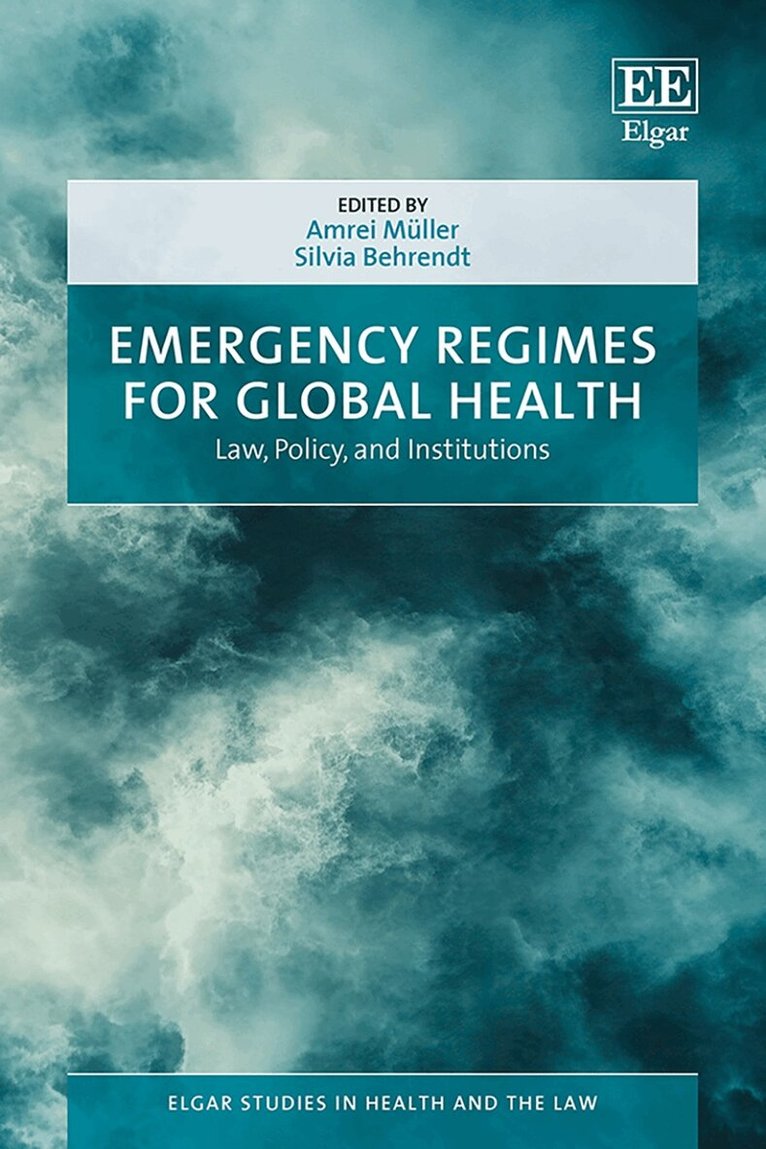
Emergency Regimes for Global Health
Law, Policy, and Institutions
Av Amrei Müller, Silvia Behrendt
Inbunden, 2026
1907 kr
Lägg i varukorg
This book examines the role of international, European and domestic responses to SARS-CoV-2 (Covid-19) in accelerating and solidifying trends of securitisation and public-private hybridisation in public health. It explores the broader legal, policy and institutional implications of the WHO …
Emergency Regimes for Global Health
Law, Policy, and Institutions
Av Silvia Behrendt, Amrei Muller
E-bok, 2026
422 kr
Lägg i varukorg
This book examines the role of international, European and domestic responses to SARS-CoV-2 (Covid-19) in accelerating and solidifying trends of securitisation and public-private hybridisation in public health. It explores the broader legal, policy and institutional implications of the WHO …
Emergency Regimes for Global Health
Law, Policy, and Institutions
Av Silvia Behrendt, Amrei Muller
E-bok, 2026
413 kr
Lägg i varukorg
This book examines the role of international, European and domestic responses to SARS-CoV-2 (Covid-19) in accelerating and solidifying trends of securitisation and public-private hybridisation in public health. It explores the broader legal, policy and institutional implications of the WHO …
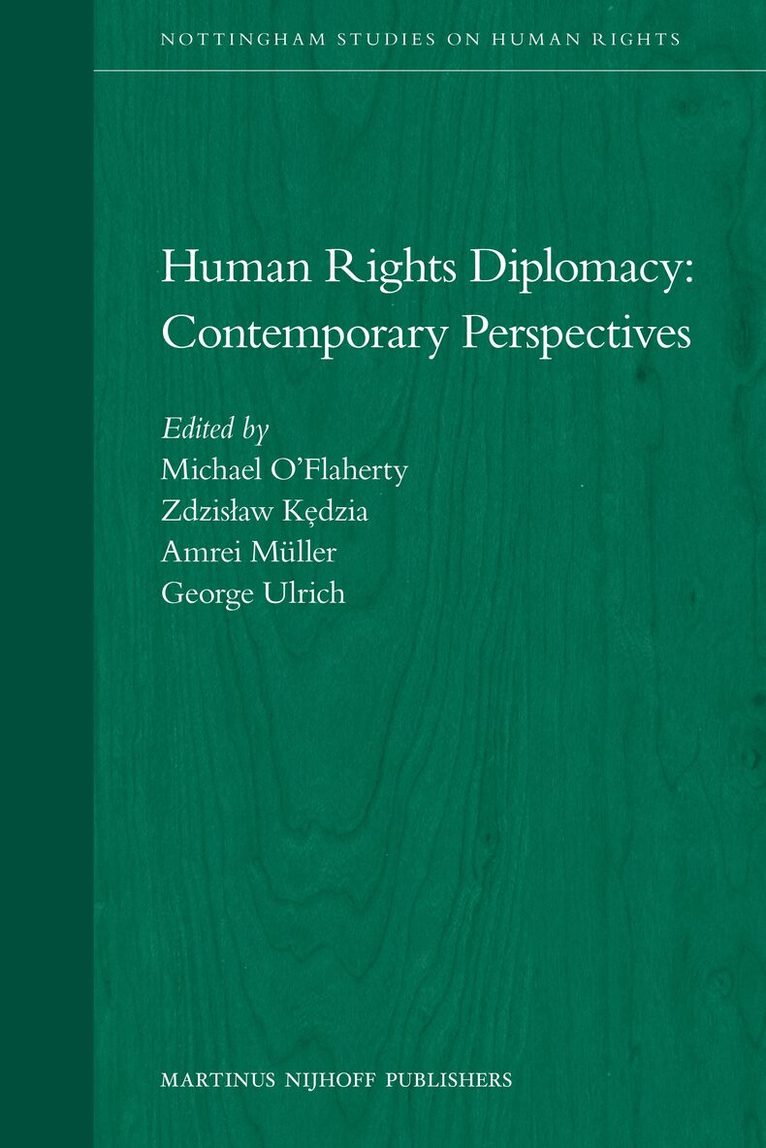
Human Rights Diplomacy: Contemporary Perspectives
Av Michael O'Flaherty, Zdzisław Kędzia m. fl.
Inbunden, 2011
2112 kr
Lägg i varukorg
This collection of essays explores the notion, tools and challenges of human rights diplomacy, which is understood as the utilisation of diplomatic negotiation and persuasion for the specific purpose of promoting and protecting human rights. Theoretical reflections are combined with first-hand …
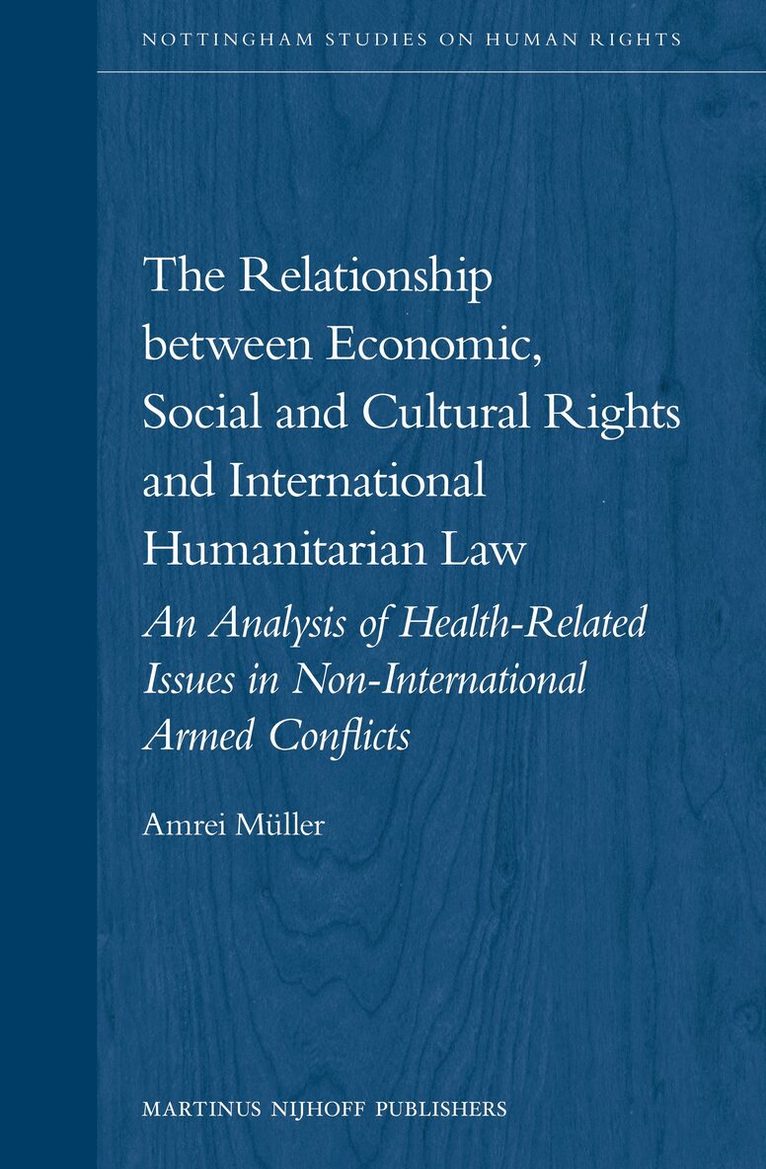
Relationship between Economic, Social and Cultural Rights and International Humanitarian Law
An Analysis of Health Related Issues in Non-international Armed Conflicts
Av Amrei Müller
Inbunden, 2013
2712 kr
Lägg i varukorg
In The Relationship between Economic, Social and Cultural Rights and International Humanitarian Law, Amrei Müller offers a detailed analysis of the legal consequences of the parallel application of economic, social and cultural (ESC) rights and international humanitarian law (IHL) to …