Amy E Black – författare
Visar alla böcker från författaren Amy E Black. Handla med fri frakt och snabb leverans.
8 produkter
Five Views on the Church and Politics
Av Zondervan Publishing, Amy E Black m. fl.
Häftad, 2016
166 kr
Lägg i varukorg
Learn to think deeply about the relationship between church and state in a way that goes beyond mere policy debates and current campaigns.Few topics can grab headlines and stir passions quite like politics, especially when the church is involved. Considering the attention that many Christian …
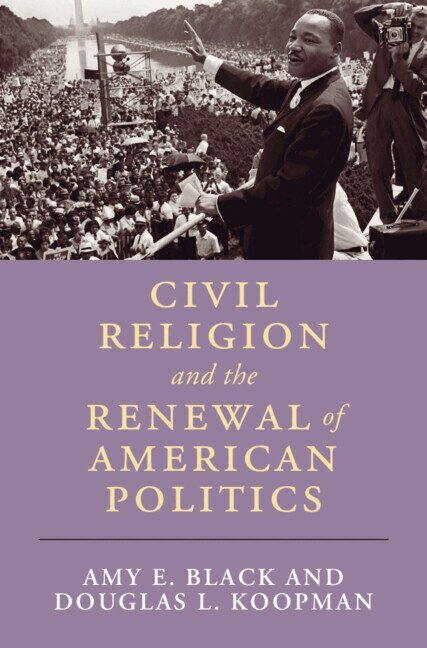
Civil Religion and the Renewal of American Politics
Av Amy E. Black, Douglas L. Koopman
Inbunden, 2025
1318 kr
Lägg i varukorg
American culture is evolving rapidly as a result of shifts in its religious landscape. American civil religion is robust enough to make room for new perspectives, as religious pluralism is foundational for democracy. Moreover, as Amy Black and Douglas L. Koopman argue, American religion and …
Civil Religion and the Renewal of American Politics
Av Douglas L. Koopman, Amy E. Black
E-bok, 2025
408 kr
Lägg i varukorg
Civil Religion and the Renewal of American Politics
Av Douglas L. Koopman, Amy E. Black
E-bok, 2025
399 kr
Lägg i varukorg
Civil Religion and the Renewal of American Politics
Av Amy E. Black, Douglas L. Koopman
Häftad, 2025
389 kr
Lägg i varukorg
American culture is evolving rapidly as a result of shifts in its religious landscape. American civil religion is robust enough to make room for new perspectives, as religious pluralism is foundational for democracy. Moreover, as Amy Black and Douglas L. Koopman argue, American religion and …
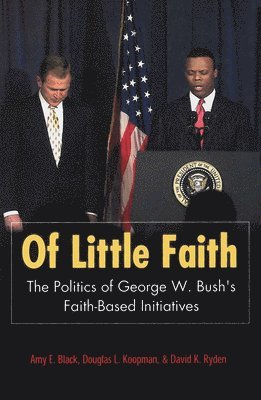
Of Little Faith
The Politics of George W. Bush's Faith-Based Initiatives
Av Amy E. Black
Häftad, 2004
643 kr
Lägg i varukorg
George W. Bush had planned to swear his oath of office with his hand on the Masonic Bible used by both his father and George Washington, however, due to the inclement weather, a family Bible was substituted. Almost immediately on taking office, President Bush made passage of "faith-based …
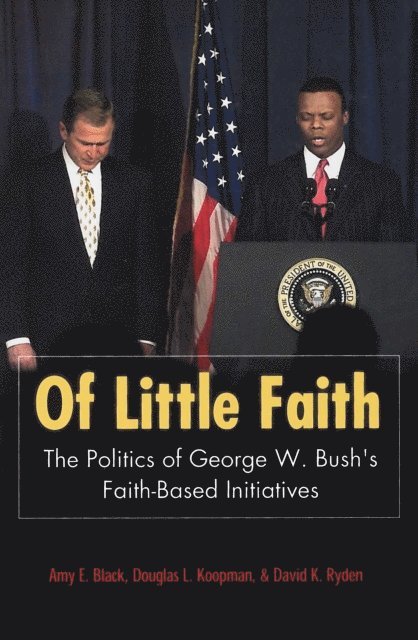
Of Little Faith
The Politics of George W. Bush''s Faith-Based Initiatives
Av Amy E. Black
E-bok, 2004
783 kr
Lägg i varukorg
George W. Bush had planned to swear his oath of office with his hand on the Masonic Bible used by both his father and George Washington, however, due to the inclement weather, a family Bible was substituted. Almost immediately on taking office, President Bush made passage of "faith-based …
Of Little Faith
The Politics of George W. Bush's Faith-Based Initiatives
Av Amy E. Black
Inbunden, 2004
2039 kr
Tillfälligt slut
George W. Bush had planned to swear his oath of office with his hand on the Masonic Bible used by both his father and George Washington, however, due to the inclement weather, a family Bible was substituted. Almost immediately on taking office, President Bush made passage of "faith-based …