Amy E. Earhart - Böcker
Visar alla böcker från författaren Amy E. Earhart. Handla med fri frakt och snabb leverans.
3 produkter
3 produkter
528 kr
Skickas inom 7-10 vardagar
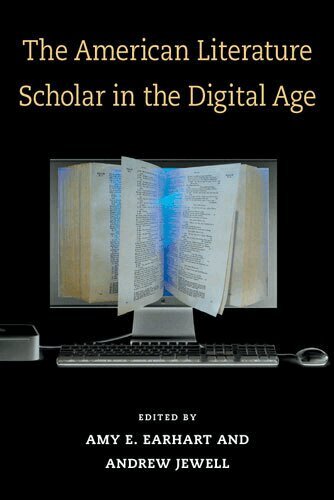
"By casting the collection explicitly as an outreach to the larger community of Americanists---not primarily those who self-identify as 'digital scholars'---Earhart and Jewell have made an important choice, and one that will likely make this a landmark publication."---Andrew Stauffer, University of VirginiaThe American Literature Scholar in the Digital Age, which features a wide range of practitioner-scholars, is the first of its kind: a gathering of people who are expert in American literary studies and in digital technologies, scholars uniquely able to draw from experience with building digital resources and to provide theoretical commentary on how the transformation to new technologies alters the way we think about and articulate scholarship in American literature. The volume collects articles from those who are involved in tool development, usability testing, editing and textual scholarship, digital librarianship, and issues of race and ethnicity in digital humanities, while also situating digital humanities work within the larger literary discipline. In addition, the volume examines the traditional structures of the fields, including tenure and promotion criteria, modes of scholarly production, the skill sets required for scholarship, and the training of new scholars. The American Literature Scholar in the Digital Age will attract practitioners of digital humanities in multiple fields, Americanists who utilize digital materials, and those who are intellectually curious about the new movement and materials.Amy E. Earhart is Assistant Professor in the Department of English at Texas A&M University.Andrew Jewell is Associate Professor of Digital Projects, University Libraries, at the University of Nebraska–Lincoln.Cover art: Book background ©iStockphoto.com/natashikadigitalculturebooks is an imprint of the University of Michigan Press and the Scholarly Publishing Office of the University of Michigan Library dedicated to publishing innovative and accessible work exploring new media and their impact on society, culture, and scholarly communication. Visit the website at www.digitalculture.org.
414 kr
Skickas inom 7-10 vardagar
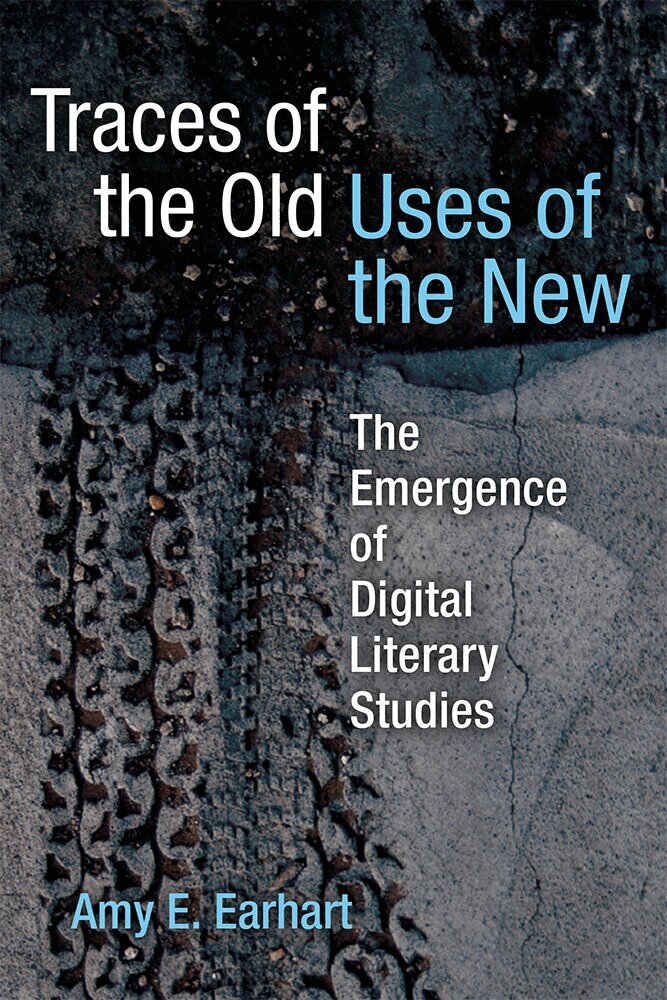
Digital Humanities remains a contested, umbrella term covering many types of work in numerous disciplines, including literature, history, linguistics, classics, theater, performance studies, film, media studies, computer science, and information science. In Traces of the Old, Uses of the New: The Emergence of Digital Literary Studies, Amy Earhart stakes a claim for discipline-specific history of digital study as a necessary prelude to true progress in defining Digital Humanities as a shared set of interdisciplinary practices and interests. Traces of the Old, Uses of the New focuses on twenty-five years of developments, including digital editions, digital archives, e-texts, text mining, and visualization, to situate emergent products and processes in relation to historical trends of disciplinary interest in literary study. By reexamining the roil of theoretical debates and applied practices from the last generation of work in juxtaposition with applied digital work of the same period, Earhart also seeks to expose limitations in need of alternative methods—methods that might begin to deliver on the early (but thus far unfulfilled) promise that digitizing texts allows literature scholars to ask and answer questions in new and compelling ways. In mapping the history of digital literary scholarship, Earhart also seeks to chart viable paths to its future, and in doing this work in one discipline, this book aims to inspire similar work in others.
Digital Literary Redlining
African American Anthologies, Digital Humanities, and the Canon
Inbunden, Engelska, 2025
855 kr
Skickas inom 7-10 vardagar
Though canon concerns seem to be a relic of 1990s academia, we are, once again, at a historical moment when there is resistance to teaching texts by writers of color and texts that deal with race, ethnicity and gender. At the same time, algorithmic bias scholars are locating systemic bias encoded into systems from policing software to housing software. Bringing these divergent areas together, Amy E. Earhart examines how technological and institutional infrastructures construct and deconstruct race, ethnicity and gender identities. Focusing on two central infrastructures, the database, a commonly used technological infrastructure in the digital humanities, and the anthology, a scholarly and pedagogical infrastructure, Earhart considers how such seemingly naturalized infrastructures impact the representation and modeling of identity. The book draws upon the building and use of DALA, a collection of almost 100 years of generalist American and African American literature anthologies, constructed to investigate questions of identity and representation in literary anthologies and, by extension, the larger literary canon. The resulting examination, and its rigorous discussion of how identities are created and recreated within Black literary histories, has important implications for contemporary cultural and political debates about canon formation, literary scholarship, and the bias embedded in technological infrastructures.