Amy Zegart - Böcker
Visar alla böcker från författaren Amy Zegart. Handla med fri frakt och snabb leverans.
3 produkter
3 produkter
309 kr
Skickas inom 7-10 vardagar
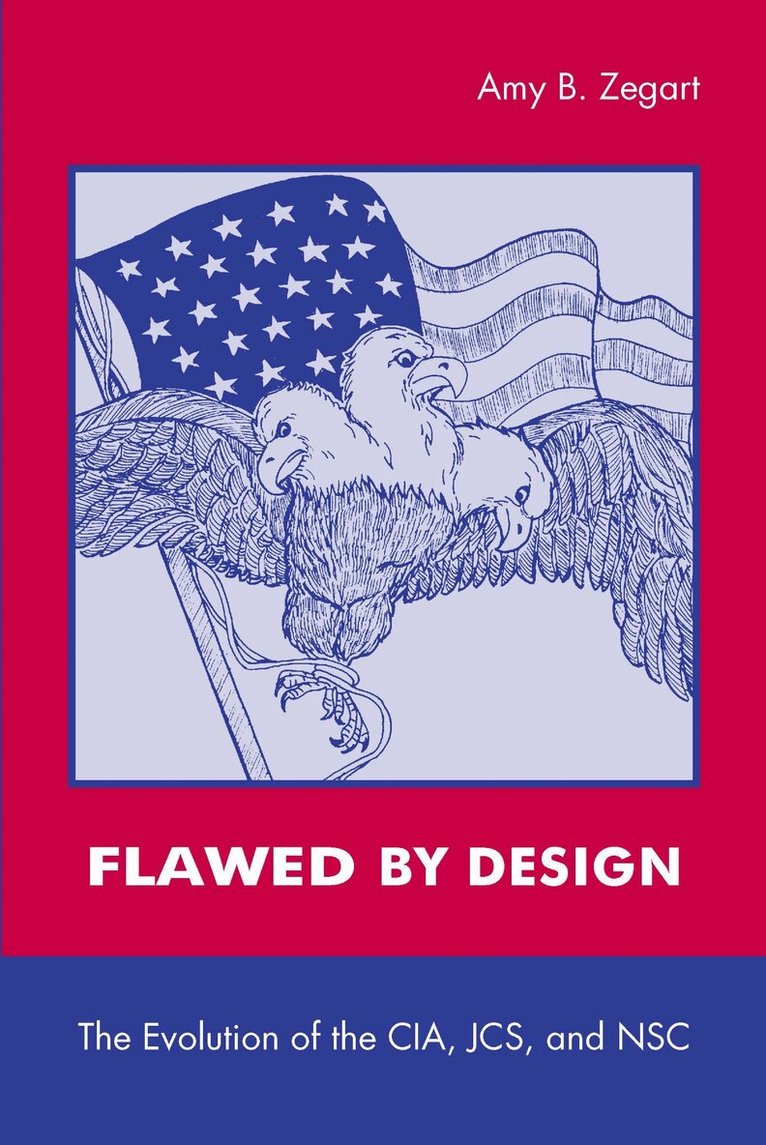
In this provocative and thoughtful book, Amy Zegart challenges the conventional belief that national security agencies work reasonably well to serve the national interest as they were designed to do. Using a new institutionalist approach, Zegart asks what forces shaped the initial design of the Central Intelligence Agency, the Joint Chiefs of Staff, and the National Security Council in ways that meant they were handicapped from birth.Ironically, she finds that much of the blame can be ascribed to cherished features of American democracy—frequent elections, the separation of powers, majority rule, political compromise—all of which constrain presidential power and give Congress little incentive to create an effective foreign policy system. At the same time, bureaucrats in rival departments had the expertise, the staying power, and the incentives to sabotage the creation of effective competitors, and this is exactly what they did. Historical evidence suggests that most political players did not consider broad national concerns when they forged the CIA, JCS, and NSC in the late 1940s. Although President Truman aimed to establish a functional foreign policy system, he was stymied by self-interested bureaucrats, legislators, and military leaders. The NSC was established by accident, as a byproduct of political compromise; Navy opposition crippled the JCS from the outset; and the CIA emerged without the statutory authority to fulfill its assigned role thanks to the Navy, War, State, and Justice departments, which fought to protect their own intelligence apparatus.Not surprisingly, the new security agencies performed poorly as they struggled to overcome their crippled evolution. Only the NSC overcame its initial handicaps as several presidents exploited loopholes in the National Security Act of 1947 to reinvent the NSC staff. The JCS, by contrast, remained mired in its ineffective design for nearly forty years—i.e., throughout the Cold War—and the CIA's pivotal analysis branch has never recovered from its origins. In sum, the author paints an astonishing picture: the agencies Americans count on most to protect them from enemies abroad are, by design, largely incapable of doing so.
568 kr
Skickas inom 10-15 vardagar
We are dropping cyber bombs. We have never done that before.U.S. Defense Department officialA new era of war fighting is emerging for the U.S. military. Hi-tech weapons have given way to hi tech in a number of instances recently:A computer virus is unleashed that destroys centrifuges in Iran, slowing that country's attempt to build a nuclear weapon.ISIS, which has made the internet the backbone of its terror operations, finds its network-based command and control systems are overwhelmed in a cyber attack.A number of North Korean ballistic missiles fail on launch, reportedly because their systems were compromised by a cyber campaign.Offensive cyber operations like these have become important components of U.S. defense strategy and their role will grow larger. But just what offensive cyber weapons are and how they could be used remains clouded by secrecy.This new volume by Amy Zegart and Herb Lin is a groundbreaking discussion and exploration of cyber weapons with a focus on their strategic dimensions. It brings together many of the leading specialists in the field to provide new and incisive analysis of what former CIA director Michael Hayden has called digital combat power and how the United States should incorporate that power into its national security strategy.
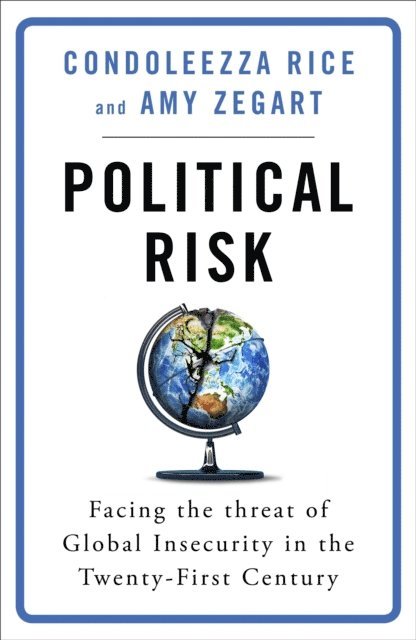
Political Risk
Facing the Threat of Global Insecurity in the Twenty-First Century
Häftad, Engelska, 2019
138 kr
Skickas inom 7-10 vardagar
'Smart. Informative. Overdue' Eric Schmidt, former CEO of Google Political risk - the probability that a political action could significantly affect an organisation - is changing fast, and it's more widespread than ever before.In the past, the chief concern used to be whether a foreign dictator would nationalise the country's oil industry. Today, political risk stems from a widening array of agents, from Twitter users and terrorists to hackers and insurgents. What's more, the very institutions and laws that are supposed to reduce uncertainty and risk often increase it instead. This means that in today's globalised world there are no 'safe' bets. Political risk affects companies and organisations of all sizes, operating everywhere from London to Lahore, even if they don't know it.Political Risk investigates and analyses this shifting landscape, suggests what businesses can do to navigate it, and explains how all of us can better understand these rapidly changing geopolitical dynamics.