
Anastasios Korkotsides – författare
1 508 kr
Skickas inom 10-15 vardagar
464 kr
Skickas inom 10-15 vardagar
2 164 kr
Skickas inom 10-15 vardagar
535 kr
Läs direkt efter köp
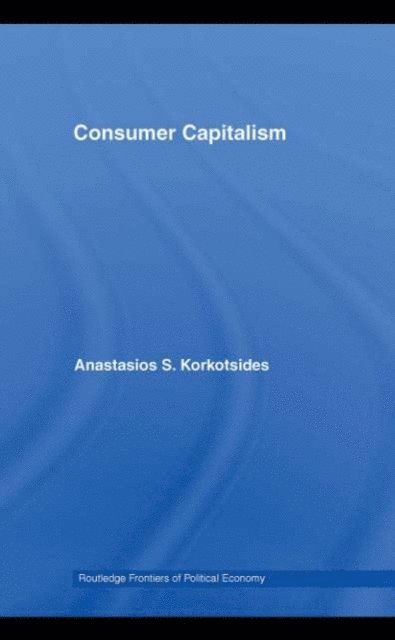
An excellent addition to Routledge’s strong tradition of publishing exceptional books in heterodox economics, this innovative and groundbreaking volume draws on the work of Schumpeter, Marx and Sraffa, three of the most influential economists of all time. It bases value on a single, inwardly felt scarcity, the scarcity of life, which consumers scramble to experience more of through private possession of the product of socially contributed human time-space, in the form of knowledge embodied in commodities. This coercive urge, which appears outwardly as ‘commodity fetishism’, sets the context of ‘utility’ and self-interest, implicating consumers in the plunder of each other’s toil and of the earth, showing that capitalistic growth surveys existential distress rather than welfare.
Existential motivational uniformity joins the seemingly disparate individualistic pursuits into a race for growth, while markets promote variety and innovation. Markets assist consumption innovations to blend with Schumpeterian production innovations as consumers try to foresee market conditions and structure their expenditures towards gaining positional advantage. These explain the structural dynamics of increased roundaboutness through adjustment of prices and demand to an evolving techno-structure.
A valuable resource, this book unfolds a new vision of economic theorizing through the extreme basics of agent behaviour.
535 kr
Läs direkt efter köp
An excellent addition to Routledge’s strong tradition of publishing exceptional books in heterodox economics, this innovative and groundbreaking volume draws on the work of Schumpeter, Marx and Sraffa, three of the most influential economists of all time. It bases value on a single, inwardly felt scarcity, the scarcity of life, which consumers scramble to experience more of through private possession of the product of socially contributed human time-space, in the form of knowledge embodied in commodities. This coercive urge, which appears outwardly as ‘commodity fetishism’, sets the context of ‘utility’ and self-interest, implicating consumers in the plunder of each other’s toil and of the earth, showing that capitalistic growth surveys existential distress rather than welfare.
Existential motivational uniformity joins the seemingly disparate individualistic pursuits into a race for growth, while markets promote variety and innovation. Markets assist consumption innovations to blend with Schumpeterian production innovations as consumers try to foresee market conditions and structure their expenditures towards gaining positional advantage. These explain the structural dynamics of increased roundaboutness through adjustment of prices and demand to an evolving techno-structure.
A valuable resource, this book unfolds a new vision of economic theorizing through the extreme basics of agent behaviour.
875 kr
Läs direkt efter köp
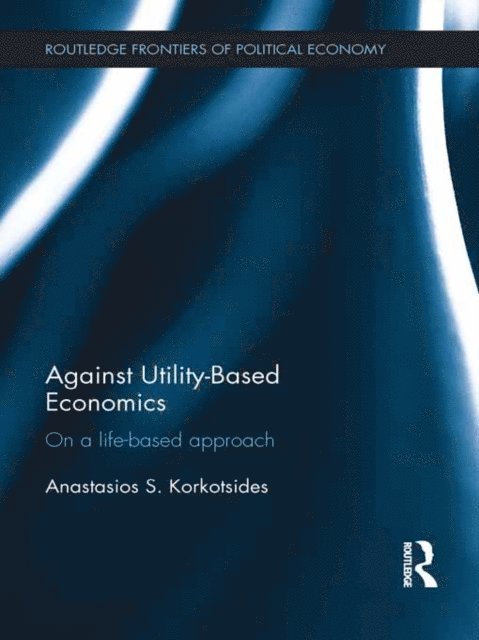
Utility-based theory and the fallback choice-theoretic framework are shown to be biased, irremediably flawed and misleading. A radically different theory of value and of consumer behaviour is proposed based on existential interpretations of scarcity, value and self-interest. For self-conscious mortals, only time is scarce. All other is derivative scarcity. Value is in the life, as a knowledge extract of time, which goes into commodities as direct human labour and depreciated capital, through their production. By structuring their preferences, consumers try to confiscate more of such value per unit of expended income, extending their social presence, soothing their angst and gaining power over each other. This raises output and makes gains cancel out. Negative psychological externalities preclude any well-being or social-welfare type conclusion.
These resolve a number of long-standing issues: endogenously generated growth, the micro-macro connection, the price mechanism, crises, unemployment, etc. Equilibrium is of a low-potential kind, not of a force-balancing one, and it is unique, reachable and stable. The relevant analytics involve purely economic, non-psychological entities. Consumer behaviour is grounded on a well-defined, structure-based decision criterion and on observably measurable magnitudes, only. The social ramifications of the two juxtaposed perspectives are discussed at length.
867 kr
Läs direkt efter köp
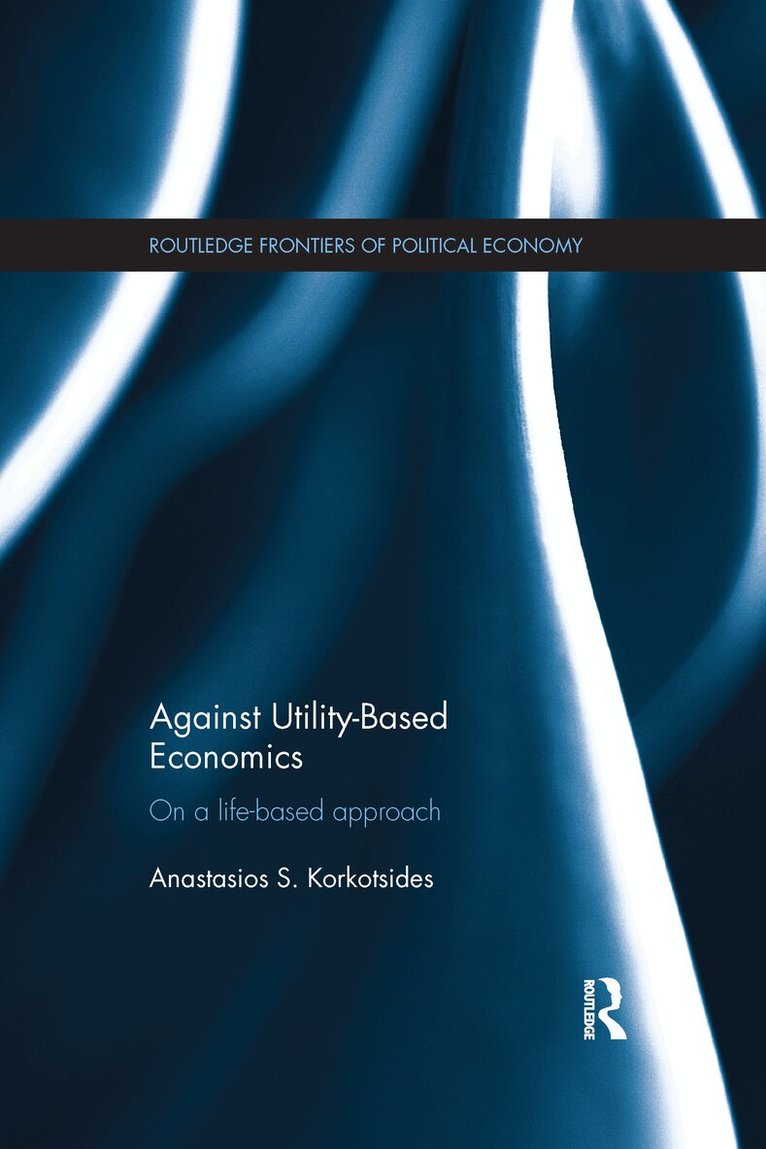
Utility-based theory and the fallback choice-theoretic framework are shown to be biased, irremediably flawed and misleading. A radically different theory of value and of consumer behaviour is proposed based on existential interpretations of scarcity, value and self-interest. For self-conscious mortals, only time is scarce. All other is derivative scarcity. Value is in the life, as a knowledge extract of time, which goes into commodities as direct human labour and depreciated capital, through their production. By structuring their preferences, consumers try to confiscate more of such value per unit of expended income, extending their social presence, soothing their angst and gaining power over each other. This raises output and makes gains cancel out. Negative psychological externalities preclude any well-being or social-welfare type conclusion.
These resolve a number of long-standing issues: endogenously generated growth, the micro-macro connection, the price mechanism, crises, unemployment, etc. Equilibrium is of a low-potential kind, not of a force-balancing one, and it is unique, reachable and stable. The relevant analytics involve purely economic, non-psychological entities. Consumer behaviour is grounded on a well-defined, structure-based decision criterion and on observably measurable magnitudes, only. The social ramifications of the two juxtaposed perspectives are discussed at length.
748 kr
Skickas inom 10-15 vardagar