Anca Parvulescu – författare
Visar alla böcker från författaren Anca Parvulescu. Handla med fri frakt och snabb leverans.
7 produkter
7 produkter
E-bok
Engelska, 2014510 kr
Läs direkt efter köp
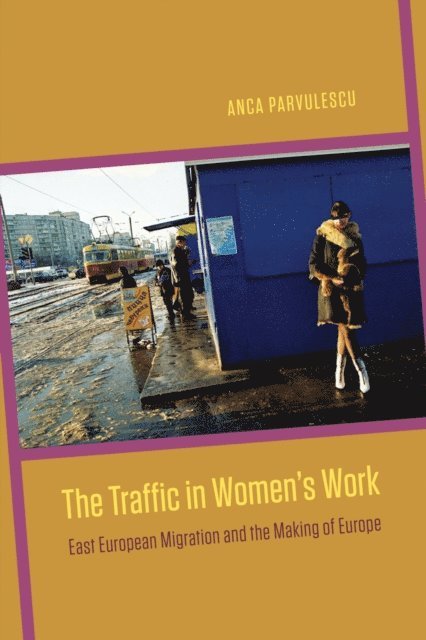
“Welcome to the European family!” When East European countries joined the European Union under this banner after 1989, they agreed to the free movement of goods, services, capital, and persons. In this book, Anca Parvulescu analyzes an important niche in this imagined European kinship: the traffic in women, or the circulation of East European women in West Europe in marriage and as domestic servants, nannies, personal attendants, and entertainers. Analyzing film, national policies, and an impressive range of work by theorists from Giorgio Agamben to Judith Butler, she develops a critical lens through which to think about the transnational continuum of “women’s work.” Parvulescu revisits Claude Lévi-Strauss’s concept of kinship and its rearticulation by second-wave feminists, particularly Gayle Rubin, to show that kinship has traditionally been anchored in the traffic in women. Reading recent cinematic texts that help frame this, she reveals that in contemporary Europe, East European migrant women are exchanged to engage in labor customarily performed by wives within the institution of marriage. Tracing a pattern of what she calls Americanization, Parvulescu argues that these women thereby become responsible for the labor of reproduction. A fascinating cultural study as much about the consequences of the enlargement of the European Union as women’s mobility, The Traffic in Women’s Work questions the foundations of the notion of Europe today.
Häftad, Engelska, 2010
485 kr
Skickas inom 5-8 vardagar
E-bok
Engelska, 20251 638 kr
Läs direkt efter köp
Inbunden, Engelska, 2025
1 400 kr
Skickas inom 7-10 vardagar
Faces, faces, faces - faces everywhere! Modernism was obsessed with the ubiquity of the human face. Thomas Mann, Marcel Proust, Virginia Woolf, Gertrude Stein, and, later, Kōbō Abe framed their literary projects around the question of the face, its dynamic of legibility and opacity. In literary modernism, the face functioned as a proxy for form, memory, intermediality, or difference - and combinations thereof. The old pseudo-science of physiognomy, which assumed faces to be sites of legible meaning, was in the process reconfigured. Modernist faces lost their connection to interiority, but remained surfaces of reading and interpretation. As such, they also became canvases for creative appropriation, what Mina Loy called auto-facial-construction. The modernist overinvestment in faces functions as a warning against the return of physiognomy in contemporary technologies of facial recognition. This title is also available as open access on Cambridge Core.
E-bok
PDF, Engelska, 20251 638 kr
Läs direkt efter köp
Inbunden, Engelska, 2022
1 861 kr
Skickas inom 10-15 vardagar
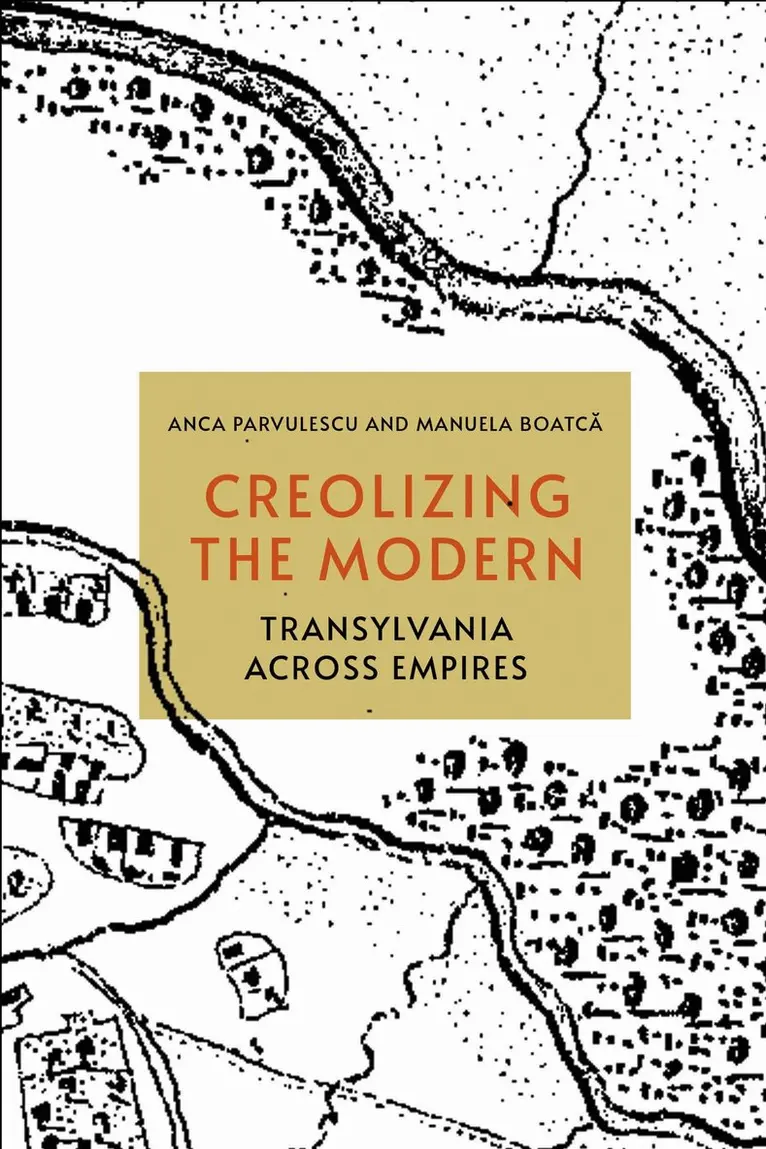
How are modernity, coloniality, and interimperiality entangled? Bridging the humanities and social sciences, Anca Parvulescu and Manuela Boatcă provide innovative decolonial perspectives that aim to creolize modernity and the modern world-system. Historical Transylvania, at the intersection of the Habsburg Empire, the Ottoman Empire, Austria-Hungary, and Russia, offers the platform for their multi-level reading of the main themes in Liviu Rebreanu's 1920 novel Ion. Topics range from the question of the region's capitalist integration to antisemitism and the enslavement of Roma to multilingualism, gender relations, and religion. Creolizing the Modern develops a comparative method for engaging with areas of the world that have inherited multiple, conflicting imperial and anti-imperial histories.
Häftad, Engelska, 2022
471 kr
Skickas inom 10-15 vardagar
How are modernity, coloniality, and interimperiality entangled? Bridging the humanities and social sciences, Anca Parvulescu and Manuela Boatcă provide innovative decolonial perspectives that aim to creolize modernity and the modern world-system. Historical Transylvania, at the intersection of the Habsburg Empire, the Ottoman Empire, Austria-Hungary, and Russia, offers the platform for their multi-level reading of the main themes in Liviu Rebreanu's 1920 novel Ion. Topics range from the question of the region's capitalist integration to antisemitism and the enslavement of Roma to multilingualism, gender relations, and religion. Creolizing the Modern develops a comparative method for engaging with areas of the world that have inherited multiple, conflicting imperial and anti-imperial histories.