and Behavioral Health Forum on Promoting Children's Cognitive, Affective – författare
Visar alla böcker från författaren and Behavioral Health Forum on Promoting Children's Cognitive, Affective. Handla med fri frakt och snabb leverans.
11 produkter
Strategies for Scaling Effective Family-Focused Preventive Interventions to Promote Children's Cognitive, Affective, and Behavioral Health
Workshop Summary
Av National Research Council, Institute of Medicine m. fl.
Häftad, 2014
651 kr
Lägg i varukorg
Over the last three decades, researchers have made remarkable progress in creating and testing family-focused programs aimed at fostering the cognitive, affective, and behavioral health of children. These programs include universal interventions, such as those for expecting or new parents, and …
Strategies for Scaling Effective Family-Focused Preventive Interventions to Promote Children's Cognitive, Affective, and Behavioral Health
Workshop Summary
Av and Behavioral Health Forum on Promoting Children's Cognitive, Affective, and Families Board on Children, Youth m. fl.
E-bok, 2014
572 kr
Lägg i varukorg
Over the last three decades, researchers have made remarkable progress in creating and testing family-focused programs aimed at fostering the cognitive, affective, and behavioral health of children. These programs include universal interventions, such as those for expecting or new parents, and …
Harvesting the Scientific Investment in Prevention Science to Promote Children's Cognitive, Affective, and Behavioral Health
Workshop Summary
Av National Research Council, Institute of Medicine m. fl.
Häftad, 2015
416 kr
Lägg i varukorg
Over the past few decades there have been major successes in creating evidence-based interventions to improve the cognitive, affective, and behavioral health of children. Many of these interventions have been put into practice at the local, state, or national level. To reap what has been learned …
Harvesting the Scientific Investment in Prevention Science to Promote Children's Cognitive, Affective, and Behavioral Health
Workshop Summary
Av and Behavioral Health Forum on Promoting Children's Cognitive, Affective, and Families Board on Children, Youth m. fl.
E-bok, 2015
554 kr
Lägg i varukorg
Over the past few decades there have been major successes in creating evidence-based interventions to improve the cognitive, affective, and behavioral health of children. Many of these interventions have been put into practice at the local, state, or national level. To reap what has been learned …
Innovations in Design and Utilization of Measurement Systems to Promote Children's Cognitive, Affective, and Behavioral Health
Workshop Summary
Av National Research Council, Institute of Medicine m. fl.
Häftad, 2015
385 kr
Lägg i varukorg
Many measurement systems to monitor the well-being of children and guide services are implemented across the community, state, and national levels in the United States. While great progress has been made in recent years in developing interventions that have been shown to improve the cognitive, …
Innovations in Design and Utilization of Measurement Systems to Promote Children's Cognitive, Affective, and Behavioral Health
Workshop Summary
Av and Behavioral Health Forum on Promoting Children's Cognitive, Affective, and Families Board on Children, Youth m. fl.
E-bok, 2015
554 kr
Lägg i varukorg
Many measurement systems to monitor the well-being of children and guide services are implemented across the community, state, and national levels in the United States. While great progress has been made in recent years in developing interventions that have been shown to improve the cognitive, …
Opportunities to Promote Children's Behavioral Health
Health Care Reform and Beyond: Workshop Summary
Av and Medicine National Academies of Sciences, Engineering, Division of Behavioral and Social Sciences and Education m. fl.
Häftad, 2015
708 kr
Lägg i varukorg
The Patient Protection and Affordable Care Act (ACA), which was signed into law in 2010, has several provisions that could greatly improve the behavioral health of children and adolescents in the United States. It requires that many insurance plans cover mental health and substance use disorder …
Opportunities to Promote Children's Behavioral Health
Health Care Reform and Beyond: Workshop Summary
Av and Behavioral Health Forum on Promoting Children's Cognitive, Affective, and Families Board on Children, Youth m. fl.
E-bok, 2015
642 kr
Lägg i varukorg
The Patient Protection and Affordable Care Act (ACA), which was signed into law in 2010, has several provisions that could greatly improve the behavioral health of children and adolescents in the United States. It requires that many insurance plans cover mental health and substance use disorder …
Ensuring Quality and Accessible Care for Children with Disabilities and Complex Health and Educational Needs
Proceedings of a Workshop
Av and Behavioral Health Forum on Promoting Children's Cognitive, Affective, and Families Board on Children, Youth m. fl.
E-bok, 2016
660 kr
Lägg i varukorg
Children with disabilities and complex medical and educational needs present a special challenge for policy makers and practitioners. These children exhibit tremendous heterogeneity in their conditions and needs, requiring a varied array of services to meet those needs. Uneven public and …
Implementing Evidence-Based Prevention by Communities to Promote Cognitive, Affective, and Behavioral Health in Children
Proceedings of a Workshop
Av and Behavioral Health Forum on Promoting Children's Cognitive, Affective, and Families Board on Children, Youth m. fl.
E-bok, 2017
660 kr
Lägg i varukorg
Communities provide the context in which programs, principles, and policies are implemented. Their needs dictate the kinds of programs that community organizers and advocates, program developers and implementers, and researchers will bring to bear on a problem. Their characteristics help determine …
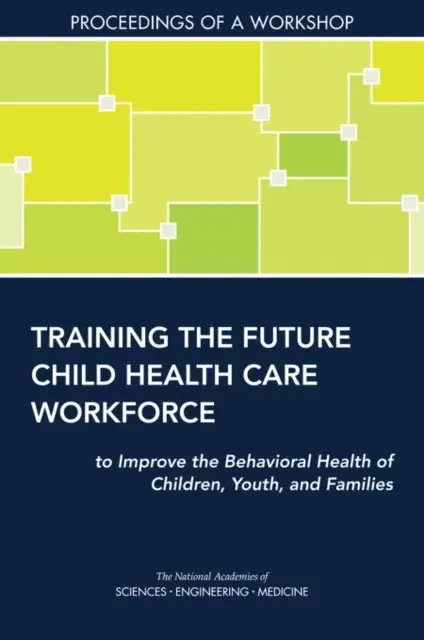
Training the Future Child Health Care Workforce to Improve the Behavioral Health of Children, Youth, and Families
Proceedings of a Workshop
Av and Behavioral Health Forum on Promoting Children's Cognitive, Affective, and Families Board on Children, Youth m. fl.
E-bok, 2017
746 kr
Lägg i varukorg
Increasing numbers of evidence-based interventions have proven effective in preventing and treating behavioral disorders in children. However, the adoption of these interventions in the health care system and other systems that affect the lives of children has been slow. Moreover, with few …