Anders Aslund – författare
Visar alla böcker från författaren Anders Aslund. Handla med fri frakt och snabb leverans.
22 produkter
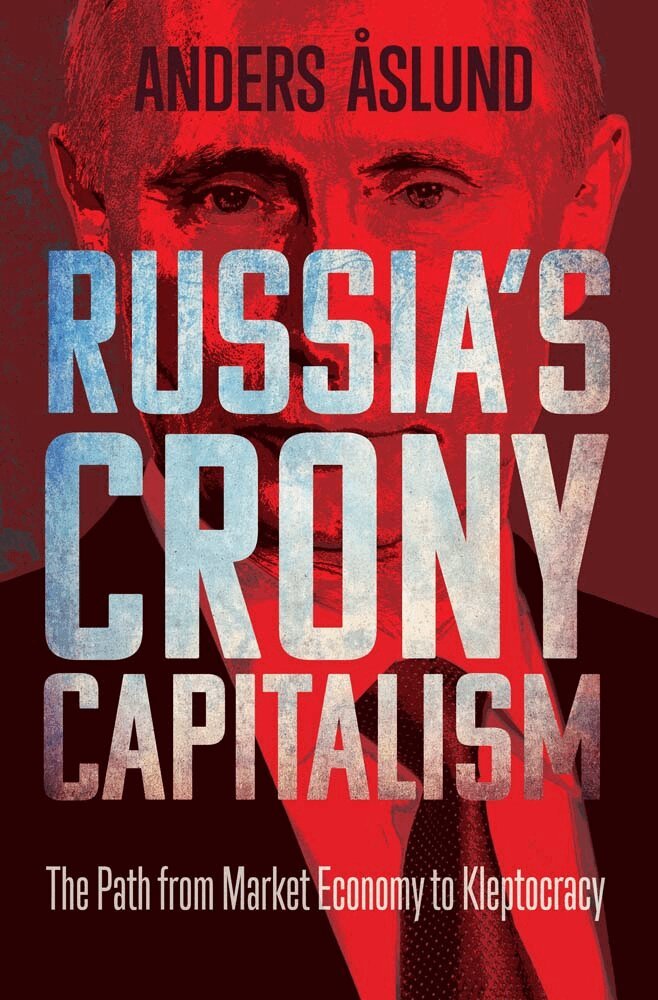
Russia's Crony Capitalism
The Path from Market Economy to Kleptocracy
Inbunden, 2019
5,0 utav 5 stjärnor. Totalt antal röster: (1)
313 kr
Lägg i varukorg
A penetrating look into the extreme plutocracy Vladimir Putin has created and its implications for Russia’s future “Full of insight and informed judgment, former diplomat Anders Åslund takes aim at the ‘authoritarian kleptocracy’ and the inner circles of power.”—John Lloyd, Financial Times This …
Europe's Growth Challenge
Av Anders Aslund, Simeon Djankov
Inbunden, 2017
574 kr
Lägg i varukorg
In the wake of the Great Recession, Europe's economy has stagnated to a considerable degree-greater even than that of the United States. Forecasts suggest an abysmal annual growth rate of about one percent over the next five years, and it now appears that Europe's enviable structural features, that …
Europe's Growth Challenge
Av Simeon Djankov, Anders Aslund
E-bok, 2016
422 kr
Lägg i varukorg
Europe is in a serious crisis but that it can face up to these challenges. In Europe''s Growth Challenge Anders Aslund and Simeon Djankov argue that the European Union can only be successful if it carries out substantial changes in the European economic system. European society benefits from …
Europe's Growth Challenge
Av Simeon Djankov, Anders Aslund
E-bok, 2016
422 kr
Lägg i varukorg
Europe is in a serious crisis but that it can face up to these challenges. In Europe''s Growth Challenge Anders Aslund and Simeon Djankov argue that the European Union can only be successful if it carries out substantial changes in the European economic system. European society benefits from …
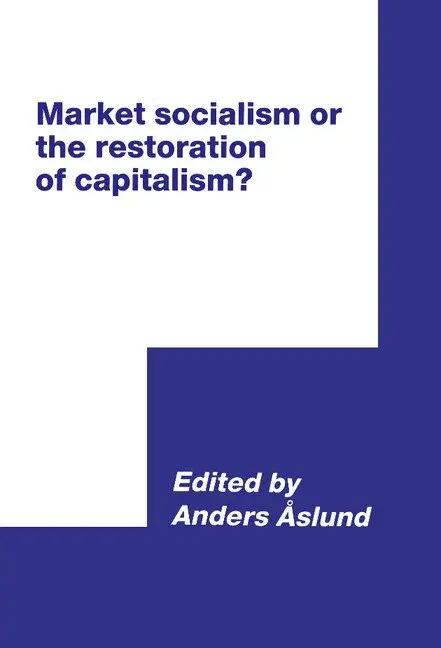
Market Socialism or the Restoration of Capitalism?
Inbunden, 1991
1140 kr
Lägg i varukorg
When East European communism collapsed in the revolutions of 1989, the newly liberated countries discarded socialism altogether. For the first time, most of Eastern Europe experienced free elections and a multitude of parties, mostly with liberal, conservative or nationalist connotations, made …
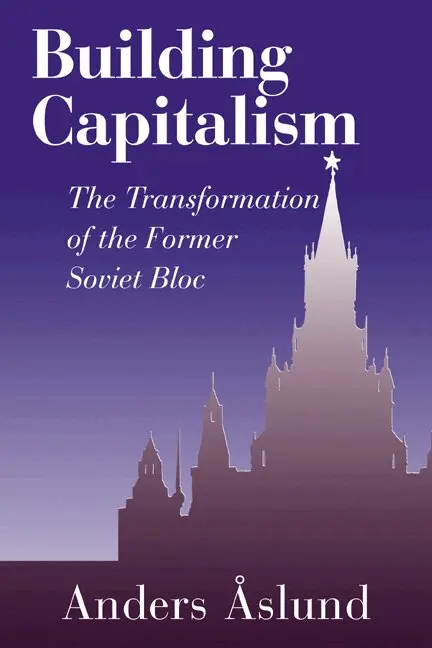
Building Capitalism
The Transformation of the Former Soviet Bloc
Inbunden, 2001
2163 kr
Lägg i varukorg
A most comprehensive empirical analysis of the economic transformation of the former Soviet bloc during the first decade after communism. It debunks many myths, seeing transition as a struggle between radical reformers and those thriving on rent seeking. People have gained from fast and …
Building Capitalism
The Transformation of the Former Soviet Bloc
Häftad, 2001
921 kr
Lägg i varukorg
A most comprehensive empirical analysis of the economic transformation of the former Soviet bloc during the first decade after communism. It debunks many myths, seeing transition as a struggle between radical reformers and those thriving on rent seeking. People have gained from fast and …
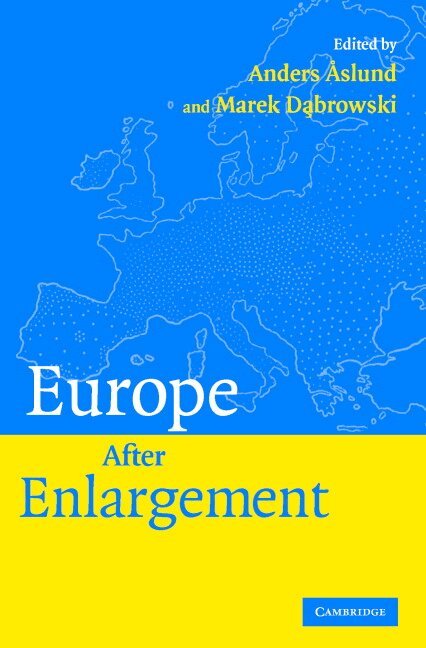
Europe after Enlargement
Av Anders Aslund, Marek Dabrowski
Inbunden, 2007
1073 kr
Lägg i varukorg
Where is Europe going? In this 2007 collection, several prominent European economists offer essays on the five big challenges to the development of the European Union (EU). Namely, the new European Constitution, European finances and the euro, the need to boost economic growth, competition in both …
Economic Reform in Ukraine: The Unfinished Agenda
The Unfinished Agenda
Av Anders Aslund, Georges De Menil
Inbunden, 2000
2831 kr
Lägg i varukorg
Ukraine may have taken a "gradualist" approach to economic reform, but the results have been no better than in Russia. The editors have assembled the leading specialists on the Ukrainian economy, including officials from major Ukrainian and international economic institutions, to outline the major …
How Russia Became a Market Economy
Häftad, 1995
299 kr
Lägg i varukorg
The breakup of the Soviet Union and the attempted transformation of Russia into a democracy and a market economy constitute one of the most significant events of our time. A transformation could hardly be greater, yet judgments vary from failure to substantial achievement. This book clarifies that …
How Russia Became a Market Economy
E-bok, 2011
321 kr
Lägg i varukorg
The breakup of the Soviet Union and the attempted transformation of Russia into a democracy and a market economy constitute one of the most significant events of our time. A transformation could hardly be greater, yet judgments vary from failure to substantial achievement. This book clarifies that …
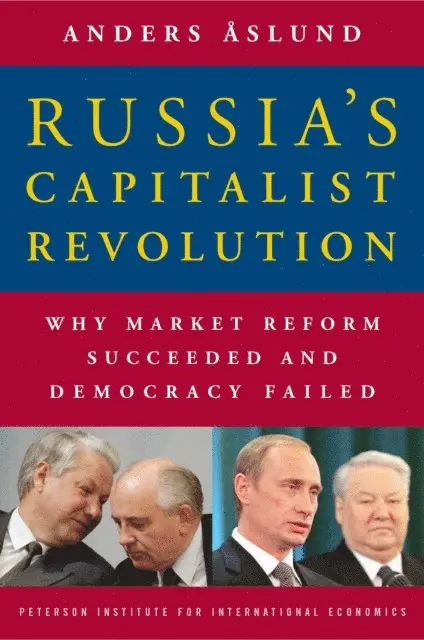
Russia's Capitalist Revolution
Why Market Reform Succeeded and Democracy Failed
E-bok, 2007
134 kr
Lägg i varukorg
The Russian revolution, collapse of the Soviet Union, and Russia''s ensuing transformation belong to the greatest dramas of our time. Revolutions are usually messy and emotional affairs, challenging much of the conventional wisdom, and Russia''s experience is no exception. This book focuses on the …
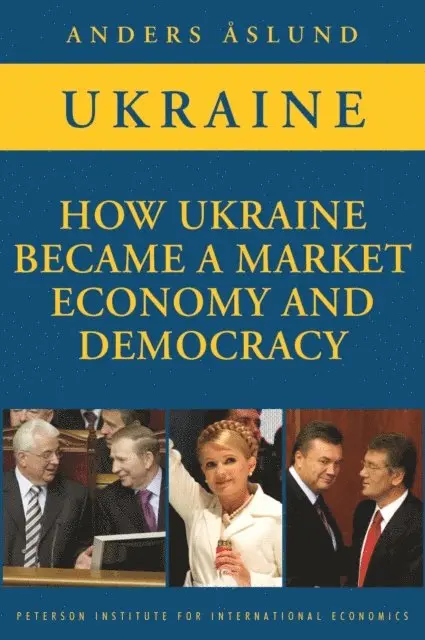
How Ukraine Became a Market Economy and Democracy
E-bok, 2009
137 kr
Lägg i varukorg
One of Europe''s old nations steeped in history, Ukraine is today an undisputed independent state. It is a democracy and has transformed into a market economy with predominant private ownership. Ukraine''s postcommunist transition has been one of the most protracted and socially costly, but it has …
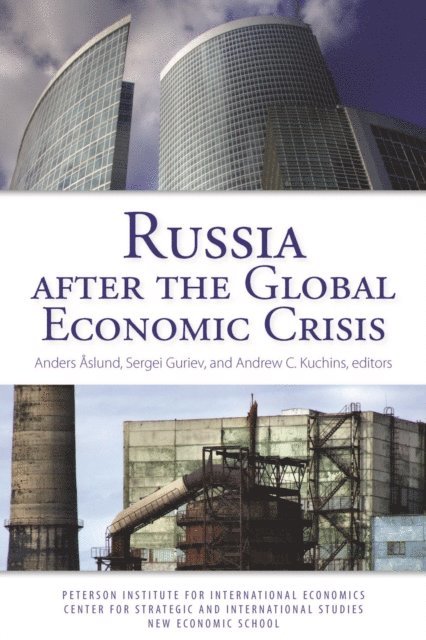
Russia After the Global Economic Crisis
Av Andrew Kuchins, Sergei Guriev m. fl.
E-bok, 2010
134 kr
Lägg i varukorg
Russia After the Global Economic Crisis examines this important country after the financial crisis of 2007–09. The second book from The Russia Balance Sheet Project, a collaboration of two of the world''s preeminent research institutions, the Peterson Institute for International Economics and the …
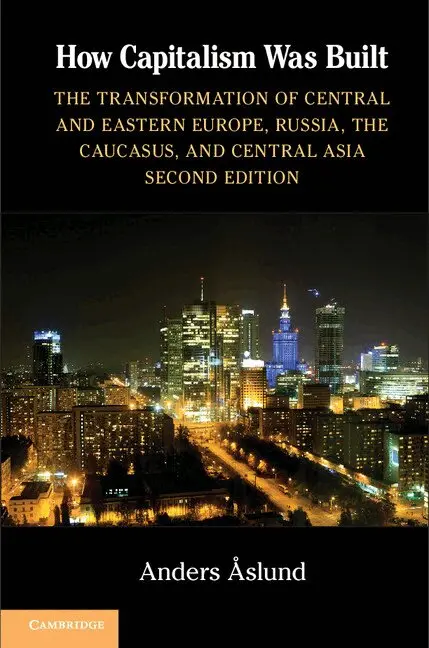
How Capitalism Was Built
The Transformation of Central and Eastern Europe, Russia, the Caucasus, and Central Asia
Inbunden, 2012
1985 kr
Lägg i varukorg
Anders Aslund is known to make bold predictions that initially arouse controversy but soon become common wisdom. In Gorbachev's Struggle for Economic Reform (1989), he foresaw the collapse of the Soviet political and economic system. After Russia's financial crisis of 1998, observers declared the …
Europe after Enlargement
Av Anders Aslund, Marek Dabrowski
Häftad, 2012
511 kr
Lägg i varukorg
Where is Europe going? In this 2007 collection, several prominent European economists offer essays on the five big challenges to the development of the European Union (EU). Namely, the new European Constitution, European finances and the euro, the need to boost economic growth, competition in both …
How Capitalism Was Built
The Transformation of Central and Eastern Europe, Russia, the Caucasus, and Central Asia
Häftad, 2012
720 kr
Lägg i varukorg
Anders Aslund is known to make bold predictions that initially arouse controversy but soon become common wisdom. In Gorbachev's Struggle for Economic Reform (1989), he foresaw the collapse of the Soviet political and economic system. After Russia's financial crisis of 1998, observers declared the …
Economic Reform in Ukraine: The Unfinished Agenda
The Unfinished Agenda
Av Georges De Menil, Anders Aslund
E-bok, 2019
838 kr
Lägg i varukorg
Ukraine may have taken a "gradualist" approach to economic reform, but the results have been no better than in Russia. The editors have assembled the leading specialists on the Ukrainian economy, including officials from major Ukrainian and international economic institutions, to outline the major …
Economic Reform in Ukraine: The Unfinished Agenda
The Unfinished Agenda
Av Georges De Menil, Anders Aslund
E-bok, 2019
856 kr
Lägg i varukorg
Ukraine may have taken a "gradualist" approach to economic reform, but the results have been no better than in Russia. The editors have assembled the leading specialists on the Ukrainian economy, including officials from major Ukrainian and international economic institutions, to outline the major …
Private Enterprise in Eastern Europe
The Non-Agricultural Private Sector in Poland and the GDR, 1945–83
E-bok, 1985
698 kr
Lägg i varukorg