Andre A. Dhondt - Böcker
Visar alla böcker från författaren Andre A. Dhondt. Handla med fri frakt och snabb leverans.
4 produkter
4 produkter
1 113 kr
Skickas inom 5-8 vardagar
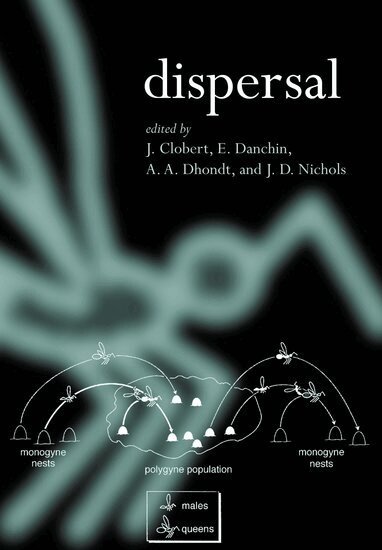
The ability of species to migrate that has interested ecologists for many years. Now that so many species and ecosystems face major environmental change, the ability of species to adapt to these changes by dispersing, migrating, or moving between different patches of habitat can be crucial to ensuring their survivial. This book provides a timely and wide-ranging overview of the study of dispersal and incorporates much of the latest research. The causes, mechanisms, and consequences of dispersal at the individual, population, species and community levels are considered. The potential of new techniques and models for studying dispersal, drawn from molecular biology and demography, is also explored. Perspectives and insights are offered from the fields of evolution, conservation biology and genetics. Throughout the book, theoretical approaches are combined with empirical data, and care has been taken to include examples from as wide a range of species as possible.
2 019 kr
Skickas inom 5-8 vardagar
The ability of species to migrate and disperse is a trait that has interested ecologists for many years. Now that many species and ecosystems face major environmental threats in the shape of habitat fragmentation and global climate change, the ability of species to adapt to these changes by dispersing, migrating, or moving between different patches of habitat can be crucial to ensuring their survival. This text provides an overview of the study of dispersal. The causes, mechanisms, and consequences of dispersal at the individual, population, and species levels are considered. The promise of new techniques and models for studying dispersal, drawn from molecular biology and from demography, is explored. Perspectives on the study of dispersal are offered from evolution, conservation biology, and genetics. Throughout the book, theoretical approaches are combined with empirical data, and care has been taken to include examples from as wide a range of species as possible.
2 137 kr
Skickas inom 7-10 vardagar
In nature there exist three main types of biotic interactions between individuals of different species: competition, predation, and mutualism. All three exert powerful selection pressures, and all three shape communities. However, the question of how important interspecific competition in nature really is remains controversial and unresolved. This book provides a critical and exhaustive review of the topic. Although the examples are limited mostly to birds (interspecific competition and community structure have been exhaustively studied in this animal group, and a lot of experimental data are available), the conclusions reached have a far broader relevance to population ecologists in general. The book reasons that the coexistence of species is the result of both past and presently on-going interspecific competition. Furthermore, understanding the importance of interspecific competition in natural systems will be increasingly important when modelling the effects of climate change on populations.
922 kr
Skickas inom 7-10 vardagar
In nature there exist three main types of biotic interactions between individuals of different species: competition, predation, and mutualism. All three exert powerful selection pressures, and all three shape communities. However, the question of how important interspecific competition in nature really is remains controversial and unresolved. This book provides a critical and exhaustive review of the topic. Although the examples are limited mostly to birds (interspecific competition and community structure have been exhaustively studied in this animal group, and a lot of experimental data are available), the conclusions reached have a far broader relevance to population ecologists in general. The book reasons that the coexistence of species is the result of both past and presently on-going interspecific competition. Furthermore, understanding the importance of interspecific competition in natural systems will be increasingly important when modelling the effects of climate change on populations.