Andrea Del Bono – författare
Visar alla böcker från författaren Andrea Del Bono. Handla med fri frakt och snabb leverans.
5 produkter
5 produkter
Häftad, Engelska, 2021
507 kr
Skickas inom 10-15 vardagar
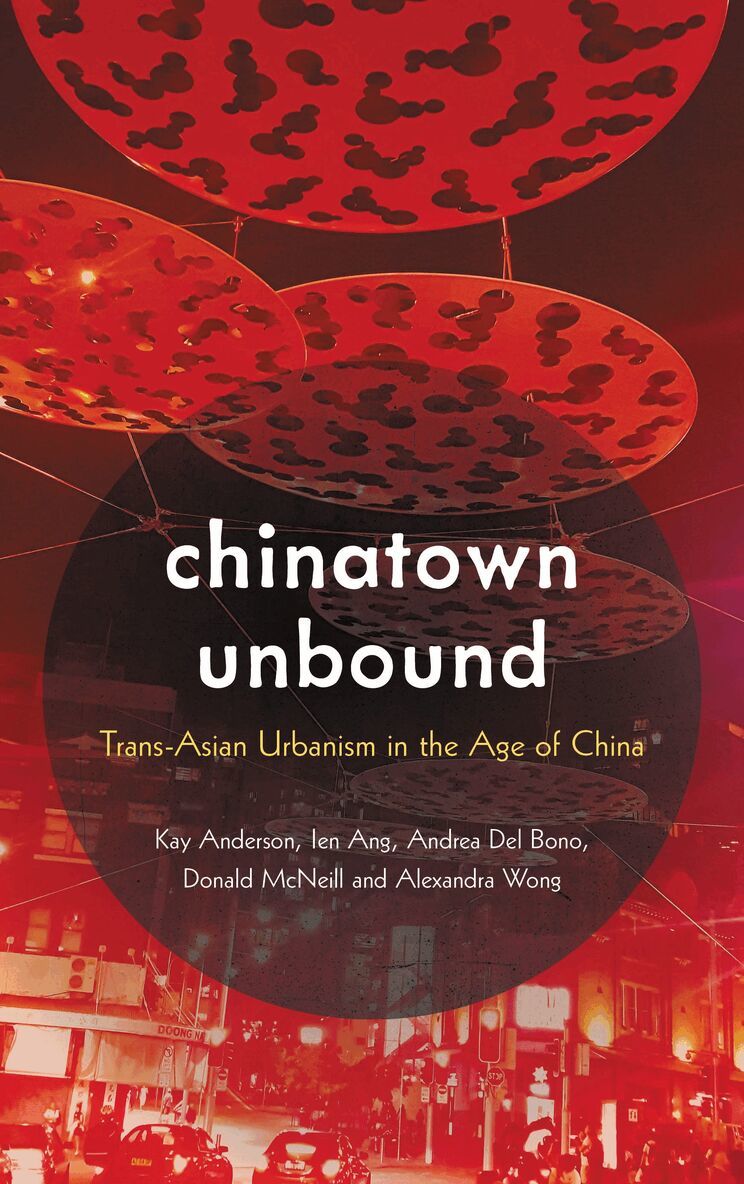
‘Chinatowns’ are familiar places in almost all major cities in the world. In popular Western wisdom, the restaurants, pagodas, and red lanterns are intrinsically equated with a self-contained, immigrant Chinese district, an alien enclave of ‘the East’ in ‘the West’. By the 1980s, when these Western societies had largely given up their racially discriminatory immigration policies and opened up to Asian immigration, the dominant conception of Chinatown was no longer that of an abject ethnic ghetto: rather, Chinatown was now seen as a positive expression of multicultural heritage and difference. By the early 21st century, however, these spatial and cultural constructions of Chinatown as an ‘other’ space – whether negative or positive – have been thoroughly destabilised by the impacts of accelerating globalisation and transnational migration. This book provides a timely and much-needed paradigm shift in this regard, through an in-depth case study of Sydney’s Chinatown. It speaks to the growing multilateral connections that link Australia and Asia (and especially China) together; not just economically, but also socially and culturally, as a consequence of increasing transnational flows of people, money, ideas and things. Further, the book elicits a particular sense of a place in Sydney’s Chinatown: that of an interconnected world in which Western and Asian realms inhabit each other, and in which the orientalist legacy is being reconfigured in new deployments and more complex delimitations. As such, Chinatown Unbound engages with, and contributes to making sense of, the epochal shift in the global balance of power towards Asia, especially China.
Inbunden, Engelska, 2019
1 673 kr
Skickas inom 10-15 vardagar
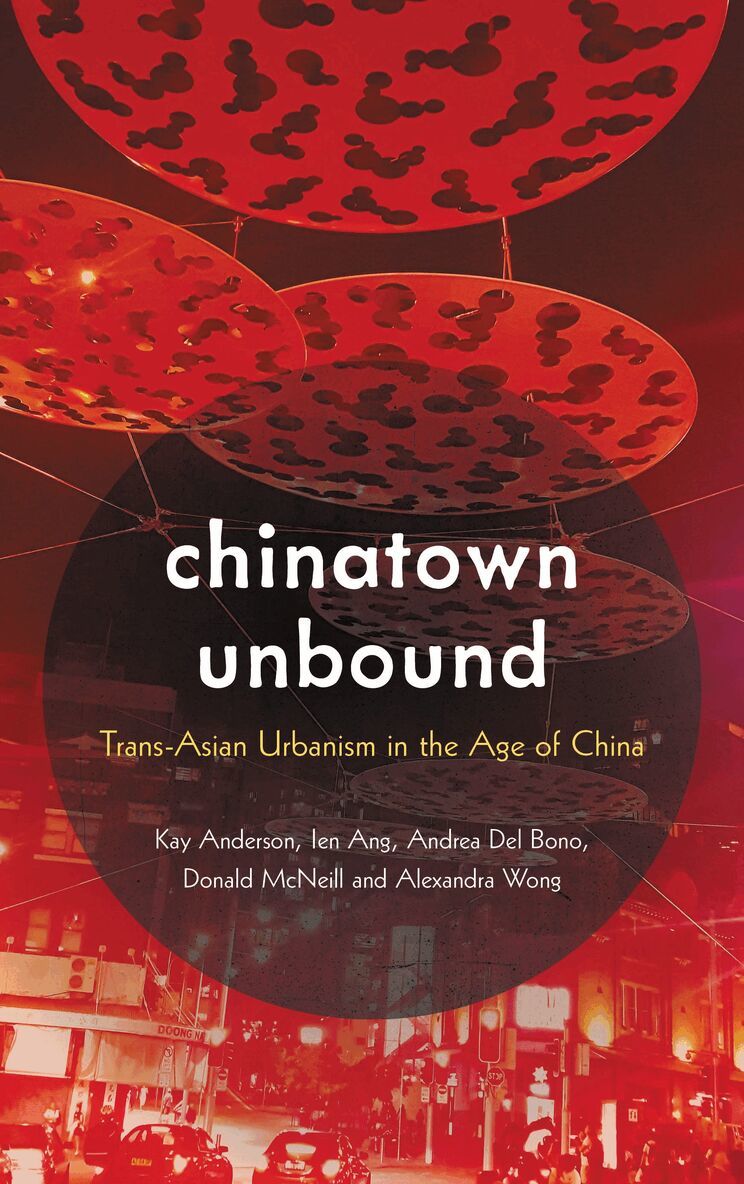
‘Chinatowns’ are familiar places in almost all major cities in the world. In popular Western wisdom, the restaurants, pagodas, and red lanterns are intrinsically equated with a self-contained, immigrant Chinese district, an alien enclave of ‘the East’ in ‘the West’. By the 1980s, when these Western societies had largely given up their racially discriminatory immigration policies and opened up to Asian immigration, the dominant conception of Chinatown was no longer that of an abject ethnic ghetto: rather, Chinatown was now seen as a positive expression of multicultural heritage and difference. By the early 21st century, however, these spatial and cultural constructions of Chinatown as an ‘other’ space – whether negative or positive – have been thoroughly destabilised by the impacts of accelerating globalisation and transnational migration. This book provides a timely and much-needed paradigm shift in this regard, through an in-depth case study of Sydney’s Chinatown. It speaks to the growing multilateral connections that link Australia and Asia (and especially China) together; not just economically, but also socially and culturally, as a consequence of increasing transnational flows of people, money, ideas and things. Further, the book elicits a particular sense of a place in Sydney’s Chinatown: that of an interconnected world in which Western and Asian realms inhabit each other, and in which the orientalist legacy is being reconfigured in new deployments and more complex delimitations. As such, Chinatown Unbound engages with, and contributes to making sense of, the epochal shift in the global balance of power towards Asia, especially China.
E-bok
Engelska, 2019526 kr
Läs direkt efter köp
‘Chinatowns’ are familiar places in almost all major cities in the world. In popular Western wisdom, the restaurants, pagodas, and red lanterns are intrinsically equated with a self-contained, immigrant Chinese district, an alien enclave of ‘the East’ in ‘the West’. By the 1980s, when these Western societies had largely given up their racially discriminatory immigration policies and opened up to Asian immigration, the dominant conception of Chinatown was no longer that of an abject ethnic ghetto: rather, Chinatown was now seen as a positive expression of multicultural heritage and difference. By the early 21st century, however, these spatial and cultural constructions of Chinatown as an ‘other’ space – whether negative or positive – have been thoroughly destabilised by the impacts of accelerating globalisation and transnational migration. This book provides a timely and much-needed paradigm shift in this regard, through an in-depth case study of Sydney’s Chinatown. It speaks to the growing multilateral connections that link Australia and Asia (and especially China) together; not just economically, but also socially and culturally, as a consequence of increasing transnational flows of people, money, ideas and things. Further, the book elicits a particular sense of a place in Sydney’s Chinatown: that of an interconnected world in which Western and Asian realms inhabit each other, and in which the orientalist legacy is being reconfigured in new deployments and more complex delimitations. As such, Chinatown Unbound engages with, and contributes to making sense of, the epochal shift in the global balance of power towards Asia, especially China.
Häftad, Spanska, 2024
173 kr
Skickas inom 5-8 vardagar
E-bok
Spanska, 202461 kr
Läs direkt efter köp
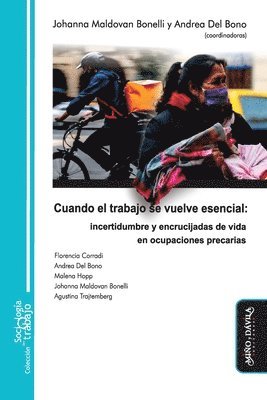
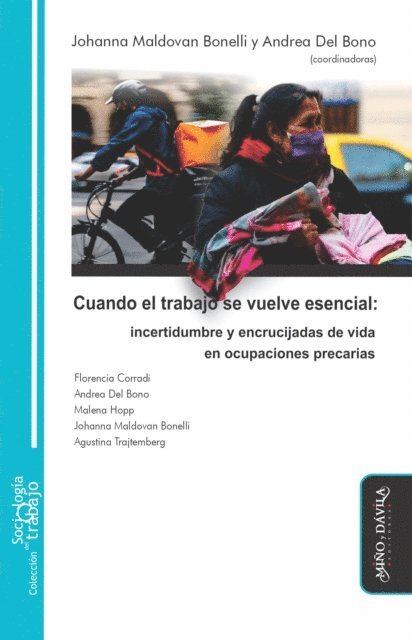
En el marco de la creciente heterogeneización de las relaciones del trabajo y las condiciones laborales, la incertidumbre emerge como uno de los rasgos más evidentes en la proyección de la vida actual, y el trabajo –en tanto actividad que continúa signando las posibilidades y condiciones de reproducción de las grandes mayorías– aparece como una de sus manifestaciones centrales. Este libro se inscribe en esta problematización y partiendo de ella propone algunas reflexiones en torno al lugar que ocupa el trabajo en nuestra sociedad y las múltiples complejidades que presenta su abordaje en términos de las relaciones laborales y condiciones que lo signan, el acceso a derechos y protecciones y las formas de organización colectiva y disputa reivindicativa. Asimismo, propone dar cuenta de cómo los procesos de crisis evidencian y profundizan las desigualdades existentes y afectan de manera desproporcionada a los sectores más vulnerables. El foco está puesto en lo acaecido durante la pandemia y postpandemia del COVID-19 en dos sectores del trabajo: los/as vendedores/as callejeros/as y los/as repartidores/as de plataformas digitales. Así, partiendo de una caracterización exhaustiva de ambas ocupaciones, el libro analiza las consecuencias de la pandemia sobre sus experiencias laborales y vitales y sus condiciones de trabajo, las estrategias individuales, familiares y colectivas desplegadas para garantizar su reproducción y los principales abordajes estatales en términos de política laboral y social orientados a atender las problemáticas de reproducción a las que se vieron sometidos durante este período. Escriben: Florencia Corradi, Andrea Del Bono, Malena Hopp, Johanna Maldovan Bonelli y Agustina Trajtemberg.