Andrea Kunard – författare
Visar alla böcker från författaren Andrea Kunard. Handla med fri frakt och snabb leverans.
3 produkter
3 produkter
Inbunden, Engelska, 2011
615 kr
Skickas inom 5-8 vardagar
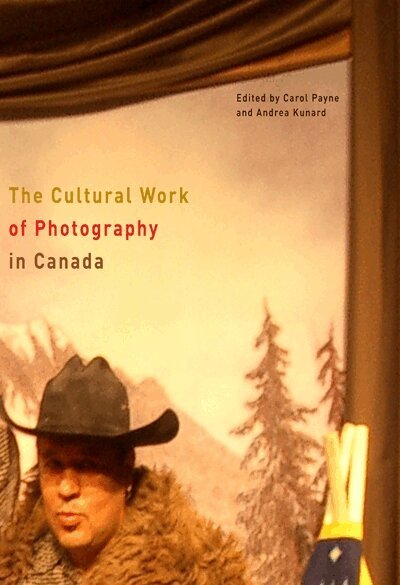
The Cultural Work of Photography in Canada is an in-depth study on the use of photographic imagery in Canada from the late nineteenth century to the present. This volume of fourteen essays provides a thought-provoking discussion of the role photography has played in representing Canadian identities. In essays that draw on a diversity of photographic forms, from the snapshot and advertising image to works of photographic art, contributors present a variety of critical approaches to photography studies, examining themes ranging from photography's part in the formation of the geographic imaginary to Aboriginal self-identity and notions of citizenship. The volume explores the work of photographs as tools of self and collective expression while rejecting any claim to a definitive, singular telling of photography's history. Reflecting the rich interdisciplinarity of contemporary photography studies, The Cultural Work of Photography in Canada is essential reading for anyone interested in Canadian visual culture. Contributors include Sarah Bassnett (University of Western Ontario), Lynne Bell (University of Saskatchewan), Jill Delaney (Library and Archives Canada), Robert Evans (Carleton University), Sherry Farrell Racette (University of Manitoba), Blake Fitzpatrick (Toronto Metropolitan University), Vincent Lavoie (Université du Québec à Montréal), John O'Brian (University of British Columbia), James Opp (Carleton University), Joan M. Schwartz (Queen's University), Sarah Stacy (Library and Archives Canada), Jeffrey Thomas (Ottawa), and Carol Williams (Trent University/University of Lethbridge).
Inbunden, Engelska, 2017
467 kr
Skickas inom 11-20 vardagar
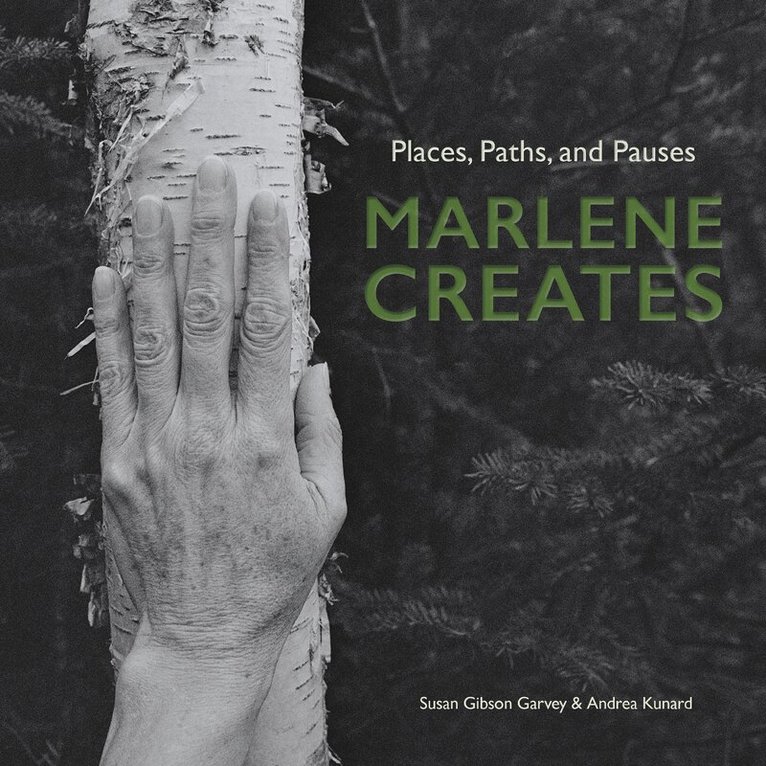
"... I was able to make a simple gesture which left no permanent mark on the land."In 1979 Marlene Creates signaled her intent. In contrast to the monumental earthworks of that time, she revealed that her interest in the intersection of art and the natural world was with the ephemeral, the small scale, and the non-monumental, and with place, "not as a geographical location," she writes, "but as a process that involves memory, multiple narratives, ecology, language, and both scientific and vernacular knowledge." Supplementing the impermanence of her artistic gestures with the technology of photography, Creates found an audience and created a body of work without peer.Creates has sensitvely probed the relationship between human experience and the natural world for almost four decades. From her early works that record traces of the human body on the land to her later explorations of poetry in situ in the boreal forest and photography as an active medium — where the rush of water over the lens transforms the artist's own image — Creates leads us with an environmental and cultural consciousness to a greater understanding of the language of the natural world and our "places" in it.It is no easy task to sum up, in a single book, a career that privileges the act over the artifact, the moment over the monument. But under the direction of curator-critics Susan Gibson Garvey and Andrea Kunard, Marlene Creates: Places, Paths, and Pauses offers not only a broad view of her work in photography but also a critical appreciation of her multi-disciplinary approach (assemblages, memory-map drawings, and video-poems) through essays by Gibson Garvey and Kunard, art historian Joan M. Schwartz, nature writer Robert Macfarlane, and poet Don McKay.Marlene Creates: Places, Paths, and Pauses accompanies a major retrospective touring exhibition organized by the Beaverbrook Art Gallery in partnership with the Dalhousie Art Gallery. It will open in Fredericton in September 2017 and thereafter will be shown at galleries in Halifax, Charlottetown, St. John's, and other venues in central and western Canada.
Inbunden, Franska, 2017
507 kr
Skickas inom 3-6 vardagar
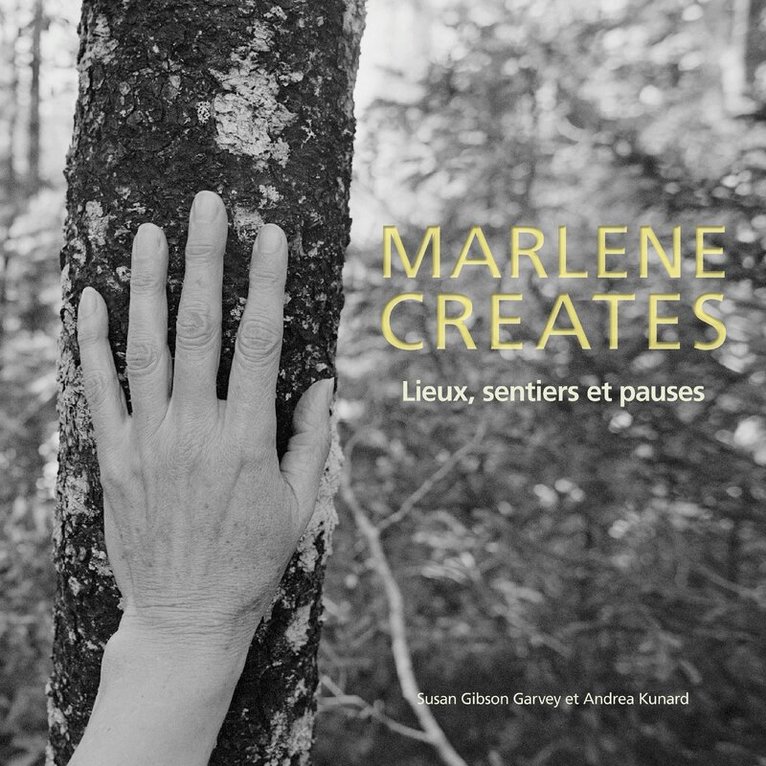
« ... j’ai pu intervenir simplement, sans laisser de traces durables sur le terrain. »Jeune encore, l’artiste Marlene Creates signalait déjà en 1979 son intention de se démarquer des installations de terrassement monumentales de l’époque pour s’intéresser, au confluent de l’art et du monde naturel, à l’éphémère, à la petite échelle, au non monumental et au lieu, « pas tant comme endroit géographique, » écrit-elle, « que comme processus qui inclut la mémoire, une multiplicité de récits, l’écologie, le langage et le savoir, tant vernaculaire que scientifique. » En palliant le caractère éphémère de ses interventions grâce aux techniques photographiques, elle a su trouver son public et créer une œuvre hautement originale.Depuis près de quatre décennies, Creates s’attarde avec sensibilité aux rapports entre l’expérience humaine et le monde naturel. Dès ses premières œuvres, préservant les empreintes du corps humain sur le sol, et jusqu’à ses plus récentes explorations de poésie in situ dans la forêt boréale et de photographie comme médium actif, où elle laisse le ruissellement de l’eau sur l’objectif brouiller son autoportrait, Creates exerce sa grande vigilance écologique et culturelle pour nous amener à mieux comprendre le langage du monde naturel et les « lieux » que nous y occupons.Il est difficile de rendre compte en un seul volume d’une carrière qui a préféré l’acte à l’artefact, le moment au monument. Or, sous la direction des commissaires-critiques Susan Gibson Garvey et Andrea Kunard, Lieux, sentiers et pauses propose au lecteur, en plus d’une large gamme des œuvres photographiques de Marlene Creates, un examen critique de sa démarche multidisciplinaire (assemblages, croquis de cartes-mémoire et poèmes sur vidéo) grâce aux essais de Gibson Garvey, de Kunard, de l’historienne de l’art Joan M. Schwartz, de l’écrivain écologiste Robert Macfarlane et du poète Don McKay.Marlene Creates : Lieux, sentiers et pauses accompagne l’importante rétrospective itinérante organisée par la galerie d'art Beaverbrook, en partenariat avec la Dalhousie Art Gallery. Après son vernissage à Fredericton en septembre 2017, l’exposition visitera Halifax, Charlottetown, St. John’s et d’autres villes du centre et de l’ouest du Canada.