Carol Payne - Böcker
Visar alla böcker från författaren Carol Payne. Handla med fri frakt och snabb leverans.
4 produkter
4 produkter
508 kr
Skickas inom 7-10 vardagar
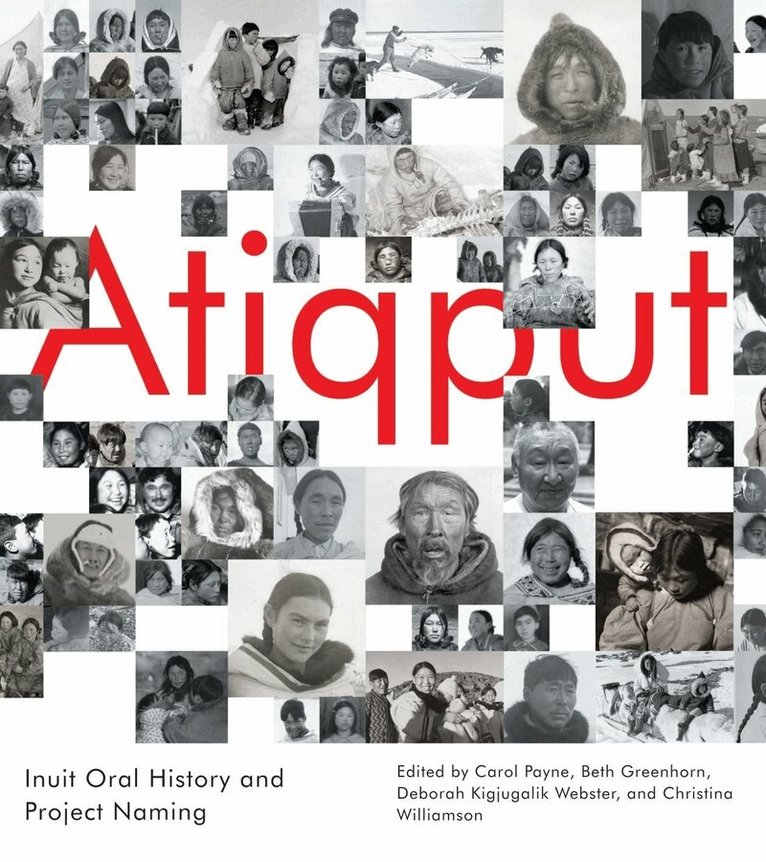
"Our names – Atiqput – are very meaningful. They are our identification. They are our Spirits. We are named after what's in the sky for strength, what's in the water ... the land, body parts. Every name is attached to every part of our body and mind. Yes, every name is alive. Every name has a meaning. Much of our names have been misspelled and many of them have lost their meanings forever. Our Project Naming has been about identifying Inuit, who became nameless over the years, just "unidentified eskimos ..." With Project Naming, we have put Inuit meanings back in the pictures, back to life." Piita IrniqFor over two decades, Inuit collaborators living across Inuit Nunangat and in the South have returned names to hundreds of previously anonymous Inuit seen in historical photographs held by Library and Archives Canada as part of Project Naming. This innovative photo-based history research initiative was established by the Inuit school Nunavut Sivuniksavut and the national archive.Atiqput celebrates Inuit naming practices and through them honours Inuit culture, history, and storytelling. Narratives by Inuit elders, including Sally Kate Webster, Piita Irniq, Manitok Thompson, Ann Meekitjuk Hanson, and David Serkoak, form the heart of the book, as they reflect on naming traditions and the intergenerational conversations spurred by the photographic archive. Other contributions present scholarly insights and research projects that extend Project Naming's methodology, interspersed with pictorial essays by the artist Barry Pottle and the filmmaker Asinnajaq.Through oral testimony and photography, Atiqput rewrites the historical record created by settler societies and challenges a legacy of colonial visualization.
Hunter, the Crown, and the Cameras
Joseph Idlout and the Image of Sangussaqtauliqtilluta
Inbunden, Engelska, 2026
566 kr
Kommande
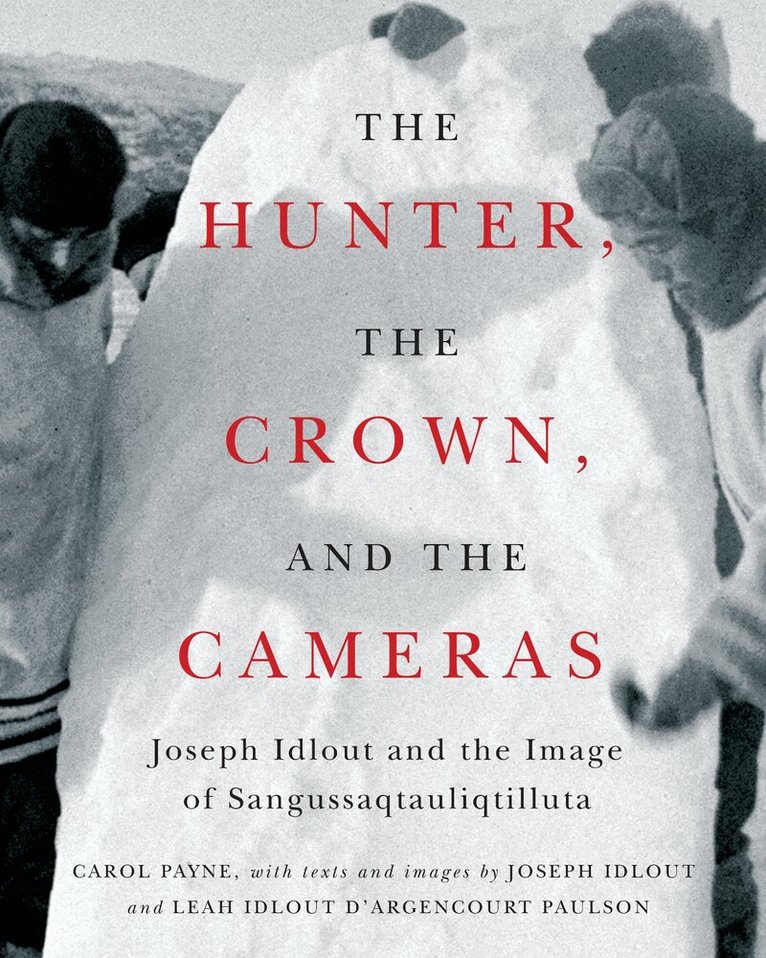
Joseph Idlout was one of the most widely recognized Inuit figures of his time, famous for his role in the film Land of the Long Day and for a still photograph of him and his family that appeared on the Canadian two-dollar bill. These as well as other films and photographs were made by qallunaat filmmaker Doug Wilkinson. Idlout and Wilkinson had a complex connection forged with cameras: Wilkinson taught Idlout to photograph; Idlout and members of his camp were active collaborators in Wilkinson’s films, never solely the product of southern imagination. Idlout crafted a powerful visual record of Inuit life within a relationship that, while built on mutual dependence and respect, remained deeply inequitable. Through photographs and Inuit memory, The Hunter, the Crown, and the Cameras traces the entangled histories of Inuit and settlers in the Qikiqtani region during the 1950s and into the 1960s. Idlout’s work serves as a guide to a period of cultural encounter and the role of photography and film in understanding or misunderstanding Inuit life. He was a skilled photographer as well as a hunter, and the Nunavut Archives now hold some three hundred photographs credited to him. Dating from 1951 to 1958, the images depict camp life, encounters with qallunaat, and a journey he made with other Inuit to Kalaallit Nunaat/Greenland. Created during a period of intensified contact with southerners, state intervention, and forced assimilation – what the Qikiqtani Truth Commission calls Sangussaqtauliqtilluta (the disruption) – these images document both the resilience of Inuit culture and subtle forms of resistance to southern authority.Building on this visual record, family and community voices illuminate Idlout’s images. The volume reproduces contemporary texts by Joseph Idlout and his daughter Leah Idlout d’Argencourt Paulson and includes the words of his children Paul Ullatitaq Idlout and Susan Salluviniq and his grandson Joshua Idlout. Moses Idlout, Ludy Pudluk, Jacob Anaviapik, Elisapee Ootoova, Ruth Sangoya, and Solomon Awa also offer insight into his life and work. The book begins with a foreword by Idlout’s granddaughter Madeleine d’Argencourt; Inuk historian, educator, and curator Augatnaaq Eccles co-authored one chapter and co-curated a related online exhibition.Structured around cyclical Inuit conceptions of time, The Hunter, the Crown, and the Cameras advances an approach to Arctic history that integrates visual analysis, Inuit testimony, and archival research to re-story Sangussaqtauliqtilluta.
Official Picture
The National Film Board of Canada's Still Photography Division and the Image of Canada, 1941-1971
Inbunden, Engelska, 2013
603 kr
Skickas inom 7-10 vardagar
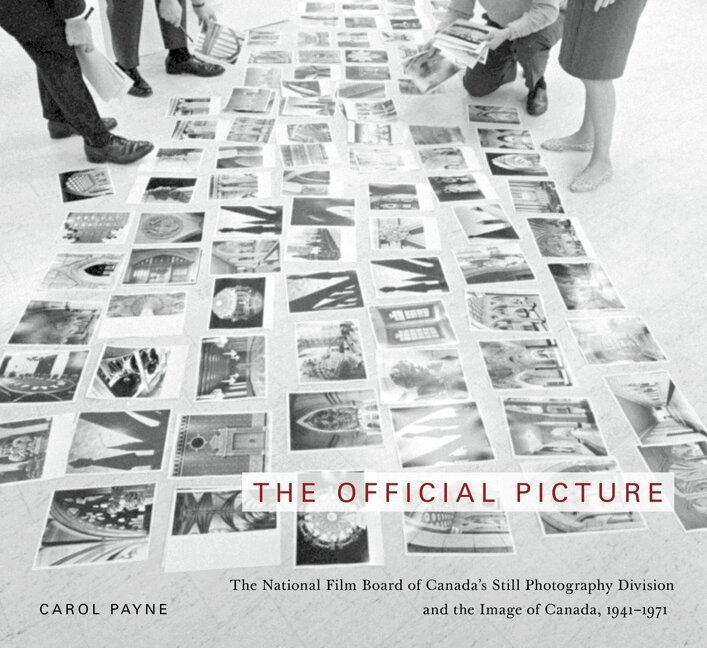
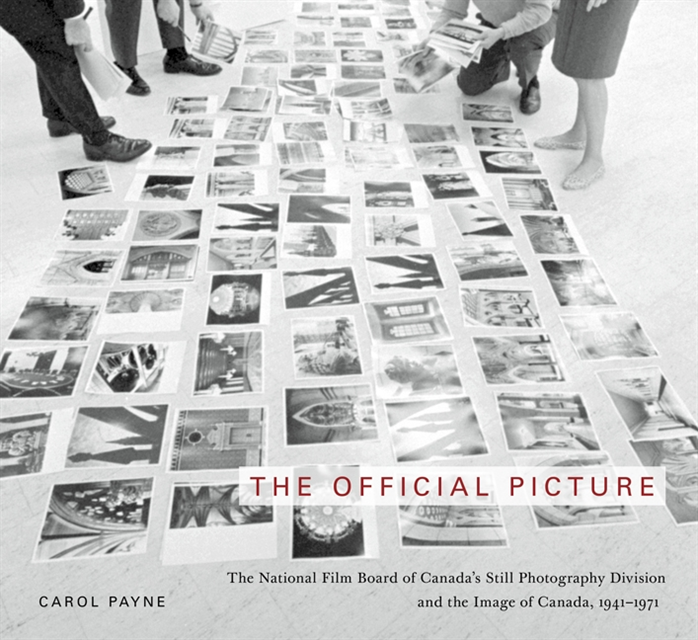
Mandated to foster a sense of national cohesion The National Film Board of Canada's Still Photography Division was the country's official photographer during the mid-twentieth century. Like the Farm Security Administration and other agencies in the US, the NFB used photographs to serve the nation. Division photographers shot everything from official state functions to images of the routine events of daily life, producing some of the most dynamic photographs of the time, seen by millions of Canadians - and international audiences - in newspapers, magazines, exhibitions, and filmstrips. In The Official Picture, Carol Payne argues that the Still Photography Division played a significant role in Canadian nation-building during WWII and the two decades that followed. Payne examines key images, themes, and periods in the Division's history - including the depiction of women munitions workers, landscape photography in the 1950s and 60s, and portraits of Canadians during the Centennial in 1967 - to demonstrate how abstract concepts of nationhood and citizenship, as well as attitudes toward gender, class, linguistic identity, and conceptions of race were reproduced in photographs. The Official Picture looks closely at the work of many Division photographers from staff members Chris Lund and Gar Lunney during the 1940s and 1950s to the expressive documentary photography of Michel Lambeth, Michael Semak, and Pierre Gaudard, in the 1960s and after. The Division also produced a substantial body of Northern imagery documenting Inuit and Native peoples. Payne details how Inuit groups have turned to the archive in recent years in an effort to reaffirm their own cultural identity. For decades, the Still Photography Division served as the country's image bank, producing a government-endorsed "official picture" of Canada. A rich archival study, The Official Picture brings the hisotry of the Division, long overshadowed by the Board's cinematic divisions, to light.
Now That You Have Your Boaz, Are You Ready?
Girl Talk: God's Guide On Getting and Keeping Your Boaz
Häftad, Engelska, 2024
324 kr
Skickas inom 5-8 vardagar