Andrea Pavoni - Böcker
Visar alla böcker från författaren Andrea Pavoni. Handla med fri frakt och snabb leverans.
13 produkter
13 produkter
622 kr
Skickas inom 10-15 vardagar
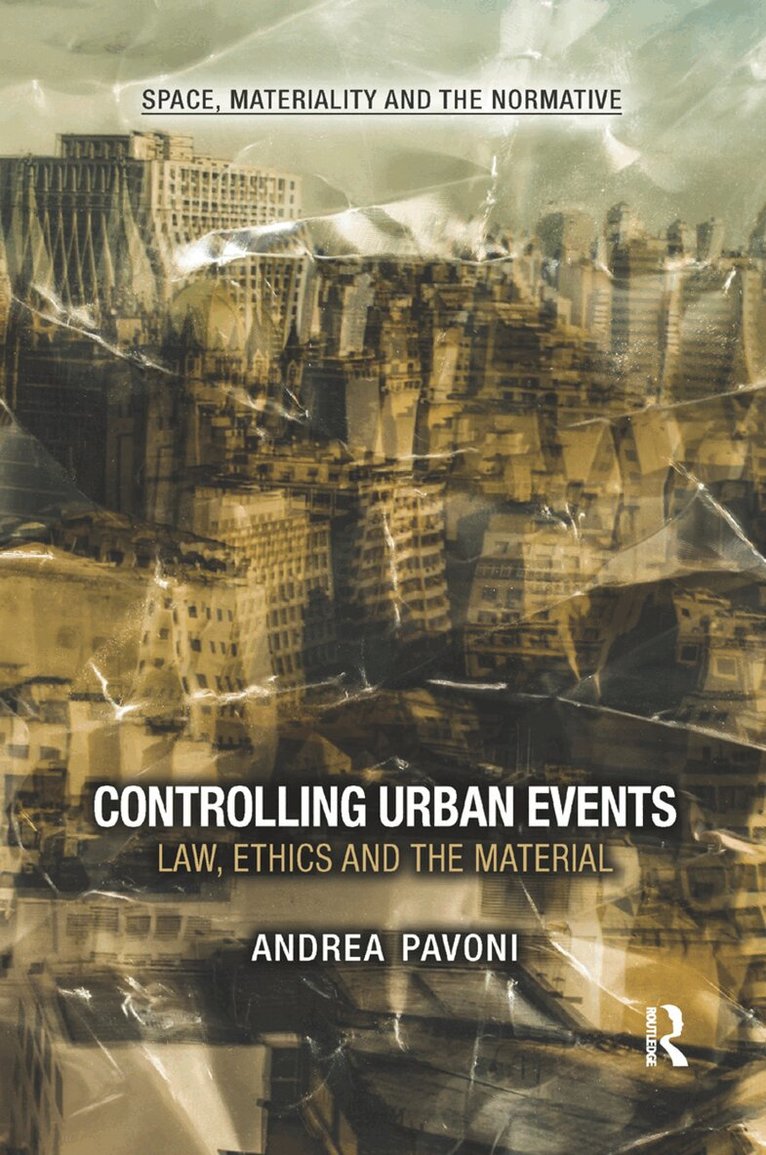
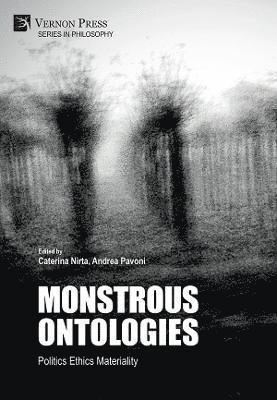
How does order emerge out of the multiplicity of bodies, objects, ideas and practices that constitute the urban? This book explores the relation between space, law and control in the contemporary city – and particularly in the context of urban ‘mega events’ – through a combined geographical and normative analysis. Informed by the recent spatial, affective and material ‘turns’ in the humanities and social sciences, Andrea Pavoni addresses this question by pursuing an innovative and trans-disciplinary approach, capable of accounting for the emergence of order in urban space both at the conceptual and empirical levels. Two overarching objectives are pursued. First, to account for the increasing convergence of logics, techniques and technologies of law, security and marketing into novel, potentially oppressive spatial configurations. Second, to envisage a consistent ethico-political strategy to counter this evolution, by rethinking originally and in radically spatial terms the notion of justice. Forging a sophisticated and original analysis, this book offers an analysis that will be of considerable interest to those working in critical urban geography, critical legal studies, critical event studies, surveillance and control studies.
1 983 kr
Skickas inom 10-15 vardagar
How does order emerge out of the multiplicity of bodies, objects, ideas and practices that constitute the urban? This book explores the relation between space, law and control in the contemporary city – and particularly in the context of urban ‘mega events’ – through a combined geographical and normative analysis. Informed by the recent spatial, affective and material ‘turns’ in the humanities and social sciences, Andrea Pavoni addresses this question by pursuing an innovative and trans-disciplinary approach, capable of accounting for the emergence of order in urban space both at the conceptual and empirical levels. Two overarching objectives are pursued. First, to account for the increasing convergence of logics, techniques and technologies of law, security and marketing into novel, potentially oppressive spatial configurations. Second, to envisage a consistent ethico-political strategy to counter this evolution, by rethinking originally and in radically spatial terms the notion of justice. Forging a sophisticated and original analysis, this book offers an analysis that will be of considerable interest to those working in critical urban geography, critical legal studies, critical event studies, surveillance and control studies.
698 kr
Skickas inom 5-8 vardagar
2 014 kr
Skickas inom 3-6 vardagar
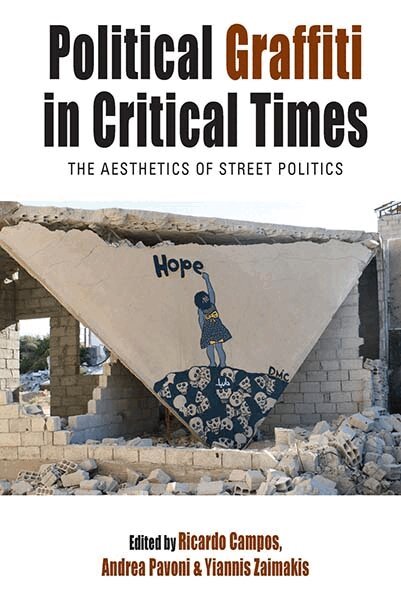
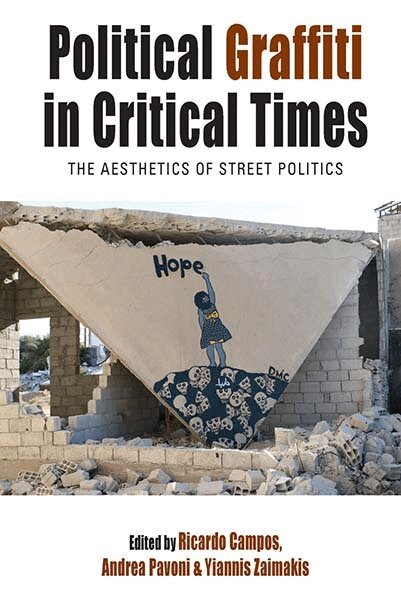
Whether aesthetically or politically inspired, graffiti is among the oldest forms of expression in human history, one that becomes especially significant during periods of social and political upheaval. With a particular focus on the demographic, ecological, and economic crises of today, this volume provides a wide-ranging exploration of urban space and visual protest. Assembling case studies that cover topics such as gentrification in Cyprus, the convulsions of post-independence East Timor, and opposition to Donald Trump in the American capital, it reveals the diverse ways in which street artists challenge existing social orders and reimagine urban landscapes.
1 476 kr
Skickas inom 10-15 vardagar
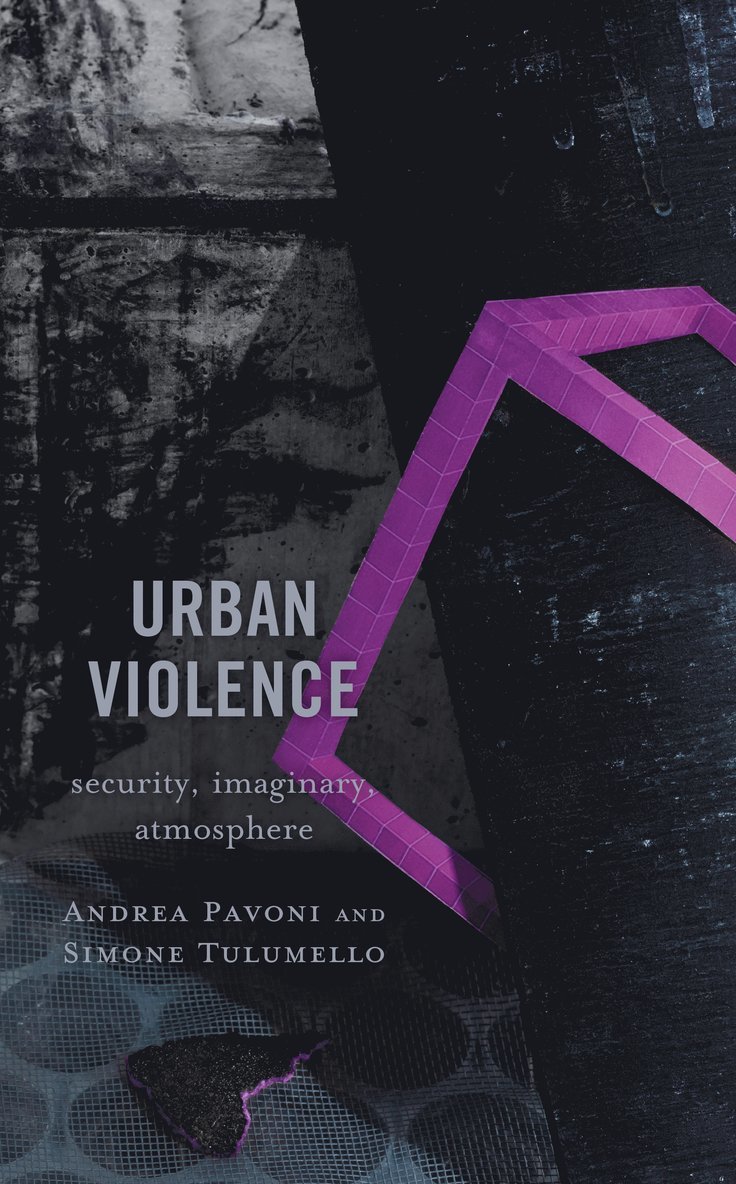
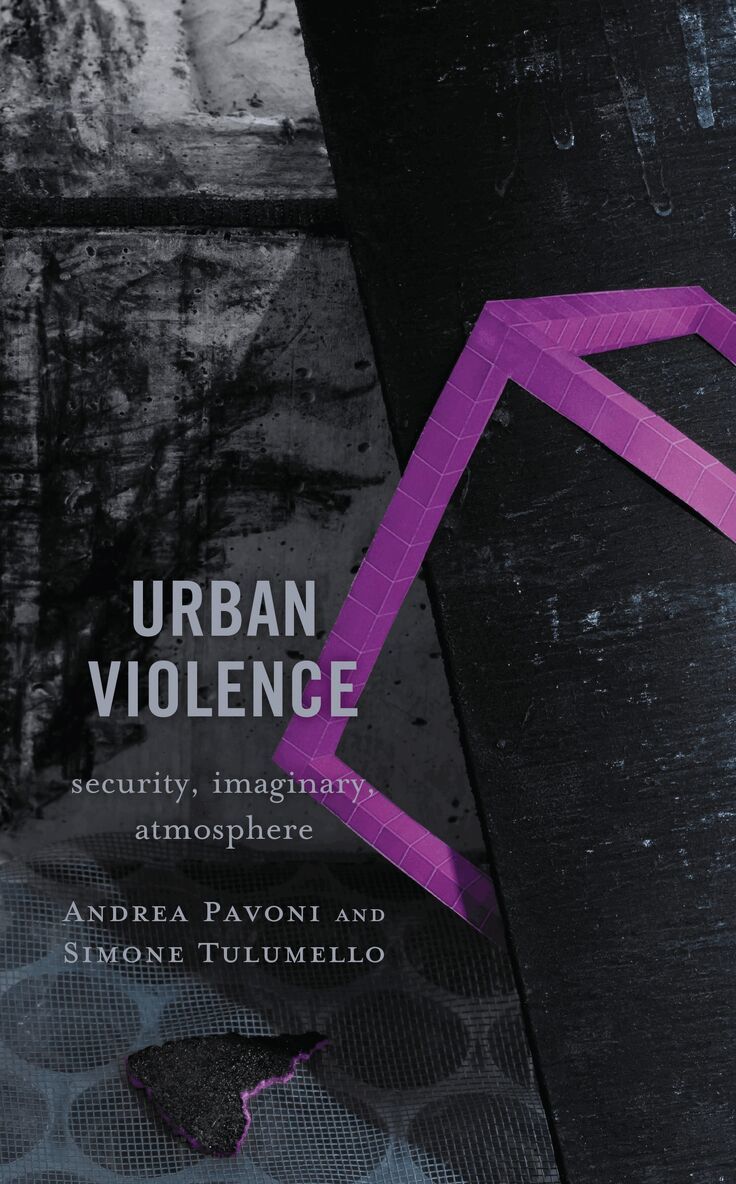
Urban violence still has a peculiar standing within social and urban research. This book works to unpack the link between urban, violence, and security with three main arguments. The first is that urban violence is under-theorized because long-term theoretical problems with both of its elements (‘urban’ and ‘violence’).The second is to answer these questions: (1) how can violence be conceptualized in a way that opens to an understanding of the specificity of urban violence? (2) What is the urban in urban violence? And (3) How can ‘urban’ and ‘violence’ be articulated in a way that makes urban violence a category with both analytical and strategic power? The third, and central, argument of this book is that, through a genealogy that articulates political economic and vital materialism, urban violence can ultimately be framed as a precise category shaped by three interlocking trajectories: the process of (capitalist) urbanization, the spatio-political project of the urban, and the concrete urban atmospheres in and through which the process and the project materialize, often violently so, in the urban.
488 kr
Skickas inom 10-15 vardagar
Urban violence still has a peculiar standing within social and urban research. This book works to unpack the link between urban, violence, and security with three main arguments. The first is that urban violence is under-theorized because long-term theoretical problems with both of its elements (‘urban’ and ‘violence’).The second is to answer these questions: (1) how can violence be conceptualized in a way that opens to an understanding of the specificity of urban violence? (2) What is the urban in urban violence? And (3) How can ‘urban’ and ‘violence’ be articulated in a way that makes urban violence a category with both analytical and strategic power? The third, and central, argument of this book is that, through a genealogy that articulates political economic and vital materialism, urban violence can ultimately be framed as a precise category shaped by three interlocking trajectories: the process of (capitalist) urbanization, the spatio-political project of the urban, and the concrete urban atmospheres in and through which the process and the project materialize, often violently so, in the urban.
332 kr
Skickas
Whether aesthetically or politically inspired, graffiti is among the oldest forms of expression in human history, one that becomes especially significant during periods of social and political upheaval. With a particular focus on the demographic, ecological, and economic crises of today, this volume provides a wide-ranging exploration of urban space and visual protest. Assembling case studies that cover topics such as gentrification in Cyprus, the convulsions of post-independence East Timor, and opposition to Donald Trump in the American capital, it reveals the diverse ways in which street artists challenge existing social orders and reimagine urban landscapes.
248 kr
Skickas inom 7-10 vardagar
Taste usually occupies the bottom of the sensorial hierarchy, as the quintessentially hedonistic sense, too close to the animal, the elemental and the corporeal, and for this reason disciplined and moralised. At the same time, taste is indissolubly tied to knowledge. To taste is to discriminate, emit judgement, enter an unstable domain of synaesthetic normativity where the certainty of metaphysical categories begins to crumble. This second title in the ‘Law and the Senses’ series explores law using taste as a conceptual and ontological category able to unsettle legal certainties, and a promising tool whereby to investigate the materiality of law’s relation to the world. For what else is law’s reduction of the world into legal categories, if not law’s ingesting the world by tasting it, and emitting moral and legal judgements accordingly? Through various topics including coffee, wine, craft cider and Japanese knotweed, this volume explores the normativities that shape the way taste is felt and categorised, within and beyond subjective, phenomenological and human dimensions. The result is an original interdisciplinary volume – complete with seven speculative ‘recipes’ – dedicated to a rarely explored intersection, with contributions from artists, legal academics, philosophers, anthropologists and sociologists.
202 kr
Skickas inom 7-10 vardagar
Vision traditionally occupies the height of the sensorial hierarchy. The sense of clarity and purity conveyed by vision, allows it to be explicitly associated with truth and knowledge. The law has always relied on vision and representation, from eye-witnesses to photography, to imagery and emblems. The law and its normative gaze can be understood as that which decrees what is permitted to be and become visible and what is not. Indeed, even if law’s perspectival view is bound to be betrayed by the realities of perception, it is nonetheless productive of real effects on the world.This first title in the interdisciplinary series ‘Law and the Senses’ asks how we can develop new theoretical approaches to law and seeing that go beyond a simple critique of the legal pretension to truth. This volume aims to understand how law might see and unsee, and how in its turn is seen and unseen. It explores devices and practices of visibility, the evolution of iconology and iconography, and the relation between the gaze of the law and the blindness of justice. The contributions, all radically interdisciplinary, are drawn from photography, legal theory, philosophy, and poetry.
241 kr
Skickas inom 7-10 vardagar
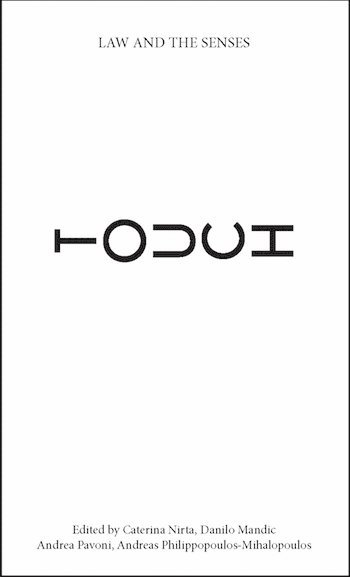
Described by Aristotle as the most vital of senses, touch contains both the physical and the metaphysical in its ability to express the determination of being. To manifest itself, touch makes a movement outwards, beyond the body, and relies on a specific physical involvement other senses do not require: to touch is already to be active and to activate. This fundamental ontology makes touch the most essential of all senses.This volume of ‘Law and the Senses’ attempts to illuminate and reconsider the complex and interflowing relations and contradictions between the tactful intrusion of the law and the untactful movement of touch. Compelling contributors from arts, literature and social science disciplines alongside artist presentations explore touch’s boundaries and formal and informal ‘laws’ of the senses. Each contribution unveils a multi-faceted new dimension to the force of touch, its ability to form, deform and reform what it touches. In unique ways, each of the several contributions to this volume recognises the trans-corporeality of touch to traverse the boundaries on the body and entangle other bodies and spaces, thus challenging the very notion of corporeal integrity and human being.
937 kr
Skickas inom 7-10 vardagar
Described by Aristotle as the most vital of senses, touch contains both the physical and the metaphysical in its ability to express the determination of being. To manifest itself, touch makes a movement outwards, beyond the body, and relies on a specific physical involvement other senses do not require: to touch is already to be active and to activate. This fundamental ontology makes touch the most essential of all senses.This volume of ‘Law and the Senses’ attempts to illuminate and reconsider the complex and interflowing relations and contradictions between the tactful intrusion of the law and the untactful movement of touch. Compelling contributors from arts, literature and social science disciplines alongside artist presentations explore touch’s boundaries and formal and informal ‘laws’ of the senses. Each contribution unveils a multi-faceted new dimension to the force of touch, its ability to form, deform and reform what it touches. In unique ways, each of the several contributions to this volume recognises the trans-corporeality of touch to traverse the boundaries on the body and entangle other bodies and spaces, thus challenging the very notion of corporeal integrity and human being.
290 kr
Skickas inom 7-10 vardagar
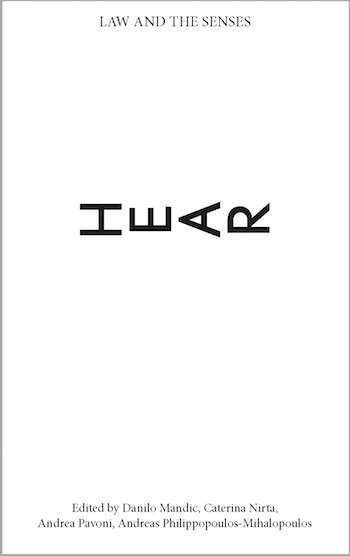
Hearing is an intricate but delicate modality of sensory perception, continuously enfolded in the surroundings in which it takes place. While passive in its disposition, it is integral to the movement and fluctuations of one’s environment. Always attuned to the present and immersed in the murmur of its background, hearing remains a situated perception but fundamentally overarching and extended into the open. It is an immanent modality of being in and with the world. It is also the ultimate juridical act, a sense-making activity that adjudicates and informs the spatio-temporal acoustics of law and justice. This collection gathers multidisciplinary contributions on the relationship between law and hearing, the human vocalisations and non-human echolocations, the spatial and temporal conditions in which hearing takes place, as well as the forms of order and control that listening entails. Contributors explore, challenge and expand the structural and sensorial qualities of law, and recognise how hearing directs us to perceiving and understanding the intrinsic acoustic sphere of simultaneous relations, which challenge and break the normative distinctions that law informs and maintains. In exploring the ambiguous, indefinable and unembodied nature of hearing, as well as its objects – sound and silence – this volume approaches it as both an ontological and epistemological device to think with and about law.
290 kr
Skickas inom 7-10 vardagar
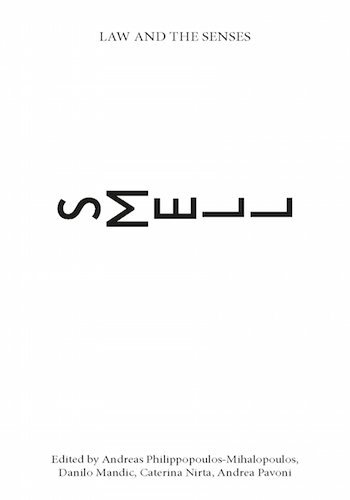
Although somewhat marginal in relation to the other senses, smell is the most potent way of anchoring ourselves to the world. We subconsciously find our place in it by sniffing our body, the body of the one next to us, the room in which we are, the culture with which we are familiar. There is an incessant olfactory flow consisting of bodies, human and nonhuman, that are agents of generation, consumption, diffusion, reproduction and dissolution of odours. As they move or pause, as they cluster with others or try to move away, these bodies constantly partake in this olfactory flow, this dense planetary swirl that leaves nothing outside.The law aims at presenting itself as rational and objective. Smell, on the other hand, is one of the least integrated senses in the legal edifice, in comparison to, say, seeing and hearing. This can be attributed mainly to the fact that sense-making of smell and law are different, even antithetical. Smell operates undercurrent, tickling the olfactory antennas of individual and collective bodies while habitually hiding behind other sensory volumes. Law, on the other hand, has an interest in appearing present, universal, constant. Olfactory sense-making relies on its elusiveness; legal sense-making invests in its obviousness. Yet, the two can interact in most unexpected ways, as this volume amply shows. If anything, smell airs the way in which law conceptualises and contextualises its own actuality. Smell brings law forth by allowing it to show its underbelly, its elusive sense-making that is invariably sacrificed in preference to the necessity of legal impressions of constancy. However, smell’s fragmentary, discontinuous and unstable nature, despite all the ordering that goes to it, poses a peculiar challenge to the law. This volume sets out to investigate this juncture.