Andrea Warnecke - Böcker
Visar alla böcker från författaren Andrea Warnecke. Handla med fri frakt och snabb leverans.
4 produkter
4 produkter
2 327 kr
Skickas inom 5-8 vardagar
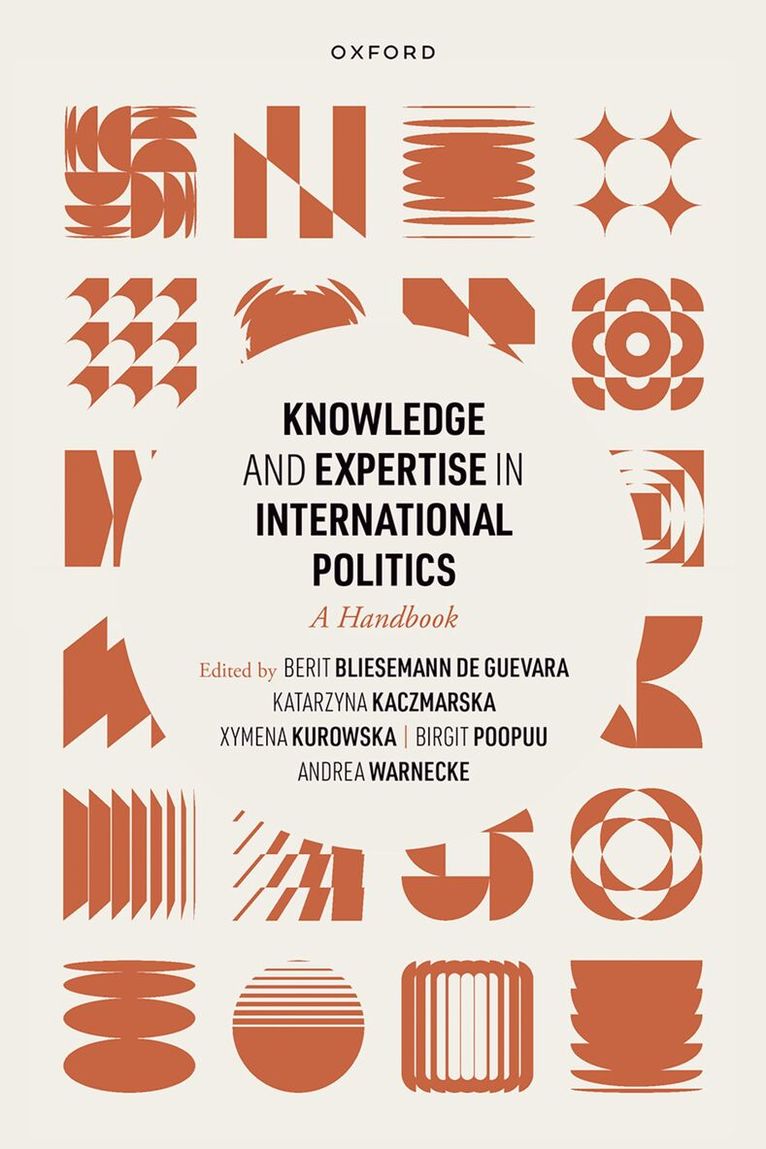
This timely handbook offers a comprehensive, critical overview of current research on knowledge and expertise in international politics that helps readers navigate the growing literature in the field and explore new research agendas. The handbook is based on a shared understanding that knowledge and expertise matter in politics and that knowledge claims are a form of power warranting critical interrogation. The chapters of Knowledge and Expertise in International Politics take different theoretical starting points to explore the complex relationship between knowledge and politics and investigate whose knowledge matters politically, why, how, and with what effects. The contributions are organized into five perspectives, highlighting the role of actors, practices, contexts, structures, and relations in the (re)production, circulation, and contestation of knowledge. Further chapters explore central knowledge debates and cutting-edge avenues for future research in the International Relations (IR) discipline. The handbook addresses themes such as the ethics and politics of knowing, new technologies, and ways to democratize, decolonize, and pluralize politically relevant knowledge. Bringing insights from different sub-disciplines and policy fields together in one place, Knowledge and Expertise in International Politics consolidates the international politics of knowledge as a new, transdisciplinary paradigm in the discipline, providing numerous points of connection with debates around pressing global challenges. With original theoretical expositions and granular thematic case studies, it is an invaluable companion to all those interested in adopting knowledge and expertise approaches in research, teaching, and policy work.Chapters 1, 16, 27, 45, and 67 of this work are available under the terms of a CC BY-NC-ND 4.0 International open access licence. These parts of the work are free to read on Oxford Academic and offered as a free PDF download from OUP and selected open access locations.
Claiming Impartiality
Peacebuilding Organizations as Actors in Multiple Fields of Global Governance
Häftad, Engelska, 2026
665 kr
Kommande
Why has multilateral peacebuilding in conflict-ridden states emerged as a depoliticized practice that rarely engages with local actors and agendas? And why has depoliticization persisted despite continued criticisms? Claiming Impartiality offers an innovative answer to the puzzling persistence of depoliticization in post-war peacebuilding that focuses on the institutional mandates, interests, and practices of those international and bilateral organizations that design and implement most peacebuilding interventions. Drawing on and expanding a Bourdieusian field perspective, the book examines international organizations as actors in multiple fields of global governance. Using the case studies of Bosnia and Herzegovina and Timor-Leste, it traces the emergence and transformation of peacebuilding practices by leading international and bilateral organizations during the first two decades of the field’s existence. The organizational lens highlights the tensions that exist between the objectives of simultaneously acting as a peacebuilding organization and as a peacekeeping, humanitarian, or development organization whose practices are to varying degrees committed to observing the twin principles of impartiality and neutrality. By thinking through these sometimes contradictory roles, the book offers new insights into how these organizations sideline questions of political agency in favor of expanding their influence into related fields of global governance. Claiming Impartiality discusses the future of peacebuilding and explores avenues for addressing political challenges to peace itself.
Claiming Impartiality
Peacebuilding Organizations as Actors in Multiple Fields of Global Governance
Inbunden, Engelska, 2026
1 689 kr
Kommande
Why has multilateral peacebuilding in conflict-ridden states emerged as a depoliticized practice that rarely engages with local actors and agendas? And why has depoliticization persisted despite continued criticisms? Claiming Impartiality offers an innovative answer to the puzzling persistence of depoliticization in post-war peacebuilding that focuses on the institutional mandates, interests, and practices of those international and bilateral organizations that design and implement most peacebuilding interventions. Drawing on and expanding a Bourdieusian field perspective, the book examines international organizations as actors in multiple fields of global governance. Using the case studies of Bosnia and Herzegovina and Timor-Leste, it traces the emergence and transformation of peacebuilding practices by leading international and bilateral organizations during the first two decades of the field’s existence. The organizational lens highlights the tensions that exist between the objectives of simultaneously acting as a peacebuilding organization and as a peacekeeping, humanitarian, or development organization whose practices are to varying degrees committed to observing the twin principles of impartiality and neutrality. By thinking through these sometimes contradictory roles, the book offers new insights into how these organizations sideline questions of political agency in favor of expanding their influence into related fields of global governance. Claiming Impartiality discusses the future of peacebuilding and explores avenues for addressing political challenges to peace itself.
164 kr
Skickas inom 3-6 vardagar