Birgit Poopuu – författare
Visar alla böcker från författaren Birgit Poopuu. Handla med fri frakt och snabb leverans.
3 produkter
3 produkter
2 327 kr
Skickas inom 5-8 vardagar
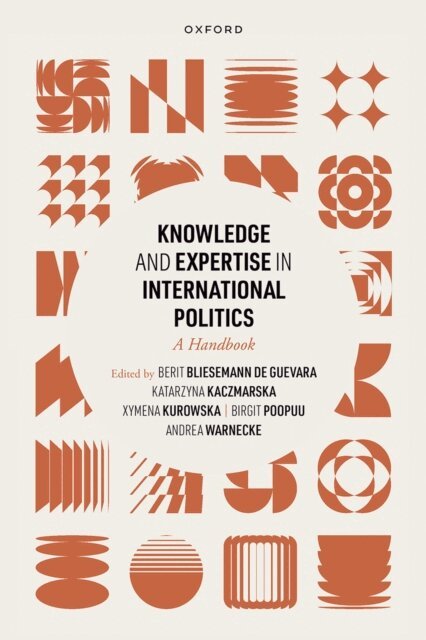
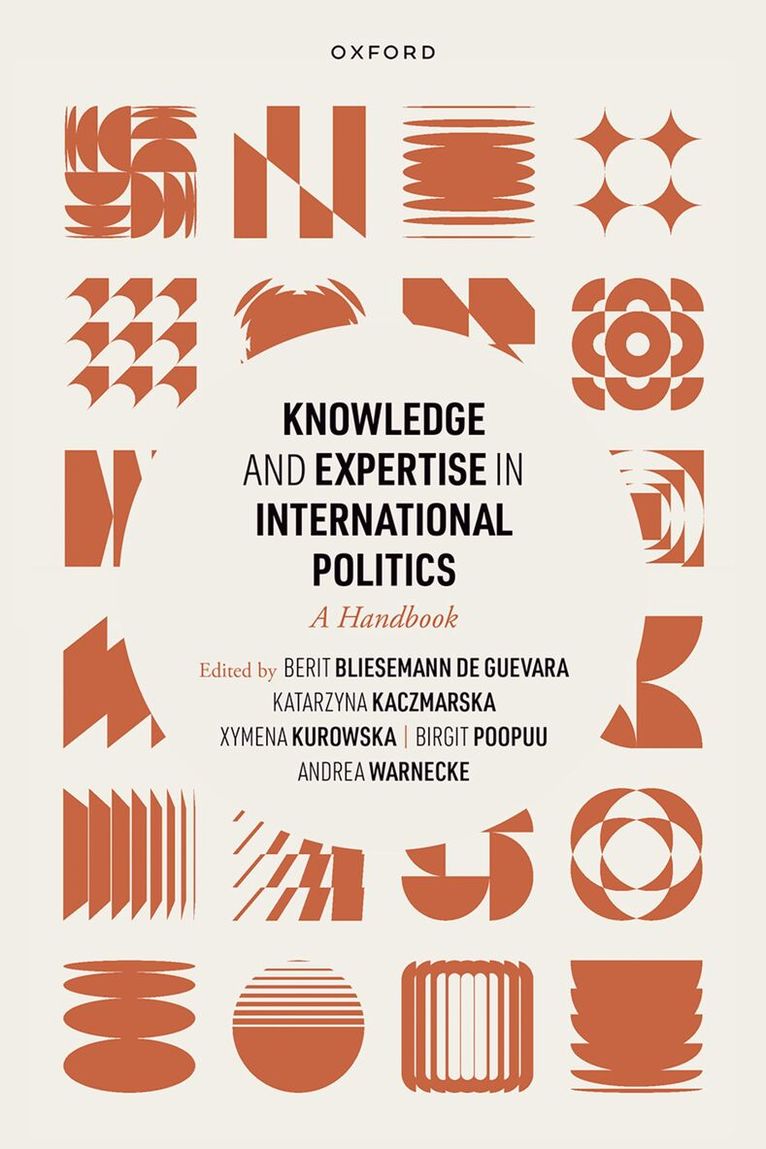
This timely handbook offers a comprehensive, critical overview of current research on knowledge and expertise in international politics that helps readers navigate the growing literature in the field and explore new research agendas. The handbook is based on a shared understanding that knowledge and expertise matter in politics and that knowledge claims are a form of power warranting critical interrogation. The chapters of Knowledge and Expertise in International Politics take different theoretical starting points to explore the complex relationship between knowledge and politics and investigate whose knowledge matters politically, why, how, and with what effects. The contributions are organized into five perspectives, highlighting the role of actors, practices, contexts, structures, and relations in the (re)production, circulation, and contestation of knowledge. Further chapters explore central knowledge debates and cutting-edge avenues for future research in the International Relations (IR) discipline. The handbook addresses themes such as the ethics and politics of knowing, new technologies, and ways to democratize, decolonize, and pluralize politically relevant knowledge. Bringing insights from different sub-disciplines and policy fields together in one place, Knowledge and Expertise in International Politics consolidates the international politics of knowledge as a new, transdisciplinary paradigm in the discipline, providing numerous points of connection with debates around pressing global challenges. With original theoretical expositions and granular thematic case studies, it is an invaluable companion to all those interested in adopting knowledge and expertise approaches in research, teaching, and policy work.Chapters 1, 16, 27, 45, and 67 of this work are available under the terms of a CC BY-NC-ND 4.0 International open access licence. These parts of the work are free to read on Oxford Academic and offered as a free PDF download from OUP and selected open access locations.
904 kr
Skickas inom 10-15 vardagar
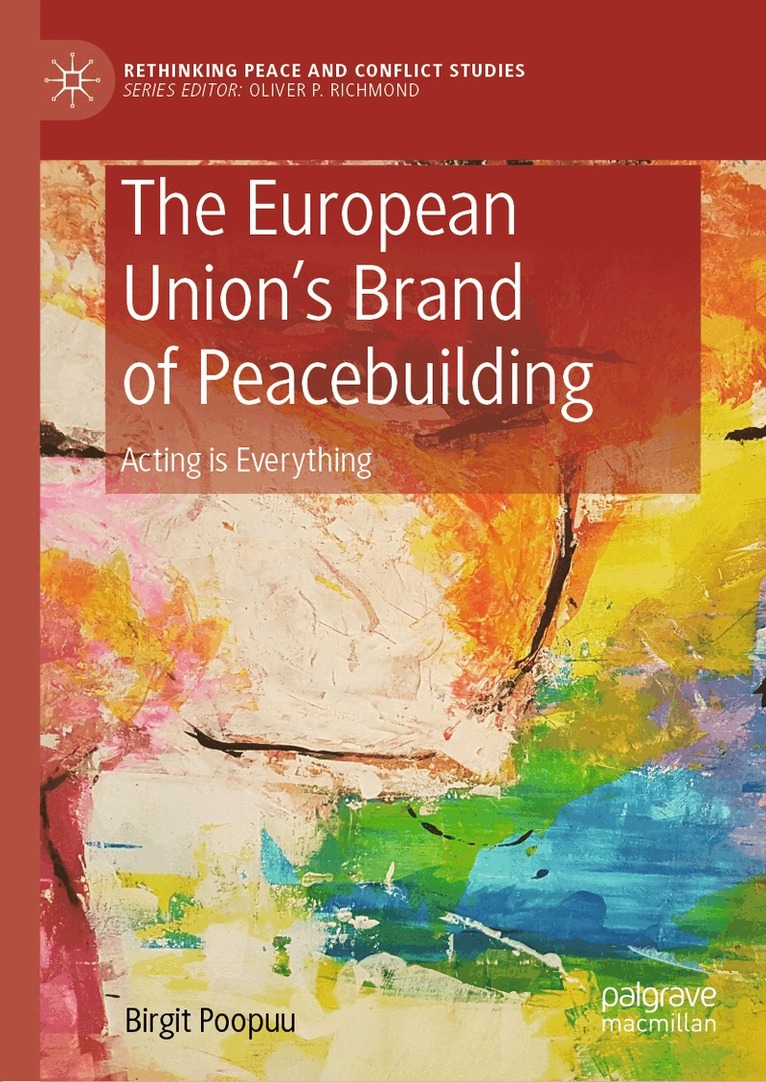
“Conceptually and empirically, this is the most thoughtful analysis of the role of EU’s peace missions I have read so far. It starts with the ‘action for the sake of action’ logic of CSDP development and offers a new interpretation of what CSDP could be, if just peace was part of its political agenda. A rare gem in European studies.”— Xymena Kurowska, Associate Professor of International Relations at Central European University, Hungary“This impressive research monograph provides a critical account of EUs peace missions by asking what these missions offer, how peace is built, and whom these missions serve. To address these important questions, Birgit Poopuu develops and employs an original and sophisticated discursive framework of telling and acting to conduct an in-depth investigation of EU peace missions Artemis in the DRC, EUFOR Althea in Bosnia-Herzegovina, and EULEX in Kosovo. This book’s ground-breaking exploration advances the study of the EU as a peacebuilder.”— Annika Björkdahl, Professor of Political Science, Lund University, Sweden, and Editor in Chief of Cooperation and ConflictThis book critically explores the European Union’s brand of peacebuilding in the form of its Common Security and Defence Policy (CSDP). A contextually close reading of EU missions – using the fluid categories of telling and acting, stressing the dialogical ways of being, and taking heed of the concept of just peace as a particular guide to building peace – allows the book to tap into the specific meanings the EU has of peace, the ways in which it imagines its relationships with its varied partners, and perhaps most controversially, the way that being/becoming a global actor has been front and center of the CSDP. The analysis focuses on three core missions in the Democratic Republic of the Congo, Bosnia-Herzegovina, and Kosovo. One of the recurring themes that emerges from the empirical chapters is the significance attached to acting, and that acting per se constitutes success of a mission, without much thought given to its substance, or the outcome of the EU’s engagement. The imaginative force of this book rests on developing a set of context-sensitive analytical tools, encapsulated in the dialogical model of identity formation and the dynamic approach to analysing identity through telling and acting.
904 kr
Skickas inom 10-15 vardagar
“Conceptually and empirically, this is the most thoughtful analysis of the role of EU’s peace missions I have read so far. It starts with the ‘action for the sake of action’ logic of CSDP development and offers a new interpretation of what CSDP could be, if just peace was part of its political agenda. A rare gem in European studies.”— Xymena Kurowska, Associate Professor of International Relations at Central European University, Hungary“This impressive research monograph provides a critical account of EUs peace missions by asking what these missions offer, how peace is built, and whom these missions serve. To address these important questions, Birgit Poopuu develops and employs an original and sophisticated discursive framework of telling and acting to conduct an in-depth investigation of EU peace missions Artemis in the DRC, EUFOR Althea in Bosnia-Herzegovina, and EULEX in Kosovo. This book’s ground-breaking exploration advances the study of the EU as a peacebuilder.”— Annika Björkdahl, Professor of Political Science, Lund University, Sweden, and Editor in Chief of Cooperation and ConflictThis book critically explores the European Union’s brand of peacebuilding in the form of its Common Security and Defence Policy (CSDP). A contextually close reading of EU missions – using the fluid categories of telling and acting, stressing the dialogical ways of being, and taking heed of the concept of just peace as a particular guide to building peace – allows the book to tap into the specific meanings the EU has of peace, the ways in which it imagines its relationships with its varied partners, and perhaps most controversially, the way that being/becoming a global actor has been front and center of the CSDP. The analysis focuses on three core missions in the Democratic Republic of the Congo, Bosnia-Herzegovina, and Kosovo. One of the recurring themes that emerges from the empirical chapters is the significance attached to acting, and that acting per se constitutes success of a mission, without much thought given to its substance, or the outcome of the EU’s engagement. The imaginative force of this book rests on developing a set of context-sensitive analytical tools, encapsulated in the dialogical model of identity formation and the dynamic approach to analysing identity through telling and acting.