Andreas Keiling – författare
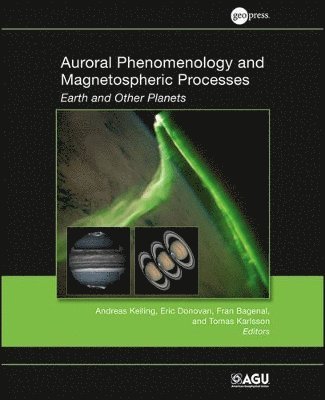
Auroral Phenomenology and Magnetospheric Processes
Earth and Other Planets
1 718 kr
Skickas inom 5-8 vardagar
1 977 kr
Läs direkt efter köp
1 977 kr
Läs direkt efter köp
2 305 kr
Läs direkt efter köp
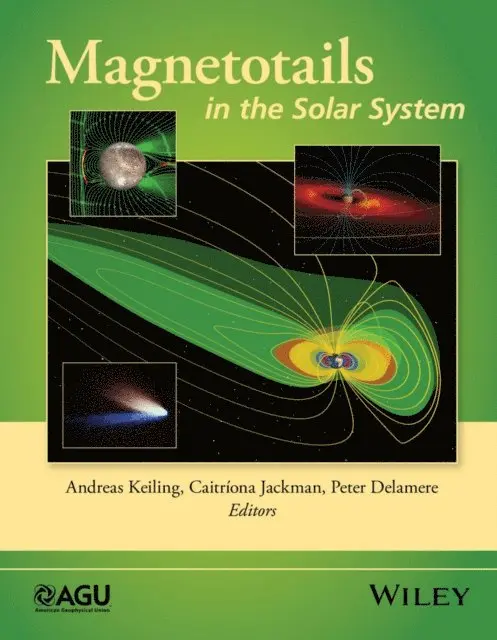
All magnetized planets in our solar system (Mercury, Earth, Jupiter, Saturn, Uranus, and Neptune) interact strongly with the solar wind and possess well developed magnetotails. It is not only the strongly magnetized planets that have magnetotails. Mars and Venus have no global intrinsic magnetic field, yet they possess induced magnetotails. Comets have magnetotails that are formed by the draping of the interplanetary magnetic field. In the case of planetary satellites (moons), the magnetotail refers to the wake region behind the satellite in the flow of either the solar wind or the magnetosphere of its parent planet. The largest magnetotail of all in our solar system is the heliotail, the “magnetotail” of the heliosphere. The variety of solar wind conditions, planetary rotation rates, ionospheric conductivity, and physical dimensions provide an outstanding opportunity to extend our understanding of the influence of these factors on magnetotail processes and structures.
Volume highlights include:
Discussion on why a magnetotail is a fundamental problem of magnetospheric physics Unique collection of tutorials on a large range of magnetotails in our solar system In-depth reviews comparing magnetotail processes at Earth with other magnetotail structures found throughout the heliosphereCollectively, Magnetotails in the Solar System brings together for the first time in one book a collection of tutorials and current developments addressing different types of magnetotails. As a result, this book should appeal to a broad community of space scientists, and it should also be of interest to astronomers who are looking at tail-like structures beyond our solar system.
Magnetotails in the Solar System
2 074 kr
Skickas inom 5-8 vardagar
2 420 kr
Läs direkt efter köp
All magnetized planets in our solar system (Mercury, Earth, Jupiter, Saturn, Uranus, and Neptune) interact strongly with the solar wind and possess well developed magnetotails. It is not only the strongly magnetized planets that have magnetotails. Mars and Venus have no global intrinsic magnetic field, yet they possess induced magnetotails. Comets have magnetotails that are formed by the draping of the interplanetary magnetic field. In the case of planetary satellites (moons), the magnetotail refers to the wake region behind the satellite in the flow of either the solar wind or the magnetosphere of its parent planet. The largest magnetotail of all in our solar system is the heliotail, the “magnetotail” of the heliosphere. The variety of solar wind conditions, planetary rotation rates, ionospheric conductivity, and physical dimensions provide an outstanding opportunity to extend our understanding of the influence of these factors on magnetotail processes and structures.
Volume highlights include:
Discussion on why a magnetotail is a fundamental problem of magnetospheric physics Unique collection of tutorials on a large range of magnetotails in our solar system In-depth reviews comparing magnetotail processes at Earth with other magnetotail structures found throughout the heliosphereCollectively, Magnetotails in the Solar System brings together for the first time in one book a collection of tutorials and current developments addressing different types of magnetotails. As a result, this book should appeal to a broad community of space scientists, and it should also be of interest to astronomers who are looking at tail-like structures beyond our solar system.
2 752 kr
Läs direkt efter köp
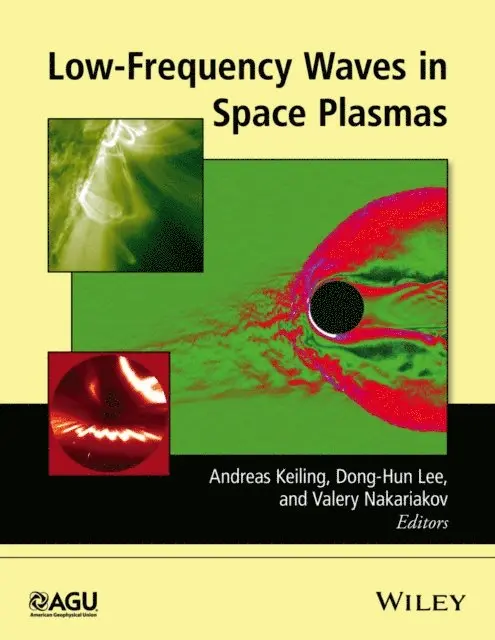
Low-frequency waves in space plasmas have been studied for several decades, and our knowledge gain has been incremental with several paradigm-changing leaps forward. In our solar system, such waves occur in the ionospheres and magnetospheres of planets, and around our Moon. They occur in the solar wind, and more recently, they have been confirmed in the Sun’s atmosphere as well. The goal of wave research is to understand their generation, their propagation, and their interaction with the surrounding plasma. Low-frequency Waves in Space Plasmas presents a concise and authoritative up-to-date look on where wave research stands: What have we learned in the last decade? What are unanswered questions?
While in the past waves in different astrophysical plasmas have been largely treated in separate books, the unique feature of this monograph is that it covers waves in many plasma regions, including:
Waves in geospace, including ionosphere and magnetosphere Waves in planetary magnetospheres Waves at the Moon Waves in the solar wind Waves in the solar atmosphereBecause of the breadth of topics covered, this volume should appeal to a broad community of space scientists and students, and it should also be of interest to astronomers/astrophysicists who are studying space plasmas beyond our Solar System.
2 752 kr
Läs direkt efter köp
Low-frequency waves in space plasmas have been studied for several decades, and our knowledge gain has been incremental with several paradigm-changing leaps forward. In our solar system, such waves occur in the ionospheres and magnetospheres of planets, and around our Moon. They occur in the solar wind, and more recently, they have been confirmed in the Sun’s atmosphere as well. The goal of wave research is to understand their generation, their propagation, and their interaction with the surrounding plasma. Low-frequency Waves in Space Plasmas presents a concise and authoritative up-to-date look on where wave research stands: What have we learned in the last decade? What are unanswered questions?
While in the past waves in different astrophysical plasmas have been largely treated in separate books, the unique feature of this monograph is that it covers waves in many plasma regions, including:
Waves in geospace, including ionosphere and magnetosphere Waves in planetary magnetospheres Waves at the Moon Waves in the solar wind Waves in the solar atmosphereBecause of the breadth of topics covered, this volume should appeal to a broad community of space scientists and students, and it should also be of interest to astronomers/astrophysicists who are studying space plasmas beyond our Solar System.
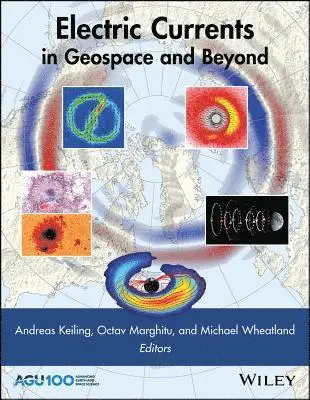
Electric Currents in Geospace and Beyond
2 886 kr
Skickas inom 11-20 vardagar
3 259 kr
Läs direkt efter köp
Electric currents are fundamental to the structure and dynamics of space plasmas, including our own near-Earth space environment, or “geospace.”This volume takes an integrated approach to the subject of electric currents by incorporating their phenomenology and physics for many regions in one volume. It covers a broad range of topics from the pioneers of electric currents in outer space, to measurement and analysis techniques, and the many types of electric currents.
First volume on electric currents in space in over a decade that provides authoritative up-to-date insight on the current status of research Reviews recent advances in observations, simulation, and theory of electric currents Provides comparative overviews of electric currents in the space environments of different astronomical bodiesElectric Currents in Geospace and Beyond serves as an excellent reference volume for a broad community of space scientists, astronomers, and astrophysicists who are studying space plasmas in the solar system.Read an interview with the editors to find out more: https://eos.org/editors-vox/electric-currents-in-outer-space-run-the-show
3 259 kr
Läs direkt efter köp
Electric currents are fundamental to the structure and dynamics of space plasmas, including our own near-Earth space environment, or “geospace.”This volume takes an integrated approach to the subject of electric currents by incorporating their phenomenology and physics for many regions in one volume. It covers a broad range of topics from the pioneers of electric currents in outer space, to measurement and analysis techniques, and the many types of electric currents.
First volume on electric currents in space in over a decade that provides authoritative up-to-date insight on the current status of research Reviews recent advances in observations, simulation, and theory of electric currents Provides comparative overviews of electric currents in the space environments of different astronomical bodiesElectric Currents in Geospace and Beyond serves as an excellent reference volume for a broad community of space scientists, astronomers, and astrophysicists who are studying space plasmas in the solar system.Read an interview with the editors to find out more: https://eos.org/editors-vox/electric-currents-in-outer-space-run-the-show
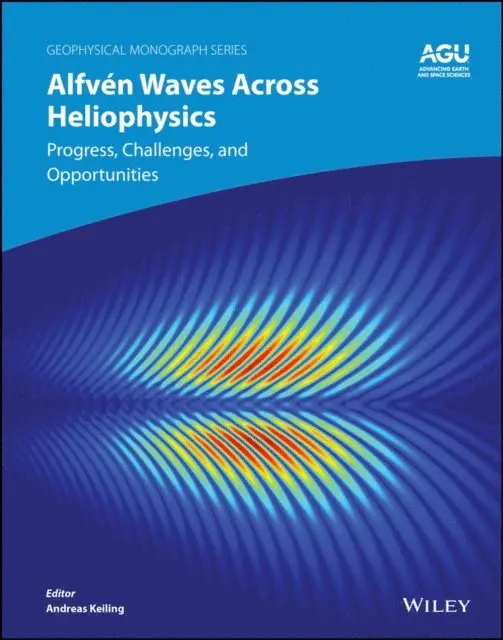
Alfvén Waves Across Heliophysics
Progress, Challenges, and Opportunities
2 131 kr
Skickas
2 531 kr
Läs direkt efter köp
An interdisciplinary review of recent advances in Alfvén wave research
Alfvén waves are fundamental to the dynamics of space plasmas. Recent advances in our knowledge about Alfvén waves have come from several directions, including new space missions to unexplored heliospheric regions, sophisticated rocket campaigns in the auroral zone, enlarged magnetometer arrays and radar networks, and significant advances in computer modeling.
Alfvén Waves Across Heliophysics: Progress, Challenges, and Opportunities is an interdisciplinary collaboration from different space science communities to review recent and current Alfvén wave research.
Volume highlights include:
Alfvén waves in the solar atmosphere Alfvén waves at the giant planets Alfvén waves at Mars Alfvén waves in moon-magnetosphere systems Alfvén waves in geospace Alfvén waves in the laboratoryFind out more about this book in this Q&A with the Editor.The American Geophysical Union promotes discovery in Earth and space science for the benefit of humanity. Its publications disseminate scientific knowledge and provide resources for researchers, students, and professionals.
2 531 kr
Läs direkt efter köp
An interdisciplinary review of recent advances in Alfvén wave research
Alfvén waves are fundamental to the dynamics of space plasmas. Recent advances in our knowledge about Alfvén waves have come from several directions, including new space missions to unexplored heliospheric regions, sophisticated rocket campaigns in the auroral zone, enlarged magnetometer arrays and radar networks, and significant advances in computer modeling.
Alfvén Waves Across Heliophysics: Progress, Challenges, and Opportunities is an interdisciplinary collaboration from different space science communities to review recent and current Alfvén wave research.
Volume highlights include:
Alfvén waves in the solar atmosphere Alfvén waves at the giant planets Alfvén waves at Mars Alfvén waves in moon-magnetosphere systems Alfvén waves in geospace Alfvén waves in the laboratoryFind out more about this book in this Q&A with the Editor.The American Geophysical Union promotes discovery in Earth and space science for the benefit of humanity. Its publications disseminate scientific knowledge and provide resources for researchers, students, and professionals.
Low-Frequency Waves in Space Plasmas
1 825 kr
Tillfälligt slut