Peter Delamere – författare
2 305 kr
Läs direkt efter köp
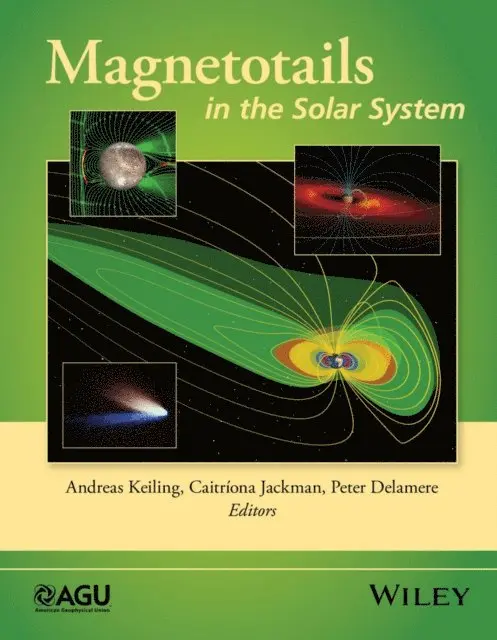
All magnetized planets in our solar system (Mercury, Earth, Jupiter, Saturn, Uranus, and Neptune) interact strongly with the solar wind and possess well developed magnetotails. It is not only the strongly magnetized planets that have magnetotails. Mars and Venus have no global intrinsic magnetic field, yet they possess induced magnetotails. Comets have magnetotails that are formed by the draping of the interplanetary magnetic field. In the case of planetary satellites (moons), the magnetotail refers to the wake region behind the satellite in the flow of either the solar wind or the magnetosphere of its parent planet. The largest magnetotail of all in our solar system is the heliotail, the “magnetotail” of the heliosphere. The variety of solar wind conditions, planetary rotation rates, ionospheric conductivity, and physical dimensions provide an outstanding opportunity to extend our understanding of the influence of these factors on magnetotail processes and structures.
Volume highlights include:
Discussion on why a magnetotail is a fundamental problem of magnetospheric physics Unique collection of tutorials on a large range of magnetotails in our solar system In-depth reviews comparing magnetotail processes at Earth with other magnetotail structures found throughout the heliosphereCollectively, Magnetotails in the Solar System brings together for the first time in one book a collection of tutorials and current developments addressing different types of magnetotails. As a result, this book should appeal to a broad community of space scientists, and it should also be of interest to astronomers who are looking at tail-like structures beyond our solar system.
Magnetotails in the Solar System
2 074 kr
Skickas inom 5-8 vardagar
2 420 kr
Läs direkt efter köp
All magnetized planets in our solar system (Mercury, Earth, Jupiter, Saturn, Uranus, and Neptune) interact strongly with the solar wind and possess well developed magnetotails. It is not only the strongly magnetized planets that have magnetotails. Mars and Venus have no global intrinsic magnetic field, yet they possess induced magnetotails. Comets have magnetotails that are formed by the draping of the interplanetary magnetic field. In the case of planetary satellites (moons), the magnetotail refers to the wake region behind the satellite in the flow of either the solar wind or the magnetosphere of its parent planet. The largest magnetotail of all in our solar system is the heliotail, the “magnetotail” of the heliosphere. The variety of solar wind conditions, planetary rotation rates, ionospheric conductivity, and physical dimensions provide an outstanding opportunity to extend our understanding of the influence of these factors on magnetotail processes and structures.
Volume highlights include:
Discussion on why a magnetotail is a fundamental problem of magnetospheric physics Unique collection of tutorials on a large range of magnetotails in our solar system In-depth reviews comparing magnetotail processes at Earth with other magnetotail structures found throughout the heliosphereCollectively, Magnetotails in the Solar System brings together for the first time in one book a collection of tutorials and current developments addressing different types of magnetotails. As a result, this book should appeal to a broad community of space scientists, and it should also be of interest to astronomers who are looking at tail-like structures beyond our solar system.
1 084 kr
Skickas inom 10-15 vardagar
1 416 kr
Läs direkt efter köp
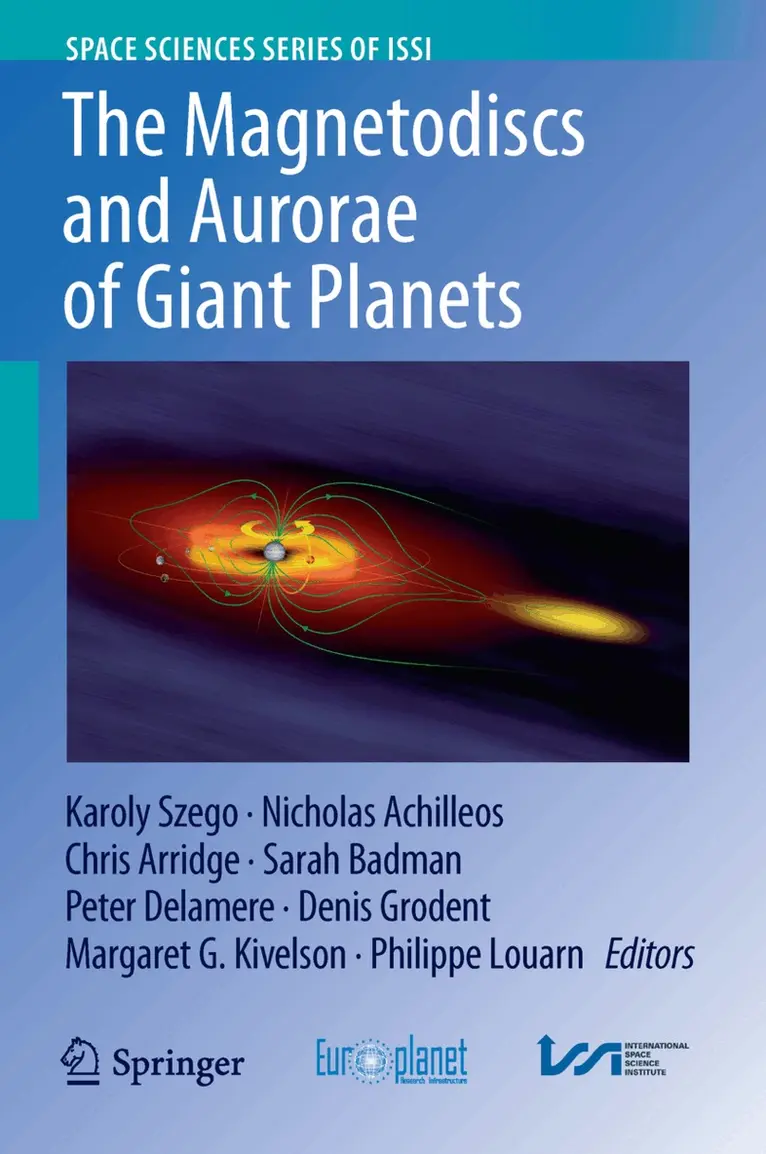
Readers will find grouped together here the most recent observations, current theoretical models and present understanding of the coupled atmosphere, magnetosphere and solar wind system. The book begins with a general discussion of mass, energy and momentum transport in magnetodiscs. The physics of partially ionized plasmas of the giant planet magnetodiscs is of general interest throughout the field of space physics, heliophysics and astrophysical plasmas; therefore, understanding the basic physical processes associated with magnetodiscs has universal applications. The second chapter characterizes the solar wind interaction and auroral responses to solar wind driven dynamics. The third chapter describes the role of magnetic reconnection and the effects on plasma transport. Finally, the last chapter characterizes the spectral and spatial properties of auroral emissions, distinguishing between solar wind drivers and internal driving mechanisms. The in-depth reviews provide an excellent reference for future research in this discipline.
1 084 kr
Skickas inom 10-15 vardagar