Andreas Kilcher – författare
Visar alla böcker från författaren Andreas Kilcher. Handla med fri frakt och snabb leverans.
7 produkter
7 produkter
422 kr
Skickas inom 5-8 vardagar
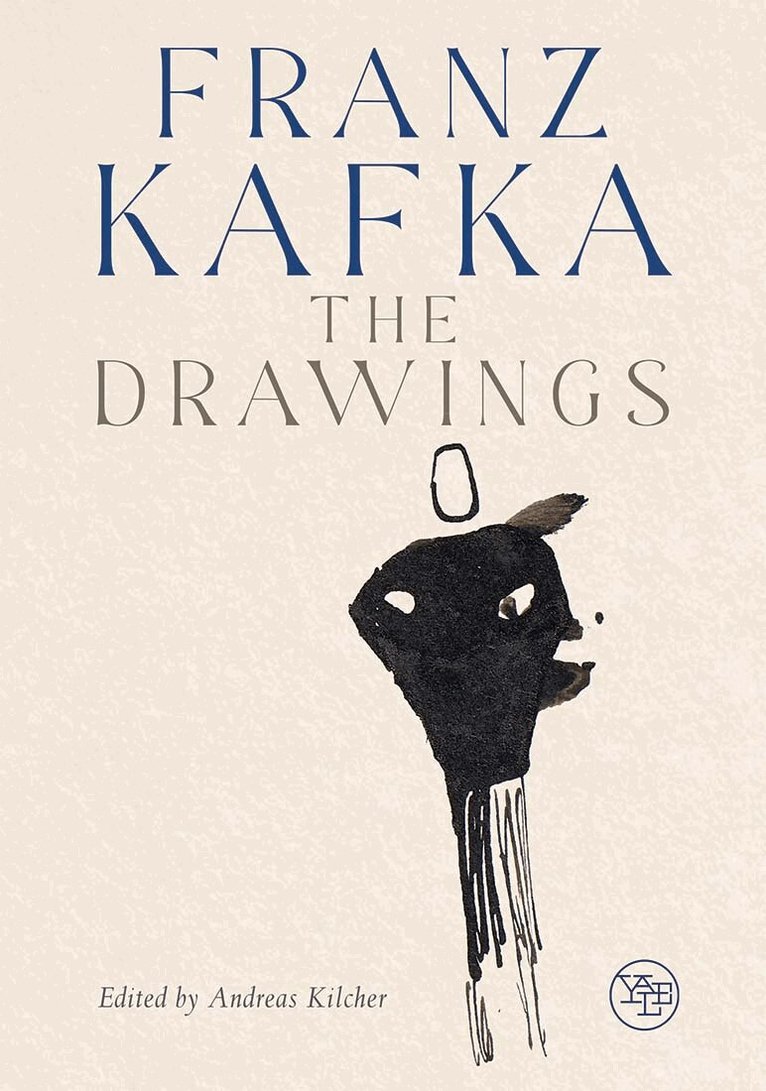
The first book to publish the entirety of Franz Kafka’s graphic output, including more than 100 newly discovered drawings “The figures he drew stand alone as stories in themselves.”—Lauren Christensen, New York Times Book Review “A sensational new book [that] reveals these hitherto hidden artworks for the first time. . . . This valuable volume allows us to see how, for Kafka, word and image walk arm in arm.”—Benjamin Balint, Jewish Review of Books The year 2019 brought a sensational discovery: hundreds of drawings by the writer Franz Kafka (1883–1924) were found in a private collection that for decades had been kept under lock and key. Until now, only a few of Kafka’s drawings were widely known. Although Kafka is renowned for his written work, his drawings are evidence of what his literary executor Max Brod termed his “double talent.” Irresistible and full of fascinating figures, shifting from the realistic to the fantastic, the grotesque, the uncanny, and the carnivalesque, they illuminate a previously unknown side of the quintessential modernist author. Kafka’s drawings span his full career, but he drew most intensively in his university years, between 1901 and 1907. An entire booklet of drawings from this period is among the many new discoveries, along with dozens of loose sheets. Published for the first time in English, these newly available materials are collected with his known works in a complete catalogue raisonné of more than 240 illustrations, reproduced in full color. Essays by Andreas Kilcher and Judith Butler provide essential background for this lavish volume, interpreting the drawings in their own right while also reconciling their place in Kafka’s larger oeuvre.
1 045 kr
Skickas inom 5-8 vardagar
Focusing on Eastern and Central Europe before WWII, this collection explores various genres of "ethnoliterature" across temporal, geographical, and ideological borders as sites of Jewish identity formation and dissemination. Challenging the assumption of cultural uniformity among Ashkenazi Jews, the contributors consider how ethnographic literature defines Jews and Jewishness, the political context of Jewish ethnography, and the question of audience, readers, and listeners. With contributions from leading scholars and an appendix of translated historical ethnographies, this volume presents vivid case studies across linguistic and disciplinary divides, revealing a rich textual history that throws the complexity and diversity of a people into sharp relief.
420 kr
Skickas inom 5-8 vardagar
Focusing on Eastern and Central Europe before WWII, this collection explores various genres of "ethnoliterature" across temporal, geographical, and ideological borders as sites of Jewish identity formation and dissemination. Challenging the assumption of cultural uniformity among Ashkenazi Jews, the contributors consider how ethnographic literature defines Jews and Jewishness, the political context of Jewish ethnography, and the question of audience, readers, and listeners. With contributions from leading scholars and an appendix of translated historical ethnographies, this volume presents vivid case studies across linguistic and disciplinary divides, revealing a rich textual history that throws the complexity and diversity of a people into sharp relief.
517 kr
Skickas inom 3-6 vardagar
343 kr
Skickas inom 3-6 vardagar
348 kr
Skickas inom 3-6 vardagar
Del 11 - Aries Book Series
Constructing Tradition
Means and Myths of Transmission in Western Esotericism
Inbunden, Engelska, 2010
1 923 kr
Skickas inom 3-6 vardagar
The question of constructing tradition, concepts of origin, and memory as well as techniques and practices of knowledge transmission, are central for cultures in general. In esotericism, however, such questions and techniques play an outstanding role and are widely reflected upon, in its literature. Esoteric paradigms not only understand themselves in elaborated mytho-poetical narratives as bearers of “older”, “hidden”, “higher” knowledge. They also claim their knowledge to be of a particular origin. And they claim this knowledge has been transmitted by particular (esoteric) means, media and groups. Consequently, esotericism not only involves the construction of its own tradition; it can even be understood as a specific form of tradition and transmission. The various studies of the present voume, which contains the papers of a conference held in Tübingen in July 2007, provide an overview of the most important concepts and ways of constructing tradition in esotericism.