Andreas Rupprecht - Böcker
Visar alla böcker från författaren Andreas Rupprecht. Handla med fri frakt och snabb leverans.
4 produkter
4 produkter
214 kr
Tillfälligt slut
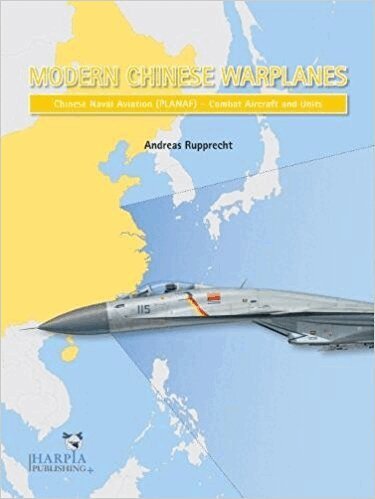
Due to China’s strong dependence/reliance on its economic development but also due to its rising political ambitions with the aim to resume a central role in the regional and global affairs, it is vital for China to show some sort of military presence in its area of influence. Consequently, within the past decade, China’s military – in both strategic considerations and the modernisation of procedures and material as well – has undergone some of the most profound reforms since its establishment and the Chinese Navy and its Naval Air Arm play an ever more increasing role to achieve these goals.The 2016-released National ‘white paper’ has emphasized a greater focus on the seas and clearly stated that China’s has to establish itself as a major maritime power. Consequently, the PLN will shift its focus from 'offshore waters defence' to an 'open seas protection'. That means in parallel to the PLAAF’s modernisations, the changes for the PLN – and concerning the scope off the book the PLANAF – will be probably even more dramatic when the PLANAF creates a modern, capable 'Blue Water' force. In terms of modern systems, the PLNAF will steadily increase its naval capabilities by introducing more modern multirole-capable systems but most important by the establishment of an indigenous carrier force.Similar to the original /Modern Chinese Warplanes/and /Flashpoint China/ books, this uniquely compact yet comprehensive directory serves as a magnificently illustrated, in-depth analysis and directory of modern Chinese Naval Air Power.It is organised in four parts: the most important military aircraft and their weapons found in PLANAF service today; aircraft markings and serial number systems; the recent modernization efforts and structural reforms and orders of battle for the People's Liberation Naval Air Force.
369 kr
Tillfälligt slut
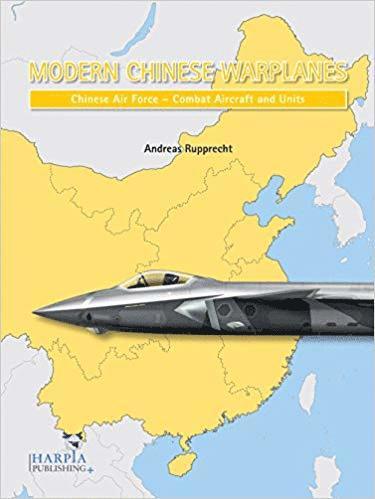
In 2012 the original Modern Chinese Warplanes set the standard as a uniquely compact yet comprehensive directory of modern Chinese air power, combining magnificent illustrations and in-depth analysis.Now almost six years later, much of the fascination that Chinese military aviation holds for the analyst and enthusiast still stems from the thick veil of secrecy that surrounds it. However, in the time that has passed since the first edition a plethora of new types, systems and weapons has been revealed. What is more, the structure of the People’s Liberation Army Air Force (PLAAF) has been completely revised by transforming the former Military Regions into Theatre Commands. In parallel, the general structure has been thoroughly modernised to cope with China’s latest challenges.Consequently, this fully revised edition is organised in three parts: the most important military aircraft and their weapons found in service today; aircraft markings and serial number systems; and orders of battle for the PLAAF. The study includes the latest developments emerging from behind the ‘Great Wall’, including the J-20 stealth fighter programme, Y-20 strategic transport and the latest developments in UAVs that are equipping a rapidly modernising air arm.The centrepiece consists of almost 100 fully illustrated pages detailing the organisational structure of the air force, providing an easy-to-use review of all known flying units, their equipment and their markings.No other book has ever attempted to present this level of accuracy in this way: Modern Chinese Air Power portrays the PLAAF in a degree of detail that was previously unavailable.
367 kr
Tillfälligt slut
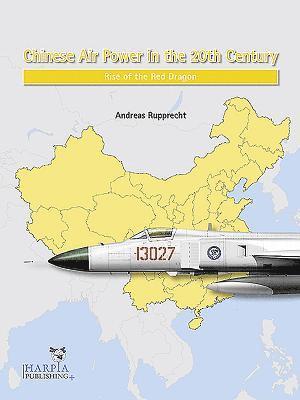
This comprehensive directory provides a lavishly illustrated, in-depth analysis and overview of the historical gestation of the PLAAF and its path to becoming the modern air arm we know today.
421 kr
Tillfälligt slut
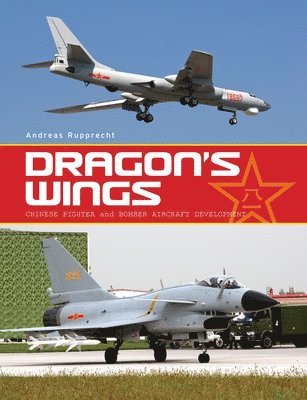
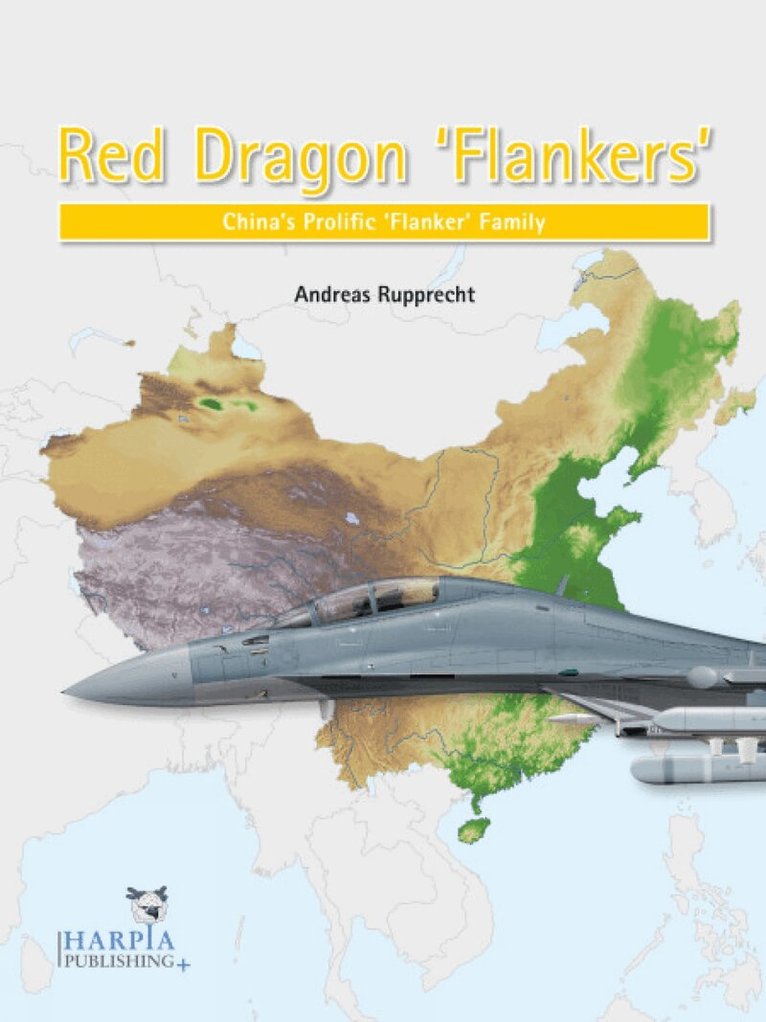
Noted for its exceptional performance, the Sukhoi Su-27 is not only one of the most capable fourth-generation fighters, but its development history is also remarkably rich. The ‘Flanker’ story took on a new industrial and political dimension when the Su-27 was chosen by China to meet the People’s Liberation Army Air Force’s requirement for a new fourth-generation type. This was a win-win-situation: Russia received a much-needed multi-billion-dollar contract and the PLAAF, for the first time, obtained a true high-end fourth-generation fighter. However, what followed was a complex drama, with both sides telling different stories. Following the direct sale from Russia, China obtained a contract for licence manufacturing. This yielded mixed success in the beginning and by the time the manufacturing procedures had evolved and improved, the licenced J-11 fighters no longer met the PLAAF’s requirements.Subsequently, China developed indigenous variants of the ‘Flanker’ equipped with improved avionics, weapons, and engines, which Russia regards as a breach of the formal agreement. Regardless of whether these ‘Sino-Flankers’ are illegal copies, evolved clones or indigenous versions, the Chinese ‘Flanker’ series ultimately evolved into a wide range of variants, sometimes with no true counterparts in Russia. This book provides a full overview of the Chinese ‘Flanker’ family, describing the genesis of this family and providing a review of the variants, their systems, and capabilities and how they are used by the People’s Liberation Army.